
Tetramorium arnoldi
- Nome científico
- Tetramorium arnoldi
- Tribo
- Crematogastrini
- Subfamília
- Myrmicinae
- Autor
- Forel, 1913
- Distribuição
- Encontrada em 1 países
Introdução
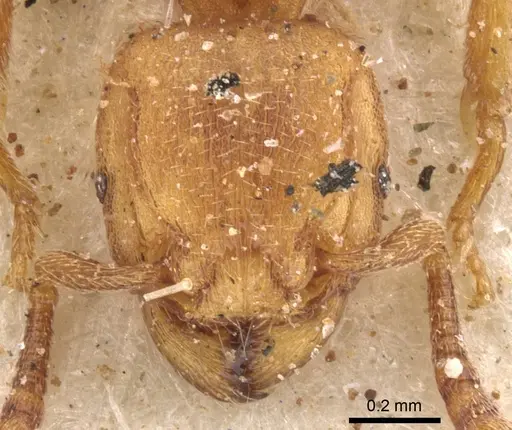
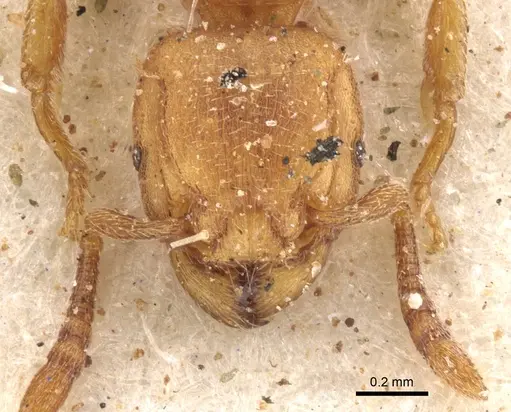
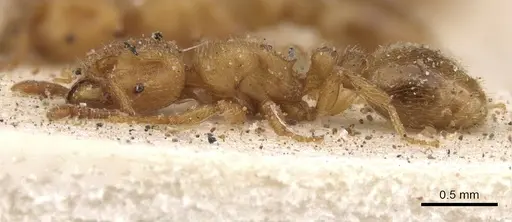
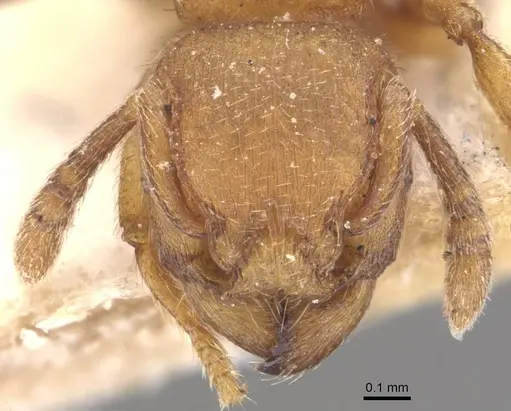
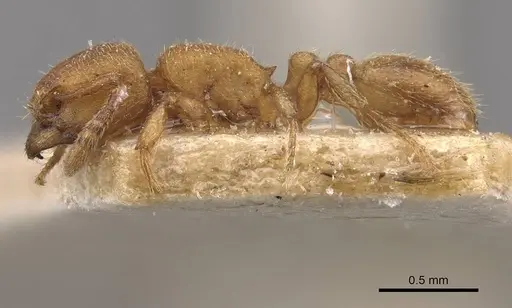
Tetramorium arnoldi is a tiny, pale yellow ant from southern Africa. Workers are only 2.8-3.0mm long, making them one of the smaller Tetramorium species. They have a uniform pale yellow body, a hairless back (alitrunk), and a rounded, toothless rear section (propodeum). These features make them easy to tell apart from similar yellow species . They live in bushveld and woodland habitats in South Africa and Zimbabwe . One interesting thing about T. arnoldi is its sensitivity to invasive ants. Research shows they are found almost exclusively in areas not invaded by the Argentine ant (Linepithema humile) . This means wild colonies may struggle where invasive ants have taken over, which is something to keep in mind if you plan to keep them.
Quick Summary
- Difficulty: Medium
- Origin & Habitat: Bushveld and woodland habitats in South Africa and Zimbabwe (Afrotropical Region) [1]
- Colony Type: Colony structure is unconfirmed, specific data for Tetramorium arnoldi is lacking
- Size & Growth:
- Queen: Size data unavailable
- Worker: 2.8-3.0mm [1]
- Colony: Unknown, likely under 500 workers inferred from Tetramorium genus patterns
- Growth: Moderate, inferred from genus patterns
- Development: 6-10 weeks, estimated based on typical Tetramorium development at 24-28°C (Direct development data unavailable, genus-level estimates suggest moderate speed at 24-28°C)
- Antkeeping:
- Temperature: Keep at 24-28°C. These are warm-climate ants from southern Africa. A heating cable on one side of the nest creates a usable gradient [1]
- Humidity: Keep the nest substrate slightly moist but not waterlogged, they come from bushveld areas with seasonal rainfall
- Diapause: Unknown, being from subtropical Africa, they likely do not require a true hibernation. A slight cool-down to 18-22°C during winter may be beneficial, but avoid going below 15°C
- Nesting: Y-tong (AAC) nests or test tubes work well. Provide tight chambers since workers are very small [1]
- Behavior: Small, generally docile ants that prefer to nest in soil or under stones. Not aggressive, they usually flee when disturbed. Their tiny size means excellent escape prevention is a must. Like other Tetramorium species, they likely eat small insects, honeydew, and seeds [1]
- Common Issues: tiny size means escapes are likely without fine mesh barriers, use fluon and tight-fitting lids, limited biological data makes care requirements uncertain, be prepared to adjust based on colony behavior, moderate colony growth may seem slow compared to faster species, requiring patience, wild-caught colonies may be stressed from collection and need careful acclimation, sensitivity to invasive ants means they might be outcompeted in suboptimal conditions
Housing and Nest Setup
Because workers are only 2.8-3.0mm, Tetramorium arnoldi needs carefully scaled housing. Y-tong (AAC) nests with narrow chambers work well, the tight spaces match their small size and help them feel secure. A well-humidified test tube with a cotton plug is fine for starting a colony. Avoid large, open spaces in the nest, these ants prefer compact, snug chambers. For the outworld, use a smooth container with excellent escape prevention, their small size means they can slip through tiny gaps. Apply fluon to the rim and use fine mesh on ventilation holes [1].
Feeding and Diet
Like other Tetramorium species, T. arnoldi is probably omnivorous with a preference for protein-rich foods. Offer small live prey such as fruit flies, pinhead crickets, or small mealworms, sized appropriately for tiny workers. They will also take sugar sources like honey water or sugar water, especially as the colony grows. Seeds may be accepted too, as some Tetramorium collect them. Feed small amounts every 2-3 days and remove uneaten prey after 24 hours to prevent mold. Keep a constant sugar water supply once workers are established [1].
Temperature and Seasonal Care
These ants come from southern Africa (South Africa and Zimbabwe), so they prefer warmth. Keep nest temperatures between 24-28°C for good brood growth. A small heating cable on one side of the nest creates a temperature gradient, letting workers choose their preferred spot. Room temperature may be fine in warm homes, but use a thermometer to check. True hibernation is probably not needed given their subtropical origin, but a slight cool-down to 18-22°C during winter may help simulate natural cycles and keep the colony healthy. Avoid letting temperatures drop below 15°C [1].
Handling and Colony Dynamics
Tetramorium arnoldi workers are small, slow-moving, and not aggressive. They are not known to sting and are harmless to keepers. However, their tiny size makes them fragile and tricky to handle. When moving colonies or cleaning nests, use gentle methods to avoid crushing workers. The colony likely follows typical Tetramorium structure with one queen (monogyne), though this is not documented for this species. Expect moderate growth, first workers (nanitics) should appear within 6-10 weeks after the queen lays eggs, assuming optimal temperatures. Colonies probably stay relatively small (likely under 500 workers) compared to some other Myrmicinae. Workers have a distinctive pale yellow color that makes them easy to spot [1].
Frequently Asked Questions
How long does it take for Tetramorium arnoldi to get first workers?
Expect first workers (nanitics) within 6-10 weeks after the queen begins laying eggs, provided temperatures are 24-28°C. This is an estimate based on typical Tetramorium development, specific data for T. arnoldi is not available.
What do Tetramorium arnoldi ants eat?
They likely accept small protein sources like fruit flies, tiny crickets, and mealworms, plus sugar water or honey. Scale prey to their tiny worker size (under 3mm). Remove uneaten prey after 24 hours [1].
Can I keep Tetramorium arnoldi in a test tube?
Yes, test tubes work well for starting colonies. Use a small test tube with a water reservoir (cotton plug) to maintain humidity. Once the colony grows, move to a Y-tong or naturalistic setup with appropriately sized chambers [1].
Do Tetramorium arnoldi ants sting?
No, these ants are not known to sting and are harmless. They are small, docile ants that usually flee when disturbed.
Are Tetramorium arnoldi good for beginners?
They are rated Medium difficulty. Their small size and specific temperature needs require some attention, but they are generally hardy once established. The main challenges are escape prevention and limited biological data to reference.
Do Tetramorium arnoldi need hibernation?
Probably not, being from subtropical Africa, they don't require true hibernation. A slight cool-down to 18-22°C during winter may be beneficial, but avoid temperatures below 15°C.
How big do Tetramorium arnoldi colonies get?
Colony size is not documented, but based on genus patterns, they likely reach several hundred workers at most. They are not among the larger Tetramorium species.
Why are my Tetramorium arnoldi dying?
Common causes include: escape (use fine mesh and fluon), temperatures too cold (keep at 24-28°C), improper humidity (avoid waterlogging or drying out), or stress from wild collection. Their sensitivity to invasive ants also suggests they may be stressed by competition in suboptimal setups [2].
When should I move my colony to a formicarium?
Move to a larger nest setup once the test tube becomes crowded or the colony has 20+ workers. Y-tong nests work well for their small size. Make sure the new setup has appropriately tight chambers [1].
Can I keep multiple Tetramorium arnoldi queens together?
Not recommended, combining unrelated queens has not been documented for this species. Tetramorium species typically form single-queen colonies. Keep only one queen per colony.
Report an Issue
The current care sheet is based fully on literature. See inconsistencies, or something that's incorrect? Please , it will be resolved after review from an admin. Contributing to the blogs tab also helps providing information, to make us be able to further improve the caresheets. Thank you for your support!
References

Este guia de cuidados está sob a licença CC BY-SA 4.0 .
Posts da comunidade
CASENT0901140
Ver no AntWeb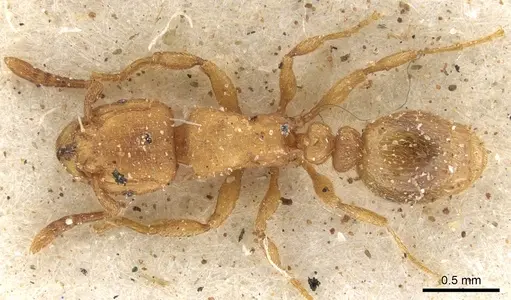
CASENT0909122
Ver no AntWeb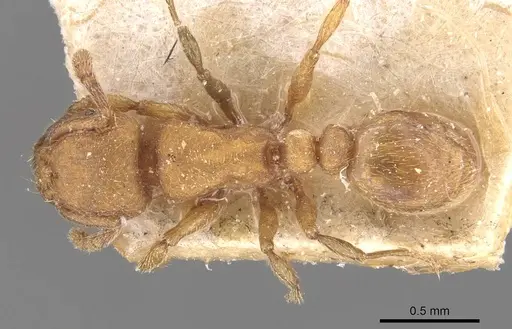
Literatura
Carregando mapa de distribuição...Carregando produtos...