
Temnothorax tesquorum
- Nome científico
- Temnothorax tesquorum
- Tribo
- Crematogastrini
- Subfamília
- Myrmicinae
- Autor
- Arnol'di, 1977
- Distribuição
- Encontrada em 0 países
Introdução
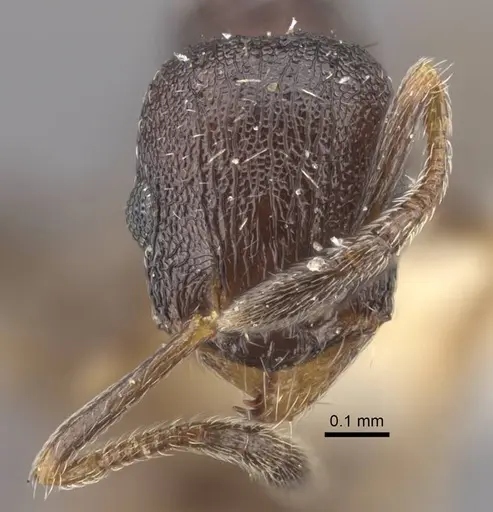
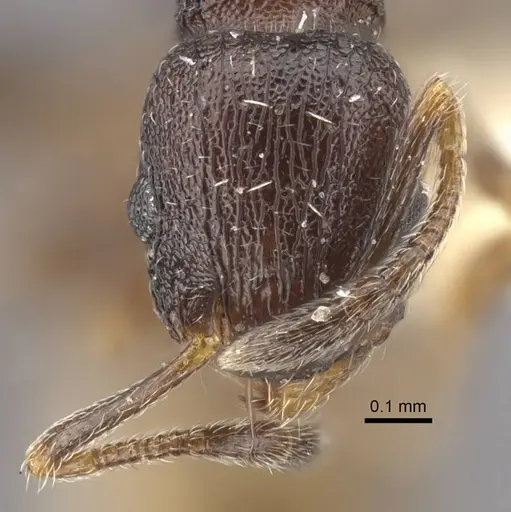
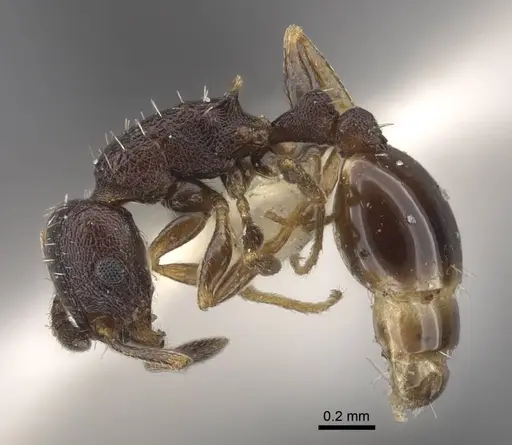
Temnothorax tesquorum is a small ant species native to the North Caucasus region. Its scientific description comes from Arnoldi in 1977,with taxonomic notes later provided by Radchenko and Yusupov . Morphologically, it has a uniform brownish-red or brownish body, quite long spines on the propodeum (the rear part of the thorax), and a high petiole (waist segment) with a narrowly rounded top . No specific data exists on its behavior, colony size, or care requirements. Most of what follows is based on general Temnothorax genus patterns, so expect some guesswork. This species is not well-studied, and keepers should treat it as a bit of an experiment.
Quick Summary
- Difficulty: Easy
- Origin & Habitat: North Caucasus region (between the Black Sea and Caspian Sea), likely found in mountainous rocky areas [1][2]
- Colony Type: Unknown. Based on typical Temnothorax patterns, likely single-queen (monogyne), but no data has been recorded.
- Size & Growth:
- Queen: Size data unavailable, typical Temnothorax queens are around 5-6mm (inferred from genus)
- Worker: Size data unavailable, typical Temnothorax workers are 2-4mm (inferred from genus)
- Colony: Unknown, typical Temnothorax colonies reach up to 500 workers (inferred from genus)
- Growth: Moderate, expected based on genus patterns
- Development: Not documented, typical Temnothorax is 6-10 weeks at optimal temperature (inferred from genus) (All timing is estimated from genus-level data. No species-specific studies have been done.)
- Antkeeping:
- Temperature: Room temperature (18-24°C) is suitable. Aim for 20-22°C for steady activity. No exact data exists, these are general recommendations for temperate small ants.
- Humidity: Keep the nest substrate slightly moist but not wet. Provide a humidity gradient with one damp area and the rest dry. These ants come from a mountainous region with good drainage.
- Diapause: Yes, almost certainly. As a temperate Caucasus species, they need a winter rest period. Gradually lower temperature to 10-15°C for 2-3 months in winter (inferred from geographic range).
- Nesting: Small, dark cavities suit them best. Test tubes, Y-tong nests, or small plaster formicaria with narrow chambers are ideal. Avoid large open spaces.
- Behavior: Peaceful and non-aggressive. Workers will flee rather than fight. Their primary defense is fleeing, but they have a modified stinger used to smear venom onto attackers (not painful to humans). Their tiny size makes them excellent escape artists, use fine mesh (0.5mm or smaller) on all ventilation and tight seals on connections.
- Common Issues: escape prevention is critical due to their very small size, use fine mesh and tight-fitting lids, limited species-specific information means you're mostly working from guesswork based on related ants, test tube setups can dry out quickly, so check moisture levels weekly, winter diapause is almost certainly needed, skipping it may harm the colony (inferred from habitat)
Housing and Nest Setup
Use a standard test tube with a water reservoir (fill one-third with water, plug with cotton, leave the rest as the nesting chamber). This mimics the small cavities they occupy in the wild. For larger colonies, switch to a small Y-tong (AAC) nest with narrow chambers scaled to their tiny workers. Avoid overly large chambers, they feel more secure in tight, dark spaces. A small outworld (feeding area) is fine. Because their natural nesting preferences are not documented, this setup is based on typical Temnothorax habits.
Feeding and Diet
Offer a mix of small protein prey (fruit flies, tiny crickets, or pieces of mealworm) 2-3 times per week, plus a constant supply of sugar water or honey water. Remove uneaten prey after 24 hours to prevent mold. No species-specific dietary data exists, so follow general small-ant feeding guidelines.
Temperature and Seasonal Care
Keep the nest at 20-22°C for steady activity and brood development. Room temperature (18-24°C) is usually fine. In autumn, gradually reduce temperature to 10-15°C for a winter diapause of 2-3 months. This is inferred from the species' temperate Caucasus origin. Do not skip the rest period, it likely regulates the colony's reproductive cycle. Avoid temperatures above 28°C or below 15°C outside of diapause.
Behavior and Handling
Workers are active foragers and will flee rather than fight. They have a modified stinger for smearing venom (subfamily Myrmicinae, tribe Crematogastrini). This is not painful to humans. The main challenge is their tiny size, they can escape through gaps smaller than 1mm. Use fluon barriers on test tube rims, fine mesh on all vents, and seal connections with Vaseline or tight tape. Overfeeding or poor ventilation can lead to mold, which is a bigger issue for small colonies.
Frequently Asked Questions
How long does it take for Temnothorax tesquorum to raise their first workers?
Not documented for this species. Based on related Temnothorax, expect 6-10 weeks from egg to worker at 20-22°C. The queen likely stays sealed until the first workers emerge (typical for claustral founding).
What do Temnothorax tesquorum ants eat?
They are omnivorous. Offer small live prey (fruit flies, tiny crickets) and a constant supply of sugar water. No specific diet data exists, so follow general small-ant feeding guidelines.
Do Temnothorax tesquorum ants need hibernation?
Almost certainly yes. As a temperate Caucasus species, they likely require a winter diapause. Gradually lower temperature to 10-15°C for 2-3 months. Skipping it may weaken the colony.
Can I keep Temnothorax tesquorum in a test tube?
Yes, test tubes are ideal for small colonies. Use a standard setup with a water reservoir. They prefer tight, dark spaces.
Are Temnothorax tesquorum good for beginners?
Yes, if you are careful with escape prevention. They are peaceful and tolerate room temperature well. The main challenge is their tiny size, they need very fine mesh and tight seals.
How big do Temnothorax tesquorum colonies get?
Not documented. Based on similar Temnothorax species, colonies may reach several hundred workers. Do not expect a huge colony.
Do Temnothorax tesquorum ants sting?
No, they cannot sting you in the normal sense. They have a modified stinger used to smear venom onto attackers, not painful to humans. Their primary defense is fleeing.
When should I move my colony to a formicarium?
Move them when the test tube becomes crowded or the water dries out. For Temnothorax, this might be around 20-30 workers, but no exact data exists. Choose a nest with small chambers.
Why are my Temnothorax tesquorum dying?
Most likely escaped due to inadequate barriers (their tiny size makes this the top cause). Also check: test tube dried out, temperature too high or low, mold from overfeeding, or stress from too much disturbance. This species is poorly studied, so troubleshooting is based on general small-ant experience.
What temperature is ideal for Temnothorax tesquorum?
Aim for 20-22°C for steady activity. Room temperature (18-24°C) is generally fine. Avoid extremes above 28°C or below 15°C outside diapause. No exact data exists.
Report an Issue
The current care sheet is based fully on literature. See inconsistencies, or something that's incorrect? Please , it will be resolved after review from an admin. Contributing to the blogs tab also helps providing information, to make us be able to further improve the caresheets. Thank you for your support!
References

Este guia de cuidados está sob a licença CC BY-SA 4.0 .
Posts da comunidade
CASENT0917450
Ver no AntWeb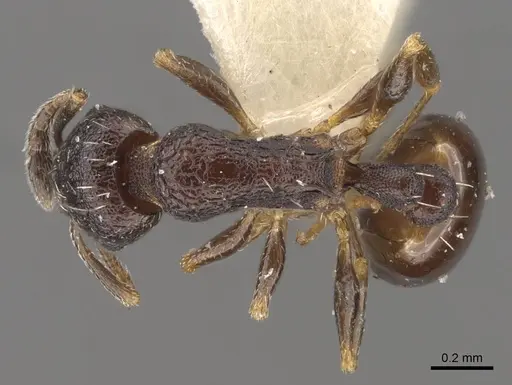
Literatura
Carregando mapa de distribuição...Carregando produtos...