
Temnothorax koreanus
- Nome científico
- Temnothorax koreanus
- Tribo
- Crematogastrini
- Subfamília
- Myrmicinae
- Autor
- Teranishi, 1940
- Distribuição
- Encontrada em 0 países
Introdução
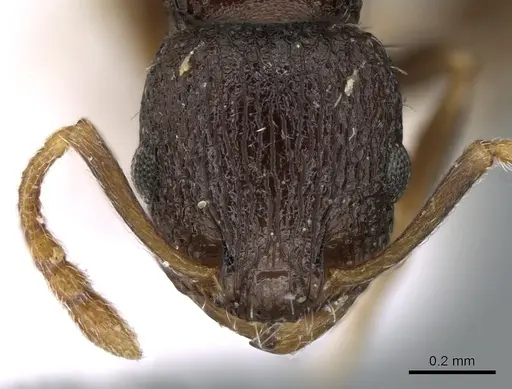
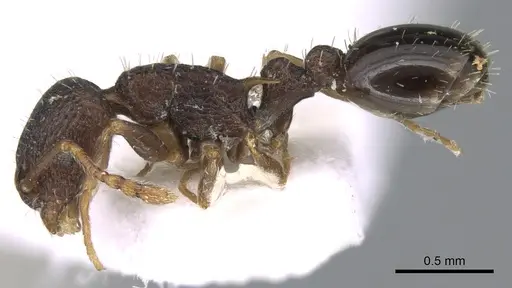
Temnothorax koreanus is a tiny ant native to East Asia. Workers measure just 2-2.5 mm in length . Their body color ranges from yellowish brown to blackish brown, with a head and gaster that are darker than the mesosoma . The most distinctive features are the distinctly angled 'shoulders' (pronotal humeri) when viewed from above, and very long propodeal spines - about three times as long as wide . They have 11-segmented antennae with short scapes that don't reach the back of the head . This species is considered relatively rare in its range . It is found in open habitats like seashores, parks, and shrine sites across Korea, Japan, and central China (Hubei) . In Japan, workers have been observed walking on the trunks of somei-yoshino cherry trees in Matsuyama Castle . The taxonomic position of T. koreanus has been debated - it shares some features with the genus Leptothorax (11-segmented antennae) but has distinct angulate humeri and long spines that are atypical for that genus .
Quick Summary
- Difficulty: Easy
- Origin & Habitat: Native to the Palaearctic region: Korea, Japan, and central China (Hubei) [1][2][4][5]. Found in open situations such as seashores, parks, and shrine sites (e.g., Matsuyama Castle) [1][3].
- Colony Type: Unconfirmed. Most Temnothorax species are monogyne (single-queen), but specific data for this species is lacking.
- Size & Growth:
- Queen: Unconfirmed, estimated around 4-5 mm based on typical Temnothorax queen size
- Worker: 2-2.5 mm [1]
- Colony: Likely small, under 200 workers at maturity, based on related species
- Growth: Moderate
- Development: Estimated 6-10 weeks at optimal temperature, based on typical Temnothorax development (Direct development data unavailable for this species.)
- Antkeeping:
- Temperature: Keep around 20-24°C, typical for temperate Temnothorax species. Provide a slight gradient so workers can choose.
- Humidity: Moderate humidity. Keep the nest substrate slightly moist but not waterlogged, these ants come from variable open habitats.
- Diapause: Likely yes, this is a temperate species. Provide 2-3 months at 10-15°C during winter to mimic natural conditions.
- Nesting: Prefers small, tight chambers typical of its tiny size. Y-tong (AAC) or plaster nests work well. In the wild they occupy small cavities in open areas [1].
- Behavior: Generally peaceful and non-aggressive. Workers are active foragers, moving individually or in small groups. They have a modified stinger used to smear venom (a trait common in the tribe Crematogastrini) rather than piercing, but they rarely use it defensively with keepers. Their tiny size (2-2.5 mm) means standard escape prevention (Fluon, tight lids) is essential. Based on genus patterns, they are curious and timid.
- Common Issues: tiny size makes escape prevention critical, use fine mesh or Fluon barriers, rare in the wild, wild colonies may be difficult to find or collect, slow colony growth can test beginner patience, winter diapause requirements must be met or colonies may decline over time, test tube setups need proper water reservoir management to avoid flooding or drying out
Housing and Nest Preferences
Because Temnothorax koreanus workers are only 2-2.5 mm, choose a formicarium with small chambers and narrow passages. Y-tong (AAC) nests work well because they hold moisture and offer tight spaces. Plaster nests are also a good option. In the wild they live in small cavities in open areas like parks and seashores [1], so they don't need deep soil. Provide a water source (test tube or plastic reservoir) connected to the nest to keep the substrate slightly moist. The outworld can be simple, they aren't strong climbers, but cover edges with Fluon and use tight lids to prevent escapes. No specific nesting data exists for this species, so these recommendations are based on related Temnothorax species.
Feeding and Diet
Like most Temnothorax, T. koreanus is likely a generalist omnivore. Offer small protein sources like flightless fruit flies, pinhead crickets, or small mealworm pieces. Sugar sources can be honey water or sugar water provided on a cotton ball. In the wild they would forage on small arthropods and honeydew. Feed protein 2-3 times per week in portions small enough to be consumed within a day. Remove uneaten prey to prevent mold. Because workers are tiny, even a small fruit fly is a big meal for them. Keep sugar water available at all times.
Temperature and Seasonal Care
Maintain a nest temperature of 20-24°C for steady brood development. This matches the temperate climate of their native East Asia. Use a heating cable on one side of the nest to create a gradient. During winter, provide a diapause period of 2-3 months at 10-15°C. Reduce feeding and keep the nest slightly cooler (but not frozen). Avoid sudden temperature changes. Exact requirements are unstudied for this species, so these guidelines follow typical temperate Temnothorax care.
Behavior and Colony Dynamics
Workers are active, curious, and non-aggressive. They forage individually or in small clusters rather than forming large raiding parties. When threatened, they can smear a venom using a modified spatulate stinger (common to the tribe Crematogastrini), this is more of a repellent than a painful sting. Workers are 2-2.5 mm, agile, and alert. Colonies are thought to be small, likely under 200 workers at peak, and the queen probably lays eggs seasonally. This species is considered rare in the wild [1][3], so established captive colonies are valuable. Direct behavioral studies for T. koreanus are lacking, so most observations come from related Temnothorax species.
Frequently Asked Questions
How long does it take for Temnothorax koreanus to produce first workers?
Exact timing is unknown for this species, but based on typical Temnothorax development, expect 6-10 weeks from egg to first worker at around 22°C. The first workers (nanitics) will be smaller than mature workers. Be patient, founding colonies grow slowly.
Can I keep multiple Temnothorax koreanus queens together?
Colony structure is unconfirmed. Most Temnothorax are monogyne (single queen), so combining unrelated queens is not recommended. There is no documented evidence of polygyny in this species. Stick to single-queen setups for best success.
Do Temnothorax koreanus ants sting?
They have a modified stinger, but they use it to smear venom rather than inject it. They are not aggressive and rarely sting even when handled. These tiny ants are considered harmless to humans, they may attempt to bite if severely stressed, but it’s barely noticeable.
What do Temnothorax koreanus eat?
They accept a typical ant diet: small insects (fruit flies, pinhead crickets, small mealworms) for protein and sugar sources (honey water, sugar water). Offer prey items appropriate to their 2-2.5 mm worker size. Flightless fruit flies are an excellent protein source. Keep sugar water available at all times.
Do Temnothorax koreanus need hibernation?
Likely yes, this is a temperate East Asian species. Provide a winter diapause of 2-3 months at 10-15°C. Reduce feeding during this period and keep the nest slightly moist. Skipping hibernation may cause colony decline over time.
Are Temnothorax koreanus good for beginners?
Yes, they are easy to keep due to their small size, moderate temperature needs, and peaceful nature. The main challenges are slow colony growth (patience required) and ensuring escape proof housing (2.5 mm workers can slip through tiny gaps). They are an excellent choice for keepers who enjoy watching active, small ants.
When should I move Temnothorax koreanus to a formicarium?
Wait until the colony has at least 20-30 workers before moving from a test tube setup. This typically takes several months to a year after founding. Signs that they are ready include workers actively exploring out of the test tube and the water reservoir needing frequent refills. Moving too early can stress the colony.
How big do Temnothorax koreanus colonies get?
Based on typical genus patterns, colonies likely reach under 200 workers at maturity. This is a small species that stays compact, so a small formicarium is sufficient their entire lives.
Why is my Temnothorax koreanus colony declining?
Common causes include: incorrect temperature (too cold or too hot), improper humidity (too dry or waterlogged), lack of winter diapause, mold from overfeeding, or stress from premature moving. Check that temperatures are stable (20-24°C), the nest has moderate moisture, and you are not overfeeding. Ensure a winter rest period is provided each year.
Report an Issue
The current care sheet is based fully on literature. See inconsistencies, or something that's incorrect? Please , it will be resolved after review from an admin. Contributing to the blogs tab also helps providing information, to make us be able to further improve the caresheets. Thank you for your support!
References

Este guia de cuidados está sob a licença CC BY-SA 4.0 .
Posts da comunidade
CASENT0906181
Ver no AntWeb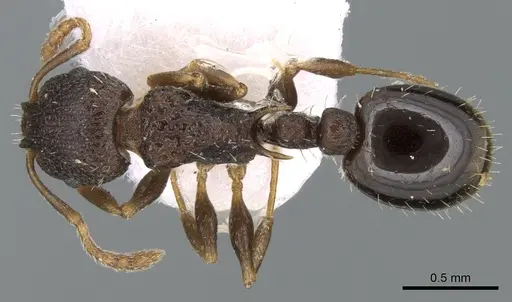
Literatura
Carregando mapa de distribuição...Carregando produtos...