
Temnothorax incompletus
- Nome científico
- Temnothorax incompletus
- Tribo
- Crematogastrini
- Subfamília
- Myrmicinae
- Autor
- Salata <i>et al.</i>, 2018
- Distribuição
- Encontrada em 1 países
Introdução
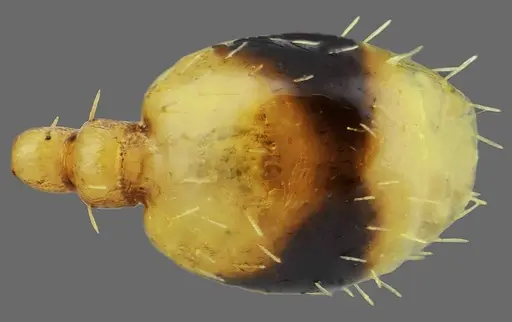
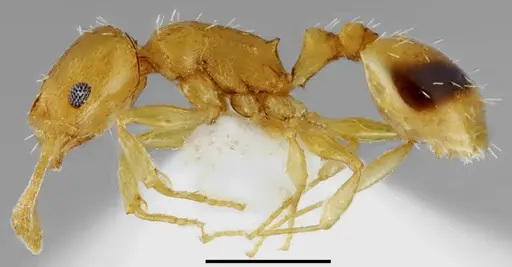
Temnothorax incompletus is an extremely rare ant species endemic to the island of Crete, Greece. Workers are tiny (estimated 2.5-3 mm total length), with a distinctive bright yellow body and a dark band across the first segment of the gaster that breaks in the center . This species was described in 2018 from just two worker specimens collected in macchia (Mediterranean shrubland) leaf litter . Its name refers to the incomplete dark band on its abdomen. As a Cretan endemic, this ant represents a unique piece of island biodiversity found nowhere else on Earth.
Quick Summary
- Difficulty: Hard
- Origin & Habitat: Endemic to Crete, Greece. Collected from leaf litter in macchia (Mediterranean shrubland) at elevations of 350-563 m [1][2].
- Colony Type: Colony structure is unconfirmed, no data exists on queen number or colony size. Based on typical Temnothorax patterns, likely single-queen colonies.
- Size & Growth:
- Queen: Unknown, no queens have been described [1]
- Worker: Estimated total length 2.5-3 mm (inferred from related Temnothorax species) [1]
- Colony: Unknown, only two workers have ever been collected [1]
- Growth: Unknown
- Development: No data for this species. Based on typical Temnothorax development, likely 6-10 weeks at optimal temperature (around 20-24 °C). (All development estimates are inferred from related species, no direct data.)
- Antkeeping:
- Temperature: No species-specific data. Inferred from Crete's Mediterranean climate: provide a gradient from 18-26 °C, with a preferred zone around 20-24 °C. Avoid extremes.
- Humidity: No data. Based on macchia habitat, provide a slight moisture gradient, keep one part of the nest substrate lightly moist, with a drier area. Do not flood.
- Diapause: Unknown. Most temperate Temnothorax require a winter rest. If attempting, try 1-2 months at 10-15 °C and observe colony response.
- Nesting: No direct data. Based on collection from leaf litter, they likely nest in small pre‑existing cavities under stones or in rotting wood. In captivity, use a small Y‑tong (AAC) nest with tight chambers or a test tube setup scaled to their tiny size.
- Behavior: No specific behavior data exists. Based on genus patterns, these are timid, non‑aggressive ants that forage in leaf litter for small prey. Workers are tiny, escape prevention must be excellent (use fine mesh or PTFE barriers). Based on subfamily/tribe (Myrmicinae, Crematogastrini), they likely have a modified stinger used to smear venom rather than to sting, but this has not been studied for this species.
- Common Issues: extremely limited availability, this species is almost unknown in the antkeeping hobby and may not be obtainable legally., no captive husbandry data exists, keepers must pioneer care protocols from scratch., tiny size makes escape prevention critical, standard mesh is insufficient, use very fine gauze or oil barriers., unknown specific requirements mean keepers must experiment with temperature and humidity, expect failures., as an endemic species, ethical considerations apply: wild collection may impact the fragile Cretan population. Only acquire from legitimate captive breeding programs.
Species Discovery and Rarity
Temnothorax incompletus is one of the rarest known ant species, described in 2018 from only two worker specimens collected in Crete [1]. Its bright yellow body and broken dark band on the gaster distinguish it from all other Cretan Temnothorax [1]. The species epithet refers to the incomplete band. This ant exemplifies the unique endemic fauna of Crete, an island with several distinctive ant lineages [2].
Natural Habitat and Distribution
This species is endemic to Crete and is known from only two locations: Vistagi (Rethymno region,563 m elevation) and near Prina (Lasithi region,350 m) [1]. Both specimens were collected in macchia, Mediterranean shrubland with dense, low vegetation and leaf litter [1][2]. Crete's climate features hot, dry summers and mild, wet winters, which likely shape the species' seasonality. No nests or queens have ever been found.
Identification and Appearance
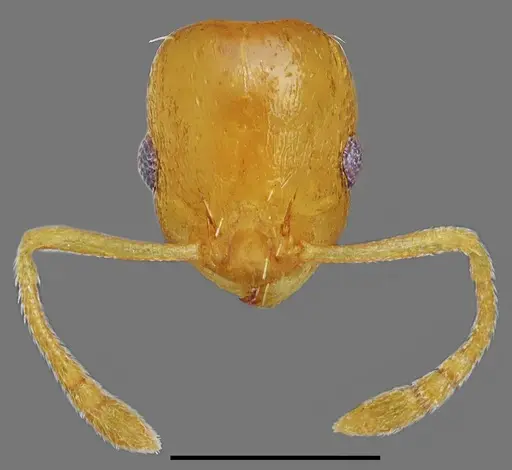
Workers are tiny (estimated total length 2.5-3 mm) and entirely bright yellow [1]. The key feature is a dark brown band on the first segment of the gaster (abdomen), this band is widest at the sides and narrows toward the center, where it is broken by pale yellow [1]. The head is roughly square, and the antennae end in a three-segmented club. No other Cretan ant has this colour pattern [1].
Housing and Nesting
No captive data exists. Based on its small size and natural habitat, Temnothorax incompletus likely nests in small pre‑existing cavities under stones, in rotting wood, or in soil cracks, typical of many Temnothorax. In captivity, use a small Y‑tong (AAC) nest with chambers scaled to their tiny size (≈2-3 mm tall), or a test tube setup with a water reservoir and a substrate of sand/vermiculite. Provide a moisture gradient: keep one end slightly damp. Escape prevention is critical, use very fine mesh (≤0.3 mm) or apply fluon/PTFE around the outworld edge.
Temperature and Seasonal Care
No species‑specific data. Crete experiences mild winters (lows around 5°C) and warm summers (highs above 30°C). For captive care, provide a temperature gradient of 18-26°C, with a preferred zone around 20-24°C. Most temperate Temnothorax species undergo a winter diapause. If you attempt to induce hibernation, slowly reduce temperature over 2-3 weeks to 10-15°C and maintain for 1-2 months, then slowly rewarm. Observe colony activity, if they become sluggish at normal temperatures, slightly raise the heat, if they avoid the warm area, lower it.
Feeding and Diet
No specific dietary data exists. Based on typical Temnothorax ecology, they likely forage for small arthropods (e.g., springtails, fruit flies, tiny caterpillars) and collect honeydew from aphids. In captivity, offer appropriately sized live prey: flightless Drosophila, pinhead crickets, and small mealworms. Provide sugar water or honey water in a small dish. Feed small amounts 2-3 times per week, remove uneaten prey to prevent mould. A varied diet is recommended until more is known.
Behaviour and Defence
No direct observations exist for this species. Based on the subfamily Myrmicinae and tribe Crematogastrini, these ants have a modified, spatulate stinger that they use to wipe venom onto enemies (a smear defence) rather than injecting it. Given their tiny size, any venom is negligible to humans. Behaviourally, they are likely timid and rely on hiding rather than fighting. Escape risk is high due to small size, always use escape‑proof enclosures.
Frequently Asked Questions
How do I keep Temnothorax incompletus ants?
Keeping this species is extremely challenging, no husbandry protocol exists. You would need a tiny nest (Y‑tong or test tube), a moisture gradient, a temperature range of 18-26°C, and small live prey. This is only for experienced keepers willing to experiment. Because the species is known from only two specimens, ethical collection is a concern.
What do Temnothorax incompletus eat?
Likely small insects and honeydew. Offer fruit flies, springtails, and small mealworms, along with sugar water or honey water. Feed small amounts 2-3 times per week.
How big do Temnothorax incompletus colonies get?
No data, only two individual workers have ever been collected. Based on related species, colonies probably remain small (under 500 workers), but this is speculative.
Do Temnothorax incompletus ants sting?
As a member of Myrmicinae (tribe Crematogastrini), it likely has a stinger adapted for smearing venom rather than piercing. The sting would be negligible to humans due to the ant's tiny size.
Where is Temnothorax incompletus found?
This species is endemic to Crete, Greece, and is known from only two locations: near Vistagi (Rethymno) and Prina (Lasithi), both in macchia shrubland at 350-563 m elevation [1][2].
Is Temnothorax incompletus a good beginner ant?
No. It is an expert‑level species due to extreme rarity, complete lack of care data, and the need for custom, tiny escape‑proof setups.
Do Temnothorax incompletus need hibernation?
Unknown. Most temperate Temnothorax require a winter rest. If you try, offer a mild diapause of 1-2 months at 10-15°C, but monitor closely because the species' natural diapause pattern is unknown.
How long does it take for Temnothorax incompletus to develop from egg to worker?
No species‑specific data. Based on related Temnothorax, estimate 6-10 weeks at 20-24°C, but this is purely inferred.
Can I keep multiple Temnothorax incompletus queens together?
No data exists. Most Temnothorax are monogyne. It is not recommended to combine queens without evidence from this species.
Why is Temnothorax incompletus so rare?
It is a recently described (2018) endemic of Crete, known from only two workers. Its tiny size and specific macchia habitat may make it easily overlooked, but it may genuinely be very scarce [1].
Report an Issue
The current care sheet is based fully on literature. See inconsistencies, or something that's incorrect? Please , it will be resolved after review from an admin. Contributing to the blogs tab also helps providing information, to make us be able to further improve the caresheets. Thank you for your support!
References

Este guia de cuidados está sob a licença CC BY-SA 4.0 .
Posts da comunidade
CASENT0845913
Ver no AntWeb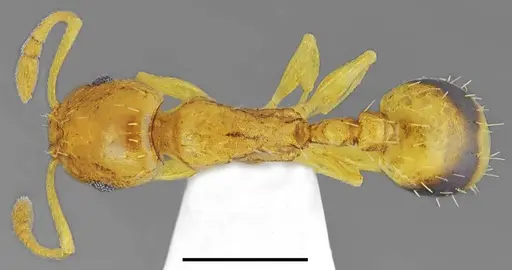
Literatura
Carregando mapa de distribuição...Carregando produtos...