
Slave-raiding Acorn Ant
Temnothorax americanus
- Nome científico
- Temnothorax americanus
- Tribo
- Crematogastrini
- Subfamília
- Myrmicinae
- Autor
- Emery, 1895
- Nome comum
- Slave-raiding Acorn Ant
- Distribuição
- Encontrada em 1 países
Introdução
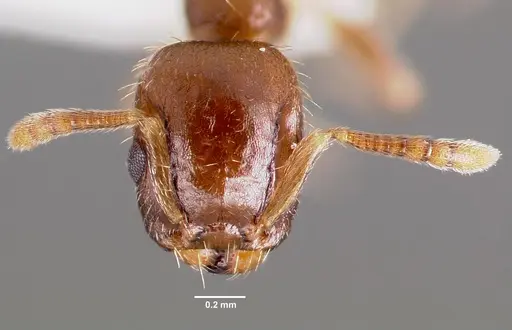
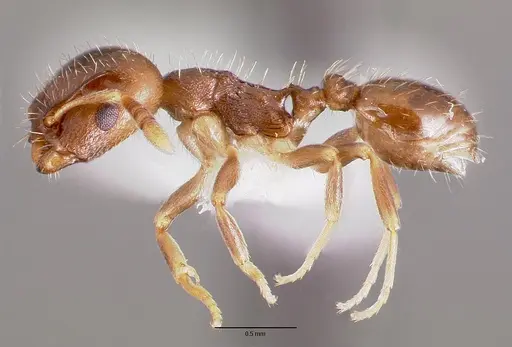
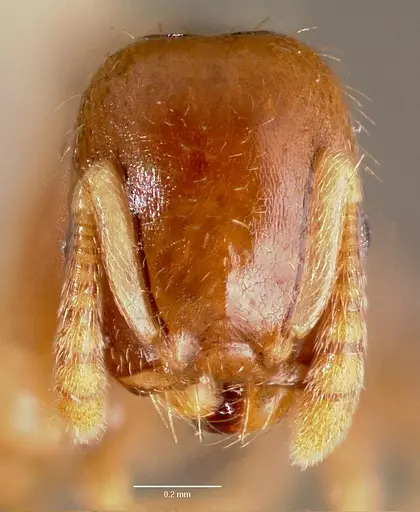
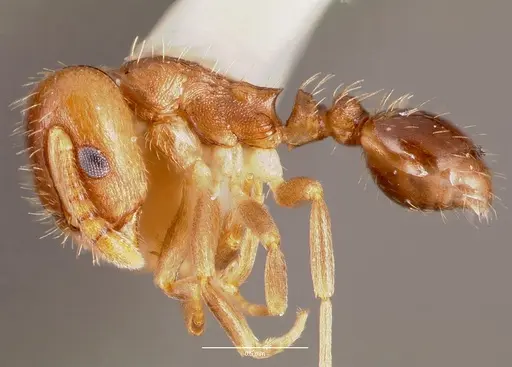
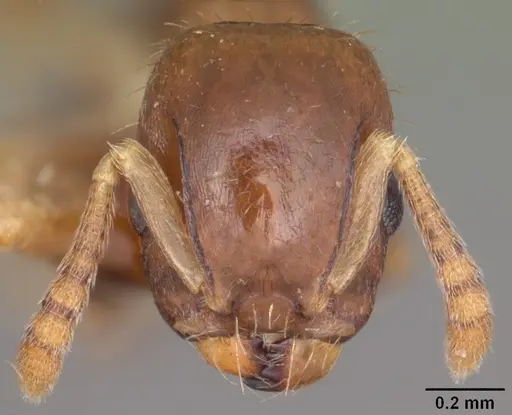
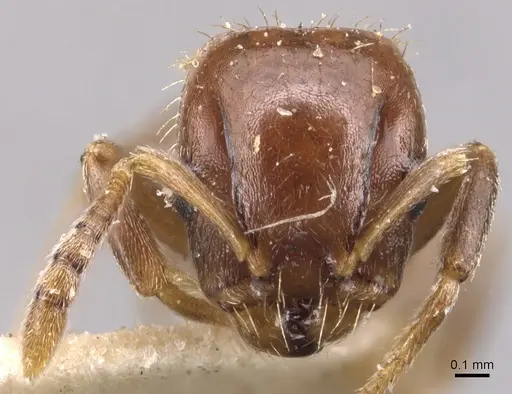
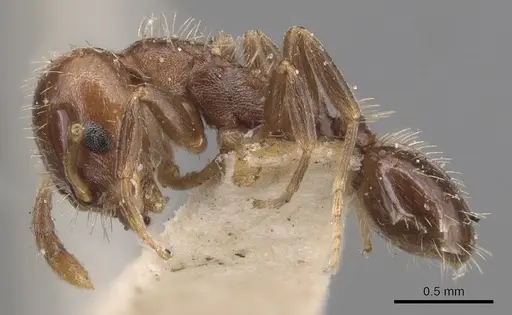
Temnothorax americanus is a small, dark brown slave-making ant native to eastern North America. Workers measure 2.5-2.75mm with a distinctive broad, square head and well-developed antennal scrobes that accommodate their folded antennae . Queens are slightly larger at 2.7-3.5mm and possess wings until after mating . This ant is one of six independent origins of slavery in the Formicoxenini tribe and represents a phylogenetically ancient parasite that split from non-parasitic ancestors approximately 22-12 million years ago . It uses propaganda pheromones from its Dufour's gland to manipulate host defenders during raids , and its cuticular hydrocarbon profiles closely mimic those of its host species to avoid detection . The species is listed as Vulnerable (VU D2) on the IUCN Red List due to its specialized lifestyle and dependence on specific hosts .
Quick Summary
- Difficulty: Expert
- Origin & Habitat: Eastern North America, from Quebec and Ontario south to Georgia and Florida, west to Kansas, Michigan, Illinois, Missouri, and Texas. Found in deciduous forests and semi-open woodlands, nesting in acorns, hickory nuts, sticks and dead roots in leaf litter, and in nests of other Temnothorax species [1][8][6].
- Colony Type: Obligate social parasite, requires host Temnothorax workers to survive. Small colonies typically contain 4-5 slavemaker workers and about 30 enslaved host workers, though larger colonies can reach 50 slavemakers and 300 slaves [5][1]. Colonies are polydomous (multiple connected nests) with only one nest containing the queen [9]. Strictly monogynous (single queen per colony) and monandrous (queen mates with one male) [9][10].
- Size & Growth:
- Queen: 2.7-3.5 mm [2]
- Worker: 2.5-2.75 mm [1]
- Colony: Typically 4-5 slavemaker workers with ~30 slaves, maximum up to 50 slavemakers and 300 slaves [5][1]
- Growth: Slow
- Development: Unknown, likely 6-10 weeks based on related Temnothorax species (No specific development data available for this species. Related temperate Temnothorax species typically take 6-10 weeks from egg to worker at optimal temperatures. The estimate is based on related species.)
- Antkeeping:
- Temperature: Keep at cool room temperatures, roughly 18-22°C, typical of forest floor habitat in temperate forests for habitat].
- Humidity: Moderate humidity. Keep nest substrate slightly moist but not waterlogged, reflecting the leaf litter microhabitat].
- Diapause: Yes, requires a winter rest period of 2-3 months at cooler temperatures (around 5-10°C), consistent with temperate origin].
- Nesting: Tiny cavities, acorns, hickory nuts, sticks, or small artificial nests with narrow chambers scaled to their 2.5mm size. Must be kept with host colony [1][2]
- Behavior: Highly specialized social parasite that cannot survive without host workers. Slavemaker workers do not forage, feed themselves, or care for brood, enslaved host workers perform all these tasks via trophallaxis [11]. Workers form dominance hierarchies, dominant workers become fertile and account for over 70% of male offspring [9][12]. During summer, scouts search for host colonies and conduct raids using propaganda pheromones from their Dufour's gland to panic host defenders [5]. Colonies are small but aggressive during raids, approximately 19% of participating slavemaker workers are killed during attacks [13]. Escape risk is moderate due to small size but colonies remain confined to their nest area.
- Common Issues: requires live host colony, this species cannot survive without enslaved Temnothorax workers to feed and care for it, host rebellion, enslaved workers can kill up to two-thirds of parasite brood, especially in mature colonies, queen establishment failure, less than 7% of queens successfully establish new colonies in the wild, small colony size means any losses are significant and difficult to recover, dominance hierarchies within colonies can lead to conflict and reduced colony cohesion
The Slave-Making Lifestyle
Temnothorax americanus is an OBLIGATE social parasite, it cannot survive without host workers. This is perhaps the most critical point for any keeper: you must maintain both the slavemaker colony AND a healthy host colony simultaneously [11]. Unlike normal ants, slavemaker workers do not forage, feed themselves, or care for brood. They rely entirely on enslaved host workers to feed them through trophallaxis (mouth-to-mouth food sharing) and to care for their brood [11]. If separated from their slaves, slavemaker workers will starve to death even if food is available [11]. The species enslaves three common Temnothorax species: T. longispinosus, T. curvispinosus, and T. ambiguus [3][8]. Queens establish new colonies by invading host nests, killing or driving away the host queen and workers, then appropriating the existing brood. When that brood ecloses, the resulting host workers become the slavemaker's first slaves [1].
Host Colony Requirements
Because this is an obligate parasite, successful keeping requires establishing a host colony FIRST, then introducing the slavemaker. The best hosts are Temnothorax longispinosus, T. curvispinosus, or T. ambiguus, all common and relatively easy to keep [3]. Host colonies should be established in their own nest setup before introducing slavemakers. The slavemaker queen will need to invade and take over the host nest, so housing them in separate connected setups allows for this natural behavior. In the wild, approximately 1 in 15 host colonies of T. curvispinosus is enslaved by T. americanus [1]. Keep in mind that host workers are not passive victims, they can and do fight back. In fact, enslaved workers engage in "host rebellion" and may kill up to two-thirds of the parasite's female brood, particularly queen and worker pupae [14]. This is a natural defense mechanism that helps host colonies survive parasitic invasion.
Feeding and Nutrition
Feeding is straightforward in principle but complex in practice. Slavemaker workers cannot feed themselves, they must be fed by their enslaved hosts [11]. This means you offer food to the HOST workers, who then share it with the slavemakers via trophallaxis. Offer the host colony standard Temnothorax fare: small insects (fruit flies, pinhead crickets, mealworms), sugar water, and honey. The host workers will distribute food throughout the colony including to the slavemakers. Do not expect slavemakers to directly accept food offered to them. One interesting note: slavemaker workers have been observed consuming eggs laid by enslaved workers, this is the first recorded instance of independent feeding behavior in this species [9].
Raiding Behavior and Chemical Warfare
One of the most fascinating aspects of this species is its raiding behavior. During summer months, slavemaker workers leave their colony as scouts searching for nearby host colonies [13]. When a scout finds a suitable host nest (preferentially larger colonies with more workers), she can either attack directly or return to recruit a raiding party via tandem running [13]. During raids, slavemakers use propaganda pheromones from their Dufour's gland to induce panic in host workers, preventing organized defense [5]. They also mimic the cuticular hydrocarbon profiles of their host species to avoid detection, in areas with a single host species they closely match that host's CHC profile, while in areas with multiple hosts they produce an intermediate profile [5]. Despite this chemical warfare, approximately 19% of participating slavemaker workers are killed during raids, and about one-third of all raiding colonies lose at least one worker [13]. After a successful raid, slavemakers carry host eggs, larvae, and pupae back to their own nest. These stolen brood eclose as workers that become enslaved to the slavemaker colony [1].
Colony Organization and Social Structure
Temnothorax americanus colonies have a complex social structure. Colonies are polydomous, meaning they maintain multiple connected nests, but only one nest contains the queen [9]. Within the colony, workers form clear dominance hierarchies through antennal boxing and other behaviors, dominant workers become fertile and produce the majority of male offspring [9]. In fact, workers produce over 70% of all males in a colony, while the queen produces the remaining males and all females [9][12]. This is unusual, in most ant species, only the queen produces males. Higher-ranking workers lay more eggs, have longer ovarioles, and are fed more often by slaves [9]. Interestingly, dominant workers rarely participate in raiding, they stay in the nest and reproduce, while lower-ranking workers do the dangerous scouting and raiding work [13]. Relatedness among nestmates is high (r=0.66) due to monogyny and monandry [9].
Temperature and Seasonal Care
As a temperate species from eastern North America, T. americanus experiences distinct seasons in the wild. Keep colonies at cool room temperature (roughly 18-22°C), this matches their natural forest floor habitat]. During winter, colonies likely require a diapause period of 2-3 months at cooler temperatures around 5-10°C, similar to other temperate Temnothorax species. This winter rest is important for colony health and reproductive behavior. In captivity, you may observe reduced activity during winter months even without formal hibernation setup. The species shows distinct seasonal activity patterns, raiding primarily occurs during summer months, while winter is spent in relative dormancy [13]. Avoid keeping them too warm year-round as this may disrupt their natural cycles.
Legal and Ethical Considerations
This species is listed as Vulnerable (VU D2) on the IUCN Red List due to its specialized parasitic lifestyle and dependence on specific host species [6][7]. In the wild, less than 7% of queens successfully establish new colonies [13], making them naturally rare. Before keeping this species, check local regulations regarding collection and possession of native ant species. In some states, collecting native ants may require permits. Additionally, NEVER release this or any non-native species into the wild, while T. americanus is native to eastern North America, releasing captive colonies could spread disease to wild populations or disrupt local ecological balances. If you can no longer keep your colony, contact a local ant keeper or entomological society to rehome it responsibly.
Frequently Asked Questions
Can I keep Temnothorax americanus without a host colony?
No, absolutely not. This is an OBLIGATE social parasite that cannot survive without host workers. Slavemaker workers cannot feed themselves and will starve even if food is available [11]. You must keep both the slavemaker colony AND a healthy host colony (Temnothorax longispinosus, T. curvispinosus, or T. ambiguus) simultaneously [3]. This makes them one of the most challenging ants to keep.
What do Temnothorax americanus eat?
They don't eat directly, their enslaved hosts eat for them. Offer food to the HOST colony: small insects (fruit flies, pinhead crickets, small mealworms), sugar water, and honey [11]. The host workers will distribute food throughout the colony including to the slavemakers via trophallaxis. Do not expect slavemaker workers to accept food offered directly to them.
How do I establish a slavemaker colony?
First establish a healthy host colony (Temnothorax longispinosus, T. curvispinosus, or T. ambiguus) in its own nest. Then introduce a newly mated slavemaker queen or a small slavemaker colony nearby. In nature, the queen invades the host nest, kills or drives away the host queen and workers, then appropriates the brood [1]. Less than 7% of queens succeed in the wild [13], so be patient and have backup colonies ready.
Are Temnothorax americanus good for beginners?
No, absolutely not recommended for beginners. This is an expert-level species that requires maintaining TWO colonies simultaneously (the slavemaker AND a host colony). The complex dependency, small colony sizes, and the fact that enslaved workers can kill parasite brood make this one of the most challenging ants to keep. Start with easier species like Lasius niger or Temnothorax curvispinosus first.
Do these ants sting?
No. T. americanus does not possess a functional stinger and never uses one during raids. Instead, they rely on propaganda pheromones from their Dufour's gland to confuse and panic host defenders [5][11]. They pose no stinging threat to keepers.
How big do colonies get?
Colonies remain relatively small. A typical colony contains only 4-5 slavemaker workers plus about 30 enslaved host workers [5]. The largest documented colonies reach around 50 slavemaker workers and 300 slaves [1]. This is much smaller than most common ant species and reflects their specialized parasitic lifestyle.
Will enslaved workers rebel?
Yes, this is well-documented. Enslaved workers can kill up to two-thirds of the parasite's female brood, particularly queen and worker pupae [14]. This "host rebellion" is a defensive strategy that helps host colonies reduce the parasite population. Expect some brood loss in established colonies, it's natural and not necessarily a sign of colony failure.
Do I need to hibernate this species?
Yes, likely. As a temperate species from eastern North America, they require a winter rest period. Keep them at cooler temperatures (around 5-10°C) for 2-3 months during winter, similar to other temperate Temnothorax species. This helps maintain natural cycles and supports colony health. The need for diapause is inferred from their temperate forest habitat [1].
Why are my slavemaker workers dying?
Several causes are possible. First, check that your host colony is healthy and functioning, slavemakers depend entirely on host workers for food. Second, host rebellion may be killing brood, this is natural and difficult to prevent. Third, raiding is dangerous, approximately 19% of participating workers die during attacks [13]. Finally, check that you're offering appropriate food to the HOST colony, not directly to slavemakers.
Can I keep multiple slavemaker queens together?
Not recommended. Colonies are strictly monogynous (single queen) [9][10]. Multiple unrelated queens would likely fight, and there's no benefit to keeping more than one queen per colony. Focus on establishing one successful queen with her host colony first.
What host species does Temnothorax americanus use?
It enslaves three common Temnothorax species: Temnothorax longispinosus (preferred), Temnothorax curvispinosus, and Temnothorax ambiguus [3][8]. In the wild, it preferentially attacks larger host colonies [13].
Report an Issue
The current care sheet is based fully on literature. See inconsistencies, or something that's incorrect? Please , it will be resolved after review from an admin. Contributing to the blogs tab also helps providing information, to make us be able to further improve the caresheets. Thank you for your support!
References

Este guia de cuidados está sob a licença CC BY-SA 4.0 .
Posts da comunidade
CASENT0003235
Ver no AntWeb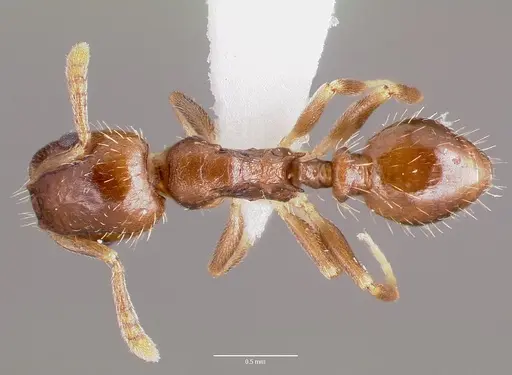
CASENT0006099
Ver no AntWeb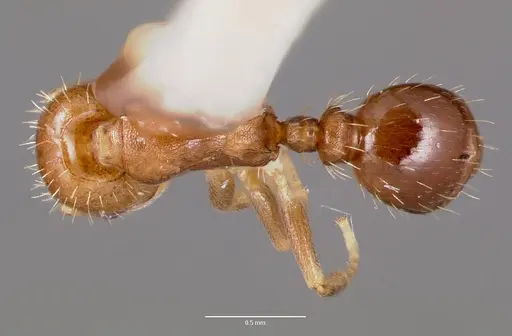
CASENT0104553
Ver no AntWeb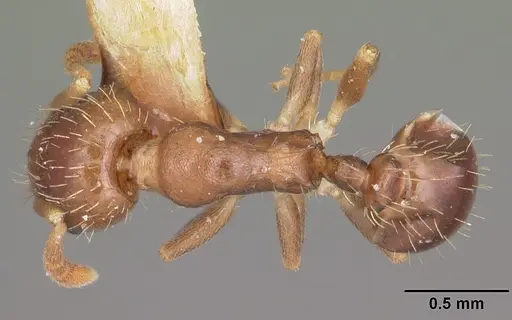
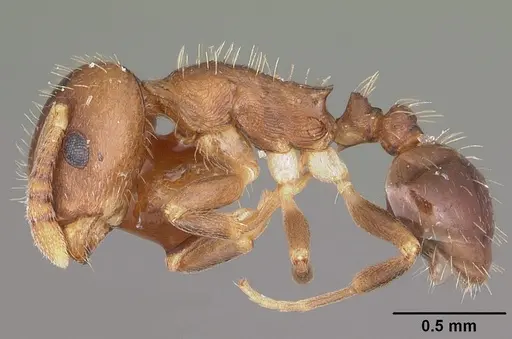
CASENT0105656
Ver no AntWeb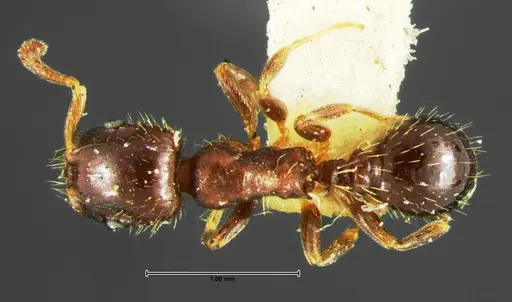
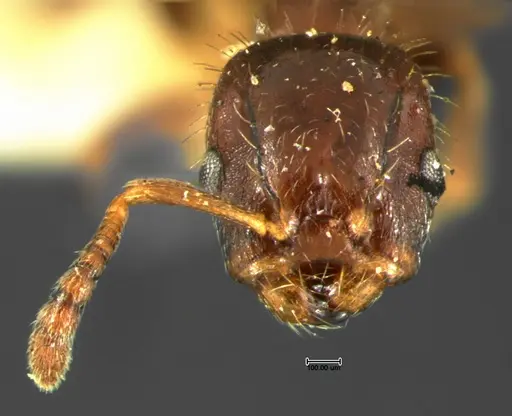
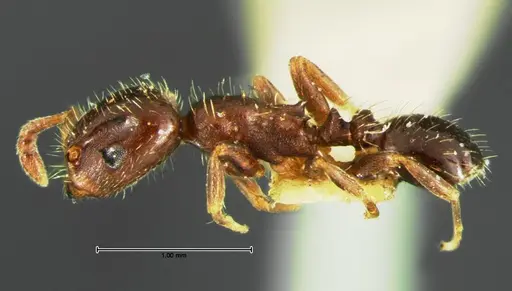
CASENT0904772
Ver no AntWeb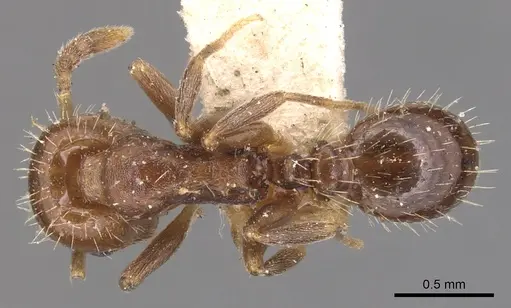
Literatura
Carregando mapa de distribuição...Carregando produtos...