
Tapinolepis mediterranea
- Nome científico
- Tapinolepis mediterranea
- Tribo
- Plagiolepidini
- Subfamília
- Formicinae
- Autor
- Mayr, 1866
- Distribuição
- Encontrada em 0 países
Introdução
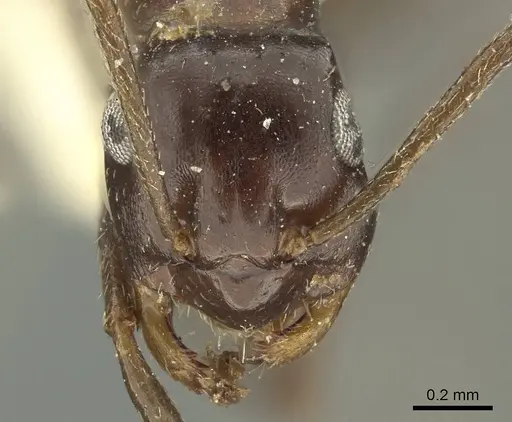
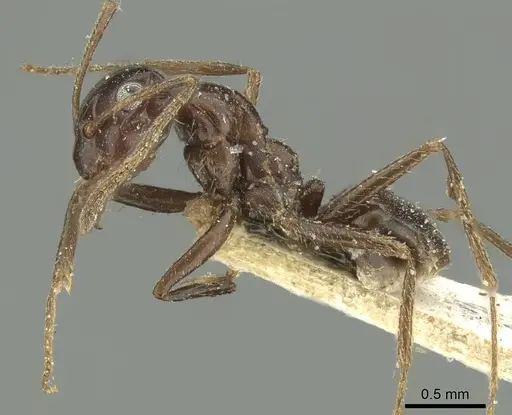
This tiny ant was originally described as Plagiolepis mediterranea and is now classified in Tapinolepis . Workers are 2.7-3mm long, brown and shiny with paler legs and yellowish mandibles . They have delicate leather-like wrinkling visible only under magnification and nearly lack fine body hairs . Like other Formicinae, they defend themselves by spraying formic acid.
Quick Summary
- Difficulty: Medium
- Origin & Habitat: Originally described from Egypt, likely found across North Africa and the Mediterranean region [1]. Based on genus patterns, they likely inhabit dry, warm areas and nest in soil or under stones.
- Colony Type: Colony structure is unconfirmed. No research data available on queen number or colony organization for this species.
- Size & Growth:
- Queen: Unknown, no documented measurements
- Worker: 2.7-3mm [1]
- Colony: Unknown, no colony size data available
- Growth: Unknown
- Development: Unconfirmed, no direct development data available. Based on related small Formicinae, estimate 6-10 weeks at warm temperatures. (Estimate based on genus-level patterns for small tropical/subtropical Formicinae. This is a rough estimate only.)
- Antkeeping:
- Temperature: Based on North African origin, aim for warm conditions around 22-28°C. Provide a temperature gradient so ants can self-regulate.
- Humidity: Likely prefers drier conditions typical of desert/semi-arid ants. Keep nest substrate moderately dry to slightly moist, with drier areas available.
- Diapause: Unknown, no research on overwintering requirements. Given North African origin, may not require true hibernation but might benefit from a cool period (15-18°C) in winter.
- Nesting: Natural nesting habits unconfirmed. Likely nests in soil or under stones in warm, dry areas. In captivity, a small test tube setup or Y-tong (AAC) nest with narrow chambers scaled to their tiny size would work well.
- Behavior: Temperament and detailed behavior unconfirmed. Based on genus patterns, likely not aggressive and may be shy. Their tiny size (2.7-3mm) means escape prevention is critical, they can squeeze through extremely small gaps. Use fine mesh barriers and ensure all openings are sealed.
- Common Issues: tiny size means escapes are likely without fine mesh barriers, these ants are only 2.7-3mm, no colony size data available so growth expectations are uncertain, lack of direct research means care requirements are largely inferred from genus patterns, humidity requirements are unconfirmed, start with moderate dryness and adjust based on colony behavior, founding behavior is unconfirmed so queen care protocols are uncertain
Appearance and Identification
Tapinolepis mediterranea workers are tiny at just 2.7-3mm in length [1]. They have a brown, shiny body with noticeably paler tibiae and tarsi, and ochraceous (yellowish-brown) mandibles [1]. The head, thorax, and abdomen have moderately distributed standing hairs with blunt tips, while the antennae and legs have shorter, more appressed hairs [1]. A key identification feature is the extremely delicate leather-like wrinkling on the body, only visible with strong magnification, combined with nearly complete lack of pubescence, only detectable on the sides of the head with strong magnification [1]. This species was originally described as Tapinolepis mediterranea before being reclassified to Tapinolepis.
Housing and Nest Setup
Given their tiny worker size of 2.7-3mm, these ants require excellent escape prevention [1]. A small test tube setup works well for founding colonies. For established colonies, a Y-tong (AAC) nest with narrow chambers or a small 3D-printed nest scaled to their size is appropriate. The chambers should be tight enough that workers can touch the walls on both sides, large open spaces can stress small ants. Since natural nesting habits are unconfirmed, start with a moderately moist substrate and observe colony preferences. Ensure any water reservoir is appropriately sized for such small ants to prevent flooding.
Temperature and Heating
Based on their North African origin (Egypt), Tapinolepis mediterranea likely prefers warm conditions [1]. Aim for a temperature range of 22-28°C in the nest area. Provide a temperature gradient by placing a heating cable on one side of the nest (on top, not underneath, to prevent excessive drying). This allows ants to move to warmer or cooler areas as needed. Monitor colony activity, if workers cluster consistently near the heat source, increase temperature slightly, if they avoid the heated area, reduce heat. Avoid temperatures above 30°C unless the colony shows clear preference for extreme heat.
Feeding and Diet
Direct feeding observations are unavailable for this species. Based on genus patterns for small Formicinae, they likely accept sugar sources (honey water, sugar water) and small protein sources. Start with a drop of sugar water and observe acceptance. For protein, offer very small items like fruit flies, pinhead crickets, or small mealworm pieces. Feed small amounts initially and remove uneaten food within 24-48 hours to prevent mold. Since they are tiny ants, portion sizes should be correspondingly small.
Humidity Requirements
Given the North African origin, these ants likely prefer drier conditions than typical forest ants [1]. Keep the nest substrate moderately dry to slightly moist, it should feel damp but not waterlogged. Allow some areas to dry out completely so ants can choose their preferred humidity zone. Avoid excessive moisture which can lead to mold problems. A small water reservoir in the test tube setup provides humidity without creating wet conditions. Monitor for condensation, excessive condensation indicates humidity is too high.
Behavior and Temperament
Detailed behavioral observations are not available for this species. As Formicinae ants, they possess formic acid for defense but lack a functional stinger, they would spray acid rather than sting. Their tiny size suggests they may be shy and non-aggressive. Workers are likely to be foragers, searching for sugar and small prey. The primary husbandry concern is their small size (2.7-3mm) making escape prevention critical [1]. Always use fine mesh barriers and check all connections and lid seals thoroughly.
Frequently Asked Questions
How big do Tapinolepis mediterranea workers get?
Workers are tiny at just 2.7-3mm in length [1].
What temperature do Tapinolepis mediterranea ants need?
Based on their North African origin, aim for warm conditions around 22-28°C. Provide a temperature gradient so ants can self-regulate.
Can I keep Tapinolepis mediterranea in a test tube?
Yes, a test tube setup is appropriate for this tiny species. Ensure excellent escape prevention as they can squeeze through very small gaps.
How long does it take for Tapinolepis mediterranea to develop from egg to worker?
Development time is unconfirmed. Based on related small Formicinae, estimate 6-10 weeks at warm temperatures (24-28°C).
What do Tapinolepis mediterranea eat?
Direct observations are unavailable. Likely accept sugar sources (honey water, sugar water) and small protein items like fruit flies or small mealworm pieces.
Do Tapinolepis mediterranea need hibernation?
Diapause requirements are unknown. Given their North African origin, they likely do not require true hibernation but may benefit from a cool period (15-18°C) in winter.
Are Tapinolepis mediterranea good for beginners?
Difficulty is rated as Medium. The main challenge is their tiny size requiring excellent escape prevention. Limited research data means care is partly based on inference from genus patterns.
How big do Tapinolepis mediterranea colonies get?
Colony size is unknown, no research data is available on maximum colony size for this species.
Why are my Tapinolepis mediterranea escaping?
These ants are extremely small (2.7-3mm) and can squeeze through tiny gaps [1]. Use fine mesh barriers and check all seals thoroughly. Even standard ant keeping equipment may have gaps too large for them.
Report an Issue
The current care sheet is based fully on literature. See inconsistencies, or something that's incorrect? Please , it will be resolved after review from an admin. Contributing to the blogs tab also helps providing information, to make us be able to further improve the caresheets. Thank you for your support!
References

Este guia de cuidados está sob a licença CC BY-SA 4.0 .
Posts da comunidade
CASENT0915743
Ver no AntWeb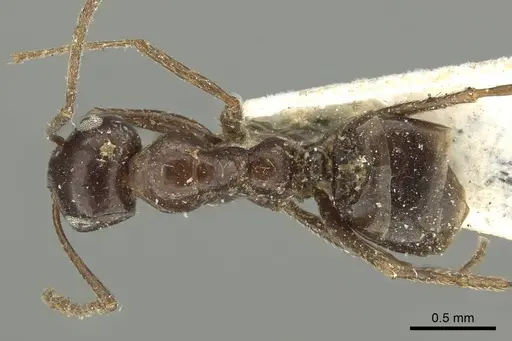
Literatura
Carregando mapa de distribuição...Carregando produtos...