
Strumigenys urrhobia
- Nome científico
- Strumigenys urrhobia
- Tribo
- Attini
- Subfamília
- Myrmicinae
- Autor
- Bolton, 2000
- Distribuição
- Encontrada em 2 países
Introdução
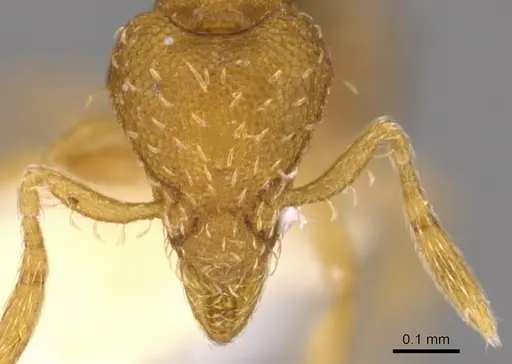
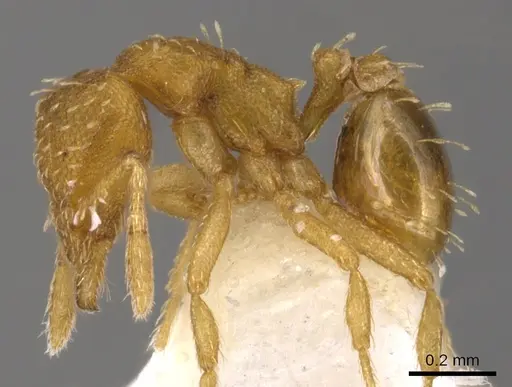
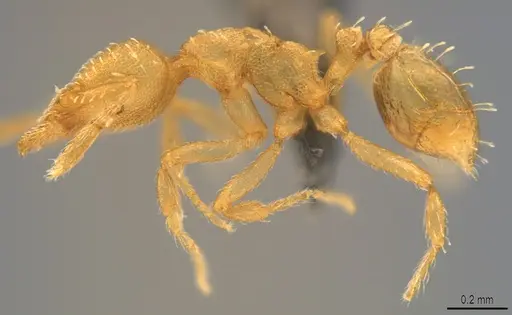
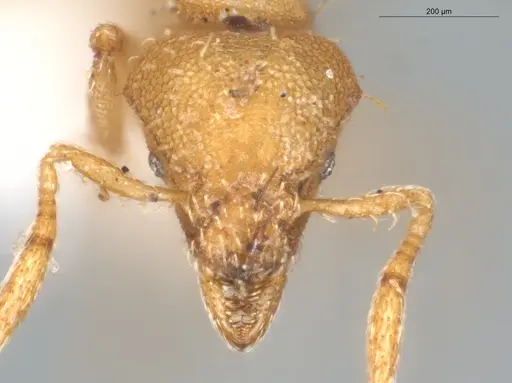
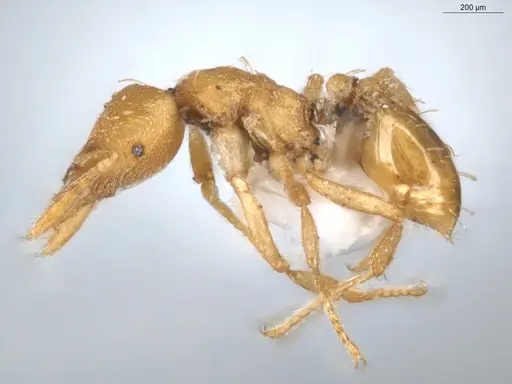
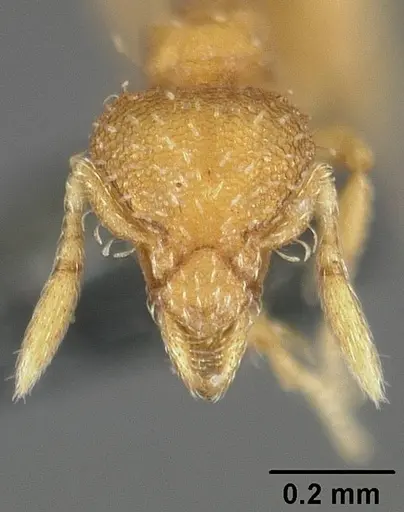
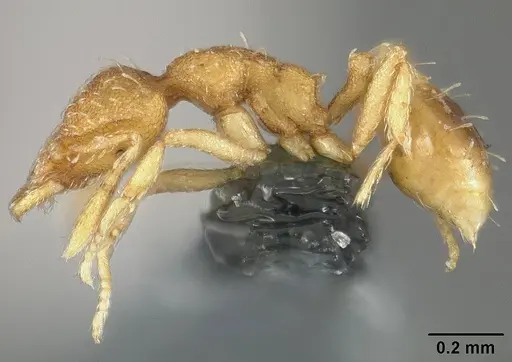
Strumigenys urrhobia is a minute predatory ant belonging to the schulzi species group within the dacetine tribe (Attini). Workers measure just 1.7–1.8 mm total length, making them one of the smallest ants you can keep . They are trap-jaw ants – their short, robust mandibles snap shut rapidly to capture prey. The species is distinguished by erect hairs on the vertex and pronotal humeri, and a dental pattern with three stout basal teeth and a broad plate-like fourth tooth that stays visible even when the mandibles are closed . These ants inhabit leaf-litter environments across the Neotropical region, including Brazil, Colombia, Ecuador, French Guiana, Trinidad, and Guyana . They have been recorded in secondary forests and tropical forest fragments. Unfortunately, almost nothing is known about their specific biology – founding behavior, colony size, queen type, and development timeline have not been documented. What we know comes from related Strumigenys species: they are specialized predators of tiny arthropods like springtails and mites, using their trap-jaw mandibles to capture prey.
Quick Summary
- Difficulty: Hard
- Origin & Habitat: Neotropical region – Brazil, Colombia, Ecuador, French Guiana, Trinidad, and Guyana. Found in leaf-litter environments of secondary forests and tropical forest fragments [2][5].
- Colony Type: Unknown colony structure. No data on queen number or colony size exists for this species. Based on related Strumigenys, colonies are likely small with fewer than 100 workers.
- Size & Growth:
- Queen: Undescribed – no queen specimens have been documented in scientific literature
- Worker: 1.7–1.8 mm [1]
- Colony: Unknown – no colony data exists. Related species typically have fewer than 100 workers
- Growth: Unknown – likely slow based on small colony sizes typical of the genus
- Development: Unconfirmed – no direct observations exist. Based on similar tiny Myrmicinae, estimate 6–10 weeks at optimal temperature (Development timeline is entirely unstudied for this species. Estimates based on genus-level patterns.)
- Antkeeping:
- Temperature: Aim for 22–26°C – these are tropical forest floor ants that need warmth. Avoid temperatures below 20°C or above 30°C.
- Humidity: High humidity is essential – think damp forest floor. Keep the nest substrate consistently moist but not waterlogged. Provide a humidity gradient so ants can choose their preferred zone.
- Diapause: Unknown – no data on overwintering requirements. Given their tropical distribution, they likely do not require a true diapause but may slow activity in cooler conditions.
- Nesting: Natural nesting occurs in leaf litter and rotting wood. In captivity, a small test tube setup or tiny Y-tong/soil nest works well. The key is maintaining high humidity while allowing some ventilation to prevent mold.
- Behavior: These are tiny, secretive ants that spend most of their time hunting small prey in the leaf litter. They are not aggressive and pose no threat to keepers. They possess a functional sting (typical of Myrmicinae) but it is too small to penetrate human skin effectively. Their tiny size (under 2 mm) makes them excellent escape artists – they can squeeze through the smallest gaps. They are obligate predators, using their trap-jaw mandibles to capture tiny live arthropods.
- Common Issues: escape prevention is critical – they are tiny enough to squeeze through standard barrier setups, no biological data exists – keepers are essentially pioneering captive care, high humidity requirements can lead to mold problems if ventilation is poor, they require live tiny prey – feeding can be challenging, slow growth and small colony sizes mean colonies are fragile
Housing and Escape Prevention
Strumigenys urrhobia workers are only 1.7–1.8 mm long – smaller than a grain of rice [1]. This tiny size makes them exceptional escape artists. You must use excellent escape prevention: tight-fitting lids, fine mesh barriers, and reliable barrier gels or fluon on any exposed edges. Standard ant-keeping setups often have gaps these ants can slip through. A small test tube setup works well for founding colonies, but ensure the cotton plug is packed tightly. If using a formicarium, check all seams and connections carefully. The smaller the colony, the more critical this becomes – a single lost queen means the colony is gone. Consider keeping the entire setup inside a larger enclosed container as a secondary barrier.
Feeding and Diet
Strumigenys are specialized predators with trap-jaw mandibles designed to capture tiny arthropods. Based on what we know about related species, S. urrhobia likely hunts springtails, minute soil mites, and other tiny invertebrates found in leaf litter [6]. They are unlikely to accept sugar water or honey – these ants are obligate predators. In captivity, offer live prey: springtails are ideal. Other options include tiny fruit fly larvae or newly hatched pinhead crickets (cut smaller). Feed small amounts several times per week, removing any uneaten prey after 24–48 hours to prevent mold. Do not expect them to scavenge on protein jelly or prepared foods – they need moving prey to trigger their hunting instincts.
Temperature and Humidity
As tropical forest-floor ants from the Neotropics, Strumigenys urrhobia needs warm, humid conditions. Aim for temperatures in the 22–26°C range – stable warmth helps with brood development. Avoid temperatures below 20°C or above 30°C. For heating, use a heating cable on one side of the nest to create a gentle gradient, or keep the colony in a warm room. Humidity is critical: these ants come from damp leaf-litter environments where moisture is constant. Keep the nest substrate consistently moist but not waterlogged – it should feel damp to the touch. However, provide some ventilation to prevent mold. A humidity gradient allows ants to self-regulate: keep one area moister than another. [2][5]
Understanding the Knowledge Gap
Honesty requires noting that almost nothing is documented about Strumigenys urrhobia biology. The AntWiki explicitly states 'Nothing is known about the biology of this species.' This means you are essentially pioneering captive husbandry for this ant. There is no data on: founding behavior, colony size limits, development time from egg to worker, queen size or morphology, nuptial flight timing, or any aspect of their natural history [1]. You will need to learn by observing your colony and adapting based on what works. This is part of what makes keeping lesser-studied species challenging – you are contributing to our knowledge of these ants.
Frequently Asked Questions
How long does it take for Strumigenys urrhobia to produce first workers?
The egg-to-worker timeline is unconfirmed for this species – no scientific observations exist. Based on typical patterns for small Myrmicinae, a rough estimate is 6–10 weeks at optimal temperature (22–26°C). However, this is purely an educated guess and your colony may develop differently.
What do Strumigenys urrhobia ants eat?
Based on related Strumigenys species, they are specialized predators that eat tiny live prey. Offer springtails as a primary food source. They may also accept tiny mites, fruit fly larvae, and other micro-arthropods. They are unlikely to accept sugar water, honey, or dead protein. They need moving prey to trigger their trap-jaw hunting response [6].
Can I keep Strumigenys urrhobia in a test tube?
Yes, a test tube setup works well for small Strumigenys colonies. Use a small test tube with a water reservoir, packed cotton to prevent escapes, and keep it in a humid enclosure. The tiny size of these ants (1.7–1.8 mm) means you must pack the cotton very tightly. Add a small piece of damp leaf litter inside for enrichment if desired.
How big do Strumigenys urrhobia colonies get?
Colony size is unknown – no colony data exists for this species. Based on related Strumigenys species, colonies likely remain small, probably under 100 workers. These are cryptic leaf-litter ants that do not form large colonies like some Myrmicinae.
Do Strumigenys urrhobia ants need hibernation or diapause?
Diapause requirements are unknown. Given their tropical distribution across the Neotropics [1], they likely do not require a true hibernation period. However, they may slow activity in cooler conditions. Do not attempt to force hibernation without evidence – simply keep them at stable warm temperatures (22–26°C) year-round.
Why are my Strumigenys urrhobia escaping?
These ants are extremely small (under 2 mm) and can squeeze through the tiniest gaps. Standard ant-keeping setups often have gaps these ants can slip through. You need excellent escape prevention: tight-fitting lids, fine mesh, and barrier gels or fluon on all edges. Check all seams and connections. Consider keeping the entire setup inside a larger enclosed container as a secondary barrier [1].
Can I keep multiple Strumigenys urrhobia queens together?
This has not been studied. No data exists on colony founding or queen behavior for this species. Combining unrelated queens is not recommended since we do not know their social structure. Start with a single queen if you obtain one [1].
Are Strumigenys urrhobia good for beginners?
No – this species is not recommended for beginners. Almost nothing is known about their biology, they require high humidity and excellent escape prevention, they need live prey (more challenging than sugar water), and colonies remain tiny and fragile. Start with a better-documented species like Lasius niger or Temnothorax before attempting this challenging ant [1].
What temperature should I keep Strumigenys urrhobia at?
Keep them at 22–26°C – warm but not hot. This range mimics their tropical forest floor habitat. Use a heating cable on one side of the nest to create a gentle gradient if your room temperature is below 22°C. Avoid temperatures below 20°C or above 30°C.
Report an Issue
The current care sheet is based fully on literature. See inconsistencies, or something that's incorrect? Please , it will be resolved after review from an admin. Contributing to the blogs tab also helps providing information, to make us be able to further improve the caresheets. Thank you for your support!
References

Este guia de cuidados está sob a licença CC BY-SA 4.0 .
Posts da comunidade
CASENT0900219
Ver no AntWeb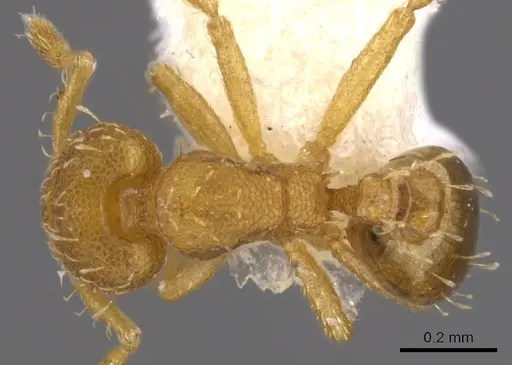
CASENT4036186
Ver no AntWeb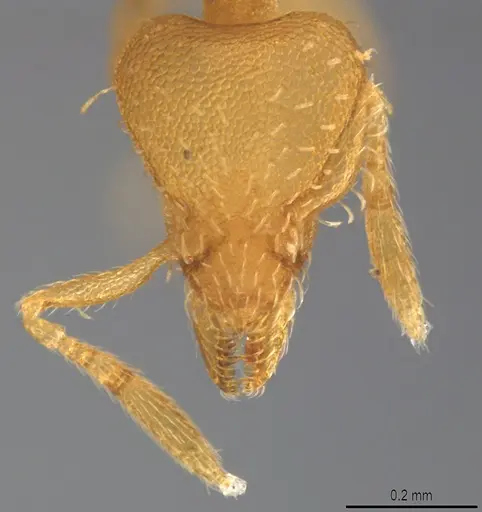
ECOFOG-CGR20-0040-05
Ver no AntWeb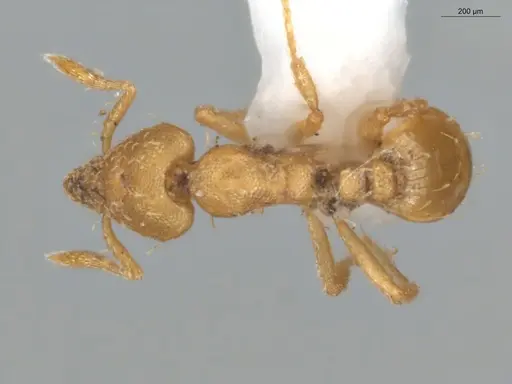
USNMENT01124316
Ver no AntWeb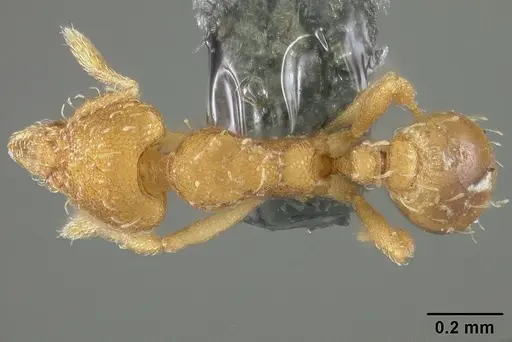
Literatura
Carregando mapa de distribuição...Carregando produtos...