
Strumigenys uberyx
- Nome científico
- Strumigenys uberyx
- Tribo
- Attini
- Subfamília
- Myrmicinae
- Autor
- Bolton, 2000
- Distribuição
- Encontrada em 0 países
Introdução
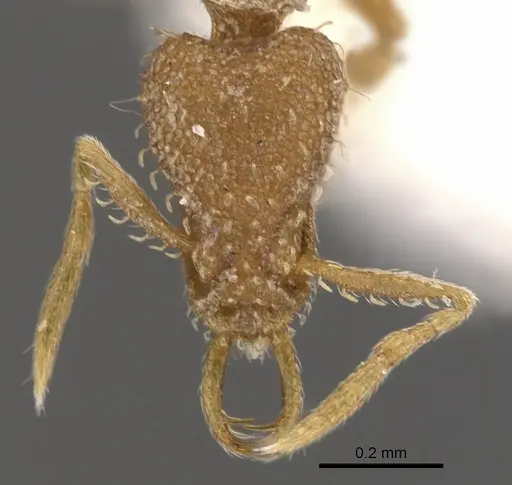
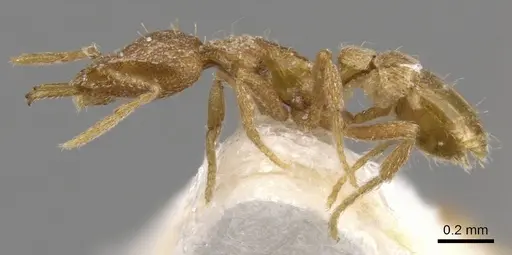
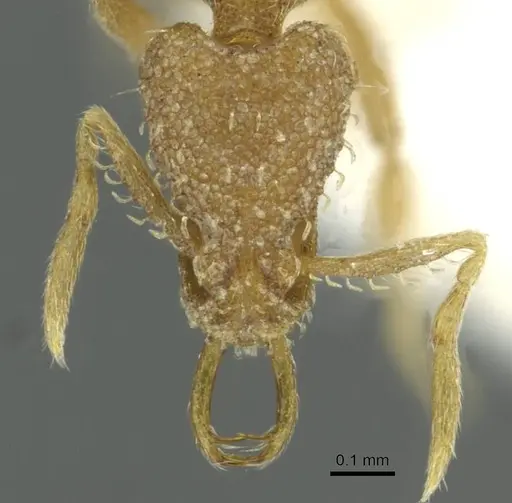
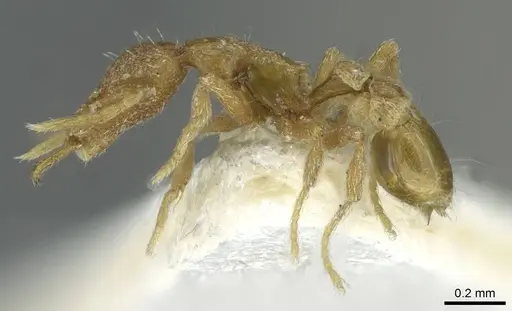
Strumigenys uberyx is an exceptionally tiny ant species, with workers measuring just 1.8-1.9mm . Known only from two worker specimens collected in Bhutan, it belongs to the dacetine group within tribe Attini and is part of the godeffroyi-complex. Workers have minute eyes (only 3-4 ommatidia), spoon-shaped hairs along the upper margin of the antennal groove, and a narrow propodeal lamella. Their pronotum is smooth and shiny . This species is a true Bhutan endemic, recorded only from Samchi in the Indomalaya region .
Quick Summary
- Difficulty: Unknown, extremely rare in cultivation with no documented care history
- Origin & Habitat: Known only from Samchi, Bhutan in the Indomalaya region [1][2]. The specific habitat is unconfirmed, but related Strumigenys species typically inhabit moist forest floors and leaf litter layers.
- Colony Type: Unconfirmed, only two workers have ever been collected, with no colony samples or queen specimens documented.
- Size & Growth:
- Queen: Unconfirmed, no queens have been described in scientific literature
- Worker: 1.8-1.9mm [1]
- Colony: Unknown, colony size has never been documented
- Growth: Unknown
- Development: Unconfirmed, no developmental data exists for this species (Based on typical Strumigenys patterns, development likely takes several months, but this is a rough estimate rather than confirmed data)
- Antkeeping:
- Temperature: Unconfirmed, no thermal studies exist. Start around 20-24°C and observe colony activity.
- Humidity: Unconfirmed, no humidity data exists. Based on typical Strumigenys habitat preferences, keep the substrate consistently moist but not waterlogged.
- Diapause: Unknown, no seasonal data exists for this species. Bhutan has cool winters in higher elevations, so some dormancy period may be expected.
- Nesting: Unconfirmed, no natural nesting observations exist. Related Strumigenys species nest in soil, leaf litter, or rotting wood. A naturalistic setup with moist substrate would be appropriate.
- Behavior: Undocumented, no behavioral observations exist for this species. The genus Strumigenys is known for specialized trap-jaw mandibles used for preying on springtails (tiny soil arthropods). Workers are likely cryptic and slow-moving, foraging in leaf litter. Escape prevention is critical due to their extremely small size, they can easily pass through standard mesh barriers.
- Common Issues: no documented care history exists, this species may not be kept in captivity at all, extreme small size means standard escape prevention will likely fail without fine mesh, no information on accepted foods, related species are specialized springtail predators, unknown if this species can be kept in groups or requires solitary founding, no data on queen longevity or colony sustainability in captivity
Species Overview and Identification
Strumigenys uberyx is one of the smallest ant species, with workers measuring 1.8-1.9mm [1]. Described by Bolton in 2000 from two worker specimens collected in Samchi, Bhutan [1]. It belongs to the dacetine group within tribe Attini and is part of the godeffroyi-complex. Key identification features include minute eyes (only 3-4 ommatidia), spoon-shaped hairs along the upper margin of the antennal groove, and a smooth, shiny pronotum. The propodeal lamella (a narrow plate on the rear of the thorax) is narrower than in related species [1].
Distribution and Endemism
This species is a true Bhutan endemic, known only from Samchi in southeastern Bhutan [1][2]. It has been recorded in AntMaps, AntWeb, and AntWiki databases [2]. The specific microhabitat is unknown, but the area lies in lowland foothills where moist subtropical forest would be expected.
Known Biology and Knowledge Gaps
Absolutely no biological information exists for Strumigenys uberyx. Only two worker specimens have ever been collected, and no queens, males, or colony samples have been documented. We have no data on nesting, diet, reproduction, or colony size. Based on the genus Strumigenys, they are likely specialized predators of springtails and other tiny soil arthropods, using trap-jaw mandibles, but this is not confirmed for this species.
Inferred Care Requirements
Given the complete lack of data, any care advice is speculative. Start with moderate temperatures around 20-24°C and keep the substrate consistently moist but not waterlogged. Their small size demands excellent escape prevention, standard test tube setups may need extra barriers. Diet would likely consist of live micro-prey like springtails. A naturalistic setup with leaf litter and hiding places is recommended. All these are estimates from related species.
Challenges for Antkeepers
Strumigenys uberyx is virtually impossible to keep in captivity. No colonies are known in the hobby. Their minute size makes housing and observation difficult, and specialized diet (likely springtails) is hard to sustain. With no data on queen longevity or colony founding, even experienced keepers would struggle. This species is not recommended for any level of antkeeping.
Frequently Asked Questions
Can I keep Strumigenys uberyx as a pet ant?
This species is not available in the antkeeping hobby and has never been documented in captivity. Only two worker specimens have ever been collected, back in the 1970s in Bhutan. There is no established care protocol for this species.
How big do Strumigenys uberyx colonies get?
Unknown, colony size has never been documented. Only two individual workers have ever been collected. Related Strumigenys species typically have colonies of several dozen to a few hundred workers, but this may not apply to S. uberyx.
What do Strumigenys uberyx ants eat?
Unconfirmed, no feeding observations exist. The genus Strumigenys are specialized predators of springtails and other micro-arthropods, using their trap-jaw mandibles. It is likely that S. uberyx has similar preferences, but this is inferred.
What temperature and humidity do Strumigenys uberyx need?
No specific data exists. Start with moderate temperatures around 20-24°C and keep the substrate consistently moist but not waterlogged. These are estimates rather than confirmed requirements.
How long does it take for Strumigenys uberyx to develop from egg to worker?
Unknown, no developmental data exists. Based on typical Strumigenys patterns, it likely takes several months, but this is a rough estimate.
Is Strumigenys uberyx a good species for beginners?
No, this species is completely unsuitable for any antkeeper. No care information exists, specimens are not available, and their extreme small size would present enormous husbandry challenges.
Where does Strumigenys uberyx live in the wild?
Only known from Samchi in southeastern Bhutan [1][2]. The specific habitat is unconfirmed, but related Strumigenys species typically inhabit moist forest floors and leaf litter layers.
Can I find Strumigenys uberyx in the wild?
Extremely unlikely. Only two specimens have ever been collected, back in the 1970s, and the species has never been documented since. Even professional researchers would struggle to locate it.
Do Strumigenys uberyx queens have wings?
Unknown, no queen specimens have ever been described. The genus Strumigenys typically has winged queens that disperse for mating flights, but this is unconfirmed for S. uberyx.
Report an Issue
The current care sheet is based fully on literature. See inconsistencies, or something that's incorrect? Please , it will be resolved after review from an admin. Contributing to the blogs tab also helps providing information, to make us be able to further improve the caresheets. Thank you for your support!
References

Este guia de cuidados está sob a licença CC BY-SA 4.0 .
Posts da comunidade
CASENT0900813
Ver no AntWeb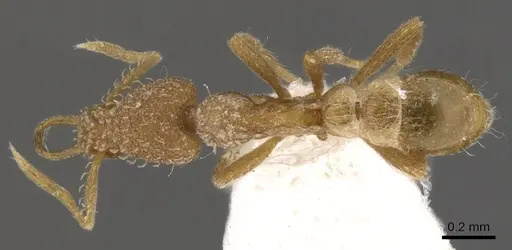
CASENT0912866
Ver no AntWeb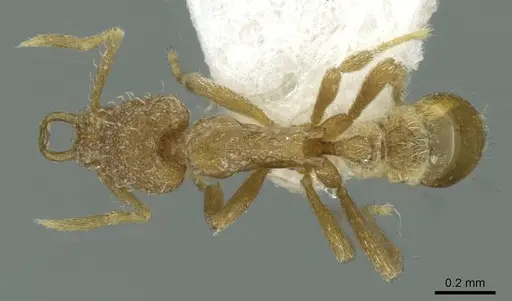
Literatura
Carregando mapa de distribuição...Carregando produtos...