
Strumigenys tisiphone
- Nome científico
- Strumigenys tisiphone
- Tribo
- Attini
- Subfamília
- Myrmicinae
- Autor
- Bolton, 2000
- Distribuição
- Encontrada em 0 países
Introdução
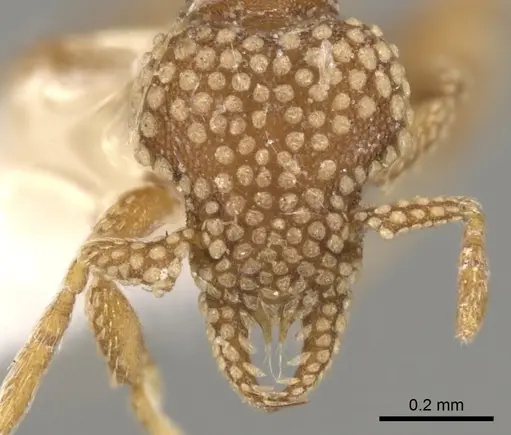
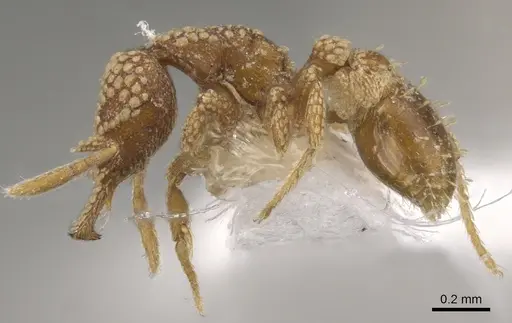
Strumigenys tisiphone is a tiny predatory ant measuring 2.0-2.4 mm in total length . This species belongs to the Strumigenys argiola group and is distinguished by its elongate, spiniform apical tooth on the mandible and a single minute preapical tooth located right next to it . The head dorsum is covered with very conspicuous pale orbicular hairs, and the mesonotum meets the propodeum at the metanotal groove without overhanging it . This ant is a rare resident of Hong Kong, known only from secondary forest habitats across an elevation range of 141-816 m . Its distribution includes Hong Kong, Guangdong, Hubei, and Hunan in southeastern China, with the Hong Kong record being the southernmost known occurrence . As a specialized predator, it hunts small micro-arthropods like springtails using its trap‑jaw mandibles.
Quick Summary
- Difficulty: Expert
- Origin & Habitat: Southeastern China (Hong Kong, Guangdong, Hubei, Hunan), secondary forests at elevations of 141-816 m [1]
- Colony Type: Unknown, no published data on social structure. Likely single‑queen (monogyne) based on patterns in related Strumigenys species, but this remains unconfirmed.
- Size & Growth:
- Queen: Not documented for this species
- Worker: 2.0-2.4 mm total length [1][2]
- Colony: Unknown, likely small (fewer than 100 workers) based on related species
- Growth: Unknown, likely slow
- Development: Unknown, no species‑specific data available. Related Strumigenys species take 6-10 weeks under warm conditions, but this is only a rough estimate. (Development time is unconfirmed, estimates are based on genus‑level patterns for small Myrmicinae.)
- Antkeeping:
- Temperature: Unknown for this species, start around 22-26 °C and adjust based on colony activity. Avoid sudden fluctuations.
- Humidity: Keep the nest substrate consistently moist but not waterlogged. Mimic the humid conditions of subtropical forest floor [1].
- Diapause: Unknown, the species comes from a subtropical region with mild winters, so a strong diapause is unlikely. A slight winter cool‑down (15-18 °C) may be beneficial but is not required.
- Nesting: Likely nests in soil or leaf litter within secondary forests [1]. In captivity, use tight chambers in Y‑tong or plaster nests with a constant water source to maintain moisture.
- Behavior: Very small, shy ants that move slowly. They are not aggressive and rely on stealth and specialized mandibles to capture springtails and other tiny arthropods. Escape is a constant risk due to their minute size, standard barriers often fail. They spend most of their time foraging in leaf litter or soil.
- Common Issues: escape is critical due to 2 mm size, these ants can squeeze through standard test‑tube cotton and tiny gaps, specialized diet requires live springtails, they rarely accept dead prey or sugars, high humidity needs create mold risk if the setup is not well ventilated, slow colony growth can tempt keepers to overfeed or disturb the nest too often, wild‑caught colonies may carry parasites that lead to collapse in captivity
Housing and Nest Setup
Because Strumigenys tisiphone workers are only 2 mm long, you must use a nest with very tight‑fitting chambers. Y‑tong (AAC) or plaster nests work well, they hold moisture and can be carved into small, connected chambers. A standard test tube can be used during founding, but cover the cotton plug with fine mesh and apply fluon or petroleum jelly to the rim: these ants will squeeze through tiny gaps. Connect a water reservoir to the nest to keep the substrate moist without flooding. The outworld should be simple, with a thin layer of plaster or soil and low decorations so you can easily spot the tiny workers. Use the finest‑gauge mesh on ventilation holes, even ordinary insect mesh may let them escape.
Feeding and Diet
This ant is a specialized predator that needs live prey. In captivity, springtails (Collembola) are the most reliable food, they are the natural prey of many Strumigenys. You can also offer very small soil mites or tiny isopods. The ants will ignore dead insects, honey, or sugar water. Feed a small amount of live springtails every two to three days, and remove any uneaten prey after a day to prevent mold. Watch the colony during feeding, successful hunts mean the workers are using their trap‑jaw mandibles to capture prey.
Temperature and Humidity
Exact temperature needs are unconfirmed, but the species lives in subtropical forests [1] so a warm, humid environment is likely best. Start at 24-26 °C and watch the workers, if they move slowly, increase by a degree or two, if they cluster away from the heated area, reduce it. Keep humidity high: the nest substrate should feel damp but not dripping. A built‑in water reservoir in the nest is the cleanest way to maintain moisture. Avoid draughts and direct sunlight. Consistency matters more than hitting exact numbers.
Colony Founding
Founding has not been observed in Strumigenys tisiphone, but based on related species the queen likely seals herself in a small chamber (claustral founding) and survives on her fat reserves until the first workers emerge. These first workers (nanitics) will be tiny, and development probably takes several months. During founding, keep the queen in a dark, quiet place. Do not offer food, she will not eat until workers appear. The founding stage is fragile, so disturb the setup as little as possible.
Behavior and Temperament
Strumigenys tisiphone is shy and non‑aggressive. Workers walk slowly and rely on ambush rather than pursuit when hunting springtails. If threatened, they flee rather than sting or bite. Their small size makes them vulnerable to stress, even regular vibrations can set the colony back. Mature colonies likely stay small (fewer than 100 workers) and are often hidden under the substrate or inside chambers. You will rarely see them unless they are foraging. Their sting is functional but harmless to humans.
Frequently Asked Questions
How long does it take for Strumigenys tisiphone to produce first workers?
Development time has not been recorded for this species. Based on related Strumigenys, expect roughly 6-10 weeks from egg to worker under warm, humid conditions, but this is an estimate. Patience is essential, do not disturb the founding queen.
What do Strumigenys tisiphone ants eat?
They need live small prey. Live springtails are the best option. They will also take tiny soil mites and very small isopods. They do not eat dead insects, honey, or other sugars.
Can I keep Strumigenys tisiphone in a test tube?
Yes, a test tube works for founding and small colonies, but escape prevention is critical. Use fine mesh over the cotton plug and apply fluon or petroleum jelly around the rim. Even a tiny gap can let these 2 mm ants out.
Are Strumigenys tisiphone good for beginners?
No, this is an expert‑level species. The tiny size, need for live springtails, high humidity requirements, and slow growth make them unsuitable for beginners.
How big do Strumigenys tisiphone colonies get?
Colony size has not been documented, but based on related Strumigenys species, it is likely small, probably under 100 workers at maturity.
Do Strumigenys tisiphone need hibernation?
Diapause requirements are unknown. The species lives in subtropical China, where winters are mild. A cool rest period (15-18 °C) for a couple of winter months may be helpful but is not proven necessary. Avoid temperatures below 15 °C.
Why are my Strumigenys tisiphone dying?
Common causes: escape through tiny gaps, stress from disturbance, mold from over‑moistening or leftover prey, temperature extremes, and, most often, lack of live springtail prey. These ants are very sensitive and need pristine, stable conditions.
When should I move Strumigenys tisiphone to a formicarium?
Wait until the colony has at least 20-30 workers before moving. Moving a smaller colony often causes stress and brood abandonment. Make sure the new nest maintains the high humidity they need.
Can I keep multiple Strumigenys tisiphone queens together?
This has not been studied in this species. Most Strumigenys are monogyne, so single‑queen colonies are the norm. Do not try to combine unrelated queens, they will likely fight.
Report an Issue
The current care sheet is based fully on literature. See inconsistencies, or something that's incorrect? Please , it will be resolved after review from an admin. Contributing to the blogs tab also helps providing information, to make us be able to further improve the caresheets. Thank you for your support!
References

Este guia de cuidados está sob a licença CC BY-SA 4.0 .
Posts da comunidade
CASENT0900154
Ver no AntWeb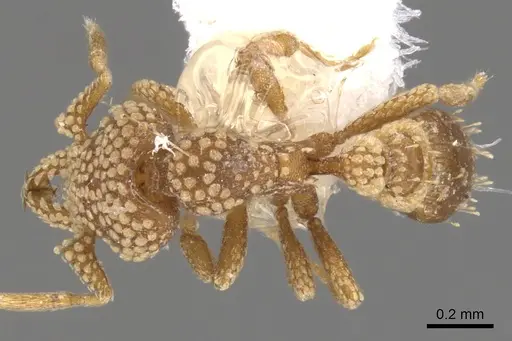
Literatura
Carregando mapa de distribuição...Carregando produtos...