
Strumigenys tetra
- Nome científico
- Strumigenys tetra
- Tribo
- Attini
- Subfamília
- Myrmicinae
- Autor
- Bolton, 2000
- Distribuição
- Encontrada em 0 países
Introdução
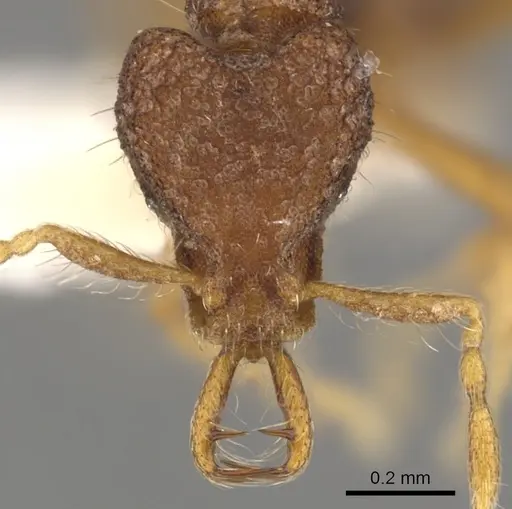
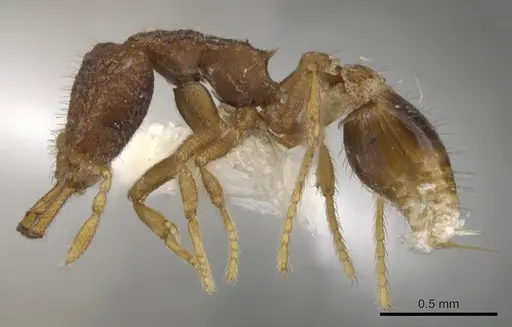
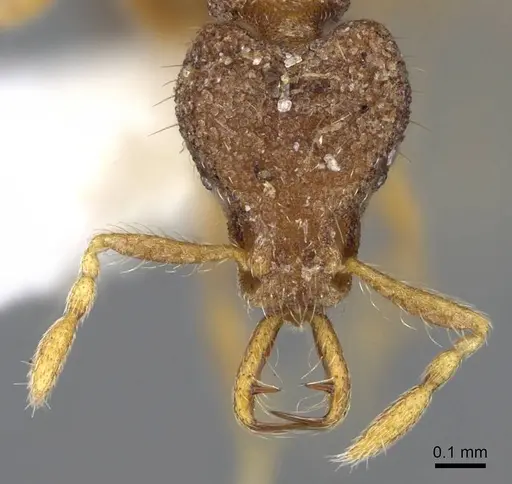
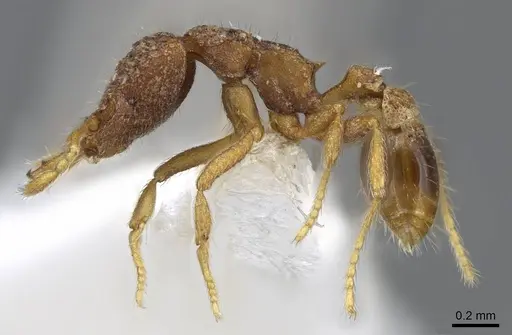
Strumigenys tetra is a tiny ant, with workers measuring just 2.4-2.5 mm in total length . They are the most densely hairy and coarsely sculptured member of the Strumigenys eurycera group. Their most distinctive feature is the row of 8-10 short stiff hairs that stick out sideways from the sides of the head . They lack the massive lobe on the scape (first antennal segment) that similar species have, and their mandibles have only a carina instead of a lamella . This species is known from a few sites in Papua New Guinea, the Democratic Republic of Congo, and Gabon, all from rainforest leaf litter and rotting wood at low to mid elevations . Because so few specimens have ever been collected, just a handful of workers, we know almost nothing about their colony life, queen, or behavior.
Quick Summary
- Difficulty: Expert
- Origin & Habitat: Rainforest leaf litter and rotting wood in lowland to mid-elevation areas of New Guinea (Papua New Guinea), the Democratic Republic of Congo, and Gabon. Recorded from 40 m to 640 m elevation [1][2].
- Colony Type: Unknown colony structure. Only known from a handful of worker specimens in litter samples. No queen or colony-level data exist.
- Size & Growth:
- Queen: Unknown, queen has not been described
- Worker: 2.4-2.5 mm total length
- Colony: Unknown, only known from 6 collected workers
- Growth: Unknown
- Development: Unknown, no development data available (Based on genus-level patterns for small Myrmicinae, development likely takes 4-8 weeks at optimal temperature, but this is an estimate)
- Antkeeping:
- Temperature: Keep at 24-26°C. This species comes from lowland rainforest, which is warm and stable. Avoid fluctuations. The exact temperature needs are not known, so aim for the middle of the range and observe.
- Humidity: High humidity required, think damp rainforest floor. Keep the nest substrate consistently moist but not waterlogged. These ants live in leaf litter and rotting wood in nature, which maintains constant moisture. Provide a humidity gradient so they can choose their preferred spot.
- Diapause: Unknown, no data on overwintering requirements. Being a tropical/lowland species, diapause may not be necessary.
- Nesting: Natural nesting occurs in rainforest leaf litter and rotting wood . In captivity, a naturalistic setup with very small chambers or a tight Ytong/plaster nest with high humidity would be appropriate. The tiny size (2.4 mm) requires extremely small passages. Do not use acrylic nests.
- Behavior: Strumigenys are specialized predators known for their trap-jaw mandibles. This species almost certainly preys on springtails and other micro-arthropods in leaf litter. They are extremely cryptic and slow-moving. Workers forage individually through the substrate. Escape prevention is critical due to their tiny size, they can squeeze through the smallest gaps. They have a functional stinger (like other Myrmicinae) but it is not medically significant to humans and they are not aggressive.
- Common Issues: extreme difficulty finding suitable prey, they require live springtails or other micro-arthropods, tiny size makes escape prevention challenging and housing difficult, no captive breeding success documented for this species, extremely limited distribution data makes care requirements uncertain, high humidity needs create mold risk in captive setups
Identification and Distinction
Strumigenys tetra is a member of the Strumigenys eurycera group and can be identified by several unique characteristics. It is the most densely hairy and coarsely sculptured species in its group. The most distinctive feature is the presence of 8-10 short stiff hairs projecting laterally from the sides of the head, no other species in this group has this trait . Additionally, it lacks the massive lobe on the scape that characterizes Strumigenys eurycera, and lacks the mandibular lamella found in Strumigenys pharosa and Strumigenys quattuor (only a carina is present) . Workers measure just 2.4-2.5 mm in total length, making them among the smaller Strumigenys species .
Distribution and Habitat
This species has a disjunct distribution across three regions: Papua New Guinea (near Madang) at 40-80 m elevation , the Democratic Republic of Congo, and Gabon, where it has been recorded at 110 m,375 m, and 640 m elevation [1][2]. All collection records come from rainforest litter samples, specifically sifted leaf mold and rotting wood [1]. This indicates the species is a litter-dwelling specialist that lives in the humid, decomposing organic material on the rainforest floor.
Feeding and Diet
Strumigenys ants are specialized predators, and this species almost certainly feeds primarily on springtails (Collembola) and other tiny micro-arthropods found in leaf litter. The genus is famous for its trap-jaw mandibles which can snap shut rapidly to capture prey. In captivity, you would need to provide live springtails as a primary food source, this is the most challenging aspect of keeping Strumigenys. Other tiny arthropods like soil mites may also be accepted. Sugar sources are unlikely to be accepted given the predatory specialization of this genus. Feeding would need to be frequent (every few days) with small amounts of live prey.
Temperature and Care
Keep Strumigenys tetra at 24-26°C, mimicking the warm, stable conditions of lowland rainforest. Temperature should be stable, avoid fluctuations. High humidity is essential, similar to the damp leaf litter environment where they naturally live. The nest substrate should remain consistently moist but never waterlogged. Provide a humidity gradient so ants can choose their preferred microclimate. A naturalistic setup with small chambers made of Ytong or plaster works better than test tubes given their tiny size and litter-dwelling nature. Do not use acrylic nests. Use excellent escape prevention, at 2.4 mm, these ants can slip through remarkably small gaps.
Challenges and Expert-Level Care
Strumigenys tetra is not a species for beginners or even intermediate antkeepers. It represents one of the most challenging ants to keep in captivity for several reasons. First, the specialized predatory diet requires a constant supply of live springtails, which are difficult to culture and maintain. Second, the tiny size creates significant housing and escape prevention challenges. Third, almost no captive breeding information exists for this species, there are no established protocols or success stories to draw from. Fourth, the limited distribution data means care requirements are largely inferred from genus patterns rather than species-specific research. If you attempt to keep this species, expect high mortality and be prepared to experiment with husbandry techniques.
Frequently Asked Questions
Can I keep Strumigenys tetra as a beginner antkeeper?
No. Strumigenys tetra is an expert-level species that is not recommended for beginners. The primary challenges are the specialized diet requiring live springtails, the extremely tiny size making housing and escape prevention difficult, and the complete lack of captive breeding information. Most antkeepers should start with more documented species.
What do Strumigenys tetra ants eat?
Strumigenys species are specialized predators that primarily hunt springtails (Collembola) and other tiny micro-arthropods. In captivity, you would need to culture live springtails as a primary food source. They are unlikely to accept sugar water or other non-prey foods due to their predatory specialization.
How big do Strumigenys tetra colonies get?
Unknown. This species is only known from 6 collected workers, and no colony size data exists. Based on related Strumigenys species, colonies are likely small, probably dozens to a few hundred workers at most.
What temperature do Strumigenys tetra need?
Keep them at 24-26°C. This species comes from lowland rainforest in New Guinea and central Africa, which are warm, stable environments. Avoid temperature fluctuations.
Do Strumigenys tetra need hibernation?
Unknown. As a tropical/lowland species from rainforest environments, diapause is likely not necessary. However, no specific research exists on their seasonal requirements.
How long does it take for Strumigenys tetra to develop from egg to worker?
Unknown. No development data exists for this species. Based on genus patterns for small Myrmicinae, development likely takes 4-8 weeks at optimal temperature, but this is purely an estimate.
Can I keep Strumigenys tetra in a test tube?
A test tube would likely be too large and open for this tiny litter-dwelling species. A naturalistic setup with very small, tight chambers or a scaled Ytong or plaster nest would be more appropriate. The key is providing high humidity and appropriately sized passages for their 2.4 mm workers.
Where is Strumigenys tetra found?
This species has a disjunct distribution in three regions: Papua New Guinea (near Madang) in the Australasian region, the Democratic Republic of Congo, and Gabon in Africa. All collections come from rainforest leaf litter at low to mid elevations [1][2].
Is Strumigenys tetra aggressive?
No. Strumigenys ants are cryptic, slow-moving predators that are not aggressive toward humans. They are specialized hunters of tiny prey and rely on their trap-jaw mechanism rather than defensive aggression.
Why is Strumigenys tetra so rarely kept?
This species is one of the least-known ants in captivity due to several factors: extremely limited collection records (only 6 workers known to science), specialized dietary requirements (live springtails), tiny size making housing difficult, and complete lack of captive breeding information. It remains a species known only from scientific collections.
What makes Strumigenys tetra unique among Strumigenys?
Strumigenys tetra is the most densely hairy and coarsely sculptured member of the Strumigenys eurycera group. Its most distinctive feature is the presence of 8-10 short stiff hairs projecting laterally from the sides of the head, a trait not found in any related species. It also lacks the massive scape lobe and mandibular lamella present in close relatives .
Report an Issue
The current care sheet is based fully on literature. See inconsistencies, or something that's incorrect? Please , it will be resolved after review from an admin. Contributing to the blogs tab also helps providing information, to make us be able to further improve the caresheets. Thank you for your support!
References

Este guia de cuidados está sob a licença CC BY-SA 4.0 .
Posts da comunidade
CASENT0900748
Ver no AntWeb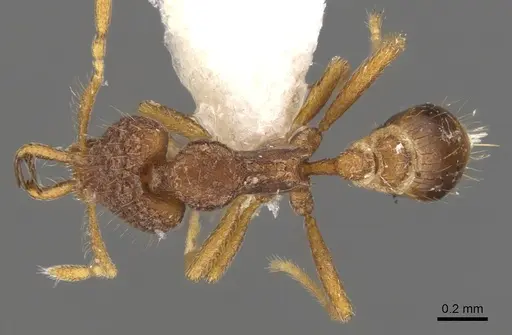
CASENT0914874
Ver no AntWeb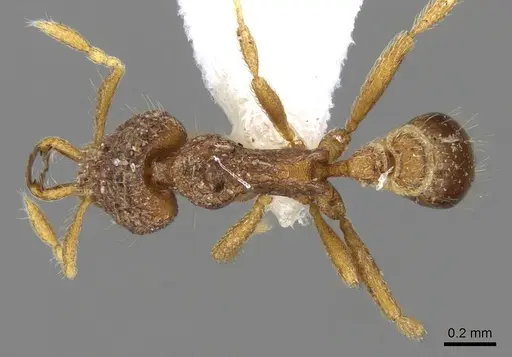
Literatura
Carregando mapa de distribuição...Carregando produtos...