
Strumigenys pnyxia
- Nome científico
- Strumigenys pnyxia
- Tribo
- Attini
- Subfamília
- Myrmicinae
- Autor
- Bolton, 2000
- Distribuição
- Encontrada em 0 países
Introdução
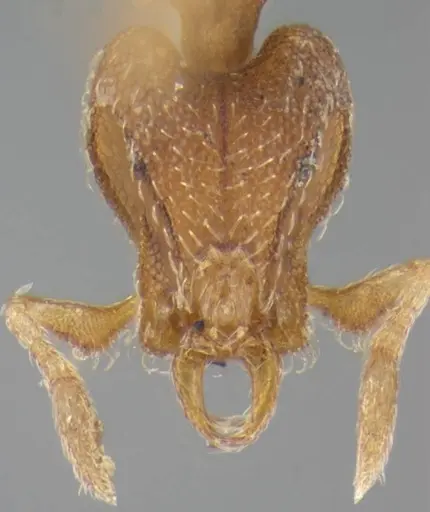
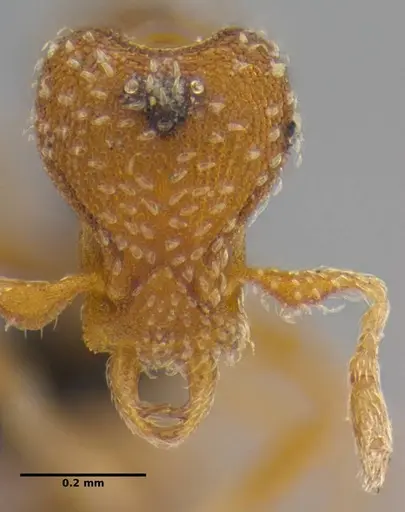
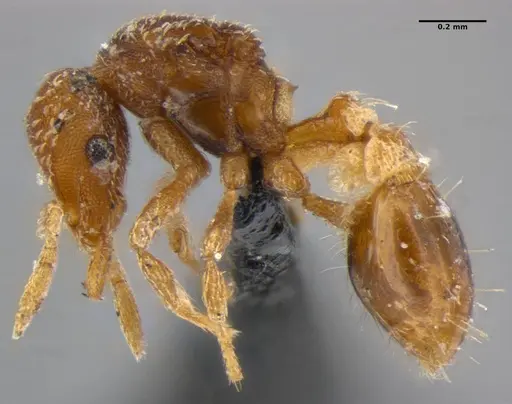
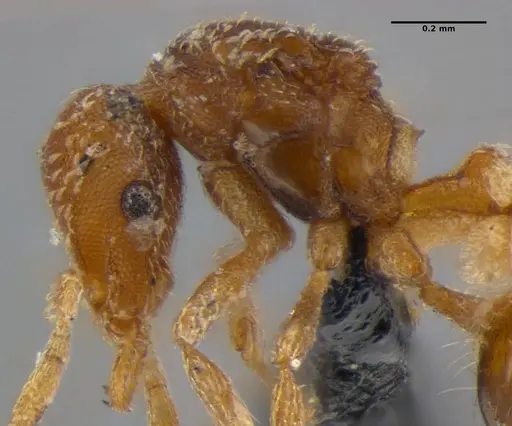
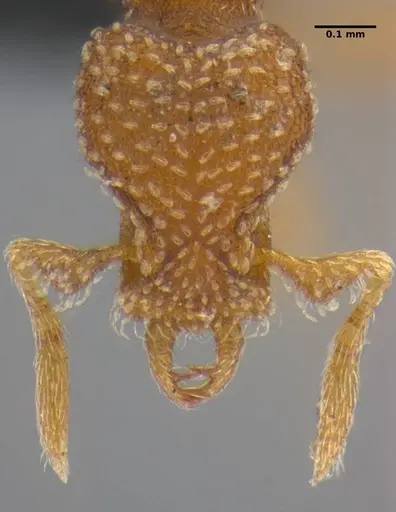
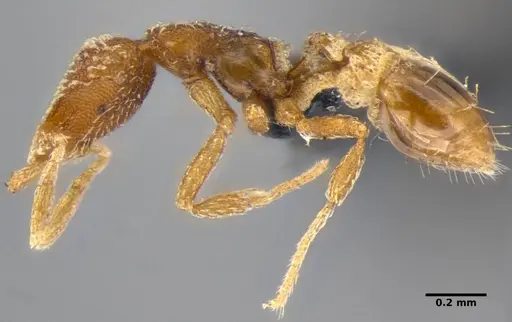
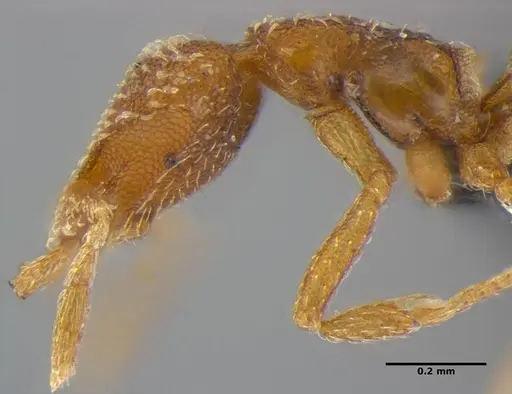
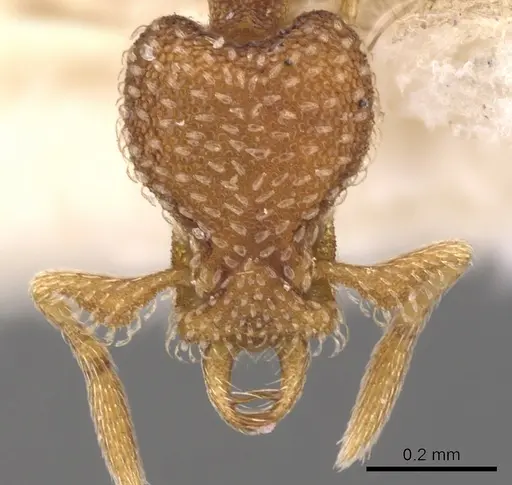
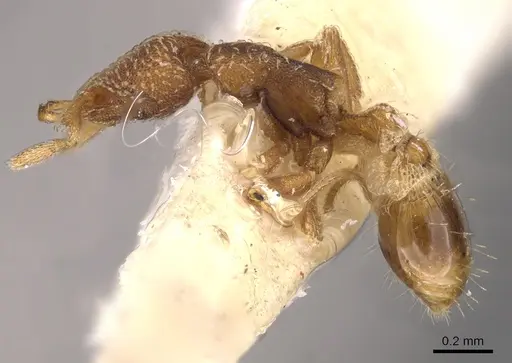
Strumigenys pnyxia is a tiny predatory ant with workers measuring 1.9-2.1 mm in total length . It belongs to the emmae group and is unique among its relatives for having 6-segmented antennae instead of the usual 4 segments in the group . Workers have the characteristic dacetine trap-jaw mandibles that snap shut rapidly to capture prey, and they are covered in spatulate (spoon-shaped) hairs. The species was described by Bolton in 2000 from Australia . These ants live in dry sandy sclerophyll habitat, usually under rocks in open, arid areas . Like other Strumigenys species, they are specialized predators with highly modified mandibles for catching small prey. Their tiny size and cryptic habits make them hard to find and study in the wild.
Quick Summary
- Difficulty: Medium
- Origin & Habitat: Australia, dry sandy sclerophyll habitat, under rocks in open areas [1]
- Colony Type: Unknown, likely single-queen (monogyne) based on genus patterns, but not confirmed
- Size & Growth:
- Queen: Size data unavailable for queen, workers are 1.9-2.1 mm [1]
- Worker: 1.9-2.1 mm total length [1]
- Colony: Unknown, likely small (under 100 workers) based on genus patterns
- Growth: Unknown, likely slow based on typical Strumigenys development
- Development: Estimated 8-12 weeks at optimal temperature, no specific data available for this species (Development is likely slow given the small colony sizes typical of this genus)
- Antkeeping:
- Temperature: Aim for 22-26°C, these are warm temperate to subtropical ants adapted to dry, warm conditions [1]
- Humidity: Provide a gradient: keep nest area moderately moist but not wet, and allow foraging area to be drier. The dry sclerophyll habitat suggests they can tolerate lower humidity than rainforest-related Strumigenys [1].
- Diapause: Unknown, as an Australian species from dry sclerophyll, they may benefit from a mild winter rest (15-18°C for 2-3 months) but this is not confirmed. Observe colony activity.
- Nesting: Y-tong (AAC) nests with narrow chambers or test tube setups work well. Keep chambers small and tight-fitting to prevent escapes. A thin layer of substrate (1-2 cm) allows natural hunting behavior.
- Behavior: Slow-moving workers use trap-jaw mandibles to capture prey. They are not aggressive toward humans and rarely sting. Their tiny size means escape prevention is critical, fine mesh (0.5 mm or smaller) and Fluon barriers are essential. Foraging is solitary, with ants hunting along surfaces.
- Common Issues: tiny size makes escape likely without fine mesh barriers and tight seals, specialized diet requires live micro-prey (springtails, etc.) which can be hard to source consistently, slow growth may lead to overfeeding or unnecessary disturbance during founding, wild-caught colonies may carry parasites that are difficult to detect, limited species-specific information means care is based on genus-level knowledge
Housing and Nest Setup
Because Strumigenys pnyxia is extremely tiny, your setup must prevent escapes. A Y-tong (AAC) nest with narrow chambers or a test tube with a small foraging area works well. Keep nest chambers tight-fitting, these ants can slip through gaps that would seem impossible for their size [1]. Cover ventilation holes with fine mesh (0.5 mm or smaller) and apply Fluon on all climbing surfaces above the barrier. A naturalistic setup with a thin substrate layer (1-2 cm) allows them to hunt as they would in the wild. Avoid tall, open spaces, they prefer confined, ground-level areas.
Feeding and Diet
Like all Strumigenys, S. pnyxia is a specialized predator requiring live small prey. In the wild they primarily hunt springtails and other micro-arthropods [1]. Offer live springtails as a staple. Other small live food like booklice, fruit flies, or minute soil mites may also be accepted. These ants do not typically tend aphids or feed on nectar, so do not rely on honey or sugar water. Their diet is almost entirely protein-based. Feed small prey every 2-3 days, adjusting for colony size and consumption.
Temperature and Humidity
Keep the colony at 22-26°C for best activity and development. This species originates from dry sclerophyll habitat in Australia, so it is adapted to warm, relatively dry conditions [1]. Provide a humidity gradient: keep the nest area slightly moist (damp cotton or substrate) and the foraging area drier. This allows the ants to self-regulate. Avoid complete dryness as well as waterlogging. Room temperature is often fine if your home stays in the low-to-mid 20s Celsius.
Behavior and Defense
Strumigenys pnyxia has the typical dacetine trap-jaw mandibles that snap shut rapidly to catch prey. Despite this weaponry, they are not aggressive toward humans and rarely sting. Their main defense is escape. The trap-jaw mechanism is for hunting small invertebrates, not for defense against larger threats. Workers forage individually, moving slowly and using their antennae to detect prey vibrations. This species belongs to Myrmicinae, tribe Attini, and has a functional stinger, though it is rarely used against humans. [2]
Colony Growth and Development
Strumigenys colonies typically grow slowly, and S. pnyxia is likely no exception. The first workers (nanitics) may take several months to appear. The founding queen will seal herself in a small chamber and raise her first brood alone, living on stored fat reserves until the nanitics emerge. After that, colony growth is gradual. Expect several months before you see significant worker numbers. Patience is key, do not disturb the founding chamber or overfeed during founding. The maximum colony size is unknown but probably under 100 workers based on genus patterns [1].
Frequently Asked Questions
How long does it take for Strumigenys pnyxia to produce first workers?
Expect 8-12 weeks from egg to first worker at optimal temperature (22-26°C). This is an estimate based on typical Strumigenys development, as specific timing for this species has not been documented. The founding queen will seal herself in and raise her first brood alone.
What do Strumigenys pnyxia ants eat?
They eat live small prey, primarily springtails and other micro-arthropods [1]. This is a specialized predator, not a sugar-feeder. Do not offer honey or sugar water as a main food source. Live springtails should be the staple.
Can I keep Strumigenys pnyxia in a test tube?
Yes, a test tube setup works well for founding colonies. Use a small test tube with a cotton barrier and a tiny foraging area. The key is ensuring excellent escape prevention, these tiny ants can slip through standard barriers. Apply Fluon to any surfaces they might climb.
Are Strumigenys pnyxia good for beginners?
This species is rated as medium difficulty. Main challenges are the specialized live-food diet, tiny size requiring excellent escape prevention, and slow growth that requires patience. If you have experience with other small predatory ants like some Myrmica species, you should do well. Beginners may struggle with the live prey requirement.
What temperature do Strumigenys pnyxia need?
Keep them at 22-26°C. This is a warm temperate to subtropical species that prefers warmth. Room temperature in most homes is often suitable, or use a small heating cable on one side of the nest to create a gentle gradient if needed.
How big do Strumigenys pnyxia colonies get?
Colony size is estimated at under 100 workers based on typical genus patterns. This is a small colony species that grows slowly. Exact maximum size has not been documented for this species.
Do Strumigenys pnyxia need hibernation?
Diapause requirements are unknown for this species. As an Australian ant from dry sclerophyll habitat, they may benefit from a mild winter rest period at cooler temperatures (15-18°C) for 2-3 months, but this is not confirmed. Observe your colony's behavior as a guide.
Why are my Strumigenys pnyxia escaping?
Their tiny size means they can escape through the smallest gaps. Use fine mesh (0.5 mm or smaller), apply Fluon to all barrier surfaces, and ensure lid seals are tight. Check all ventilation holes and any gaps where the foraging area meets the nest.
When should I move my colony to a formicarium?
Wait until the colony has at least 20-30 workers before considering a move. Strumigenys do well in simple setups for a long time. A Y-tong nest can be used once the colony outgrows a test tube, but these ants prefer tight spaces regardless of colony size.
Report an Issue
The current care sheet is based fully on literature. See inconsistencies, or something that's incorrect? Please , it will be resolved after review from an admin. Contributing to the blogs tab also helps providing information, to make us be able to further improve the caresheets. Thank you for your support!
References

Este guia de cuidados está sob a licença CC BY-SA 4.0 .
Posts da comunidade
ANTWEB1032115
Ver no AntWeb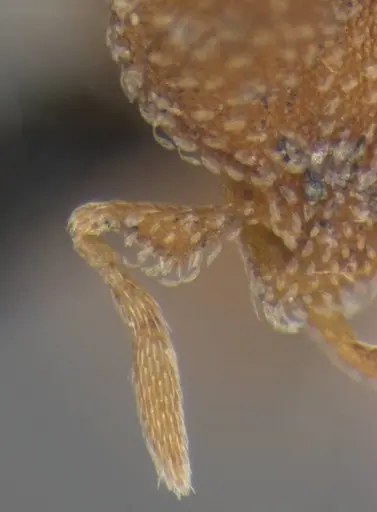
ANTWEB1032116
Ver no AntWeb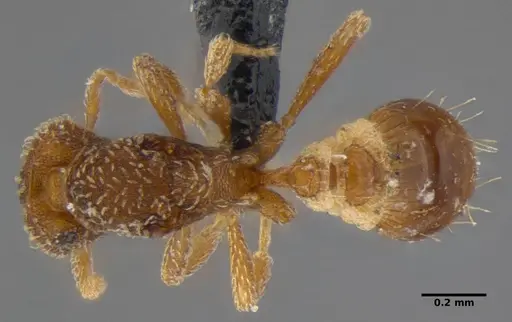
ANTWEB1032117
Ver no AntWeb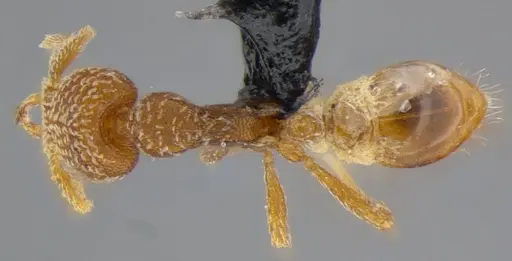
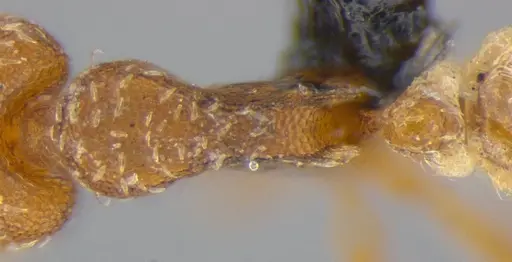
CASENT0900917
Ver no AntWeb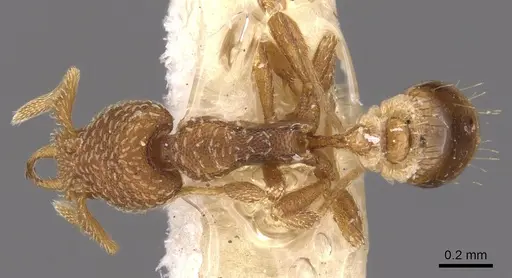
Literatura
Carregando mapa de distribuição...Carregando produtos...