
Middlegap Mustache Ant
Strumigenys metazytes
- Nome científico
- Strumigenys metazytes
- Tribo
- Attini
- Subfamília
- Myrmicinae
- Autor
- Bolton, 2000
- Nome comum
- Middlegap Mustache Ant
- Distribuição
- Encontrada em 1 países
Introdução
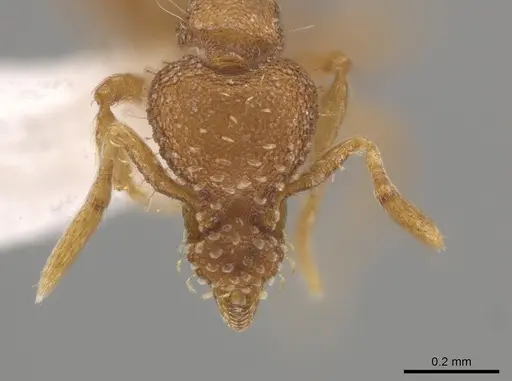
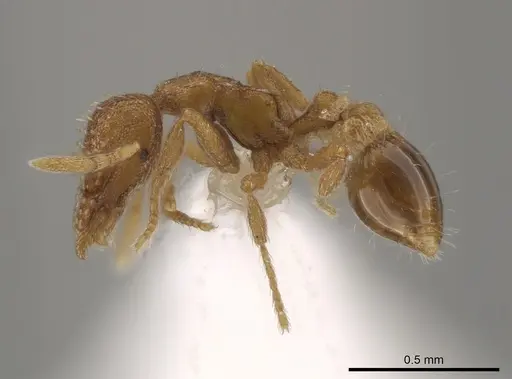
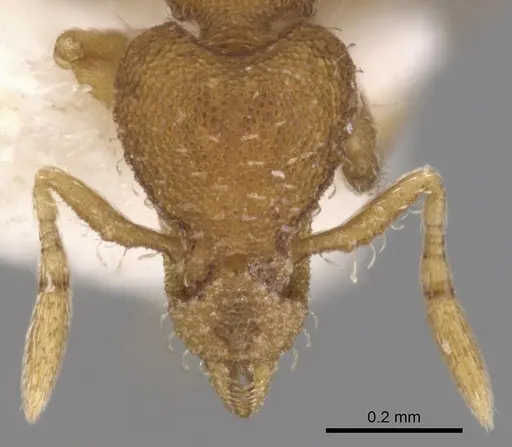
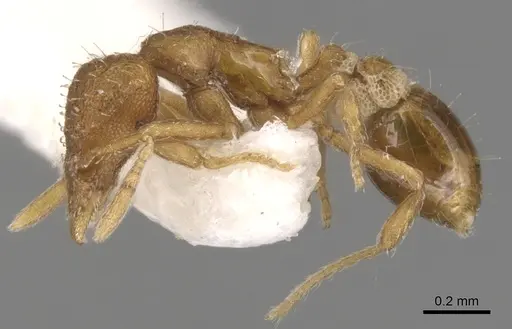
Strumigenys metazytes is a rare, tiny ant in the dacetine tribe (Attini), first described in 2000 from just five workers collected in Kentucky and Tennessee . Workers measure only 1.8-1.9mm in total length, making them one of the smallest ants in North America . They belong to the pulchella group and have unusual mandibles with three larger principal teeth flanked by smaller teeth . This species has a distinctive look: long, flagellate hairs on the head, pronotum, and mesonotum, and erect filiform hairs on the first gastral tergite . It is known from only a handful of specimens across a scattered range in Kentucky, Tennessee, Alabama, and Mississippi . What makes S. metazytes especially interesting is its extreme rarity and specialized habitat. All specimens come from moist deciduous forest litter, often at the base of hickory trees in ravine bottoms . This is a cryptic, litter-dwelling ant rarely encountered even by professional collectors – most records are from Berlese extraction of leaf litter and soil. The species is genuinely rare, not just overlooked .
Quick Summary
- Difficulty: Expert
- Origin & Habitat: Eastern United States (Kentucky, Tennessee, Alabama, Mississippi). Found in deciduous forests, in moist leaf litter and soil at the base of hickory trees (Carya sp.) in ravine bottoms [1][5].
- Colony Type: Colony structure is unknown. No direct observations of colony structure exist for this species.
- Size & Growth:
- Queen: Unknown – queen caste has not been described.
- Worker: 1.8-1.9mm total length [2].
- Colony: Unknown – only known from single workers or very small series, suggesting small colonies [1][6].
- Growth: Unknown
- Development: Unconfirmed – no direct data exists. Based on typical Strumigenys patterns, expect 6-10 weeks at optimal temperature. (Development timeline is inferred from related species, actual timeline may vary.)
- Antkeeping:
- Temperature: No specific data. Inferred from habitat: likely prefers moderate temperatures around 20-24°C, similar to other North American litter-dwelling Strumigenys. Avoid extremes.
- Humidity: Keep substrate consistently damp but not waterlogged. High humidity is essential – they inhabit moist forest floor litter in ravine bottoms [1][5]. Provide a humidity gradient so ants can choose their preferred moisture level.
- Diapause: Likely yes – as a Nearctic species from states with cold winters, they probably need a winter rest period. Reduce temperatures to 10-15°C for 2-3 months in winter. Duration and exact temperature are unconfirmed.
- Nesting: In captivity, use a naturalistic setup with deep, moist substrate (5-10cm of soil and leaf litter mixture) to mimic their natural habitat. A test tube setup with a water reservoir and constant moisture can also work, but must include a foraging area with fine mesh to prevent escape.
- Behavior: This is an extremely cryptic, slow-moving predator that hunts micro-arthropods in leaf litter. Strumigenys ants have specialized trap-jaw mandibles used to capture tiny prey like springtails and mites. They are not aggressive and rarely sting when handled – their sting is present but not medically significant. Escape prevention is critical due to their minute size, they can squeeze through very small gaps. They prefer to stay hidden in the substrate and are rarely seen above ground.
- Common Issues: extreme rarity makes obtaining founding colonies nearly impossible., tiny size means escapes are likely without fine mesh barriers and careful sealing., specialized diet requires live micro-prey, which can be difficult to culture consistently., high humidity requirements create mold risk in enclosed setups., no published care information exists – keepers must pioneer husbandry methods.
Housing and Setup
Housing Strumigenys metazytes requires a setup that mimics their natural litter-dwelling microhabitat. A naturalistic terrarium works best – use a container filled with 5-10cm of mixed substrate including moist soil, sand, and decomposed leaf litter, replicating the ravine-bottom deciduous forest floor [1][5]. The substrate should stay consistently damp but never waterlogged. Include small pieces of rotting wood, bark, or stones to provide micro-hiding places. Alternatively, a well-maintained test tube setup with a water reservoir can work, but ensure the cotton remains damp and the ants have access to a foraging area. Escape prevention is absolutely critical – these ants can squeeze through standard gap barriers. Use fine mesh (at least 0.5mm) on any ventilation holes and seal all connections tightly.
Feeding and Diet
Strumigenys are specialized trap-jaw predators that hunt tiny arthropods. In captivity, their primary food should be live micro-prey such as springtails (e.g., Folsomia candida), tiny soil mites, and booklice. Live prey is essential – Strumigenys rarely accept dead food, as their hunting behavior is triggered by movement. You may also occasionally offer small fruit flies (Drosophila), but success varies. Sugar sources are generally not accepted – they are obligate predators. Feed small amounts every few days and remove uneaten prey after 24-48 hours to prevent mold. Culturing your own springtail colony is highly recommended for long-term success.
Temperature and Seasonal Care
No specific thermal data exists for S. metazytes, but their habitat in eastern deciduous forests suggests they prefer moderate temperatures. Aim for a stable 20-24°C, avoiding extremes as both cold drafts and excessive heat stress these ants. As a Nearctic species from states with distinct seasons, they likely experience and require a winter rest period. Reduce temperatures to roughly 10-15°C for 2-3 months in winter, mimicking natural cycles. During this diapause, reduce feeding frequency significantly. The exact duration and temperature are unconfirmed and will require keeper experimentation.
Behavior and Observation
Strumigenys metazytes is an extremely cryptic species that stays hidden in leaf litter most of the time. They move slowly and deliberately compared to many ants. Their specialized mandibles act as trap-jaws, capturing prey in a fraction of a second. You will rarely see these ants out in the open, making observation challenging but interesting. They have a functional sting (like most Myrmicinae) but are not aggressive – their main defense is retreat into the substrate. The biggest challenge is obtaining a colony, as this species is known from only a handful of specimens and is almost never available in the ant hobby trade. [6][1]
Rarity and Collection Notes
This is one of the rarest ants in North America. It was described in 2000 by Barry Bolton from five workers collected in Kentucky and Tennessee [1]. Subsequent records have expanded the range slightly to Alabama, Mississippi, and a single record from Massachusetts (Clark et al.,2011) but are still extremely scarce [5][4][1]. Despite a wide geographic area, it remains rarely collected – most records come from intensive leaf litter sampling with Berlese funnels. The species is genuinely scarce, not just hard to detect. For antkeepers, obtaining a founding colony would require either a professional collecting permit or extraordinary luck.
Frequently Asked Questions
Is Strumigenys metazytes available in the ant keeping hobby?
No. This is one of the rarest ants in North America – known from only a handful of specimens. You will not find them for sale from any commercial ant keeper. Even professional entomologists rarely encounter them [1][6].
How big do Strumigenys metazytes colonies get?
Unknown. The largest scientific collections are single workers or small series, suggesting colonies are small. Based on related species, they likely reach only dozens to perhaps low hundreds of workers at most [1].
What do Strumigenys metazytes eat?
They are specialized predators that hunt tiny micro-arthropods. In captivity, they need live springtails, tiny mites, booklice, or other small live prey. They do not accept sugar or dead food.
Can I keep Strumigenys metazytes in a test tube setup?
Yes, a test tube setup can work if you maintain high humidity and provide a foraging area with suitable live prey. However, a naturalistic setup with deep moist substrate better replicates their natural habitat and may lead to better success [1][5].
Report an Issue
The current care sheet is based fully on literature. See inconsistencies, or something that's incorrect? Please , it will be resolved after review from an admin. Contributing to the blogs tab also helps providing information, to make us be able to further improve the caresheets. Thank you for your support!
References

Este guia de cuidados está sob a licença CC BY-SA 4.0 .
Posts da comunidade
CASENT0643259
Ver no AntWeb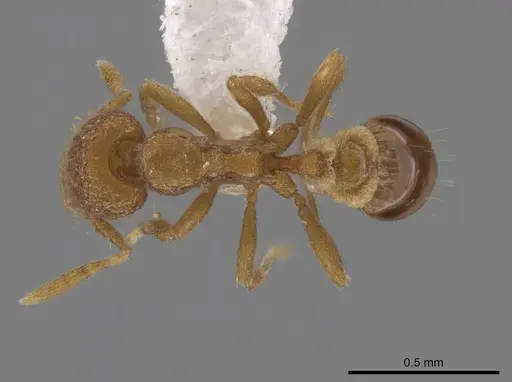
CASENT0900169
Ver no AntWeb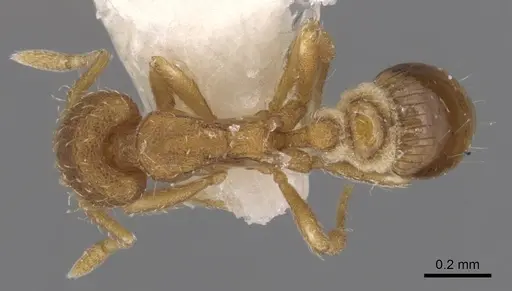
Literatura
Carregando mapa de distribuição...Carregando produtos...