
Strumigenys masukoi
- Nome científico
- Strumigenys masukoi
- Tribo
- Attini
- Subfamília
- Myrmicinae
- Autor
- Ogata & Onoyama, 1998
- Distribuição
- Encontrada em 0 países
Introdução
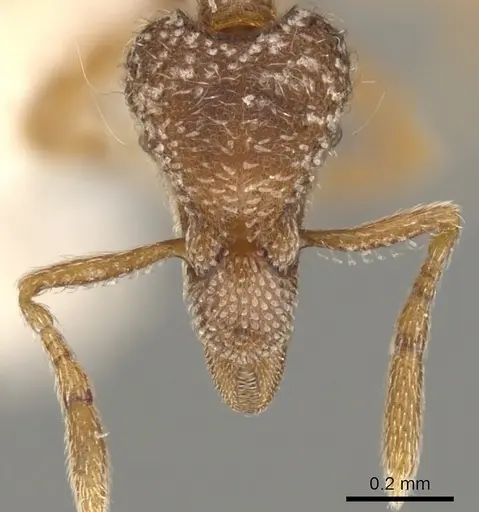
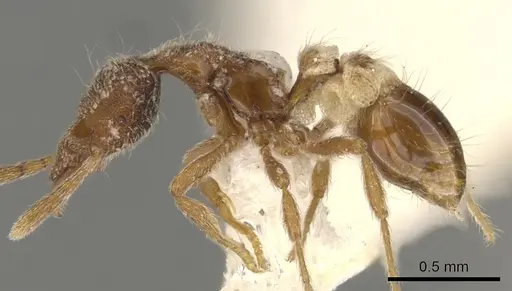
Strumigenys masukoi is an extremely tiny ant species with workers measuring just 1.5-1.9mm in total body length . They have a distinctive elongated head, short triangular mandibles, and a clypeus longer than wide - features that help tell them apart from other Strumigenys in the region . Their body is ruby to dark orange and covered with long flagelliform hairs, giving them a fuzzy look under magnification . This species belongs to the Strumigenys baudueri-group and is the only member of that group found in the eastern Palaearctic . They are soil-nesting predators native to Japan and Korea . What makes S. masukoi special is its extreme rarity - it has been collected only a handful of times across its entire range . Originally described from Kanagawa and Hiroshima prefectures in Japan, a single worker was later found in Korea at an elevation above 1000m . This scarcity makes them a rare find for antkeepers, but also means we know very little about their captive care.
Quick Summary
- Difficulty: Expert
- Origin & Habitat: Native to Japan (Honshu) and the Republic of Korea. Found exclusively on the floor of broad-leaved forests at elevations above 1000m [2][3]. This is a soil-nesting species that lives in damp forest floor conditions [1].
- Colony Type: Colony structure is unconfirmed, only single workers have been collected and no queen has ever been documented. Likely single-queen (monogyne) based on typical Strumigenys patterns, but this is speculative.
- Size & Growth:
- Queen: Unconfirmed, queen has not been described in scientific literature
- Worker: 1.5-1.9mm total length [1][2]
- Colony: Unknown, only single workers have been collected, colony size is not documented
- Growth: Unknown, likely slow given their tiny size and specialized diet
- Development: Unconfirmed, no direct observations of colony development exist (Development timeline is unknown due to the extreme rarity of this species in both wild and captivity)
- Antkeeping:
- Temperature: Based on their cool, high-elevation forest floor habitat, aim for 18-22°C and avoid prolonged temperatures above 25°C (inferred from habitat).
- Humidity: High humidity is essential to match the damp forest floor. Keep the nest substrate consistently moist but not waterlogged. Provide a gradient with a slightly drier area (inferred from habitat).
- Diapause: Likely required, based on their temperate origin, expect a winter rest period of 2-3 months at 10-15°C (November-February) (inferred from habitat).
- Nesting: Soil-nesting species [1]. Use a naturalistic setup with fine, moisture-retaining substrate (e.g., a mix of peat moss, coco fiber, and fine sand). A test tube setup may work for founding but long-term housing should include soil.
- Behavior: These are extremely small, slow-moving ants that are docile and not aggressive. They possess a functional stinger (as is typical for Attini) but it is too small to penetrate human skin. Escape prevention is critical, at 1.5-2mm they can squeeze through tiny gaps. Based on genus patterns, they likely spend most of their time hunting springtails in the substrate.
- Common Issues: escape prevention is critical, they are tiny enough to squeeze through standard mesh and gaps in setup, specialized live prey (springtails) may be hard to source, causing starvation if not cultured, maintaining high humidity without promoting mold is a delicate balance, extreme rarity in the wild means no captive colony has been documented, all care is inferred from genus patterns, slow growth and small colony size can make the species seem inactive, leading to neglect
Housing and Setup
No specific captive housing has been documented for Strumigenys masukoi. Based on their soil-nesting habits [1], a naturalistic setup with fine, moisture-retaining substrate is recommended. Use a mixture of peat moss, coco fiber, and fine sand that holds moisture without becoming waterlogged, the substrate should be at least 2-3 cm deep. For a founding colony, a small test tube with a water reservoir may work temporarily, but long-term success likely requires a more natural environment. Because of their minute size, escape prevention is absolutely critical, apply fluon or similar barriers to all edges and use fine mesh (0.5mm or smaller) on ventilation openings. Even tiny gaps can allow escapes.
Feeding and Diet
The exact diet of Strumigenys masukoi is unknown, but like most Strumigenys species, they are thought to be specialized predators of springtails (Collembola) and other tiny soil arthropods. In captivity, you should culture your own springtail colony to ensure a constant supply. Offer small springtails (2-3mm) several times per week. Other micro-arthropods like fruit flies may be accepted, but springtails should form the bulk of their diet. Do not offer sugar water, honey, or standard ant protein mixes, these ants likely do not recognize such foods as prey. Remove uneaten prey after 24-48 hours to prevent mold issues in the humid setup. [2]
Temperature and Seasonal Care
Temperature requirements are inferred from their cool, high-elevation forest floor habitat. Aim for 18-22°C and avoid prolonged temperatures above 25°C, which may stress or kill the colony. Provide a slight temperature gradient so workers can self-regulate. During winter (roughly November through February), reduce temperatures to 10-15°C to simulate their natural seasonal cycle, this diapause is likely essential for colony health, though the exact duration is not documented. Do not feed during the hibernation period. Resume normal feeding and temperatures gradually in spring. [2]
Humidity and Water
High humidity is non-negotiable for this species, inferred from their damp forest floor habitat. In test tube setups, keep the water reservoir filled and ensure the cotton remains damp. In naturalistic setups, mist the substrate regularly and check that the bottom layers stay moist. Avoid standing water or overly saturated conditions, which can drown workers and promote harmful mold. Provide a small water dish or moist cotton ball as a drinking source, though they will also obtain moisture from prey. Balance humidity with good ventilation to prevent stagnant air. [2][3]
Behavior and Observation
Strumigenys masukoi workers are slow-moving and docile, spending most of their time foraging through the substrate for small prey. They possess a functional stinger (as is typical for Attini) but it is far too small to harm humans. Observation is best done with a magnifying glass or macro lens due to their tiny size. Workers likely communicate using chemical trails and will recruit nestmates to good feeding spots. Based on the limited wild collections, the colony likely stays small (probably under 100 workers, but no data exists). Their soil-nesting lifestyle means most activity occurs hidden within the substrate, expect limited above-ground activity. [2][3]
Frequently Asked Questions
How long does it take for Strumigenys masukoi to develop from egg to worker?
The development timeline is unconfirmed due to the species' extreme rarity. No captive colonies have been documented, so no growth data exists. Based on patterns in related Strumigenys species, development likely takes several months, but this is purely speculative.
Can I keep Strumigenys masukoi in a test tube setup?
A test tube with a water reservoir may work temporarily for a founding colony, but because they are soil-nesting [1], long-term success likely requires a naturalistic setup with fine, moist substrate. There is no published information on captive housing for this species, so you must experiment carefully.
What do Strumigenys masukoi ants eat?
Their diet is not documented, but based on typical Strumigenys behavior, they likely specialize on live springtails (Collembola). Culture your own springtail colony to ensure a steady supply. Do not offer sugar or standard ant foods, they are probably obligate predators of tiny soil arthropods.
How big do Strumigenys masukoi colonies get?
Colony size is unknown, only single workers have ever been collected. Based on the genus, colonies likely stay small (probably under 100 workers), but no direct observations exist.
Do Strumigenys masukoi ants need hibernation?
Yes, a winter rest period is likely necessary given their temperate, high-elevation origin. Simulate winter by reducing temperatures to 10-15°C for 2-3 months (November-February) and stop feeding during this time. This is inferred from habitat, not directly observed.
Are Strumigenys masukoi good for beginners?
No, this is an expert-level species not suitable for beginners. Their extreme rarity means no captive care data exists, they require specialized live prey, escape prevention is critical due to tiny size, and their specific humidity and temperature requirements must be met precisely. They are best suited for experienced antkeepers willing to experiment and observe carefully.
Why are my Strumigenys masukoi dying?
Since no captive colony has been successfully maintained, any issues are speculative. Potential causes include: lack of appropriate live prey (they must have springtails), temperatures too high (keep below 25°C), low humidity causing desiccation, escape through tiny gaps, or stress from disturbance. Review each parameter and adjust. Also confirm you actually have S. masukoi, identification requires magnification.
When should I move Strumigenys masukoi to a formicarium?
There are no specific guidelines. Based on their soil-nesting habits [1], a naturalistic setup with fine, moist substrate is recommended long-term. A test tube can serve as a temporary home, but move them when it becomes crowded or the colony seems stressed.
Can I keep multiple queens together?
This is unknown, no queen has ever been documented for this species. Based on typical Strumigenys behavior, single-queen colonies are most likely. Do not attempt to combine unrelated queens, as this has not been studied and could lead to aggression.
Report an Issue
The current care sheet is based fully on literature. See inconsistencies, or something that's incorrect? Please , it will be resolved after review from an admin. Contributing to the blogs tab also helps providing information, to make us be able to further improve the caresheets. Thank you for your support!
References

Este guia de cuidados está sob a licença CC BY-SA 4.0 .
Posts da comunidade
CASENT0900152
Ver no AntWeb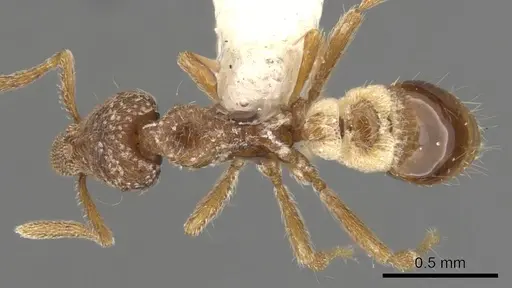
Literatura
Carregando mapa de distribuição...Carregando produtos...