
Strumigenys mailei
- Nome científico
- Strumigenys mailei
- Tribo
- Attini
- Subfamília
- Myrmicinae
- Autor
- Wilson & Taylor, 1967
- Distribuição
- Encontrada em 3 países
Introdução
Strumigenys mailei is a tiny trap-jaw ant native to the Fiji and Samoa islands in the Pacific. Workers measure just 2.4-2.9mm in total length, making them one of the smaller ant species you'll encounter . They have a distinctive light yellow-brown to reddish-brown coloration with a narrow head that is shallowly impressed posteriorly, and notably long mandibles that give this species its name - 'mailei' comes from the Samoan word for 'trap' because of their remarkable trap-like jaw mechanism . The species belongs to the signeae complex within the Strumigenys godeffroyi group, characterized by having no flagellate hairs and a unique combination of scrobe, propodeal, and petiolar features . This ant is a high-elevation forest species found on several Fijian islands (Viti Levu, Vanua Levu, Taveuni, Kadavu) as well as Samoa . Almost nothing is known about the biology of this species - all collections have come from litter samples in wet forest habitats, and researchers have never documented its colony structure, founding behavior, diet, or development . This makes keeping S. mailei a genuine challenge and a chance to contribute to scientific knowledge. As trap-jaw ants, they have spring-loaded mandibles that can snap shut rapidly, but how this translates to their specific hunting behavior remains unstudied. They belong to a subfamily and tribe (Myrmicinae: Attini) that possess a functional stinger [general knowledge].
Quick Summary
- Difficulty: Expert
- Origin & Habitat: Fiji and Samoa islands in the Pacific Ocean, found in wet forest habitats at higher elevations [7][3]. It is a regional endemic, known only from these two island groups [8][9]. Collections have come from litter samples in rainforest areas [6].
- Colony Type: Unknown, colony structure (single queen vs multiple queens) has never been documented for this species [6].
- Size & Growth:
- Queen: Queen described but measurements not available in literature [6].
- Worker: 2.4-2.9mm total length [1][2].
- Colony: Unknown, no colony size data exists for this species [6].
- Growth: Unknown, development timeline has not been studied [6].
- Development: Unknown, no development data exists for this species. Based on typical Strumigenys patterns and tropical location, estimate 6-10 weeks at warm temperatures, but this is a rough guess. (Development timeline is completely unstudied. Any estimate would be speculative.)
- Antkeeping:
- Temperature: No specific data exists. As a tropical species from Fiji/Samoa, aim for warm conditions in the low-to-mid 20s°C (around 24-27°C). Start in this range and observe colony activity, if workers seem sluggish, increase slightly, if they avoid heated areas, reduce temperature.
- Humidity: No specific data exists. As a wet forest species collected from litter samples, they likely need high humidity, think damp forest floor conditions. Keep the nest substrate consistently moist but not waterlogged, with some drier areas available for choice.
- Diapause: Unknown, no seasonal studies exist. As a tropical species from near-equator islands, they likely do not require a true diapause, but may show reduced activity during cooler periods.
- Nesting: No specific nesting data exists. In captivity, a small test tube setup works well for founding colonies, with a water reservoir for humidity. For established colonies, a small plaster or Y-tong (AAC) nest with narrow chambers would be appropriate. The key is maintaining high humidity while allowing for some ventilation. Naturalistic setups with moist substrate also work well for similar litter-dwelling Strumigenys.
- Behavior: Behavior is unstudied, but as a Strumigenys species, they are trap-jaw ants with specialized mandibles. They are likely predatory on small invertebrates like springtails and mites, similar to other Strumigenys species. Their small size (under 3mm) means escape prevention is critical, use fine mesh barriers and tight-fitting lids. They possess a functional stinger, but it is not medically significant to humans. Temperament is unknown but they are unlikely to be aggressive given their tiny size and likely predatory nature.
- Common Issues: completely unknown biology means any husbandry is experimental, colonies may fail for reasons keepers cannot diagnose, tiny size makes escape likely without excellent barriers, no data on what foods they will accept in captivity, humidity requirements are uncertain, too dry or too wet could kill colonies, no information on colony founding, introducing a queen to a setup may not work as expected
Appearance and Identification
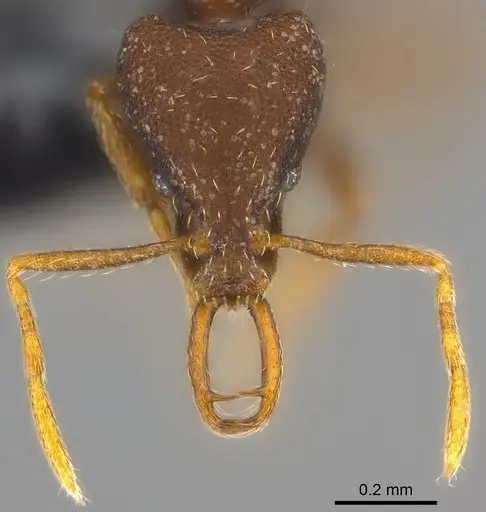
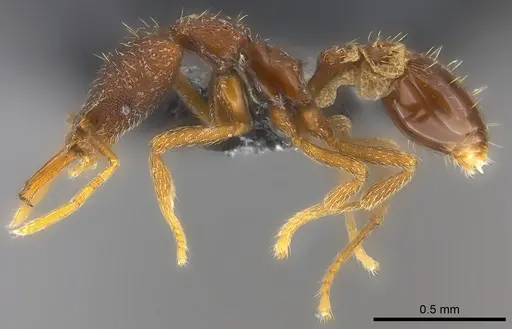
Strumigenys mailei workers are tiny ants measuring just 2.4-2.9mm in total length [1][2]. They have a distinctive light yellow-brown to reddish-brown coloration with a narrow head that is shallowly impressed posteriorly [3]. Their most notable feature is their long mandibles, the mandible length is nearly half the head length [1][2]. This species lacks flagellate (long, hair-like) hairs on the pronotal humeri, which helps distinguish it from related species. The name 'mailei' comes from the Samoan word for 'trap', referring to the remarkable trap-like action of their mandibles [2]. They have many pairs of short, straight, erect hairs on the dorsal surfaces of the head, mesosoma, and metasoma [1]. The antennal scrobe is absent behind the level of the eye, and the propodeal declivity has a narrow carina without a lamella [3].
Distribution and Habitat
Strumigenys mailei is a regional endemic found only in Fiji and Samoa [8][9]. In Fiji, it has been recorded from Viti Levu, Vanua Levu, Taveuni, and Kadavu islands [3][4][5]. The original description came from Samoa (Upolu island), with the holotype collected from Afiamalu at 700m elevation in rainforest [2]. This is a high-elevation forest species, with Fijian specimens collected at around 800m elevation [2][7]. All collections have been from litter samples, researchers sift through leaf litter on the forest floor to find these tiny ants. This suggests they are litter-dwelling predators, living in the moist microhabitat between decaying leaves on the forest floor [6]. The wet forest habitat indicates they need consistently humid conditions.
What We Don't Know
This is perhaps the most important section for prospective keepers: almost nothing is known about Strumigenys mailei biology. The AntWiki explicitly states 'nothing is known about its biology' [6]. We have no data on: colony structure (single queen or multiple queens), founding behavior (how queens establish colonies), diet preferences (what they eat in the wild), development timeline (how long from egg to worker), temperature and humidity preferences (beyond general wet forest habitat), or colony size (how large colonies grow). This is not a species where you can look up care guides, any successful husbandry would be pioneering work. Keepers should be prepared to experiment and document their observations carefully. The lack of basic biological data makes this an expert-level species suitable only for those with experience keeping less-studied ants and the patience to work through unknowns.
Housing and Setup
Given their tiny size (under 3mm) and likely litter-dwelling habits [1], a small setup is essential. A test tube setup works well for founding colonies, use a small test tube with a water reservoir (like a cotton ball) to maintain humidity. For established colonies, a small plaster or Y-tong (AAC) nest with narrow chambers would be appropriate. The key challenge is maintaining high humidity without creating stagnant conditions. Use adequate ventilation while keeping the nest substrate consistently moist. Escape prevention is critical, these tiny ants can squeeze through surprisingly small gaps. Use fine mesh (at least 0.5mm or finer) on any openings and ensure all connections are tight. A naturalistic setup with moist soil and leaf litter can also work well, mimicking their natural forest floor habitat.
Feeding and Diet
No specific dietary data exists for this species, but Strumigenys ants are typically predators of small invertebrates. In the wild, they likely hunt springtails, mites, and other tiny arthropods found in leaf litter. In captivity, start with small live prey: springtails are the most likely accepted food given their size and availability. Other small live prey like fruit fly larvae, pinhead crickets, or tiny waxworms may be accepted. Sugar sources are unlikely to be important, Strumigenys are not typically honeydew feeders. Offer small live prey items and observe carefully. Uneaten prey should be removed within 24-48 hours to prevent mold. Given the complete lack of dietary data, acceptance of any food should be considered uncertain [6].
Temperature and Seasonal Care
No specific temperature data exists for this species. As a tropical ant from Fiji and Samoa (near the equator), they likely prefer warm conditions. Aim for temperatures in the low-to-mid 20s°C (around 24-27°C). These islands have minimal seasonal temperature variation, so you likely do not need a true diapause or hibernation period. However, if you keep them at room temperature (around 20-24°C in many homes), they should still survive, they may simply be less active. Observe your colony: if workers cluster together and seem sluggish, they may want it warmer, if they avoid heated areas, reduce temperature. Any heating should be gentle, a heating cable on one side of the nest creates a gradient allowing the ants to choose their preferred spot.
Frequently Asked Questions
How do I keep Strumigenys mailei ants?
This is challenging because almost nothing is known about their biology. Start with a small test tube setup for the queen, then move to a small plaster or Y-tong nest once workers arrive. Keep them humid (moist substrate but not waterlogged) and warm (around 24-27°C). Feed small live prey like springtails. Be prepared for experimentation, successful husbandry of this species would be pioneering work.
What do Strumigenys mailei eat?
Unknown, no dietary studies exist. Based on typical Strumigenys behavior, they are likely predators of small invertebrates like springtails and mites found in leaf litter. Offer small live prey in captivity and observe acceptance. Do not rely on sugar sources.
How big do Strumigenys mailei colonies get?
Unknown, no colony size data exists for this species. Based on typical Strumigenys patterns and their tiny worker size, colonies likely remain small (probably under 100 workers).
Are Strumigenys mailei good for beginners?
No. This is an expert-level species due to completely unknown biology. There is no care guide, no established husbandry methods, and no information on what they need to survive in captivity. Only experienced antkeepers willing to experiment should attempt this species.
How long does it take for Strumigenys mailei eggs to become workers?
Unknown, no development data exists for this species. Based on typical tropical Strumigenys patterns and their small size, development might take 6-10 weeks at warm temperatures, but this is a rough estimate.
Do Strumigenys mailei need hibernation?
Unknown, no seasonal data exists. As a tropical species from near-equator islands (Fiji, Samoa), they likely do not require a true diapause. They may show reduced activity during cooler periods but probably do not need hibernation temperatures.
Can I keep multiple Strumigenys mailei queens together?
Unknown, colony structure has never been documented. We do not know if they are single-queen or multi-queen colonies in the wild. Do not attempt combining unrelated queens without data to suggest this might work.
Why are my Strumigenys mailei dying?
Without any biological data, diagnosing problems is extremely difficult. Common issues with poorly-studied species include: wrong humidity (too dry or too wet), wrong temperature, not accepting offered foods, or stress from captivity. Document everything and try varying conditions systematically.
Where is Strumigenys mailei found?
This species is endemic to Fiji and Samoa islands in the Pacific Ocean. In Fiji, it has been recorded from Viti Levu, Vanua Levu, Taveuni, and Kadavu. Originally described from Samoa.
What makes Strumigenys mailei special?
They are trap-jaw ants, their name 'mailei' comes from the Samoan word for 'trap' because of their remarkable trap-like mandible mechanism. They are also extremely understudied, keeping them successfully would contribute new knowledge to science.
Report an Issue
The current care sheet is based fully on literature. See inconsistencies, or something that's incorrect? Please , it will be resolved after review from an admin. Contributing to the blogs tab also helps providing information, to make us be able to further improve the caresheets. Thank you for your support!
References

Este guia de cuidados está sob a licença CC BY-SA 4.0 .
Posts da comunidade
CASENT0186741
Ver no AntWeb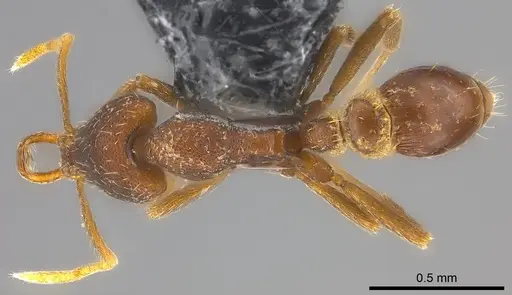
Literatura
Carregando mapa de distribuição...Carregando produtos...