
Strumigenys liukueiensis
- Nome científico
- Strumigenys liukueiensis
- Tribo
- Attini
- Subfamília
- Myrmicinae
- Autor
- Terayama & Kubota, 1989
- Distribuição
- Encontrada em 0 países
Introdução
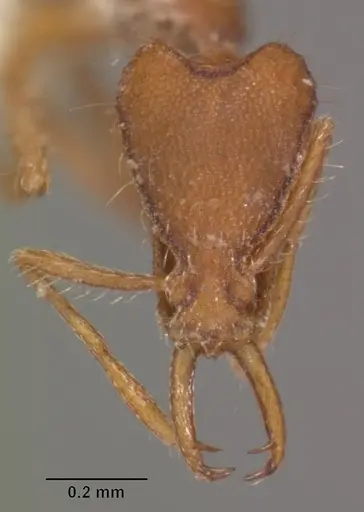
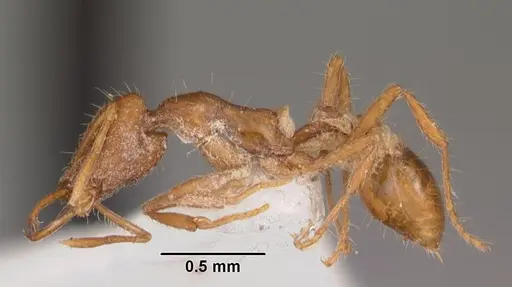
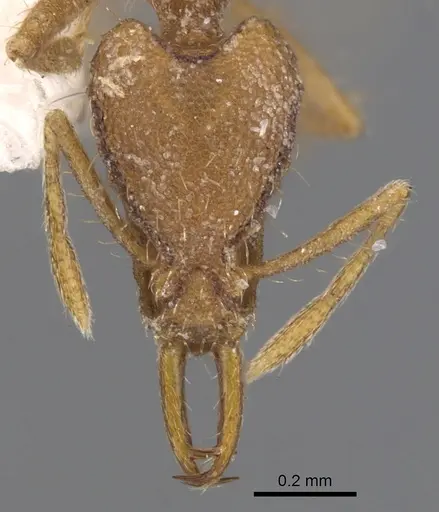
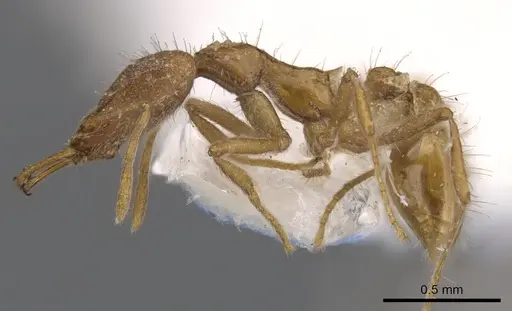
Strumigenys liukueiensis is a tiny predatory ant from Taiwan, measuring 2.5-2.7 mm in total length . Workers have long erect hairs covering the head, mesosoma, and first gastral tergite, plus six-segmented antennae and long trap-jaw mandibles . This species belongs to the smythiesii complex of the godeffroyi group . Its most unusual trait is thelytokous parthenogenesis: queens reproduce asexually, producing workers and new queens from unfertilized eggs without any males . All field-collected queens in one study were uninseminated, yet colonies grew normally . This means you don't need to worry about mating flights.
Quick Summary
- Difficulty: Medium
- Origin & Habitat: Taiwan (Indomalaya Region) [4]. Collected from Kaohsiung Hsien (Liukuei) and Jiji Township, Nantou County [5]. Likely inhabits humid forest environments typical of Taiwan's lowlands.
- Colony Type: Thelytokous parthenogenetic colonies, queens produce workers and new queens from unfertilized eggs, and no males have ever been observed [3]. Single-queen colonies are typical based on laboratory data [3].
- Size & Growth:
- Queen: Inferred similar to worker size (~2.5-2.7 mm TL) [1]
- Worker: 2.5-2.7 mm TL [1][2]
- Colony: Several hundred workers (experimental colony produced 225 workers and 12 queens over 7 months) [3]
- Growth: Moderate
- Development: Unknown for this species (Thelytokous reproduction means development from unfertilized eggs, confirmed in laboratory colonies [3])
- Antkeeping:
- Temperature: Keep at 22-26°C, mimicking Taiwan's warm climate. Avoid extremes below 18°C or above 30°C. Use a small heating mat with gradient if needed.
- Humidity: High moisture is essential. Keep the nest substrate consistently damp but not waterlogged. Mist the outworld regularly to maintain humidity. Good airflow prevents mold.
- Diapause: Unlikely. As a subtropical species from Taiwan, year-round activity is probable. You can reduce feeding slightly in winter if activity drops, but no true diapause is needed.
- Nesting: Use a test tube setup for founding. For established colonies, choose a small Y-tong (AAC), plaster, or 3D-printed nest with narrow chambers. Due to their tiny size, escape prevention is critical: use fine mesh (≤0.5 mm) on all openings and apply fluon barriers.
- Behavior: Docile and slow-moving, these ants rely on escape rather than aggression. They have a functional sting used to subdue prey, but it is not a threat to humans. Their trap-jaw mandibles snap shut on tiny prey like springtails. Escape risk is very high due to their small size, they can squeeze through the tiniest gaps.
- Common Issues: escape through standard barriers, use fine mesh and tight seals to prevent losing tiny workers., starvation if live micro-prey (especially springtails) runs out, they cannot survive on sugar or dead food alone., mold from overfeeding or poor ventilation, remove uneaten prey within 24 hours and ensure air circulation., slow colony growth can tempt overfeeding, which worsens mold and kills brood, feed small amounts frequently., all-female colonies are normal due to parthenogenesis, do not mistake this for a problem.
Housing and Setup
Due to their tiny size (2.5-2.7 mm), Strumigenys liukueiensis demands escape-proof housing [1]. For founding, a test tube setup works: fill a small tube partway with water and plug with a cotton ball, leaving a dry area for the queen. Place the tube horizontally or slightly tilted. Once the colony grows, switch to a small Y-tong, plaster, or 3D-printed nest with chambers no more than a few mm tall. The outworld should have fine mesh (≤0.5 mm) over ventilation holes, and all joints must be sealed. Apply a fluon or PTFE barrier around the outworld rim. Keep the nest area dark and still, as these ants are shy.
Feeding and Diet
These ants are specialized predators that need live micro-prey. Their natural diet consists of springtails, which are the best captive food. Other options include micro-arthropods, tiny isopods, and booklice. They do not accept honey or sugar water. Feed small prey every 2-3 days, adjust according to consumption. Remove uneaten food after 24 hours to prevent mold. When brood starts developing into new queens (which can happen at any time due to parthenogenesis [3]), increase protein to support their growth.
Temperature and Humidity
Maintain 22-26°C to match Taiwan's subtropical climate. Avoid temperatures below 18°C (slows metabolism) or above 30°C (stress). Room temperature usually works, if needed, use a small heating mat set to low under one side of the nest. Humidity is equally important: the nest substrate should be consistently damp to the touch, but never waterlogged. Mist the outworld every few days. Ensure ventilation to prevent mold but avoid strong drafts that dry the nest out.
Unique Reproduction: Thelytokous Parthenogenesis
Strumigenys liukueiensis is one of the few ant species that reproduces asexually through thelytokous parthenogenesis [3]. Queens produce daughters from unfertilized eggs, males are entirely absent. In one study,9 field-caught queens were all uninseminated, yet their colonies produced 225 workers and 12 queens over 7 months with zero males [3]. The queens have a functional spermatheca, but it appears to store secretions rather than sperm [3]. For keepers, this means you can start a colony from any single queen without needing to catch a mated queen. It also means colonies will never produce males, and all brood is female.
Behavior and Colony Dynamics
Workers are slow and deliberate, using their long mandibles to ambush tiny prey. They are not aggressive and will retreat if disturbed. Their sting is used to paralyze prey, not for defense against large threats [4]. Colonies grow at a moderate pace, data from a 7-month study shows steady increase [3]. Workers have a distinctive covering of erect hairs that likely help sense movement [1]. Keep them away from larger, faster ant species as they would be easily overwhelmed.
Frequently Asked Questions
How long does it take for Strumigenys liukueiensis to produce first workers?
The exact development time is unknown for this species. Based on general Strumigenys patterns, first workers might appear within 6-10 weeks, but this is an estimate. The queen does not need to mate, so she can start laying as soon as she is settled.
Do Strumigenys liukueiensis need hibernation?
No, they do not require hibernation. As a subtropical species from Taiwan, they stay active year-round at room temperature (22-26°C). You may see reduced activity in cooler months, but just keep conditions normal.
Can I keep multiple Strumigenys liukueiensis queens together?
Not recommended. This species is functionally monogyne (single-queen) with thelytokous reproduction. There is no evidence that multiple queens can coexist. Start with a single queen for best results.
What do Strumigenys liukueiensis eat?
They are specialized predators that need live micro-prey. The best food is springtails. Other options: micro-arthropods, tiny isopods, booklice. Do not offer honey or sugar water, they will ignore it. Feed small prey every 2-3 days.
Why are my Strumigenys liukueiensis dying?
Common causes: escape (they can squeeze through tiny gaps), starvation (no live springtails), mold from overfeeding or poor ventilation, and temperature extremes. Ensure escape-proof housing, feed live prey consistently, keep humidity high with airflow, and maintain 22-26°C.
How big do Strumigenys liukueiensis colonies get?
Based on laboratory data, colonies can reach several hundred workers. One experimental colony produced 225 workers and 12 queens over 7 months [3]. Growth is moderate, so be patient.
What makes Strumigenys liukueiensis special for antkeepers?
Its unusual reproductive biology: thelytokous parthenogenesis means queens reproduce without males [3]. You can start a colony from any single queen without needing a mated one. Also, their distinctive long erect hairs and trap-jaw mandibles make them visually interesting.
What is the best nest type for Strumigenys liukueiensis?
A test tube setup works for founding. For larger colonies, use a small Y-tong (AAC), plaster, or 3D-printed nest with narrow chambers. Escape prevention is the top priority, use fine mesh and tight seals. Keep the nest material consistently moist.
Report an Issue
The current care sheet is based fully on literature. See inconsistencies, or something that's incorrect? Please , it will be resolved after review from an admin. Contributing to the blogs tab also helps providing information, to make us be able to further improve the caresheets. Thank you for your support!
References

Este guia de cuidados está sob a licença CC BY-SA 4.0 .
Posts da comunidade
CASENT0102616
Ver no AntWeb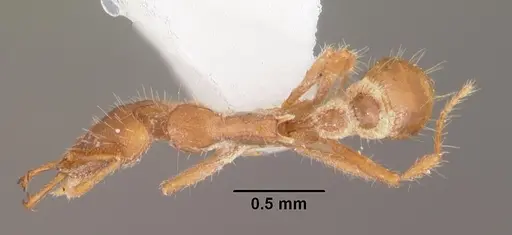
CASENT0900820
Ver no AntWeb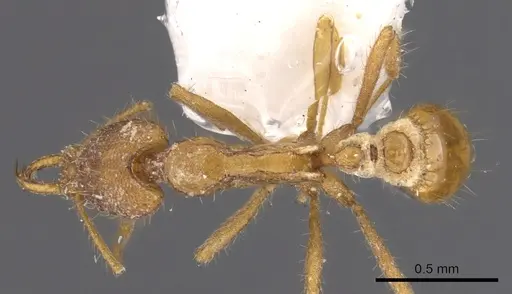
Literatura
Carregando mapa de distribuição...Carregando produtos...