
Strumigenys interfectiva
- Nome científico
- Strumigenys interfectiva
- Tribo
- Attini
- Subfamília
- Myrmicinae
- Autor
- Lattke & Goitía, 1997
- Distribuição
- Encontrada em 1 países
Introdução
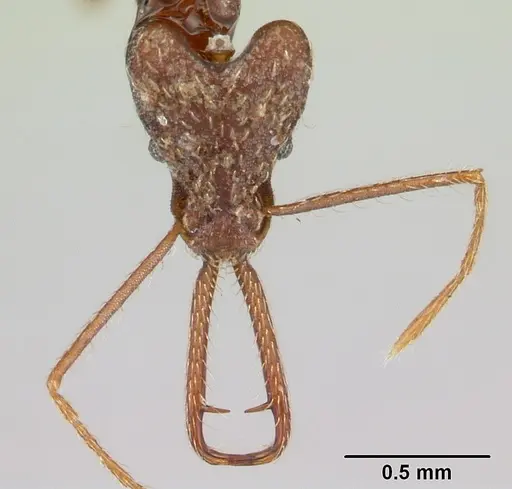
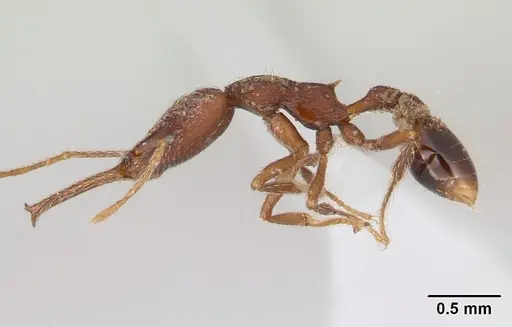
Strumigenys interfectiva is a tiny predatory ant measuring 3.1-3.3 mm in total length . Its workers have a narrow ventral spongiform strip on the petiole, longitudinal costulae across the postpetiolar disc, and fine longitudinal striations on the first gastral segment . This species belongs to the Strumigenys marginiventris group and is known from cloud forests and plantain plantings in northern South America: Venezuela, Colombia, Peru, and Bolivia . It has been recorded at elevations around 1400 m in Venezuela . Like all Strumigenys, this species has specialized trap-jaw mandibles for catching tiny prey. They are among the smallest ants in the Myrmicinae subfamily and are rarely kept in captivity due to their specialized diet and limited availability.
Quick Summary
- Difficulty: Expert
- Origin & Habitat: Cloud forests and plantain plantings in northern South America (Venezuela, Colombia, Peru, Bolivia) at elevations around 1400 m [2][1][3][4].
- Colony Type: Unknown, colony structure has not been documented for this species.
- Size & Growth:
- Antkeeping:
- Temperature: Unconfirmed. Their cloud forest habitat at 1400 m suggests they prefer cool, stable conditions around 18-22 °C. Start in this range and observe colony activity.
- Humidity: Unconfirmed. Cloud forest origin indicates high humidity needs. Keep the nest substrate consistently moist but not waterlogged. A moisture reservoir with a cotton wick works well.
- Diapause: Unknown, may need a cool period matching Andean seasonal patterns. More research needed.
- Nesting: In nature they likely nest in rotting wood or deep leaf litter. In captivity, a small test tube setup or tight-chambered nest works well. They need passages scaled to their tiny size to feel secure.
- Behavior: Strumigenys interfectiva is a shy, non-aggressive species. They possess a functional stinger but rarely use it against humans. Workers hunt individually with trap-jaw mandibles, capturing tiny live prey. Escape prevention is critical due to their very small size, they can squeeze through standard barrier gaps. They are slow-moving and spend most of their time in leaf litter.
- Common Issues: very small size means escapes are likely without fine mesh barriers, specialized diet requires constant supply of tiny live prey like springtails, slow growth and small colony sizes make colonies fragile and prone to collapse, wild-caught may have parasites that kill them in captivity, lack of species-specific care information means keepers must experiment
Housing and Nest Setup
Due to their extremely small size (workers are only 3.1-3.3 mm [1]), Strumigenys interfectiva requires specialized housing with excellent escape prevention. Use test tubes with cotton barriers or small acrylic nests with chambers scaled to their tiny dimensions. The nest should have tight-fitting lids and all openings must be sealed with fluon or similar barriers. A small outworld area connected to the nest allows for hunting space. Because they come from cloud forest environments with high humidity, the nest setup should allow for moisture retention without becoming waterlogged. A small water reservoir connected to the nest via a cotton wick works well for maintaining humidity [2].
Feeding and Diet
Strumigenys are specialized predators that require live tiny prey. In captivity, they typically accept springtails (Collembola), tiny soil mites, and other micro-arthropods. They are unlikely to accept sugar sources or dead prey, their trap-jaw mandibles are specialized for catching moving prey. Feed small live prey items at least twice weekly, removing any uneaten prey after 24-48 hours. The prey should be much smaller than the ant itself. A constant supply of springtail cultures is ideal. Do not attempt to feed them standard ant foods like honey or protein mixes, they are obligate predators on tiny arthropods.
Temperature and Humidity
This species originates from Andean cloud forests at approximately 1400 m elevation [2], suggesting they prefer cool, stable conditions. Aim for temperatures in the range of 18-22 °C. Avoid temperatures above 25 °C as this may stress the colony. Humidity should be high, keep the nest substrate consistently moist but not waterlogged. Use a moisture reservoir connected to the nest to maintain consistent humidity without having to mist directly. Monitor for condensation, a light film of condensation on the nest walls indicates good humidity levels. These requirements are estimates based on habitat data, as no direct observations exist for this species.
Behavior and Temperament
Strumigenys interfectiva is a shy, non-aggressive species that relies on camouflage and escape rather than confrontation. Workers hunt individually, using their trap-jaw mandibles to capture tiny prey. They are not defensive and will not bite or sting humans. Due to their tiny size, they are excellent escape artists, even standard ant barriers may not contain them. Use fine mesh (at least 0.5 mm or smaller) on all openings. Colony size is unknown, but based on the genus pattern, it may remain under 100 workers even at maturity. Workers are slow-moving and spend most of their time foraging in the substrate.
Colony Acquisition
This species is extremely rare in the antkeeping hobby and is not commonly available from suppliers. If available, colonies will likely be wild-caught from their native range. Be extremely cautious with wild-caught colonies, they often contain parasites that can wipe out the colony in captivity. Quarantine any new colony separately for several weeks and monitor for signs of mites, nematodes, or other parasites. Consider that wild-caught colonies may be stressed from collection and transport, and may take significant time to acclimate. Given the lack of captive breeding information, establishing a thriving colony requires significant experience with dacetine ants.
Frequently Asked Questions
Can I keep Strumigenys interfectiva in a test tube?
Yes, a test tube setup works well for this tiny species. Use a small test tube with a water reservoir and cotton barrier. However, escape prevention is critical, they can squeeze through tiny gaps, so ensure all connections are sealed with fluon or similar barriers.
What do Strumigenys interfectiva ants eat?
They are specialized predators that require live tiny prey. Feed them springtails (Collembola), tiny soil mites, and other micro-arthropods. They will not accept sugar water, honey, or dead insects. A constant supply of live springtails is ideal.
How long until first workers in Strumigenys interfectiva?
The exact development timeline is unknown. No direct data exists for this species.
Are Strumigenys interfectiva good for beginners?
No. This is an expert-level species due to their specialized predatory diet, very small size requiring excellent escape prevention, and lack of species-specific care information. They are also extremely rare in the hobby.
How big do Strumigenys interfectiva colonies get?
Colony size is unknown, no published data exists. Based on the genus pattern, they may remain under 100 workers, but this is speculative.
Do Strumigenys interfectiva need hibernation?
Unknown. Their cloud forest origin at 1400 m elevation suggests they may experience seasonal temperature changes, but specific diapause requirements have not been documented.
Why are my Strumigenys interfectiva dying?
Common causes include: temperature stress (too warm), incorrect diet (they need live tiny prey, not sugar or dead insects), escape through tiny gaps, parasites from wild-caught colonies, and humidity issues. Review all care parameters and ensure prey items are appropriate size.
When to move Strumigenys interfectiva to a formicarium?
Only move them when the test tube is fully occupied and the colony is healthy. Given their small colony size and specialized needs, many keepers keep them in test tube setups long-term. If moving, use a small acrylic nest with appropriately sized chambers.
Can I keep multiple queens together?
Not recommended and not documented. Colony structure is unknown for this species. Combining unrelated queens of this species has not been studied and could result in aggression.
Report an Issue
The current care sheet is based fully on literature. See inconsistencies, or something that's incorrect? Please , it will be resolved after review from an admin. Contributing to the blogs tab also helps providing information, to make us be able to further improve the caresheets. Thank you for your support!
References

Este guia de cuidados está sob a licença CC BY-SA 4.0 .
Posts da comunidade
CASENT0178641
Ver no AntWeb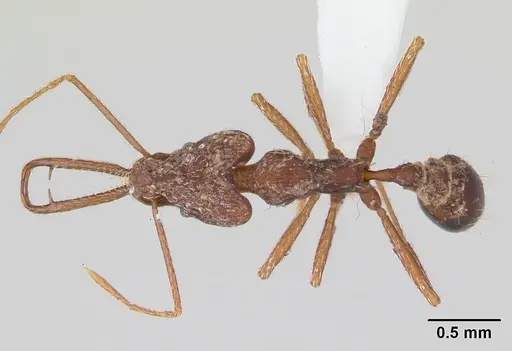
Literatura
Carregando mapa de distribuição...Carregando produtos...