
Strumigenys economoi
- Nome científico
- Strumigenys economoi
- Tribo
- Attini
- Subfamília
- Myrmicinae
- Autor
- Booher <i>et al.</i>, 2019
- Distribuição
- Encontrada em 0 países
Introdução
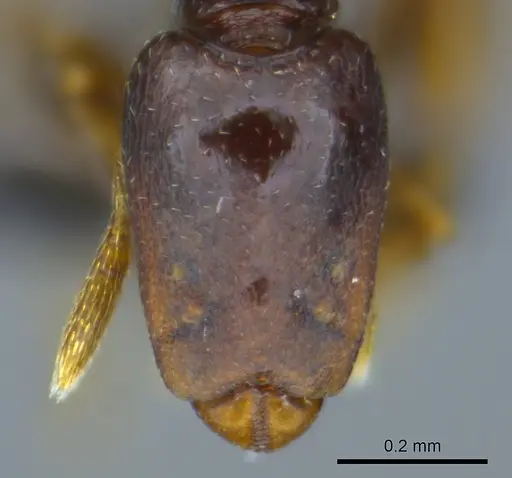
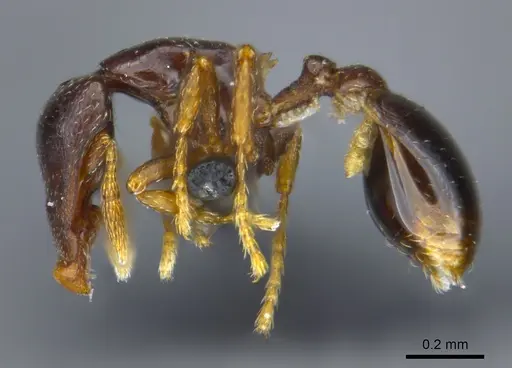
Strumigenys economoi is an extremely rare trap-jaw ant, known from a single worker discovered in the Jardín Botánico Nacional, Santo Domingo, Dominican Republic. Workers are tiny at 2.22 mm total length, with a dark reddish-brown body and lighter brown appendages . It belongs to the Strumigenys simulans group and is one of only two Antillean species with four antennal segments and triangular interlocking mandibles . The mandibles are specialized trap-jaws, but their function hasn't been studied in this species. This species is remarkable mostly for its extreme rarity - only one specimen has ever been found, collected from forest litter in a botanical garden's mature lowland forest . It has never been kept in captivity, so all care recommendations are guesses based on related Strumigenys. The genus as a whole is famous for using trap-jaws to hunt tiny prey like springtails, making them fascinating but challenging to keep - if you could ever find a colony.
Quick Summary
- Difficulty: Expert
- Origin & Habitat: Only known from Jardín Botánico Nacional, Santo Domingo, Dominican Republic (Greater Antilles). Found in mature lowland forest, collected from forest litter via mini-Winkler sampling [1].
- Colony Type: Unknown, only a single worker has ever been documented. No information about colony structure.
- Size & Growth:
- Queen: Unknown, no queen has been described
- Worker: 2.22 mm total length (TL) [1]
- Colony: Unknown, likely small based on related Strumigenys species (often under 100 workers)
- Growth: Unknown
- Development: Unknown, no data for this species. Related Strumigenys suggest 8-12 weeks at warm temperatures. (No direct data exists, all estimates from closely related species.)
- Antkeeping:
- Temperature: Keep warm at 24-28 °C, based on tropical Caribbean lowland forest habitat [1].
- Humidity: Keep the nest substrate consistently moist but not waterlogged, high humidity is expected for a leaf‑litter species [1].
- Diapause: Unlikely, this tropical species probably does not require winter dormancy [1].
- Nesting: In nature they live in forest litter and rotting wood. In captivity, a naturalistic setup with moist soil/leaf litter or a small Y‑tong or plaster nest works best. Chambers should be very small to fit their tiny size. Do not use acrylic nests.
- Behavior: Strumigenys are specialized predators with trap-jaw mandibles used to hunt micro‑arthropods like springtails. They are not aggressive toward humans. As a myrmicine, they possess a functional stinger, but it is small and not medically significant. Their tiny size (2.22 mm) means excellent escape prevention is critical, standard mesh will not stop them.
- Common Issues: this species has never been kept in captivity, all care is experimental, extremely small size requires mesh openings ≤0.5 mm to prevent escape, requires a constant supply of live micro‑prey (springtails) which must be cultured separately, colony size is likely tiny, making them vulnerable to stress and disturbance, only one specimen is known, so acquiring a colony is essentially impossible
Housing and Nest Setup
Strumigenys economoi is an extremely small leaf‑litter ant, so the nest must be carefully designed. In the wild they live in forest floor debris, so a naturalistic setup with moist substrate (soil or a soil/plaster mix) topped with leaf litter is ideal. Alternatively, a small Y‑tong (AAC) or plaster nest with very narrow chambers works. Whichever you choose, use the finest mesh available (0.5 mm or tighter) on any ventilation holes and seal all connections, these ants can slip through standard insect mesh. Maintain high humidity by misting or using a water reservoir, but avoid waterlogging. Because no one has kept this species, adapt conditions by watching the colony and adjusting moisture as needed [1].
Feeding and Diet
Strumigenys are specialized carnivores that use their trap‑jaw mandibles to catch live prey. In captivity, live springtails should be the main food, these tiny soil arthropods are their natural prey. Other small live micro‑arthropods like booklice (psocids) or very small isopods may also be taken. Strumigenys are not attracted to sugar or honey, their diet is almost entirely protein from live prey. Feed small amounts every few days and remove any uneaten prey after 24 hours to prevent mold. You must have a well‑established springtail culture before even attempting to keep this species [1].
Temperature and Seasonal Care
As a tropical Caribbean species from the Dominican Republic, Strumigenys economoi needs warm, stable temperatures. Keep the nest at 24-28 °C (75-82 °F) with minimal fluctuations. A small heating cable on one side can create a gentle gradient, but avoid direct heat that could dry out the nest. Since this is a tropical lowland species, it likely does not require winter diapause. If your room temperature drops in winter, you may see some slowing of activity, but that is normal. Maintain high humidity alongside the warmth [1].
Understanding the Trap‑Jaw Mechanism
Strumigenys ants have one of the most sophisticated hunting mechanisms in ants. Their triangular mandibles snap shut very quickly when triggered by sensory hairs near the mouth. This allows them to catch fast prey like springtails that other ants cannot hunt. The mandibles interlock when closed [1]. In captivity, you may see workers lying in ambush, remaining still until prey triggers the trap. This specialized method means they absolutely need live prey, they cannot eat dead insects or protein paste like many other ant species.
Colony Establishment and Growth
No Strumigenys economoi colonies have ever been established, so everything here is inferred from related Strumigenys. Queens probably seal themselves in a claustral chamber and raise the first brood alone, living off stored reserves until nanitic workers emerge. Initial growth will be slow, expect only a handful of workers in the first months. Strumigenys colonies typically remain small (often under 100 workers) even when mature. The key is patience and stable, warm, humid conditions with a constant supply of live springtails. Disturbance should be kept to a minimum, especially during founding, as stress can cause brood abandonment or consumption [1].
Frequently Asked Questions
Can I keep Strumigenys economoi as a beginner antkeeper?
No, this species is not suitable for beginners. It has never been kept in captivity, has no established care protocol, and requires specialized live prey (springtails) that must be cultured separately. The extreme rarity of this species also makes acquiring a colony essentially impossible since only one wild specimen has ever been found [1].
Where can I get Strumigenys economoi?
This species is essentially unavailable to antkeepers. It is known from only a single specimen collected in the Dominican Republic in 2017 and described in 2019. No colonies exist in captivity, and it has not been found again since its initial discovery. Even if new specimens were found, exporting them would require permits [1].
How long does it take for Strumigenys economoi to produce first workers?
Unknown for this species. Based on related Strumigenys and similar small tropical ants, expect 8-12 weeks from egg to first nanitic worker at optimal temperature (around 26 °C). Growth is typically slow, and colonies stay small even when established [1].
What do I feed Strumigenys economoi?
Live springtails should be the primary food, these tiny soil arthropods are their natural prey. Other small live micro‑arthropods may be accepted experimentally. Do not rely on sugar water, honey, or killed insects, Strumigenys are specialized carnivores that need live hunting opportunities to trigger their trap‑jaw mechanism [1].
Do Strumigenys economoi need hibernation?
Unlikely, this is a tropical Caribbean species that does not experience cold winters. They probably do not require diapause. However, a slight reduction in activity may occur if room temperatures drop during winter [1].
How big do Strumigenys economoi colonies get?
Unknown, no colonies have ever been documented. Based on related Strumigenys species, colonies likely remain small (probably under 100 workers) even at maturity. This is typical for the genus, which favors small, specialized colonies [1].
Why is Strumigenys economoi so rare?
This species was only discovered in 2019 and is known from a single specimen collected in a botanical garden in Santo Domingo, Dominican Republic. It may be genuinely rare, or the appropriate habitat (mature lowland forest litter) may not have been thoroughly surveyed. Its discovery in a botanical garden suggests it may have very specific microhabitat requirements [1].
Can I keep multiple Strumigenys economoi queens together?
Unknown, colony structure has never been documented for this species. Based on related Strumigenys, they likely have single‑queen colonies. Combining queens is not recommended as it has never been studied and could lead to aggression [1].
What makes Strumigenys economoi different from other Strumigenys?
Strumigenys economoi is separated from its closest relative Strumigenys simulans by its pilosity (extremely short adpressed hairs versus standing curved setae) and the shape of its anterior clypeal outline (sinuate versus shallowly concave) [1]. It is one of only two Antillean species with four antennal segments and triangular interlocking mandibles [1].
Report an Issue
The current care sheet is based fully on literature. See inconsistencies, or something that's incorrect? Please , it will be resolved after review from an admin. Contributing to the blogs tab also helps providing information, to make us be able to further improve the caresheets. Thank you for your support!
References

Este guia de cuidados está sob a licença CC BY-SA 4.0 .
Posts da comunidade
DL-FORM00001
Ver no AntWeb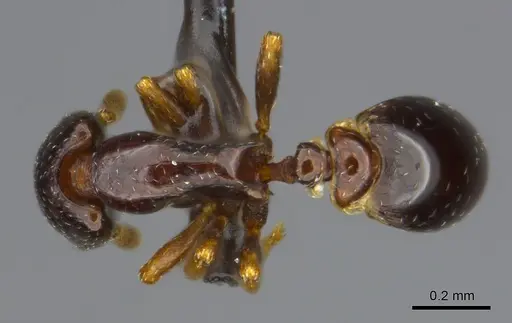
Literatura
Carregando mapa de distribuição...Carregando produtos...