
Strumigenys dyseides
- Nome científico
- Strumigenys dyseides
- Tribo
- Attini
- Subfamília
- Myrmicinae
- Autor
- Bolton, 2000
- Distribuição
- Encontrada em 3 países
Introdução
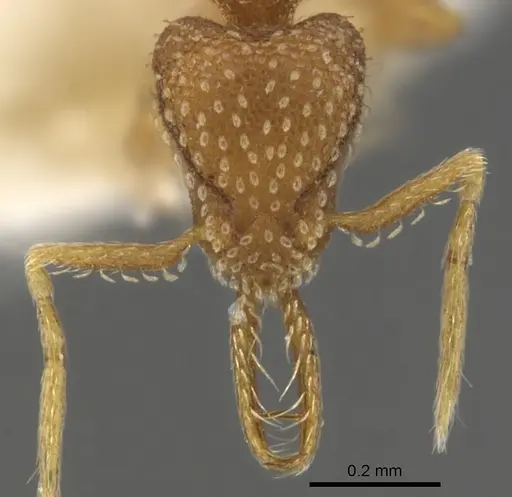
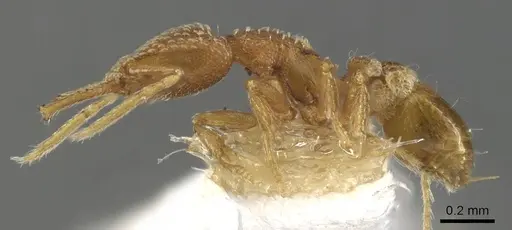
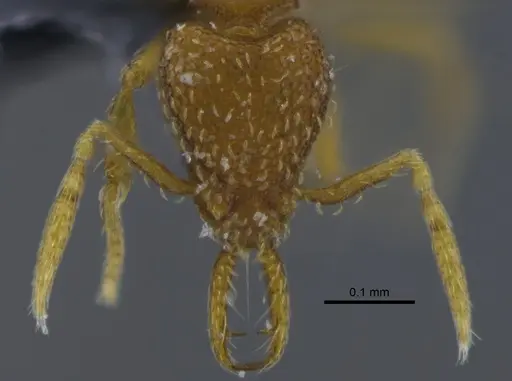
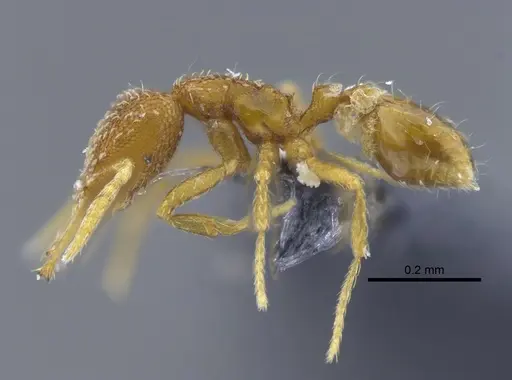
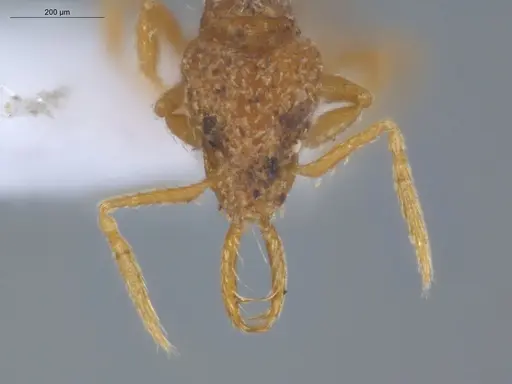
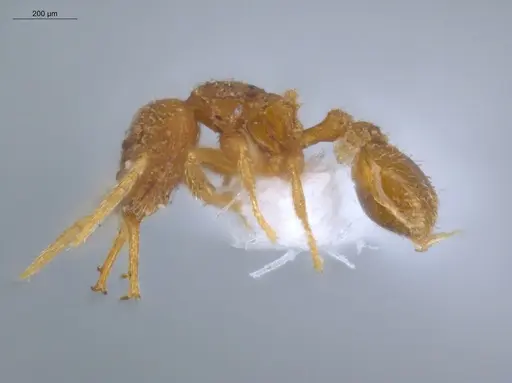
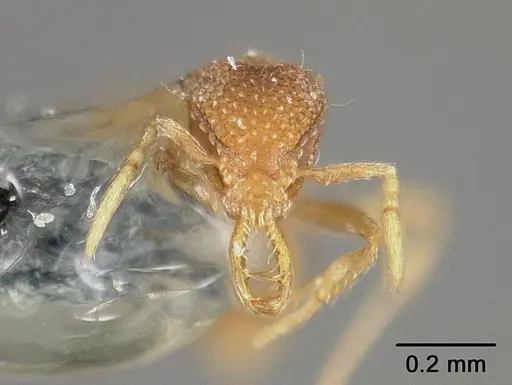
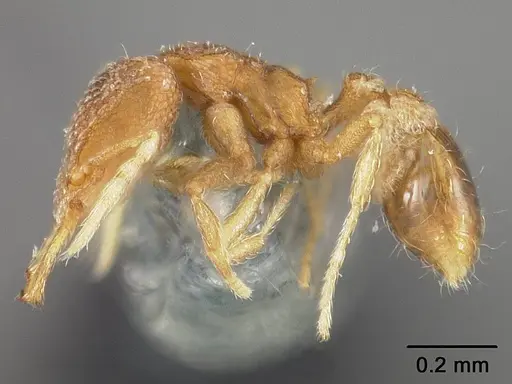
Strumigenys dyseides is a tiny ant, with workers measuring 1.8 mm total length . It belongs to the dacetine tribe (Attini) and has relatively long, slender mandibles used for capturing prey . The disc of the postpetiole is smooth and shining, and the first gastral tergite has sparse, very fine flagellate hairs . This species is a member of the Strumigenys silvestrii group . It can be identified by the absence of standing hairs on the mesonotum and the curved, spoon-shaped hairs along the upper scrobe margin . These ants inhabit forest leaf-litter in the Neotropical region, with records from Colombia (Putumayo, Arauca), French Guiana, and Argentina .
Quick Summary
- Difficulty: Hard
- Origin & Habitat: Neotropical region, found in Colombia (Putumayo, Arauca), French Guiana, and Argentina. Inhabits forest leaf-litter in primary rainforest and disturbed areas [1][5][4][6].
- Colony Type: Unknown, colony structure has not been documented.
- Size & Growth:
- Antkeeping:
- Temperature: Based on tropical rainforest habitat, keep at 24-28°C. Avoid prolonged temperatures below 22°C [5][6].
- Humidity: High, keep nest substrate consistently moist but not waterlogged. These ants desiccate quickly due to their small size [1].
- Diapause: No, tropical species, requires warm conditions year-round.
- Nesting: Use small Y-tong (AAC) or plaster nests with tight chambers scaled to their tiny size. Provide a moisture source and dark conditions. Avoid acrylic nests.
- Behavior: These ants are small and slow-moving, specialized predators. They have a functional stinger but it is not medically significant to humans. Escape prevention is critical due to their minute size, they can squeeze through tiny gaps.
- Common Issues: tiny size makes escape prevention difficult, use fine mesh and tight barriers., specialized diet requires live prey such as springtails, standard ant foods may be ignored., slow growth tests keeper patience, colonies take months to develop., high humidity needs can cause mold if ventilation is poor., wild-caught colonies may contain parasites that can devastate the colony.
Housing and Nest Setup
Strumigenys dyseides requires careful housing due to its extremely small size. Use small Y-tong (AAC) or plaster nests with tight chambers scaled to the colony. These ants feel stressed in overly large spaces. Provide a water tube or moisture reservoir connected to the nest area to maintain humidity. Keep the nest dark to simulate the leaf-litter microhabitat [6][5]. The outworld should be small and easy for them to navigate. Use fine mesh for any ventilation, these ants can escape through gaps that seem impossibly small. A layer of moist substrate (such as coco peat or soil mix) in the foraging area helps maintain humidity and provides a more natural environment.
Feeding and Diet
As dacetine ants, Strumigenys dyseides are specialized predators that require live prey. Their natural diet consists of tiny arthropods, especially springtails (collembola) and other micro-invertebrates found in leaf-litter [7]. In captivity, you must provide a steady supply of appropriately-sized live prey. Springtails are ideal and should be cultured as a permanent colony. Other small live prey like fruit flies or pinhead crickets may be accepted, but springtails should form the bulk of their diet. They have long, slender mandibles designed for precision striking and are not equipped to handle large prey or sugary foods. Offer honey water only if accepted, but most keepers find these ants do not take sugar. Feed every 2-3 days, offering only what the colony can consume within a day. Remove uneaten prey to prevent mold.
Temperature and Humidity
These tropical ants require warm, humid conditions year-round. Maintain temperatures between 24-28°C in the nest area. A slight temperature gradient allows the colony to regulate their own temperature. Avoid temperatures below 22°C for extended periods, as this can weaken the colony [5][6]. Humidity is critical, aim to keep the nest substrate consistently moist but never waterlogged. These ants desiccate quickly due to their tiny size. Use a moisture reservoir connected to the nest and mist the outworld occasionally. Balance humidity with adequate ventilation to prevent mold, which can be deadly to small colonies.
Colony Development
Development timeline is undocumented for this species. Based on related dacetine ants, colonies grow slowly. A newly mated queen likely founds the colony without help (based on typical Strumigenys patterns), but this is unconfirmed. Workers are tiny even at maturity. Do not expect fast growth, patience is essential. Colonies likely remain small, but exact maximum size is unknown. Avoid moving the colony to a larger nest too early.
Behavior and Temperament
These are cryptic, non-aggressive ants that spend most of their time hidden within the nest. Workers move slowly and deliberately, making them fascinating to observe when they do venture out to hunt. Their long mandibles are used for a strike-and-grab technique to capture tiny prey [2]. They have a functional stinger but it is not medically significant, they are harmless to humans. Unlike many ants, they do not form raiding columns or exhibit swarming behavior. The main challenge for keepers is escape prevention due to their tiny size. Always use fluon on nest rims and fine mesh on ventilation. When stressed, workers retreat deep into the nest, this is normal.
Frequently Asked Questions
How long does it take for Strumigenys dyseides to produce first workers?
This is not documented. Based on related species, it likely takes several weeks, but exact timing is unknown.
What do Strumigenys dyseides ants eat?
They are specialized predators that require live prey. Springtails are ideal, culture a permanent springtail colony for a steady supply. They may also accept fruit flies or pinhead crickets. They are unlikely to accept sugar sources [7].
Can I keep Strumigenys dyseides in a test tube setup?
Yes, test tubes can work for founding colonies, but use a very small water reservoir and ensure excellent escape prevention. Move to a small Y-tong or plaster nest once the colony outgrows the test tube.
Are Strumigenys dyseides good for beginners?
No, this species is not recommended for beginners. Their specialized diet, high humidity requirements, tiny size making escape prevention difficult, and slow growth require experienced keepers.
How big do Strumigenys dyseides colonies get?
Maximum colony size is unknown. No data is available, but related dacetine ants typically have small colonies (under 100 workers).
Do Strumigenys dyseides need hibernation?
No, they do not require hibernation. As tropical ants, they need year-round warm temperatures (24-28°C).
Why are my Strumigenys dyseides dying?
Common causes include: humidity too low (they desiccate quickly), lack of live prey, temperatures below 22°C, escape through tiny gaps, and mold from excessive moisture. Check each factor when troubleshooting.
When should I move my colony to a formicarium?
Move to a small formicarium (Y-tong or plaster) when the colony outgrows the test tube and the current setup becomes crowded. Avoid oversized nests.
Can I keep multiple queens together?
This is not recommended. Colony structure is undocumented, but Strumigenys are typically single-queen. Combining unrelated queens likely results in fighting.
Report an Issue
The current care sheet is based fully on literature. See inconsistencies, or something that's incorrect? Please , it will be resolved after review from an admin. Contributing to the blogs tab also helps providing information, to make us be able to further improve the caresheets. Thank you for your support!
References

Este guia de cuidados está sob a licença CC BY-SA 4.0 .
Posts da comunidade
CASENT0900479
Ver no AntWeb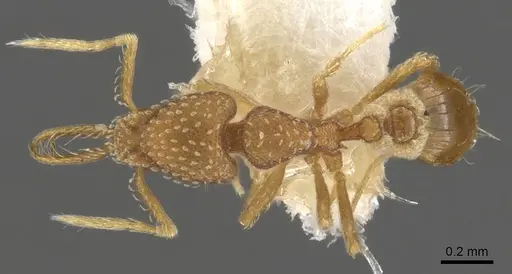
CBUMAGENT41685
Ver no AntWeb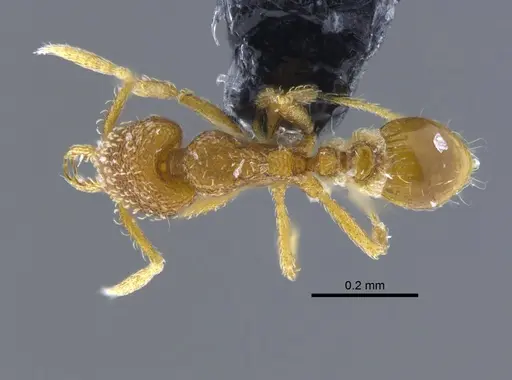
ECOFOG-IT14-0786-67
Ver no AntWeb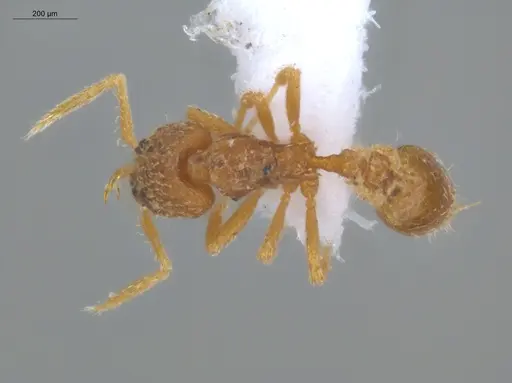
USNMENT00441509
Ver no AntWeb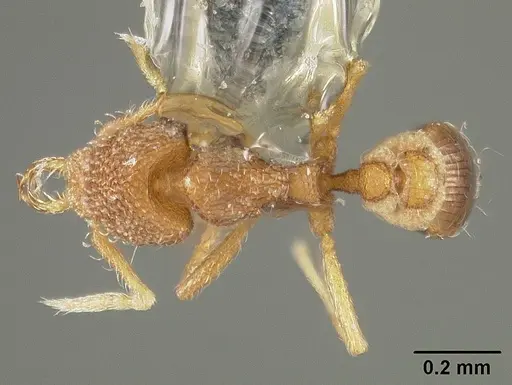
Literatura
Carregando mapa de distribuição...Carregando produtos...