
Strumigenys dontopagis
- Nome científico
- Strumigenys dontopagis
- Tribo
- Attini
- Subfamília
- Myrmicinae
- Autor
- Bolton, 2000
- Distribuição
- Encontrada em 1 países
Introdução
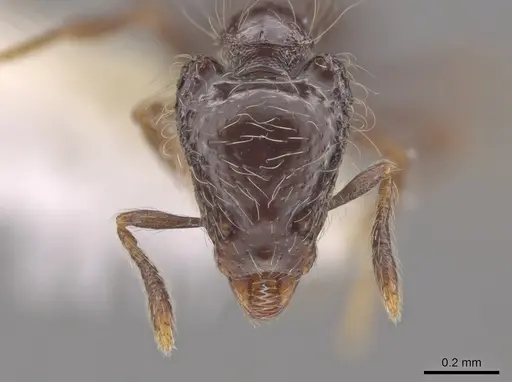
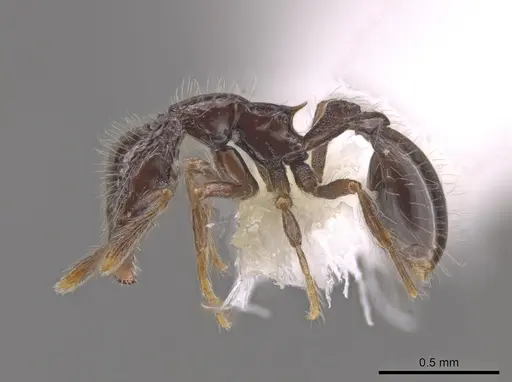
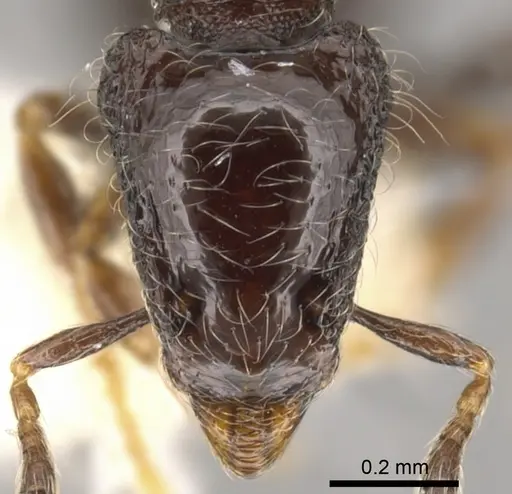
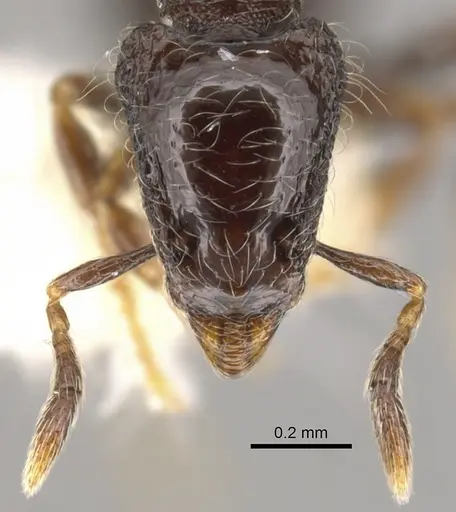
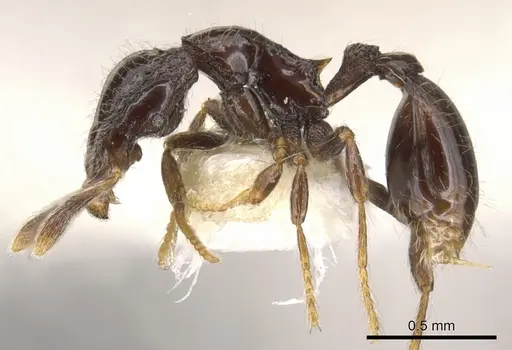
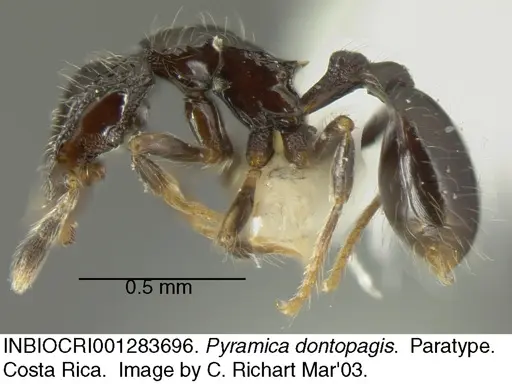
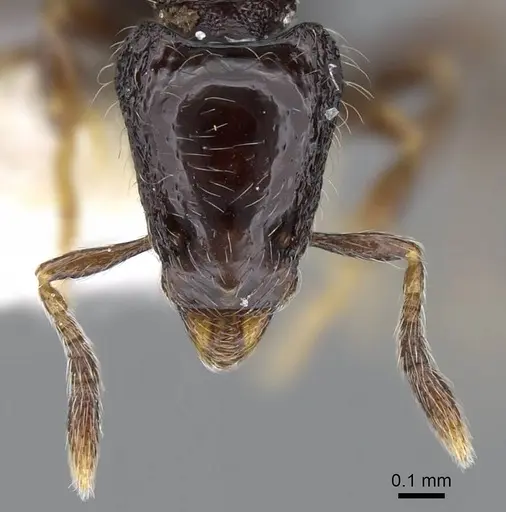
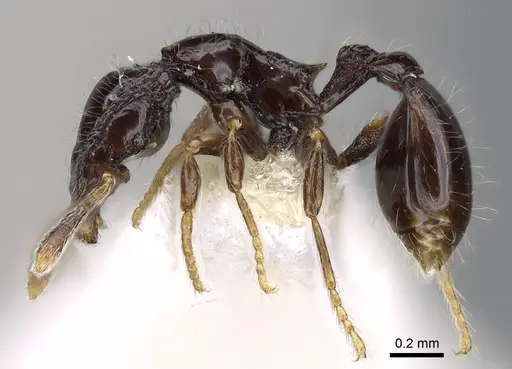
Strumigenys dontopagis is a tiny ant measuring just 2.3-2.4 mm in total length. It was described by Bolton in 2000 as a member of the Strumigenys excisa group . This species has a smooth, shiny head and mesosoma, with fine curved hairs on its body, and fewer and shorter hairs than its close relative Strumigenys excisa . It is found only in Costa Rica, specifically in the Monteverde cloud forest region at around 1500 m elevation, where it inhabits leaf litter on the wet forest floor . Strumigenys dontopagis belongs to the tribe Attini, which includes many predatory species that do not cultivate fungus. Like other Strumigenys, it likely possesses trap-jaw mandibles used to capture small prey .
Quick Summary
- Difficulty: Hard
- Origin & Habitat: Costa Rica, Monteverde cloud forest at 1500 m elevation, wet forest habitats, leaf litter [1][2].
- Colony Type: Colony structure is unconfirmed, no research data on queen number or social organization exists for this species [1].
- Size & Growth:
- Queen: Unknown, queen has not been described in the species description [1].
- Worker: 2.3-2.4 mm total length [1].
- Colony: Unknown, no colony size data available. Related Strumigenys species form colonies of dozens to a few hundred workers.
- Growth: Unknown, no development data exists for this species.
- Development: Unconfirmed, estimated 6-10 weeks at warm temperatures based on related Strumigenys species [1]. (Development timeline is estimated from genus-level data since species‑specific research is lacking.)
- Antkeeping:
- Temperature: 24-26°C based on cloud forest origin, warm but not hot. Use a heating cable on one side of the nest to create a gentle gradient if room temperature is below this range [1][2].
- Humidity: High humidity is essential, these ants come from Costa Rican cloud forests where conditions are constantly damp. Keep the nest substrate consistently moist but not waterlogged, with some drier areas available for the ants to regulate their own moisture exposure [1][2].
- Diapause: No, as a tropical species from Costa Rica, no winter dormancy is required. Maintain warm temperatures year‑round [1][2].
- Nesting: Use a naturalistic setup with moist substrate (e.g., a mix of soil and leaf litter) or a Y‑tong/plaster nest with small chambers scaled to their tiny size. These leaf‑litter ants do well in setups that retain moisture while allowing some ventilation [1].
- Behavior: These are tiny, cryptic ants that spend most of their time hunting in leaf litter. They are predatory, using their trap‑jaw mandibles to capture small prey like springtails and other micro‑arthropods [1][2]. Like all Myrmicinae, they have a functional stinger, but it is not medically significant and they rarely sting keepers. Escape prevention is critical due to their very small size, they can squeeze through the tiniest gaps. They are slow‑moving and not strong climbers, but standard barriers may not contain them.
- Common Issues: escape prevention is critical due to their very small 2.3 mm size, use fine mesh and tight‑fitting lids., high humidity requirements can lead to mold problems if ventilation is poor., lack of available information makes care challenging, this is one of the least‑studied ant species in cultivation., predatory diet means they need constant access to small live prey, they cannot survive on sugar alone., wild‑caught colonies may contain parasites that can devastate captive colonies.
Housing and Nest Setup
Strumigenys dontopagis requires a setup that mimics its natural leaf‑litter environment. A naturalistic terrarium‑style setup works well, use a moist substrate mix of soil, sand, and decomposed leaf litter to a depth of several centimeters. This allows the ants to create their own tunnels and hunting grounds. Alternatively, a Y‑tong (AAC) or plaster nest with small chambers can work, but ensure the chambers are appropriately sized for these tiny 2.3 mm ants. The nest material must stay consistently moist but never waterlogged. A layer of leaf litter on the surface provides hunting grounds and helps maintain humidity. Use excellent escape prevention, these tiny ants can slip through gaps that larger ants cannot. Fine mesh on any ventilation holes is essential [1].
Feeding and Diet
This species is predatory and uses its specialized trap‑jaw mandibles to capture small prey [1]. Their primary food should be live micro‑arthropods, springtails are ideal and widely accepted. Other small prey like booklice, grain mites, and fruit flies can also be offered. They are unlikely to accept sugar water or honey as a food source because this is not part of their natural diet. Feed small prey items every 2-3 days, adjusting based on colony size and consumption rate. Remove any uneaten prey after 24 hours to prevent mold issues. A constant supply of small live prey is more important than any other food source [1].
Temperature and Humidity
Maintain temperatures around 24-26°C, reflecting this species' cloud forest origin in Costa Rica [1][2]. Avoid temperatures above 28°C or below 20°C. A heating cable placed on one side of the nest creates a temperature gradient, allowing ants to regulate their own exposure. High humidity is critical, these ants come from the perpetually damp Monteverde cloud forest. Keep the substrate consistently moist but not standing with water. Mist the setup occasionally and cover it partially to retain moisture. Good ventilation is still necessary to prevent mold, but avoid excessive airflow that dries the environment [1][2].
Behavior and Temperament
Strumigenys dontopagis is a cryptic, ground‑dwelling species that spends most of its time hunting through leaf litter and soil [1][3]. They are not aggressive toward keepers, their small size makes them virtually harmless to humans. Like all Myrmicinae, they possess a functional stinger, but it is not used against humans unless the ant is severely provoked. Their primary defense is their trap‑jaw mandibles, which they use for hunting rather than for defense against large threats. They are slow‑moving compared to many ants and do not climb well, but their tiny size means they can escape through remarkably small gaps. Observe their hunting behavior, they use their snap‑jaw mechanism to capture prey very quickly. Colonies are likely small and secretive [1].
Finding and Acquiring
This species is extremely rare in the antkeeping hobby and has a very limited natural distribution, only known from the Monteverde region of Costa Rica [1][2]. It is not commonly available from suppliers. If you do obtain a colony, it will likely be from a specialized keeper who has propagated this species. Wild collection is not recommended because they are tied to specific cloud forest habitats and collection could harm wild populations. The species seems restricted to specific rainforest preserves according to available research [2].
Seasonal Care
As a tropical species from Costa Rica's cloud forests, Strumigenys dontopagis does not require a diapause or winter rest period [1][2]. Maintain warm, humid conditions year‑round. The Monteverde cloud forest has relatively stable temperatures year‑round, so avoid seasonal temperature fluctuations. No special winter preparation is needed beyond maintaining normal care parameters. The key is consistency, sudden changes in temperature or humidity can stress these sensitive ants [1].
Growth and Development
No specific development data exists for this species. Based on related Strumigenys species, expect development from egg to first worker to take approximately 6-10 weeks at optimal temperatures (around 25°C) [1]. The first workers (nanitics) will be very small, matching the tiny adult size. Growth rate is likely slow to moderate. Colonies probably remain small, likely under 200 workers even at maturity. Be patient with this species as they develop slowly and do not form large colonies quickly. Do not overfeed because excess prey can cause mold issues in their moist environment [1].
Frequently Asked Questions
Can I keep Strumigenys dontopagis in a test tube?
A test tube is not ideal for this species. They require high humidity and a naturalistic setup with moist substrate to mimic their leaf‑litter habitat. A small naturalistic terrarium or a Y‑tong nest with appropriately sized chambers works better. If you must use a test tube setup, use a small one with a water reservoir and keep it in a humid environment [1].
What do Strumigenys dontopagis eat?
They are predatory ants that need live small prey. Feed them springtails as a primary food source, these are ideal size and widely accepted. Other small live prey like booklice, fruit flies, and tiny mites can also be offered. They are unlikely to accept sugar water or honey. A constant supply of small live prey is essential for their survival [1].
How long does it take for first workers to hatch?
The exact timeline is unconfirmed for this species, but based on related Strumigenys species, expect 6-10 weeks from egg to first worker at optimal temperatures around 25°C. Be patient, this is a slow‑growing species and colonies develop gradually [1].
Are Strumigenys dontopagis good for beginners?
No, this is not a beginner species. They have very specific humidity requirements, need a constant supply of small live prey, and are extremely difficult to acquire. Their care requirements are not well‑documented in the hobby, making them challenging even for experienced keepers. Start with more common species like Lasius or Camponotus before attempting this species [1].
Do Strumigenys dontopagis need hibernation?
No, as a tropical species from Costa Rica's cloud forests, they do not require hibernation or any winter rest period. Maintain warm, humid conditions year‑round. They are adapted to stable, warm, damp conditions and do not experience seasonal temperature drops in their natural habitat [1][2].
How big do Strumigenys dontopagis colonies get?
Colony size is unconfirmed for this species, but based on related Strumigenys species, colonies likely reach only dozens to a few hundred workers at maturity. They are not large colony formers. Do not expect the massive worker numbers seen in species like Formica or Camponotus [1].
Why are my Strumigenys dontopagis dying?
Common causes include: low humidity (they need consistently moist conditions), too cold temperatures (keep above 20°C), lack of appropriate live prey (they cannot survive without small live food), and escape (their tiny size means they can slip through standard barriers). Also check for parasites if the colony was wild‑caught. Review all care parameters and ensure humidity and temperature are within acceptable ranges [1][2].
When should I move them to a formicarium?
Do not move them to a traditional formicarium, they do best in naturalistic setups that mimic their leaf‑litter habitat. A small terrarium‑style setup with moist substrate and leaf litter is ideal. Only consider moving if the current setup becomes too small for the colony, and even then, transfer some of the original substrate to preserve beneficial microbes [1].
Can I keep multiple queens together?
This is unknown, no research data exists on colony founding or queen behavior for this species. Do not attempt combining unrelated queens as this could result in fighting. If you obtain multiple foundress queens, house them separately until you have more information about their social structure [1].
What temperature range is ideal for Strumigenys dontopagis?
Keep them at 24-26°C based on their cloud forest origin. Avoid temperatures above 28°C or below 20°C. A heating cable on one side of the nest creates a gradient allowing ants to choose their preferred temperature. Stable, warm conditions are more important than exact numbers [1][2].
Is this species available in the antkeeping hobby?
No, this species is extremely rare in cultivation. It has a very limited natural distribution only in Costa Rica's Monteverde region and is not commonly kept or sold. Most antkeepers will never encounter this species for sale. It remains primarily a collector's species known only from scientific collections [1][2].
Report an Issue
The current care sheet is based fully on literature. See inconsistencies, or something that's incorrect? Please , it will be resolved after review from an admin. Contributing to the blogs tab also helps providing information, to make us be able to further improve the caresheets. Thank you for your support!
References

Este guia de cuidados está sob a licença CC BY-SA 4.0 .
Posts da comunidade
CASENT0648650
Ver no AntWeb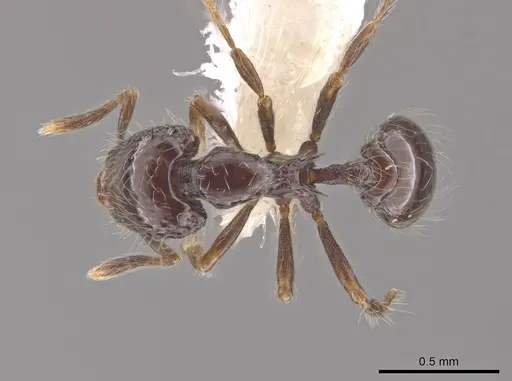
CASENT0900212
Ver no AntWeb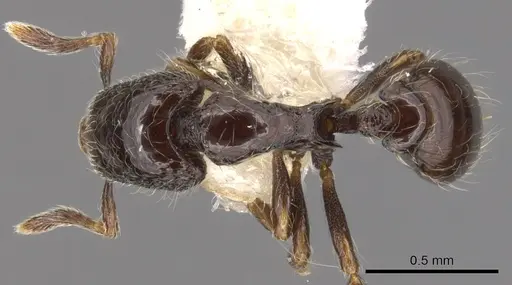
INBIOCRI001283696
Ver no AntWeb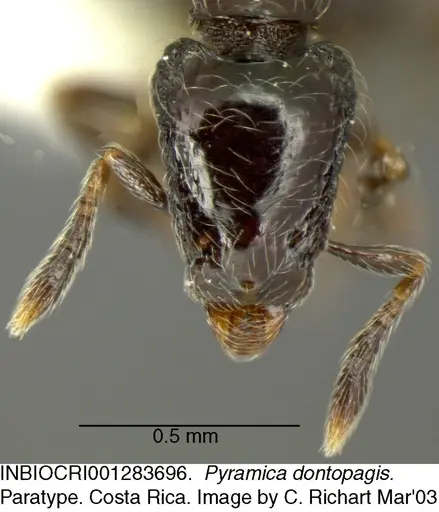
INBIOCRI002272042
Ver no AntWeb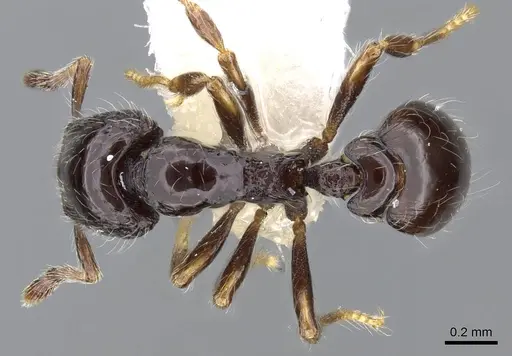
Literatura
Carregando mapa de distribuição...Carregando produtos...