
Strumigenys chapmani
- Nome científico
- Strumigenys chapmani
- Tribo
- Attini
- Subfamília
- Myrmicinae
- Autor
- Brown, 1954
- Distribuição
- Encontrada em 1 países
Introdução
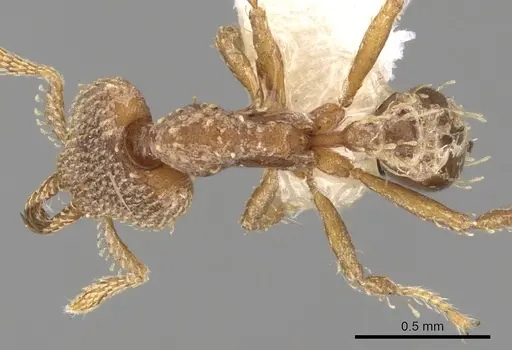
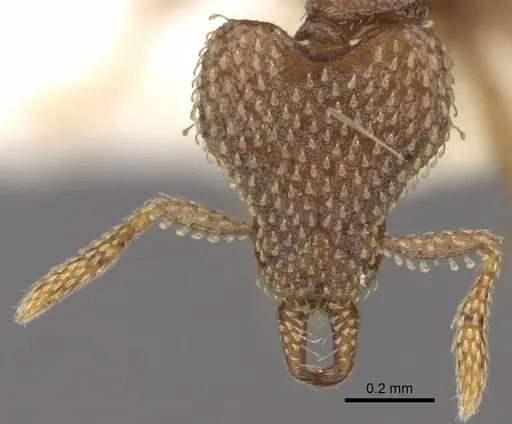
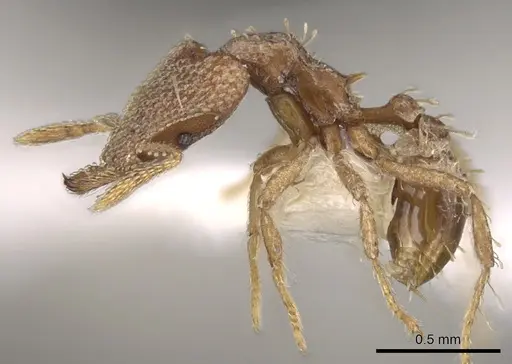
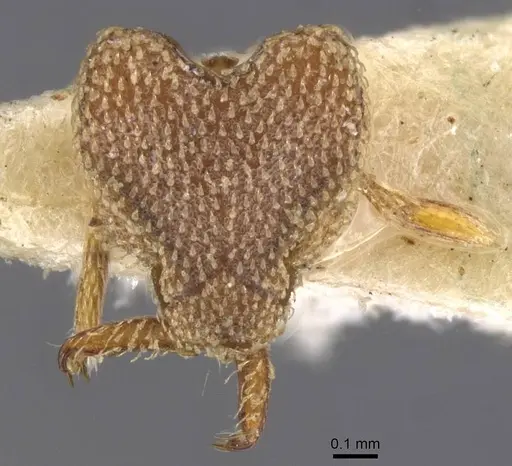
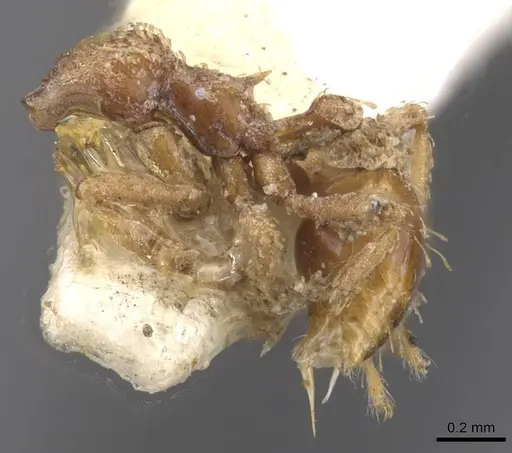
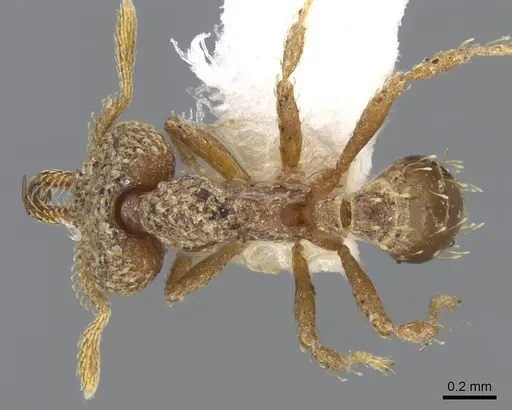
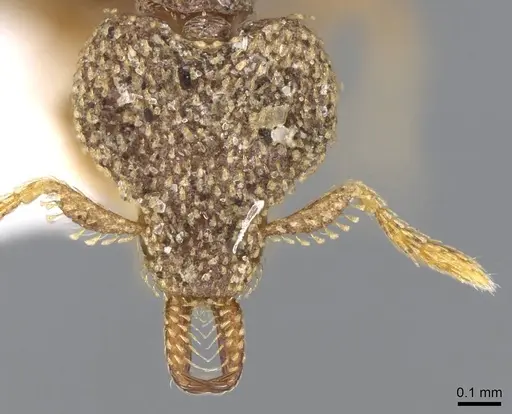
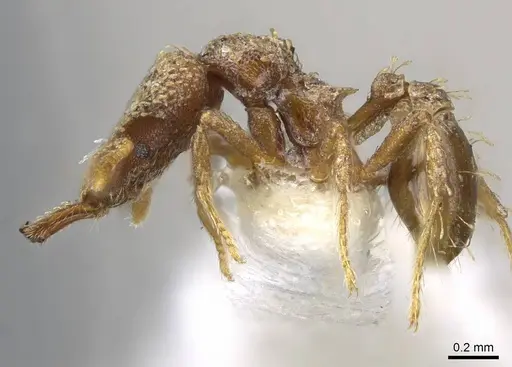
Strumigenys chapmani is a tiny predatory ant, with workers measuring 2.4-2.9 mm total length . They have a reddish-brown color and a matte look from dense fine punctures on the head and body. This species belongs to the trap-jaw ant group (tribe Attini) and is identified by the lack of long hairs on the gaster, no inner mandible lamella, and short ridges at the base of the gaster . They are found across the Indomalaya region: Brunei, Indonesia, Malaysia, the Philippines, and Singapore . These ants live in lowland dipterocarp forests and limestone forests, often collected from tree trunks using bark spray methods . They are specialized micro-predators that hunt small arthropods, especially springtails, using rapid snap-jaw mandibles. Their small colony size and secretive lifestyle make them a challenging species for experienced keepers who want to observe unique hunting behavior.
Quick Summary
- Difficulty: Expert
- Origin & Habitat: Indomalaya region (Brunei, Indonesia, Malaysia, Philippines, Singapore), lowland dipterocarp forests and limestone forests. Collected from tree trunks. [2][1]
- Colony Type: Colony structure is unconfirmed. Based on patterns in related Strumigenys species, they are likely monogyne (single queen) with small colony size.
- Size & Growth:
- Queen: Size data unavailable. Queens are not described in the available literature.
- Worker: 2.4-2.9 mm total length [1]
- Colony: Unknown. Colony size has not been documented for this species. Based on typical Strumigenys, likely under a few hundred workers at maturity.
- Growth: Slow, inferred from related Strumigenys species.
- Development: Unknown. Estimated 8-12 weeks at tropical temperatures (25-28°C) based on related species, but not confirmed for this species. (Development is temperature-dependent. Warmer conditions within the safe range accelerate development.)
- Antkeeping:
- Temperature: 24-28°C, based on tropical lowland forest habitat [2]. Avoid temperatures below 20°C or above 30°C.
- Humidity: High, keep nest substrate consistently moist but not waterlogged. Provide a moisture gradient. This mimics their natural forest floor habitat [2].
- Diapause: No, tropical species, no hibernation needed. Keep warm year-round [2].
- Nesting: Provide a dark, humid nest. Suitable options: test tube with water reservoir for founding, or a more permanent setup with Ytong (AAC) or plaster nest with moisture chambers. A naturalistic setup with moist soil/peat mix also works well. Avoid acrylic nests. [1]
- Behavior: These ants are specialized predators using their trap-jaw mandibles to capture small prey, primarily springtails. They are not aggressive toward humans and pose no sting threat. Workers are slow-moving and forage individually. Due to their tiny size (2.4-2.9 mm), escape prevention is critical, use fine mesh on all openings.
- Common Issues: escape prevention is critical due to their tiny 2.4-2.9 mm size, they can squeeze through very small gaps., they require a constant supply of live springtails as prey, failure to provide appropriate live food leads to colony starvation., maintaining high humidity without causing mold requires good ventilation and careful moisture management., slow colony growth requires patience, frequent disturbances can stress the queen during founding., wild-caught colonies may carry parasites that can devastate captive colonies.
Housing and Nest Setup
Strumigenys chapmani needs a humid, dark environment that mimics their natural habitat in forest leaf litter and under bark. A naturalistic setup works best, use a container with a moist soil/peat mixture (about 70% peat,30% sand) that lets the ants dig chambers. Alternatively, a plaster or Ytong (AAC) nest with built-in moisture chambers maintains humidity well. Keep the nest dark by covering it with an opaque material. For founding colonies, a test tube with a water reservoir works, but watch the humidity carefully, too wet and the colony drowns, too dry and they desiccate. Always provide a water source or mist the outworld without flooding the nest. Escape prevention is key, these tiny ants can slip through very small gaps. Use fine mesh on ventilation holes and make sure all connections are tight [1].
Feeding and Diet
As a specialized predator, Strumigenys chapmani needs live prey to thrive. Their main food should be springtails (Collembola), these are their natural prey in the wild. You can culture springtails using charcoal or soil cultures from pet suppliers. Other suitable prey includes small fruit flies (Drosophila), booklice (Psocoptera), and other tiny arthropods. Feed small prey 2-3 times a week, adjusting based on colony size. Remove uneaten prey after 24-48 hours to prevent mold. Sugar sources like honey water are not needed, these are obligate predators. A mix of different live prey helps keep them healthy [1].
Temperature and Care
These tropical ants need warm conditions all year. Keep temperatures at 24-28°C (75-82°F) with little fluctuation. A heating cable or mat on one side of the nest creates a gentle gradient so the ants can choose their preferred spot. Room temperature may be too cold, use a thermometer to check. Avoid going above 30°C or below 20°C. Since they come from lowland dipterocarp forests in Southeast Asia, they have no diapause requirement and should never be cooled for hibernation [2]. Keep them warm consistently, cold temps slow growth, weaken the colony, and can kill them. The combination of heat and high humidity needs good ventilation to prevent mold while keeping moisture.
Behavior and Temperament
Strumigenys chapmani is a secretive, non-aggressive species that is safe to handle. Workers are small (2.4-2.9 mm) and move slowly, spending most of their time inside the nest or hunting in the outworld. Their trap-jaw mandibles are built for catching tiny prey, not for defense, they cannot sting and rarely bite people. Colonies are low-key and don't produce the foraging trails seen in many ants. Workers hunt alone, not in groups. The main concern is escape risk, their tiny size lets them slip through standard barriers. Always use fluon or similar barriers on smooth surfaces and make sure all enclosure openings have fine mesh. These ants are best watched with patience, they are not interactive but fascinating to observe when hunting and using their rapid mandible snap [1].
Colony Growth and Development
Colony growth in Strumigenys chapmani is slow compared to many common species. Founding behavior has not been confirmed, but based on related species it may involve the queen sealing herself in a chamber and raising the first brood on stored reserves. The first workers (nanitics) likely appear after several weeks under warm conditions. Subsequent brood cycles are slow, and a mature colony probably has only a few hundred workers. The queen is likely long-lived and continues laying eggs. Patience is essential, these ants are a long-term commitment, with a colony possibly taking 2-3 years to reach moderate size. Avoid disturbing the queen during founding, as vibrations and light can cause her to abandon or eat the brood. Once workers emerge, they will gradually expand the nest and start foraging [1].
Frequently Asked Questions
How long does it take for Strumigenys chapmani to produce first workers?
The exact timeline is unknown. Based on related Strumigenys species, expect roughly 6-12 weeks from founding to first workers at warm temperatures (25-28°C). The queen likely seals herself in and raises the first brood alone using stored reserves. Cooler conditions will slow development.
What do Strumigenys chapmani eat?
They are obligate predators that need live small arthropods. Feed them springtails (Collembola) as a staple, you can culture your own or buy from pet stores. Other accepted prey includes small fruit flies, booklice, and tiny insects. They do not accept sugar water, honey, or other carbohydrates. Remove uneaten prey within 48 hours to prevent mold.
Can I keep Strumigenys chapmani in a test tube?
Yes, a test tube setup works for founding colonies if you manage humidity carefully. Fill part of the tube with water (using a cotton plug) and keep the tube dark by covering it with opaque material. Once the colony has 30-50 workers and is foraging, consider moving to a more permanent nest like a Ytong or plaster setup with moisture chambers.
Are Strumigenys chapmani good for beginners?
No, this is an expert-level species. They need high humidity, warm tropical temperatures, a live prey diet (springtails), and excellent escape prevention due to their tiny 2.4-2.9 mm size. Colony growth is slow, requiring patience. Beginners should start with more forgiving species like Lasius or Camponotus.
How big do Strumigenys chapmani colonies get?
Colony size has not been documented. Based on typical Strumigenys patterns, they probably reach a few hundred workers at most. Growth is slow, taking years to reach moderate size. The small colony size reflects their cryptic, predatory lifestyle in forest floor microhabitats.
Do Strumigenys chapmani need hibernation?
No, they are tropical ants from Southeast Asia and do not need hibernation. Keep them warm year-round at 24-28°C. Cold temperatures can kill them or cause colony decline. This is a year-round active species [2].
Why are my Strumigenys chapmani dying?
Common causes include: humidity problems (too dry causes desiccation, too wet causes drowning), cold temperatures below 24°C, starvation from lack of live springtails, escape through tiny gaps, or parasites from wild-caught colonies. Check each factor systematically. Mold from overfeeding or poor ventilation can also kill colonies.
When should I move Strumigenys chapmani to a larger nest?
Wait until the colony has at least 30-50 workers and is actively foraging in an outworld. Moving too early stresses the queen. A naturalistic setup with moist substrate is better than bare plaster or acrylic for this species. Make sure the new setup maintains high humidity and provides dark nesting areas.
Can I keep multiple Strumigenys chapmani queens together?
Not recommended. Strumigenys are typically monogyne (single queen) species, though this is not confirmed for this species. Combining unrelated queens is risky and likely leads to fighting. Only attempt co-founding if you have observed queens cooperating, but this is rare and not documented.
Report an Issue
The current care sheet is based fully on literature. See inconsistencies, or something that's incorrect? Please , it will be resolved after review from an admin. Contributing to the blogs tab also helps providing information, to make us be able to further improve the caresheets. Thank you for your support!
References

Este guia de cuidados está sob a licença CC BY-SA 4.0 .
Posts da comunidade
Literatura
Carregando mapa de distribuição...Carregando produtos...