
Strumigenys artemis
- Nome científico
- Strumigenys artemis
- Tribo
- Attini
- Subfamília
- Myrmicinae
- Autor
- Sarnat <i>et al.</i>, 2019
- Distribuição
- Encontrada em 0 países
Introdução
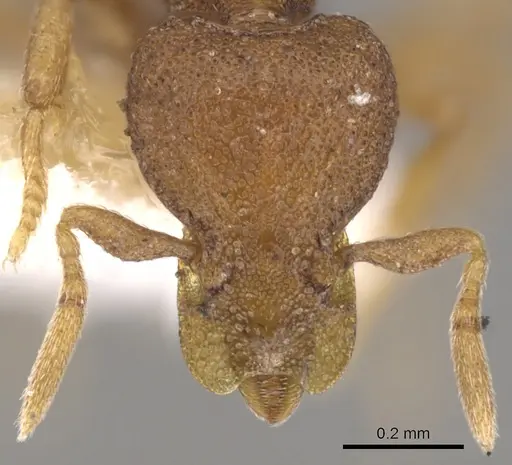
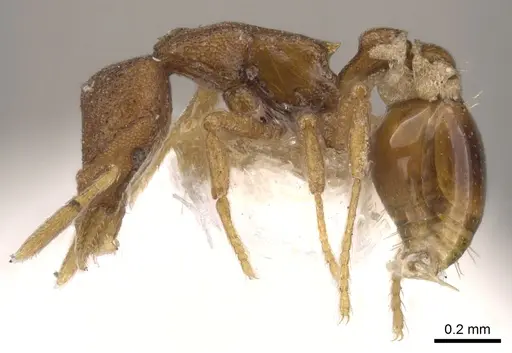
Strumigenys artemis is a tiny ant species endemic to Fiji, measuring just 1.92-2.38mm in total length . Workers have a dull yellowish-brown coloration with remarkably smooth bodies - they lack the long hairs (setae) that many other Strumigenys species display, making them appear almost bald . Their most striking feature is their long, linear trap-jaw mandibles, which they use to snap shut on prey . These ants belong to the Attini tribe, which includes fungus-growers, but Strumigenys have pivoted to a predatory lifestyle, specializing in hunting tiny springtails and other micro-arthropods in the forest leaf litter . This species is notable for being part of Fiji's unique endemic ant fauna - it's found across the archipelago including the smaller islands . As a lowland forest species, they live in the warm, humid tropical environment of Fiji's forests at around 200m elevation . Their small size and smooth appearance make them distinctive among Fijian Strumigenys, and they can be distinguished from similar species by their reduced pilosity and the position of their eyes, which are partially hidden by the head's side margins . Originally treated as two distinct species (Strumigenys sp. FJ13 and Strumigenys sp. FJ17) in earlier work, they were merged into one after closer examination .
Quick Summary
- Difficulty: Expert
- Origin & Habitat: Fiji Islands, endemic to the archipelago, found across major and smaller islands in lowland forest habitats at around 200m elevation [1][2]
- Colony Type: Colony structure is unconfirmed, likely single-queen colonies based on typical Strumigenys patterns, but no specific research exists for this species
- Size & Growth:
- Queen: Unconfirmed, no documented queen measurements for this species
- Worker: 1.92-2.38mm total length [1]
- Colony: Unknown, likely small colonies based on their tiny body size and typical Strumigenys colony patterns
- Growth: Unknown, likely slow to moderate given their small size and tropical origin
- Development: Unconfirmed, no direct data exists for this species. Related tropical Strumigenys typically develop over several weeks under warm conditions. (No direct development data exists for this species. Based on related ants, development likely takes several weeks at tropical temperatures.)
- Antkeeping:
- Temperature: Keep warm at 24-28°C, as a tropical lowland forest species from Fiji, they need consistent warmth [2]. Room temperature may suffice if your home stays in this range, otherwise use a heating cable on one side of the nest to create a gentle gradient.
- Humidity: High humidity required, think damp tropical forest floor. Keep the nest substrate consistently moist but not waterlogged, with some drier areas available. Aim for 70-80% relative humidity in the outworld.
- Diapause: No, as a tropical species from Fiji, they do not require hibernation or winter dormancy [2]. Maintain consistent warm conditions year-round.
- Nesting: In captivity, they do well in naturalistic setups with moist substrate or small Y-tong (AAC), plaster, soil, or 3D-printed nests. Their tiny size means they need tight chambers and narrow passages scaled to their minute dimensions. Avoid tall, open spaces.
- Behavior: These ants are specialized predators with trap-jaw mandibles designed for catching small prey. They are likely nocturnal or crepuscular foragers, hunting through leaf litter in search of springtails and other micro-arthropods. Their small size makes them relatively non-aggressive toward humans, they have a functional sting but it is too tiny to affect humans effectively. However, their minute size creates significant escape risk, they can squeeze through the tiniest gaps. They are likely shy and reclusive, preferring to stay hidden within their nest and foraging tubes.
- Common Issues: escape prevention is critical due to their extremely small size, they can slip through gaps invisible to the naked eye, high humidity requirements can lead to mold problems if ventilation is poor, overfeeding due to slow growth can cause mold and mite outbreaks, specialized diet means they may refuse standard ant foods, live micro-prey is essential, no captive breeding data exists, wild-caught colonies may have parasites or fail to adapt to captivity
Housing and Escape Prevention
Housing Strumigenys artemis presents unique challenges due to their extremely small size. At just 2mm in length, they are among the smallest ants you can keep, which means standard ant keeping equipment often fails to contain them. You must use excellent escape prevention regardless of how docile they appear. Apply Fluon or similar barrier products to all connection points, use fine mesh on any ventilation holes, and ensure all lids fit tightly. Even a hairline gap is an escape route for these tiny ants.
For nesting, a small Y-tong (AAC), plaster, soil, or 3D-printed nest with tight chambers works well, or you can use a naturalistic setup with moist substrate in a small container. The chambers should be appropriately scaled to their tiny size, avoid the large chambers designed for bigger ants. A small outworld connected via tubing is sufficient, they don't need much space. Keep the nest humid and the outworld slightly drier to give them humidity gradients.
Feeding and Diet
Strumigenys are specialized predatory ants with trap-jaw mandibles designed for hunting small prey. In captivity, their primary food should be live springtails, these are the ideal size and nutritional value for such tiny ants. Other small live prey like fruit flies, booklice, and minute soil mites may also be accepted, but springtails should form the core of their diet.
Do not rely on sugar sources, honey, or protein gels, these ants are obligate predators and typically ignore sweet liquids. Some keepers report success offering tiny amounts of protein paste or crushed insects, but live prey is always safest. Feed small amounts every few days, removing any uneaten prey after 24 hours to prevent mold. The key is offering appropriately-sized live prey, not large quantities.
Temperature and Humidity
As a tropical lowland forest species from Fiji, Strumigenys artemis requires warm and humid conditions year-round. Keep the nest area at 24-28°C, this range matches their natural lowland forest habitat and supports normal colony activity [2]. A heating cable placed on one side of the nest can create this temperature gradient if your room temperature is cooler.
Humidity is equally important. These ants come from Fiji's humid forests, so aim for 70-80% relative humidity in the nest area. Keep the substrate consistently moist but not waterlogged, the substrate should feel damp to the touch. Allow some condensation to form on the nest walls, but ensure adequate ventilation to prevent mold buildup. Both excessive dryness and stagnant air will stress these sensitive ants.
Colony Establishment and Growth
No specific data exists on the founding behavior of Strumigenys artemis. Based on typical Strumigenys patterns, the queen likely seals herself in a small chamber and raises her first workers alone (claustral founding), but this is unconfirmed. The first workers will be tiny even by this species' small standards.
Colony growth is likely slow, these are small ants with potentially long development times. Don't expect rapid expansion. A mature colony probably numbers in the hundreds of workers at most, not the thousands seen in larger ant species. Patience is essential with this species. Avoid the temptation to overfeed or expand the nest too quickly, as this leads to mold problems that can devastate small colonies.
Behavior and Temperament
Based on general Strumigenys behavior, Strumigenys artemis is likely a shy, reclusive species that prefers to stay hidden within its nest. Their trap-jaw mandibles are specialized hunting tools, not defensive weapons, they pose no threat to humans. When threatened, they may try to flee rather than bite. They have a functional sting, but it is too small to be effective against humans.
These ants are not aggressive colony defenders and won't form impressive foraging trails. Instead, you'll likely observe them sending occasional foragers through tubes to collect prey in the outworld. Their activity may be crepuscular or nocturnal, so don't be concerned if they seem more active in evening hours. Their tiny size and cryptic lifestyle mean they're more of a 'watch from afar' species than an interactive one.
Frequently Asked Questions
How long does it take for Strumigenys artemis to produce first workers?
The exact timeline is unconfirmed. Based on related Strumigenys species, development likely takes several weeks at tropical temperatures (24-28°C), but no direct data exists for this species.
Can I keep Strumigenys artemis in a test tube?
A test tube can work for a founding queen, but you'll need to move them to a small nest quickly once workers arrive. Their tiny size means standard test tube setups may be too large for them to feel secure. A small Y-tong, plaster, or soil nest with appropriately scaled chambers is better for established colonies.
What do Strumigenys artemis eat?
They are specialized predators that need live prey. Feed them live springtails as a primary food source. Other tiny live prey like fruit flies, booklice, or minute soil mites may also be accepted. Do not rely on sugar water, honey, or protein gels, they are obligate predators.
Are Strumigenys artemis good for beginners?
No, this is an expert-level species. Their extremely small size creates major escape prevention challenges, they require high humidity and warm temperatures, they need a specialized live-prey diet, and almost no captive breeding information exists. They are not recommended for beginners.
Do Strumigenys artemis need hibernation?
No, as a tropical species from Fiji, they do not require hibernation or any cool period. Keep them warm and humid year-round. Temperatures below 20°C for extended periods could be harmful.
How big do Strumigenys artemis colonies get?
Colony size is unknown but likely small, probably under 500 workers at maturity. Their tiny body size and typical Strumigenys colony patterns suggest modest colony sizes, not the large colonies seen in many other ant species.
Why are my Strumigenys artemis dying?
Common causes include: escape (they can slip through tiny gaps), low humidity (they need 70-80%), wrong food (they need live springtails, not sugar), mold from overfeeding or poor ventilation, and temperature stress (they need 24-28°C). Review all husbandry parameters and ensure escape prevention is absolute.
When should I move Strumigenys artemis to a formicarium?
Move them once the colony has around 20-30 workers and the test tube is becoming crowded. Use a small nest with chambers scaled to their tiny size. Don't upgrade to a large formicarium, they prefer tight, cozy spaces.
Can I keep multiple Strumigenys artemis queens together?
This has not been studied for this species. Based on typical Strumigenys behavior, single-queen colonies are most likely. Combining unrelated queens is not recommended without evidence they can coexist.
Report an Issue
The current care sheet is based fully on literature. See inconsistencies, or something that's incorrect? Please , it will be resolved after review from an admin. Contributing to the blogs tab also helps providing information, to make us be able to further improve the caresheets. Thank you for your support!
References

Este guia de cuidados está sob a licença CC BY-SA 4.0 .
Posts da comunidade
CASENT0102597
Ver no AntWeb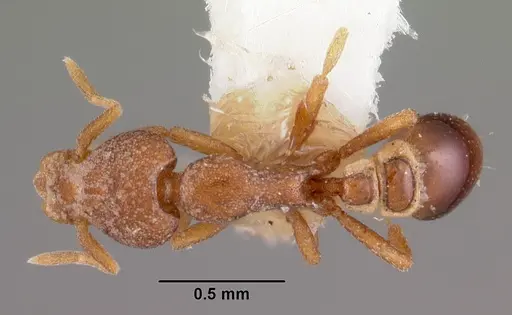
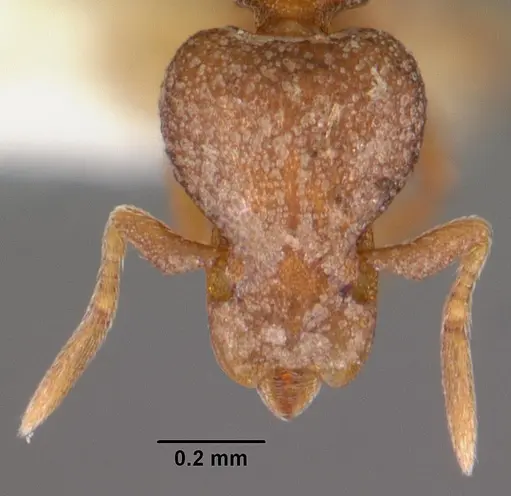
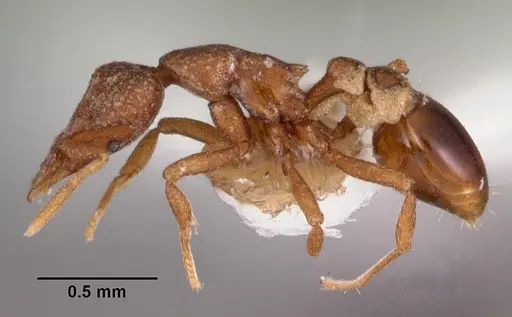
CASENT0900123
Ver no AntWeb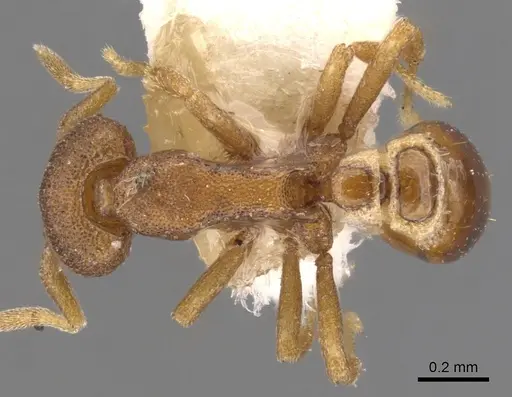
Literatura
Carregando mapa de distribuição...Carregando produtos...