
Strumigenys apalachicolensis
- Nome científico
- Strumigenys apalachicolensis
- Tribo
- Attini
- Subfamília
- Myrmicinae
- Autor
- Deyrup & Lubertazzi, 2001
- Distribuição
- Encontrada em 1 países
Introdução
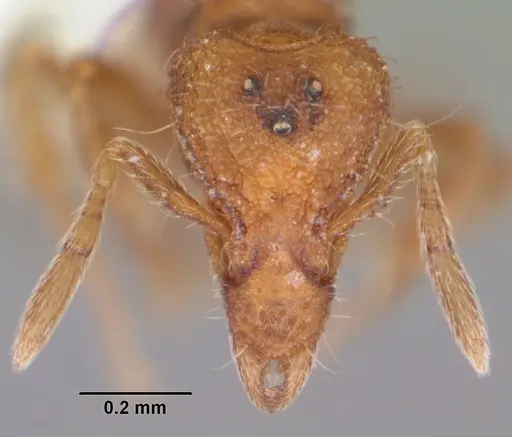
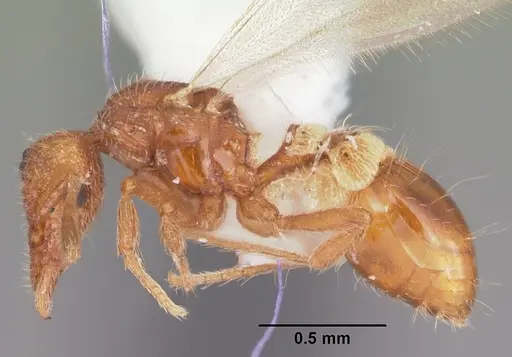
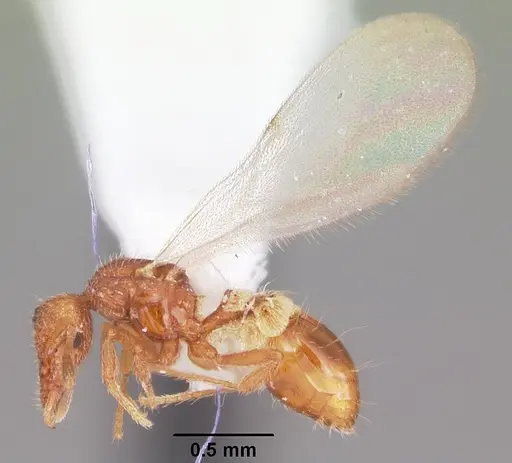
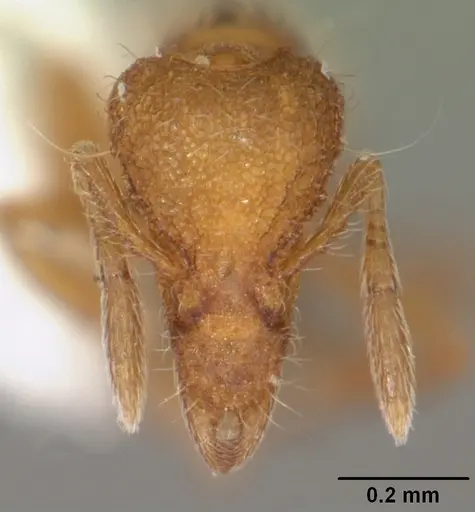
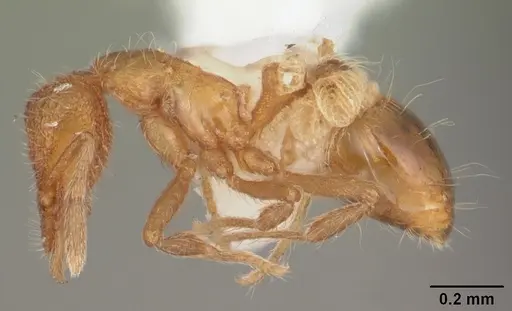
Strumigenys apalachicolensis is a tiny ant native to the southeastern United States, specifically found in Florida's Leon County where it is considered rare . These ants belong to the dacetine group of myrmicines, known for their trap-jaw mandibles that snap shut rapidly to capture small prey. Workers are estimated to be around 2-3 mm and queens slightly larger at 3-4 mm (inferred from typical Strumigenys patterns). The species was originally classified under Pyramica before being moved to Strumigenys . As a Nearctic lineage , it likely inhabits moist, shaded forest-floor microhabitats in the southeastern US . Like other Strumigenys, it has a functional sting, though it is not medically significant to humans (based on subfamily characteristics).
Quick Summary
- Difficulty: Medium
- Origin & Habitat: Leon County, Florida, USA, found in moist, shaded forest habitats in the southeastern United States [1]. The species is considered rare in its native range.
- Colony Type: Colony structure is unconfirmed. Based on typical Strumigenys patterns, colonies likely have a single queen (monogyne) and are relatively small.
- Size & Growth:
- Queen: Size data unavailable. Inferred from Strumigenys genus patterns, queens are slightly larger than workers, roughly 3-4 mm.
- Worker: Size data unavailable. Inferred from Strumigenys genus patterns, workers are about 2-3 mm.
- Colony: Likely up to 100 workers (inferred from genus patterns).
- Growth: Moderate (inferred from genus).
- Development: 6-10 weeks (estimated from related Strumigenys species, species-specific data is unavailable). (Development time is an estimate, actual data for this species is lacking.)
- Antkeeping:
- Temperature: Unknown in detail, based on Florida habitat, likely around 22-26°C. Provide a stable, warm environment with a gentle gradient so ants can self-regulate.
- Humidity: High humidity is needed, keep the nest substrate consistently damp but not waterlogged. Provide a moisture gradient.
- Diapause: Likely requires a mild winter rest period (diapause) based on its Nearctic lineage [2]. Reduce temperature gradually to about 15-18°C for 2-3 months, then warm up in spring.
- Nesting: Naturalistic setup with moist substrate (soil/peat mix) and small chambers. Y‑tong (AAC) nests or test‑tube setups work well. Scale chambers to the ants’ tiny size.
- Behavior: These ants are specialized predators with trap‑jaw mandibles used for hunting tiny arthropods like springtails (likely their main prey, based on genus habits). They have a functional sting but it is harmless to humans. Escape prevention is critical due to their small size. Foraging is slow and individual. Colonies are generally peaceful.
- Common Issues: escape prevention is critical due to their very small size, use fine mesh and tight‑fitting lids, specialized diet makes them difficult to feed, they likely require live springtails or other micro‑prey, high humidity needs can lead to mold problems if ventilation is poor, slow growth can frustrate beginners who overfeed and pollute the nest, wild‑caught colonies may be stressed or carry parasites that cause colony collapse
Housing and Nest Setup
Strumigenys apalachicolensis requires a setup that maintains high humidity and is escape‑proof. A Y‑tong (AAC) nest with narrow chambers or a test tube with a damp cotton reservoir works well. Keep the nest substrate moist but not waterlogged. Because these ants are tiny, use fine mesh on ventilation holes and seal all connections. A naturalistic setup with soil/leaf litter helps maintain humidity and allows natural foraging. Keep the nest in a dimly lit area.
Feeding and Diet
These ants are specialized predators and likely require live springtails (Collembola), which their trap‑jaw mandibles are adapted to catch. Culture your own springtails in a separate container with moist soil and leaf litter. Other tiny live prey such as booklice (psocids) or fruit fly larvae may be accepted. Sugar sources are probably not important. Feed small prey every 2-3 days and remove leftovers to prevent mold.
Temperature and Seasonal Care
Based on its Nearctic lineage [2], Strumigenys apalachicolensis likely prefers stable warm conditions (22-26°C). For winter, provide a mild diapause by gradually reducing temperature to around 15-18°C for 2-3 months. Do not cool them drastically, a gentle reduction is sufficient. Monitor activity during diapause, they will become less active but not fully dormant. Return to normal temperatures gradually in spring.
Behavior and Temperament
This species is peaceful and non‑aggressive toward humans. It has a functional sting but it is not considered medically significant (based on general Myrmicinae characteristics). The trap‑jaw mechanism is used exclusively for hunting tiny prey. Workers forage alone, patrolling slowly for springtails. Colonies are quiet and do not produce noticeable odor. The main concern is their small size, they are excellent escape artists.
Colony Establishment
Establishing a colony is challenging because the species is rare [1] and its founding behavior is unknown. If you obtain a queen, she is likely to be claustral (based on many Strumigenys), but this is unconfirmed. The founding process may take several months. Wild‑caught colonies are seldom available. Minimize disturbance during founding. First workers (nanitics) will be smaller than mature workers. Be patient, Strumigenys colonies grow slowly.
Frequently Asked Questions
How long does it take for Strumigenys apalachicolensis to produce first workers?
Based on related Strumigenys species, it is estimated at 6-10 weeks at optimal temperatures (22-26°C). Species‑specific data is unavailable, so this is a rough estimate.
Can I keep Strumigenys apalachicolensis in a test tube?
Yes, a test tube with a damp cotton reservoir works well. Ensure a tight cotton plug and fine mesh over any air holes to prevent escapes.
What do Strumigenys apalachicolensis ants eat?
They are specialized predators and likely require live springtails or other tiny arthropods. Sugar water and honey are probably not accepted. Culturing your own springtails is the most reliable method.
Are Strumigenys apalachicolensis good for beginners?
This species is best suited for intermediate to advanced antkeepers due to their specialized diet, high humidity needs, and small size which makes escape prevention challenging.
How big do Strumigenys apalachicolensis colonies get?
Based on typical Strumigenys patterns, colonies likely remain small, up to about 100 workers. This is an estimate, actual data is unavailable.
Do Strumigenys apalachicolensis need hibernation?
Yes, they likely require a mild winter rest period (diapause) given their Nearctic distribution [2]. Reduce temperature gradually to about 15-18°C for 2-3 months, then warm up slowly.
Why are my Strumigenys apalachicolensis dying?
Common causes include: escape due to inadequate barriers, starvation if springtail cultures fail, mold from excessive moisture with poor ventilation, or stress from disturbance. Ensure proper humidity balance and minimal disturbance.
When should I move Strumigenys apalachicolensis to a formicarium?
Wait until the colony has at least 20-30 workers before moving to a larger setup. Test tubes work well for small colonies. Ensure the new nest maintains the same high humidity.
Can I keep multiple queens together?
Combining unrelated queens of this species has not been documented. Based on typical Strumigenys behavior, they are likely single‑queen (monogyne). Keeping multiple queens together is not recommended.
Report an Issue
The current care sheet is based fully on literature. See inconsistencies, or something that's incorrect? Please , it will be resolved after review from an admin. Contributing to the blogs tab also helps providing information, to make us be able to further improve the caresheets. Thank you for your support!
References

Este guia de cuidados está sob a licença CC BY-SA 4.0 .
Posts da comunidade
CASENT0103798
Ver no AntWeb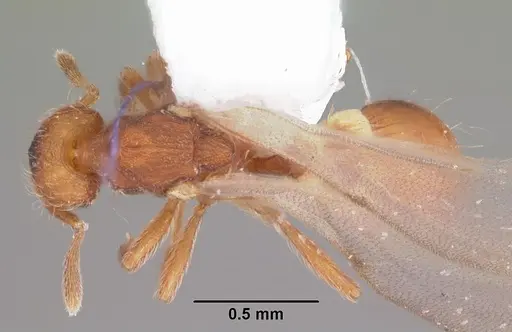
CASENT0103886
Ver no AntWeb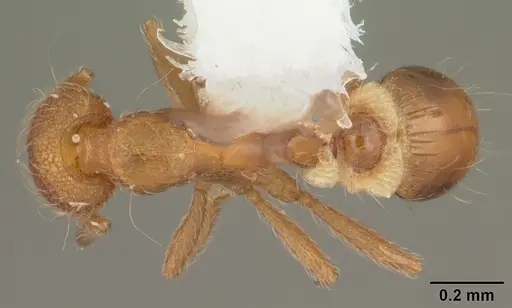
Literatura
Carregando mapa de distribuição...Carregando produtos...