
Strumigenys alperti
- Nome científico
- Strumigenys alperti
- Tribo
- Attini
- Subfamília
- Myrmicinae
- Autor
- Fisher, 2000
- Distribuição
- Encontrada em 1 países
Introdução
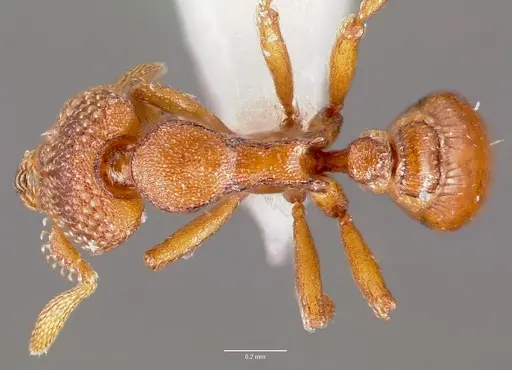
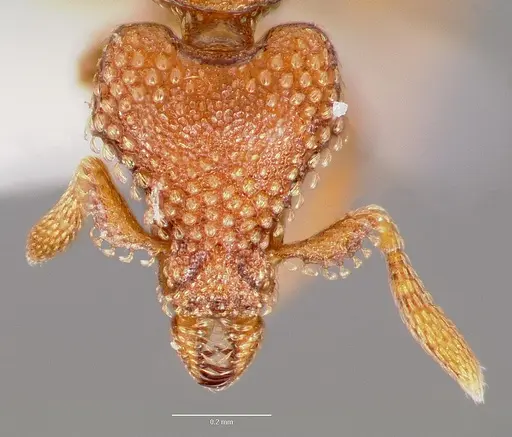
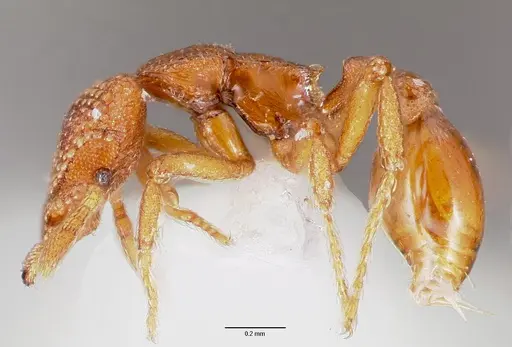
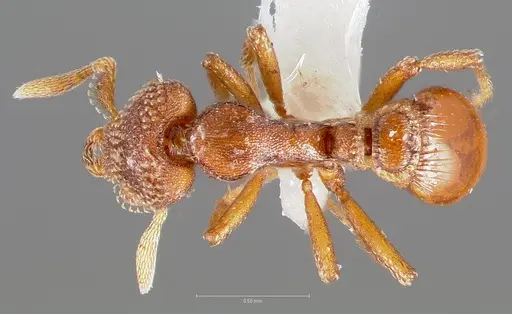
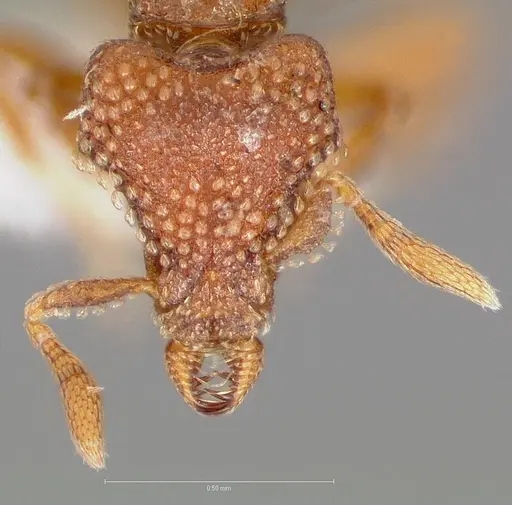
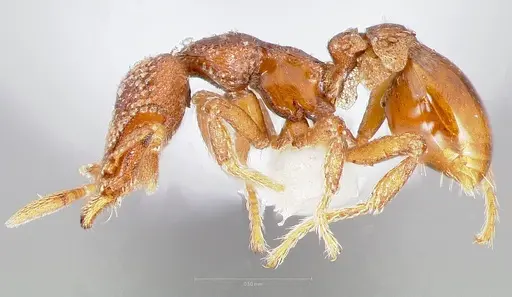
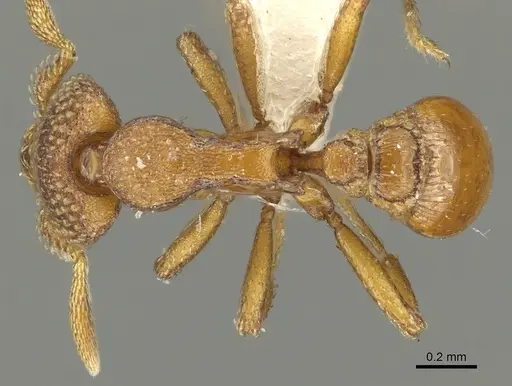
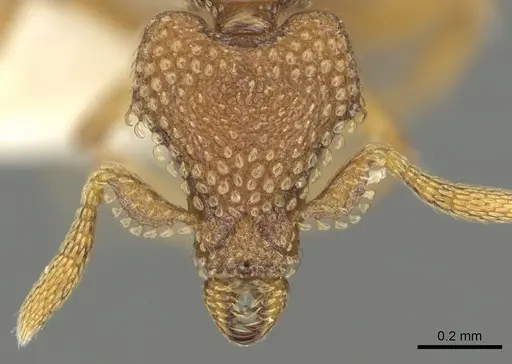
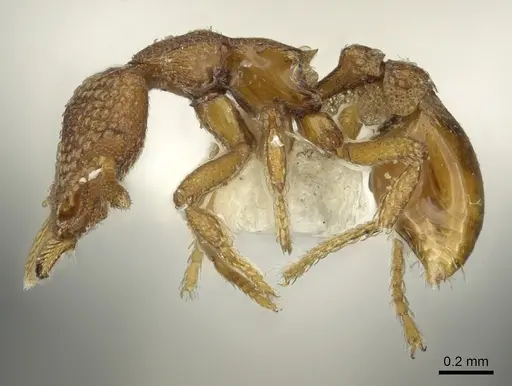
Strumigenys alperti is a tiny predatory ant native to Madagascar, measuring just 2.3-2.4mm in total length . This species belongs to the sylvaini complex within the Strumigenys dexis group, and can be identified by its unique transverse band of scale-like hairs on the head behind the clypeus, plus fine reticulate-punctate sculpture on the promesonotum . Workers have no standing hairs on the head, alitrunk, or gaster, and feature distinctive spoon-shaped hairs fringing the clypeus and scape margins. Found in rainforest and montane rainforest habitats at elevations around 875m, these ants nest in rotten logs under moss in primary forest .
Quick Summary
- Difficulty: Hard
- Origin & Habitat: Madagascar, found in rainforest and montane rainforest habitats at elevations around 875m [1]. Nests in rotten logs under moss in primary rainforest.
- Colony Type: Colony structure is unconfirmed. The type series includes one dealate queen alongside workers, which hints at monogyne colonies, but more data is needed.
- Size & Growth:
- Queen: Unconfirmed, only a dealate queen is known from the type series, but exact measurements were not provided [1]
- Worker: 2.3-2.4mm total length [1]
- Colony: Unknown, no colony size data available. Based on related Strumigenys species, likely under a few hundred workers.
- Growth: Slow, based on typical Strumigenys patterns and small colony sizes in this genus.
- Development: Unconfirmed, no direct development data exists. Based on typical dacetine ant development, estimate 8-12 weeks at optimal temperature. (Development timeline is unconfirmed for this species. Related Strumigenys species typically develop slowly.)
- Antkeeping:
- Temperature: Keep around 22-24°C, these are tropical rainforest ants from Madagascar requiring stable warmth. Avoid temperatures below 20°C.
- Humidity: High humidity required, think damp rainforest floor. Keep the nest substrate consistently moist but not waterlogged. Provide a humidity gradient with a moist side and slightly drier area for choice.
- Diapause: No, this is a tropical species from Madagascar and does not require hibernation.
- Nesting: Prefers naturalistic setups that mimic their natural rotten log habitat. Y-tong (AAC) nests or plaster nests with high humidity work well. Provide damp substrate and avoid dry conditions. The tiny size means chambers should be appropriately scaled.
- Behavior: These are specialized predatory ants, using their trap-jaw mandibles to capture small prey, primarily springtails and other micro-arthropods. They are not aggressive toward larger threats and will flee rather than engage. Escape prevention is critical due to their very small size, they can squeeze through the tiniest gaps. Use fine mesh and tight-fitting barriers. Workers are docile and not suited for multi-species setups.
- Common Issues: escape prevention is critical, they are extremely small and can squeeze through standard barrier gaps, requires high humidity, dry conditions will kill colonies quickly, specialized diet means acceptance of alternative foods is uncertain, live springtails are ideal, slow growth tests keeper patience, do not overfeed or disturb founding colonies, wild-caught colonies may have parasites that cause captive failures
Housing and Nest Setup
Strumigenys alperti requires high-humidity housing that mimics their natural rotten log habitat [1]. Y-tong (AAC) nests work well, or you can use a plaster nest with a water reservoir to maintain humidity. The chambers should be appropriately scaled for their tiny 2.3mm size, avoid large, open spaces. A naturalistic setup with damp soil and rotting wood pieces can also work, but watch for mold. Place the nest in a warm area of your setup, around 22-24°C. Use a water test tube as a humidity source connected to the nest. Because they are so small, escape prevention must be excellent, use fine mesh on any ventilation holes and ensure all connections are tight.
Feeding and Diet
Strumigenys alperti is a specialized predatory ant that hunts small arthropods, primarily springtails. In captivity, their primary food should be live springtails (collembola), this is the most reliable prey for dacetine ants. Other small live prey like fruit flies, pinhead crickets, or micro-arthropods may be accepted experimentally. Do not rely on sugar sources or honey, these ants are predators, not sugar-seekers. Feed small prey items every few days, adjusting based on colony consumption. Remove uneaten prey to prevent mold. A well-fed colony will have workers that actively hunt and patrol the outworld.
Temperature and Seasonal Care
Keep your colony at 22-24°C, these are tropical rainforest ants from Madagascar and need consistent warmth. Avoid temperature drops below 20°C, as this can stress or kill the colony. A small heating cable on one side of the nest can create a gentle gradient, but avoid direct heat that dries out the nest. No hibernation or diapause is required since they come from a tropical climate. Maintain stable conditions rather than cycling temperatures seasonally. Room temperature within this range is acceptable, if your room is cooler, use gentle bottom heating.
Behavior and Temperament
Strumigenys alperti is a calm, non-aggressive species that prefers to flee rather than fight. Workers are tiny and use their trap-jaw mandibles to capture small springtail prey, they are specialized predators, not defenders. The colony will likely remain small, with workers foraging individually rather than in groups. They are not suitable for multi-species setups and should be kept alone. The most critical husbandry factor is escape prevention: at 2.3mm, they can slip through gaps that seem sealed. Use fluon on container rims, fine mesh on ventilation, and check all connections regularly. A stressed or hungry colony may have workers that appear more active, this is normal hunting behavior.
Colony Founding
Colony founding behavior is unconfirmed for this specific species. Based on typical Strumigenys patterns, the queen likely seals herself in a small chamber and raises the first workers alone (inferred claustral founding). The first workers (nanitics) will be very small and typically only a few individuals. Founding colonies should be left undisturbed in a dark, humid location. Do not check on them frequently, excessive disturbance can cause queen abandonment. Wait several weeks before offering food, and only offer small live prey once workers emerge.
Frequently Asked Questions
How long does it take for Strumigenys alperti to produce first workers?
The exact egg-to-worker timeline is unconfirmed for this species. Based on typical Strumigenys development patterns, expect 8-12 weeks at optimal temperature (22-24°C). Founding is slow, be patient and do not disturb the queen during this time.
Can I keep Strumigenys alperti in a test tube setup?
Test tubes can work for founding colonies, but you must maintain high humidity and prevent drying. A test tube with a water reservoir works, but monitor closely for mold. As the colony grows, consider moving to a Y-tong or plaster nest that can better hold humidity.
What do Strumigenys alperti ants eat?
They are specialized predators that need live springtails as their primary food. Other small live prey like fruit flies may be accepted. Sugar sources are not typically accepted, these are predatory ants, not honeydew feeders.
Are Strumigenys alperti good for beginners?
No. This species is recommended for experienced antkeepers only. They require high humidity, specialized live prey, and excellent escape prevention due to their very small size. They are also slow-growing, which can be frustrating for beginners.
How big do Strumigenys alperti colonies get?
Colony size is unknown for this species. Based on related Strumigenys species, colonies likely remain small, possibly under a few hundred workers.
Do Strumigenys alperti need hibernation?
No. These are tropical ants from Madagascar and do not require hibernation. Keep them warm year-round at 22-24°C.
Why are my Strumigenys alperti dying?
The most common causes are: low humidity (dry conditions kill them quickly), escape through tiny gaps, starvation (not offering live prey), or stress from excessive disturbance. Check your humidity levels first, then verify escape prevention. Ensure you are offering appropriate live prey.
When should I move my colony to a formicarium?
Wait until the colony has grown beyond the founding stage and the test tube is becoming crowded. Strumigenys prefer stable conditions, so only move when necessary. A Y-tong or plaster nest with humidity control works well for this species.
Can I keep multiple queens together?
Combining unrelated queens has not been documented for this species. Based on typical Strumigenys behavior, queens are likely solitary and territorial, so it is not recommended. Start with a single queen for best success.
What makes Strumigenys alperti unique?
This species has a unique transverse band of scale-like hairs on its head behind the clypeus, plus distinctive reticulate-punctate sculpture on the promesonotum [1]. They are among the smallest ants in Madagascar and are specialized springtail predators with trap-jaw mandibles.
How often should I feed Strumigenys alperti?
Offer small live prey every 2-3 days. Adjust based on consumption, remove uneaten prey within 24 hours to prevent mold. Do not overfeed. A colony with plenty of springtails will have active hunting behavior.
Report an Issue
The current care sheet is based fully on literature. See inconsistencies, or something that's incorrect? Please , it will be resolved after review from an admin. Contributing to the blogs tab also helps providing information, to make us be able to further improve the caresheets. Thank you for your support!
References

Este guia de cuidados está sob a licença CC BY-SA 4.0 .
Posts da comunidade
Literatura
Carregando mapa de distribuição...Carregando produtos...