
Strongylognathus destefanii
- Nome científico
- Strongylognathus destefanii
- Tribo
- Crematogastrini
- Subfamília
- Myrmicinae
- Autor
- Emery, 1915
- Distribuição
- Encontrada em 1 países
Introdução
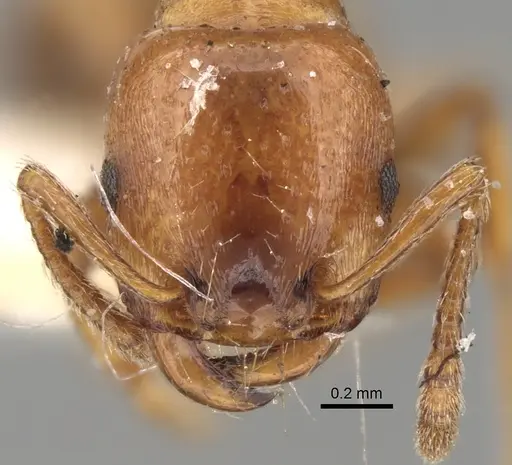
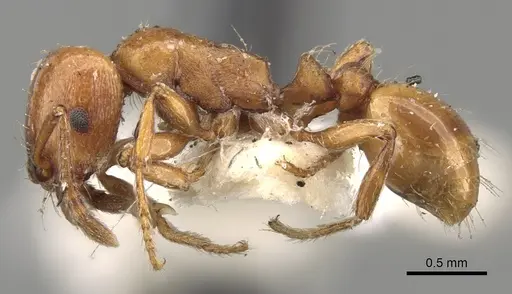
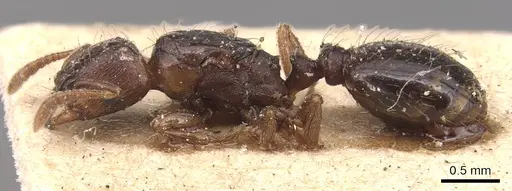
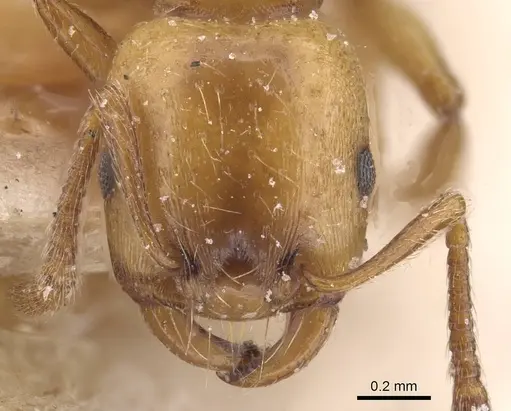
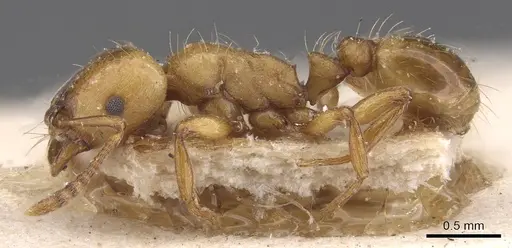
Strongylognathus destefanii is an obligate social parasite - a slave-maker that cannot survive without a host colony of Tetramorium ants . Native to southern Italy, including Sicily and the Aeolian Islands, this species is a regional endemic . Workers are small (roughly 3-4mm, inferred from the genus) and queens are larger (estimated at about 5-6mm). They belong to the subfamily Myrmicinae, tribe Crematogastrini, and have a modified spatulate stinger used for smearing venom onto enemies instead of piercing flesh. This species was first described by Emery in 1915 from a queen collected near Palermo, Sicily .
Quick Summary
- Difficulty: Expert
- Origin & Habitat: Southern Italy, including Sicily, the Aeolian Islands (Vulcano), and mainland Italy. Found at altitudes from 120-1090m in habitats such as maquis, rocky hilltops, olive plantations, disturbed shrubland, and under stones or leaf litter [3][1].
- Colony Type: Obligate social parasite (slave-maker). Colonies rely on host Tetramorium workers to raise brood and maintain the nest. The species is part of the monophyletic S. huberi group and exhibits dulotic behavior, raiding other colonies for brood [2].
- Size & Growth:
- Queen: ~5-6mm (inferred from genus, no direct TL data available)
- Worker: ~3-4mm (somewhat larger on average than the related S. afer [5])
- Colony: Small colonies, likely under 100 individuals total (parasite + host workers) [2]
- Growth: Slow, tied to host colony growth
- Development: Unknown, development depends entirely on host workers (Brood is raised by host Tetramorium workers within the parasite nest.)
- Antkeeping:
- Temperature: Keep at room temperature (20-24°C), reflecting their Mediterranean origin. Provide a slight temperature gradient.
- Humidity: Moderate humidity (nest substrate slightly moist but not wet). Natural habitats are dry Mediterranean, so avoid over-humidifying.
- Diapause: Likely requires a mild winter rest period (6-8 weeks at 10-15°C) based on the temperate climate of its native range.
- Nesting: Cannot be housed independently. Requires an established host colony of Tetramorium semilaeve or T. impurum in the same enclosure. Natural nests are under stones or in leaf litter [3].
- Behavior: This species is a slave-maker. Workers raid neighboring Tetramorium colonies to capture pupae and larvae, which hatch and work for the parasite colony. Eudulosis (raiding) behavior occurs only sporadically in the lab [5]. Workers have a modified stinger for smearing venom, not for piercing human skin, so they pose little threat to keepers. Escape risk is low because they are small and not especially active climbers.
- Common Issues: keeping this species requires maintaining TWO colonies, the parasite and a healthy host colony, which is extremely difficult, the host colony must be well-established before introducing the parasite, if the host colony declines, the parasite colony will follow, very limited availability, not for beginners and rarely seen in the ant trade, stress from captivity often leads to colony decline in social parasites
Understanding Strongylognathus destefanii
Strongylognathus destefanii is an obligate social parasite, a slave-maker that cannot survive without a host species [1]. It belongs to the S. huberi group, a set of closely related Mediterranean slave-makers [2]. The species was described by Emery in 1915 from a queen collected near Palermo, Sicily. Two junior synonyms (Strongylognathus destefanii and Strongylognathus destefanii) are now considered invalid [4]. Workers are small (3-4mm) and relatively dark. The primary host is Tetramorium semilaeve, a secondary host is Tetramorium impurum [2][6]. The parasite uses its modified stinger to smear venom onto opponents during raids, rather than to sting. This species is found only in southern Italy (Sicily, Aeolian Islands, and a few mainland sites) [1][3].
The Challenge of Keeping a Slave-Maker
You cannot maintain Strongylognathus destefanii like a normal ant species. It requires two colonies: the parasite and a healthy host colony of Tetramorium semilaeve or T. impurum [2]. The parasite queen cannot found a nest independently, she must invade an established host colony, kill or replace the host queen, and use the host workers to raise her own brood. Once the slave-maker colony is established, workers conduct raids on other Tetramorium nests to steal pupae and larvae. These captured individuals become workers that serve the parasite colony. In captivity, raiding happens only sporadically [5]. You must maintain a constant supply of host brood, either by keeping multiple host colonies or by carefully managing raids.
Housing Requirements
Set up at least two formicaria: one for the parasite colony and one or more for host colonies. The host colony must be well-established before introducing the parasite. Use standard nest setups (test tubes, Ytong, plaster, or 3D-printed nests), avoid acrylic, as it doesn't hold humidity well for Mediterranean species. Keep temperature at 20-24°C and provide a moderate humidity gradient (slightly moist nest substrate but well-drained). Both colonies need good escape prevention, though these ants are not especially prone to escaping. The biggest challenge is keeping the host colony healthy enough to support both itself and the parasite's demands. [2]
Feeding and Nutrition
Host workers feed the parasite queen and brood, so nutrition is tied to the host colony's diet. Feed the host colony a varied diet: small insects (fruit flies, pinhead crickets, mealworms) for protein, and sugar water or honey for carbohydrates. The host colony needs enough food to maintain its own population and the parasite's demands. If the host colony declines, the parasite colony will soon follow [2]. Parasite workers will also eat food brought in by host foragers.
Legal and Ethical Considerations
Before acquiring Strongylognathus destefanii, check local laws. In Italy (its native range), collection may be regulated. This species has a restricted distribution and is rarely encountered, it is possible it may be protected in some regions. Ethical considerations: keeping a social parasite is challenging and most attempts fail long-term. Only attempt if you have significant experience with ants and can maintain host colonies reliably. This species is seldom available in the ant trade. Never release this ant outside its native range. [3][1]
Frequently Asked Questions
Can I keep Strongylognathus destefanii like a normal ant species?
No. Strongylognathus destefanii is an obligate social parasite, a slave-maker that cannot survive without a host colony of Tetramorium semilaeve or T. impurum. You must keep both species to maintain the parasite colony [1][2]. This is not a species for beginners.
How do I start a Strongylognathus destefanii colony?
You cannot start a colony from a single queen. You need an established host colony and must introduce a mated parasite queen to it. The parasite queen must kill or replace the host queen to take over. This process is challenging and often fails even for experienced keepers [2].
What do Strongylognathus destefanii eat?
The host workers feed both themselves and the parasite colony. Feed the host colony small insects (fruit flies, pinhead crickets, mealworms) for protein and sugar water or honey for carbohydrates. Parasite workers will eat food brought in by host foragers [2].
Do Strongylognathus destefanii ants sting?
They have a stinger modified for smearing venom, not for piercing skin. For humans, they pose little threat, they can bite but the venom is not delivered by a typical sting. The main defense is a venom smear, which is unlikely to affect humans.
Are Strongylognathus destefanii good for beginners?
No. This is an expert-level species that requires maintaining two colonies simultaneously (the parasite and the host). Even experienced antkeepers struggle with social parasites. You should have significant experience with normal ant species before attempting a slave-maker [2].
Where is Strongylognathus destefanii native to?
This species is endemic to southern Italy, particularly Sicily and the Aeolian Islands (including Vulcano). It is found at altitudes between 120-1090m in Mediterranean habitats [3][1].
How big do Strongylognathus destefanii colonies get?
Colonies remain relatively small, typically under 100 total workers (both parasite and host workers combined). The slave-maker population is always smaller than the host worker population it depends on [2].
Do Strongylognathus destefanii need hibernation?
Likely yes. As a Mediterranean species from temperate Italy, they probably require a mild winter rest period of 6-8 weeks at 10-15°C, similar to other European ants from similar climates.
What is the host species for Strongylognathus destefanii?
The primary host is Tetramorium semilaeve, with Tetramorium impurum as a secondary host [2][6]. You must maintain at least one of these host species to keep the parasite alive.
Report an Issue
The current care sheet is based fully on literature. See inconsistencies, or something that's incorrect? Please , it will be resolved after review from an admin. Contributing to the blogs tab also helps providing information, to make us be able to further improve the caresheets. Thank you for your support!
References

Este guia de cuidados está sob a licença CC BY-SA 4.0 .
Posts da comunidade
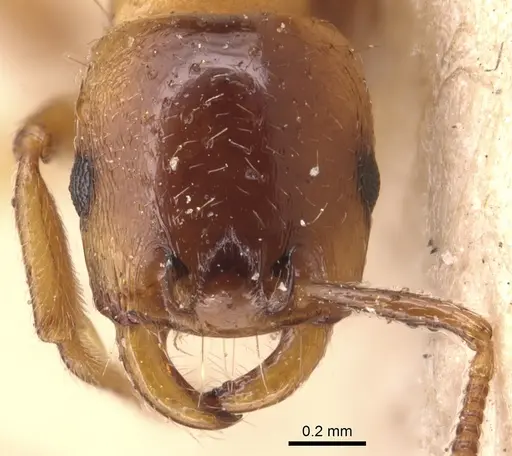
CASENT0280846
Ver no AntWeb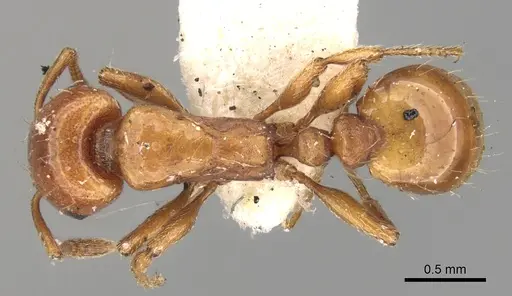
CASENT0904865
Ver no AntWeb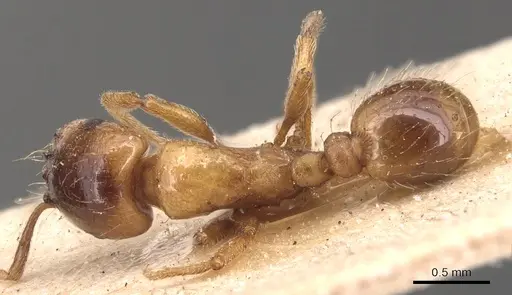
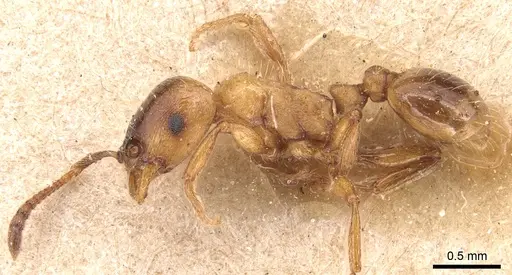
CASENT0904869
Ver no AntWeb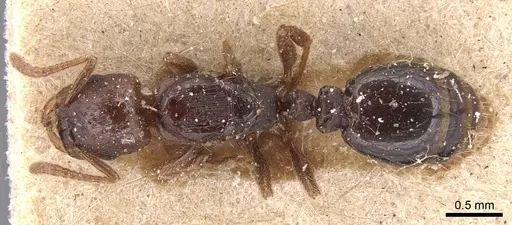
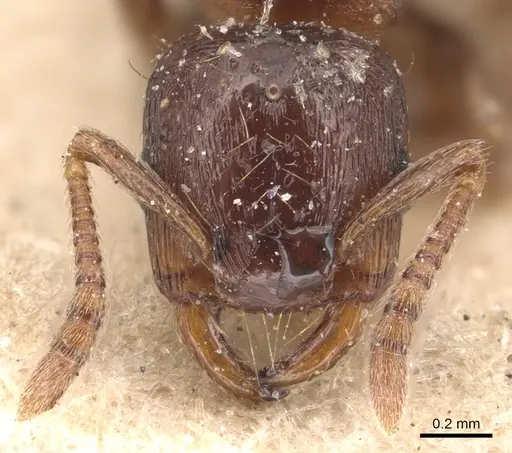
CASENT0913974
Ver no AntWeb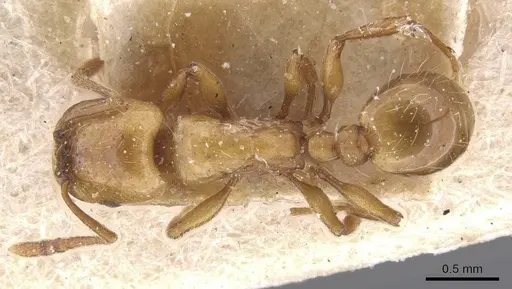
Literatura
Carregando mapa de distribuição...Carregando produtos...