
Stigmatomma noonadan
- Nome científico
- Stigmatomma noonadan
- Tribo
- Amblyoponini
- Subfamília
- Amblyoponinae
- Autor
- Taylor, 1965
- Distribuição
- Encontrada em 0 países
Introdução
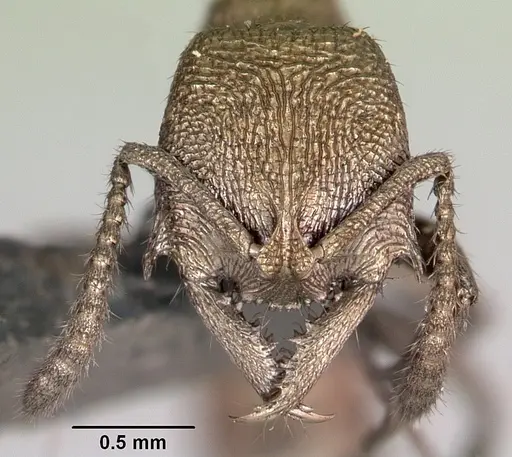
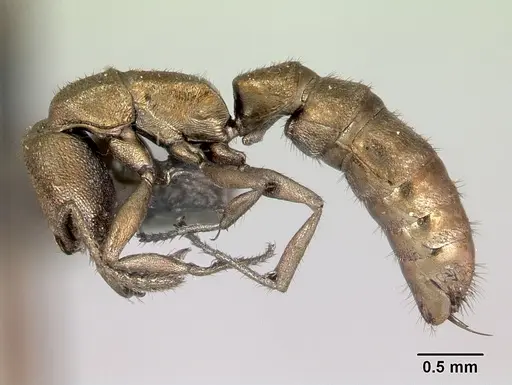
Stigmatomma noonadan is a medium-sized amblyoponine ant from Papua New Guinea, specifically New Britain Island. Workers measure about 5.5-6 mm in total length (TL) and have a dark chocolate brown body with reddish-brown areas on the clypeus, head corners, and gastric apex . This species shows the classic 'stigmatommine habitus' - specialized double‑ranked mandibular teeth and enlarged clypeal denticles used for capturing prey . The genus Stigmatomma belongs to the Amblyoponinae subfamily, whose members are often called dracula ants because they sometimes feed on their own larvae's hemolymph, a behavior not confirmed for this species. This ant remains poorly known in captivity. Most information comes from a few type specimens collected in newly cleared secondary forest at about 1000 m elevation on New Britain . Like other amblyoponines, it is a specialized predator that likely hunts small soil invertebrates.
Quick Summary
- Difficulty: Expert
- Origin & Habitat: Papua New Guinea (New Britain Island) at about 1000 m elevation. The type specimens were collected in newly cleared secondary growth forest, suggesting they nest in or on the ground in disturbed forest habitats [1].
- Colony Type: Colony structure is unconfirmed. Based on typical Amblyoponinae patterns, colonies are likely small with a single queen, but no documented observations exist for this species.
- Size & Growth:
- Queen: Size data unavailable, no queen specimens have been described for this species.
- Worker: ~5.5-6 mm total length (TL) [1]
- Colony: Likely under 100 workers, based on typical Amblyoponinae colony sizes [1]
- Growth: Unknown, likely slow to moderate based on related species
- Development: Unconfirmed. Based on typical amblyoponine development, roughly 6-10 weeks at optimal temperature. (Development has not been directly studied for this species. Related amblyoponines tend to develop slower than common genera like Lasius or Camponotus.)
- Antkeeping:
- Temperature: Aim for 22-26°C with stable conditions. This tropical species from Papua New Guinea needs warmth, avoid temperatures below 20°C or above 30°C.
- Humidity: Requires high humidity, think damp forest floor conditions. Keep the nest substrate consistently moist but not waterlogged. Provide a humidity gradient if possible.
- Diapause: No, as a tropical species from Papua New Guinea, diapause is not required. Maintain stable warm temperatures year‑round.
- Nesting: Natural nesting occurs in soil or under stones on the forest floor. In captivity, a moist plaster nest or a naturalistic setup with soil works well. They prefer tight, humid chambers.
- Behavior: Stigmatomma noonadan is a predatory ant that likely hunts small invertebrates like springtails, isopods, and other micro‑arthropods. Workers have a functional stinger and will use it for prey capture and defense [1]. They are moderately defensive when the colony is threatened. Escape risk is moderate, they can climb smooth surfaces, so standard barriers (fluon, tight lids) are needed. Activity is likely highest when conditions are warm and prey is available.
- Common Issues: tropical species needs stable warmth, cold drafts can be fatal., high humidity requirements, poor ventilation leads to mold, while low humidity causes desiccation., specialized predatory diet, colonies may refuse standard ant foods like honey or dry proteins., small colony size means any losses have a big impact on survival., rare in captivity, established colonies are hard to replace, so care must be extra cautious.
Housing and Nest Setup
Stigmatomma noonadan needs a humid, naturalistic setup that mimics the forest floor of Papua New Guinea. A moist plaster nest or a terrarium with soil works well, keep chambers small and tight because these ants prefer cozy spaces. Avoid acrylic nests, instead use Y‑tong (AAC), plaster, soil, or 3D‑printed nests designed for moisture retention. Provide a water reservoir or a test‑tube setup with a water plug to keep humidity high without constant misting. The outworld (foraging area) should also be humid but have some ventilation to prevent mold. A gentle temperature gradient helps the colony self‑regulate. [1]
Feeding and Diet
As an Amblyoponinae ant, Stigmatomma noonadan is a predator that feeds mainly on small live invertebrates. Offer springtails, fruit flies, tiny isopods, or other micro‑arthropods [1]. The specialized mandibles with double‑ranked teeth are designed for seizing and holding prey. Unlike many ants, this species likely ignores sugar sources like honey or sugar water, live prey should form the bulk of the diet. Feed small items every 2-3 days, adjusting for colony size. Remove uneaten prey after 24 hours to prevent mold.
Temperature and Humidity
Keep temperatures stable between 22-26°C. This tropical species from Papua New Guinea needs warmth and does poorly in cool conditions [1]. Avoid placing the colony near air‑conditioning vents, windows, or drafty areas. A heating cable on one side of the nest can create a slight gradient, but don't let it dry out the nest. Humidity should be high, aim for 70-80% relative humidity inside the nest. The substrate should feel consistently moist but not waterlogged. Poor humidity causes desiccation and death, too much moisture without ventilation leads to mold. A moisture gradient allows ants to move between areas.
Colony Founding
Founding behavior for Stigmatomma noonadan has not been directly documented. Based on typical Amblyoponinae patterns, the queen may seal herself in a small chamber to raise the first brood alone, but this is unconfirmed. The founding chamber should be small and very humid. During this period, do not disturb the queen or offer food, she should not leave the chamber. Once nanitic workers appear, they will begin foraging for live prey. Colony growth is likely slow, so patience is essential.
Behavior and Defense
Stigmatomma noonadan workers are active foragers that hunt on the forest floor. They have a functional stinger and use it for both prey capture and colony defense [1]. When threatened, workers may sting, but the potency of this species' venom is not well documented. They are moderately defensive and will vigorously protect the nest. Their double‑ranked mandibles are specialized for seizing and holding prey. In captivity, they are not exceptionally escape‑prone, but standard prevention (fluon barriers, tight‑fitting lids) should still be used. Activity is highest when conditions are warm and prey is available.
Frequently Asked Questions
How long does it take for Stigmatomma noonadan to raise first workers?
The exact timeline is unconfirmed for this species. Based on typical Amblyoponinae development, expect roughly 6-10 weeks from egg to worker at optimal temperature (around 24°C). Growth is generally slower than common ant genera like Lasius or Camponotus.
Can I keep Stigmatomma noonadan in a test tube setup?
A test‑tube setup can work for founding colonies, but you must maintain high humidity. Place the test tube in a humid container or use a moisture plug. For established colonies, a plaster or soil nest that holds moisture better is preferable.
What do Stigmatomma noonadan ants eat?
They are predatory ants that require live small invertebrates. Offer springtails, fruit flies, tiny isopods, and other micro‑arthropods [1]. They may not accept sugar sources like honey. Live prey should be the primary food.
Do Stigmatomma noonadan ants sting?
Yes, Amblyoponinae ants have functional stingers. While the exact potency is not documented for this species, they can sting if threatened. The sting is primarily used for prey immobilization.
Are Stigmatomma noonadan good for beginners?
No. This species is rated Expert difficulty due to specialized predatory diet, high humidity needs, and lack of captive breeding information. It is not recommended for beginners.
How big do Stigmatomma noonadan colonies get?
Based on typical Amblyoponinae colony sizes, colonies likely reach under 100 workers. They are not large colony builders like many other ant genera.
Do Stigmatomma noonadan need hibernation?
No. As a tropical species from Papua New Guinea, they do not require hibernation. Maintain stable warm temperatures year‑round.
Why is my Stigmatomma noonadan colony dying?
Common causes include: temperatures below 20°C, low humidity causing desiccation, mold from excessive moisture without ventilation, starvation due to lack of live prey, or disturbance during founding. Check each parameter and adjust as needed.
Can I keep multiple queens together?
Combining unrelated queens has not been documented for this species. Based on typical Amblyoponinae behavior, it is not recommended. Start with a single founding queen for best success.
When should I move Stigmatomma noonadan to a formicarium?
Wait until the colony has a stable worker force, typically after the first nanitics have emerged and the colony is actively growing. Moving too early can cause stress. Ensure the new setup maintains the humidity and temperature they are accustomed to.
Report an Issue
The current care sheet is based fully on literature. See inconsistencies, or something that's incorrect? Please , it will be resolved after review from an admin. Contributing to the blogs tab also helps providing information, to make us be able to further improve the caresheets. Thank you for your support!
References

Este guia de cuidados está sob a licença CC BY-SA 4.0 .
Posts da comunidade
CASENT0172233
Ver no AntWeb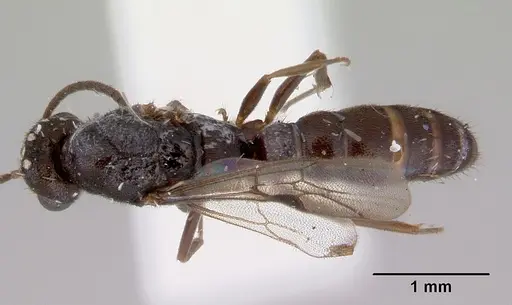
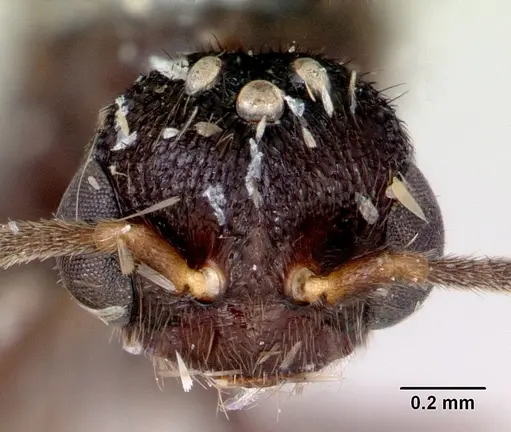
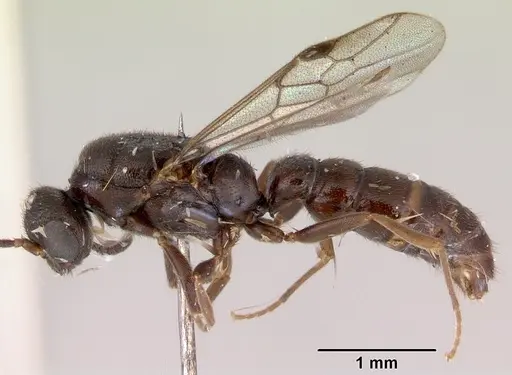
CASENT0172804
Ver no AntWeb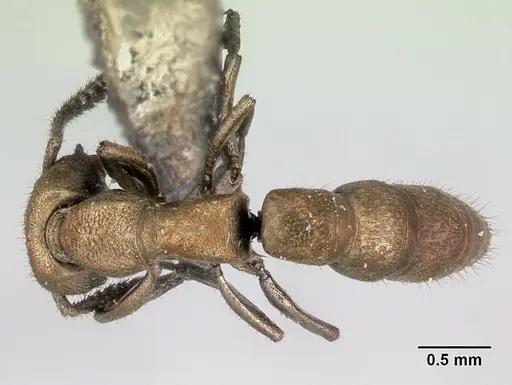
Literatura
Carregando mapa de distribuição...Carregando produtos...