
Stigmatomma awa
- Nome científico
- Stigmatomma awa
- Tribo
- Amblyoponini
- Subfamília
- Amblyoponinae
- Autor
- Xu & Chu, 2012
- Distribuição
- Encontrada em 0 países
Introdução
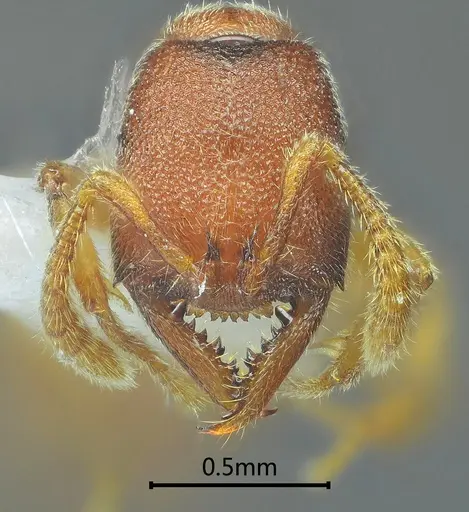
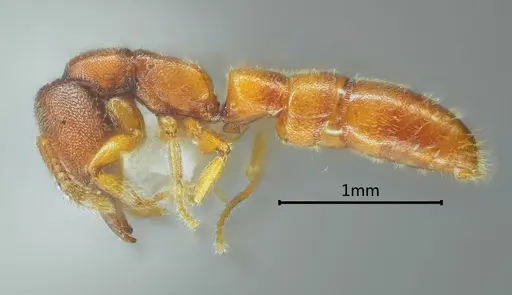
Stigmatomma awa is a small to medium-sized ant native to the Eastern Himalayas and southwestern China. Workers measure 3.6-4.2 mm (Chinese populations) to 6.37-6.71 mm (Indian populations), with a distinctive reddish-brown body, very small eyes (only 3 facets), and elongated mandibles with 7 teeth . The most striking feature is the anterior clypeal margin which has 8 dentiform setae arranged in pairs, giving them an unusual appearance among ants . These ants belong to the Amblyoponinae subfamily, a group of primitive ants with a potent sting. In the wild, they nest in soil and decayed wood in forest habitats at elevations ranging from 740 m to 2800 m . This species is notable for being found across a wide elevational gradient in both tropical and more temperate forest types. The Indian and Chinese populations show significant size differences, with Indian workers being notably larger (up to 6.7 mm) compared to Chinese populations (3.6-4.2 mm) . Like other Amblyoponinae, they are predatory ants that likely hunt small invertebrates in the leaf litter layer.
Quick Summary
- Difficulty: Hard
- Origin & Habitat: Eastern Himalayas (India: Arunachal Pradesh) and southwestern China (Yunnan, Tibet). Found in various forest types including monsoon evergreen broadleaf forest, valley tropical rainforest, and broad-leaf forest at elevations 740-2800 m [1][2][3].
- Colony Type: Colony structure is unconfirmed. Queens have been documented in the type series, but whether colonies are single-queen (monogyne) or multi-queen (polygyne) is unknown. Males have not been collected [1].
- Size & Growth:
- Queen: 4.0-4.1 mm [1], from Chinese population, Indian queens unrecorded
- Worker: 3.6-4.2 mm (China) to 6.37-6.71 mm (India) [1][2], significant size variation between populations
- Colony: Unknown, no colony size data available
- Growth: Unknown, not studied
- Development: Unknown, no development data available. Based on related Amblyoponinae species, expect 6-10 weeks at optimal temperature. (Development timeline is unconfirmed. Related Amblyoponinae species typically take 6-10 weeks from egg to worker.)
- Antkeeping:
- Temperature: Keep at roughly 20-24°C based on their high-elevation forest habitat. They likely prefer cooler conditions than tropical ants. Avoid overheating.
- Humidity: High humidity is essential, they naturally live in damp forest floor environments. Keep the nest substrate consistently moist but not waterlogged.
- Diapause: Unknown, likely requires a winter rest period given their temperate to subtropical mountain habitat, but specific requirements are unconfirmed.
- Nesting: In captivity, they do well in naturalistic setups with moist substrate or plaster nests. Provide soil or rotting wood material for them to dig in. They prefer dark, humid nest conditions.
- Behavior: These are small, secretive ants that likely forage in the leaf litter layer. They are predatory and will hunt small invertebrates. Workers are not aggressive and rarely leave the nest in the open. Their very small eyes suggest they rely more on chemical cues than vision. Escape risk is moderate, their small size means they can squeeze through small gaps, so use fine mesh barriers.
- Common Issues: lack of documented care information makes proper husbandry challenging, high humidity requirements can lead to mold if ventilation is poor, predatory diet needs may be difficult to meet with standard ant foods, small size and secretive behavior make them hard to observe and monitor, winter requirements are unknown, risk of keeping them too warm or too cold
Housing and Nest Preferences
Stigmatomma awa naturally nests in soil and decayed wood in forest habitats [1]. In captivity, naturalistic setups work well, use a container filled with moist soil or a plaster nest with water channels to maintain humidity. They prefer dark, humid conditions similar to their forest floor microhabitat. A test tube setup can work for founding colonies if kept humid, but they may do better in more spacious naturalistic setups as the colony grows. Provide a dark area for the nest and ensure the substrate stays consistently moist. Avoid drying out the nest, these ants come from damp forest environments.
Feeding and Diet
Like other Amblyoponinae, Stigmatomma awa is predatory. They likely hunt small invertebrates in the leaf litter layer in the wild. In captivity, offer small live prey such as fruit flies, pinhead crickets, small mealworms, and other tiny arthropods. They may also accept protein-based ant foods. Sugar sources are likely accepted but not their primary food, offer occasional honey or sugar water but do not rely on these as a main food source. Feed them small prey items 2-3 times per week, adjusting based on colony size and appetite. Remove uneaten prey after 24 hours to prevent mold.
Temperature and Seasonal Care
Keep colonies at roughly 20-24°C. This range reflects their high-elevation forest habitat across the Himalayas and southwestern China where temperatures are cooler than tropical lowlands [1][2]. Avoid overheating, temperatures above 28°C are likely harmful. A gentle heat gradient allows workers to choose their preferred temperature. For winter care, the requirements are unconfirmed, but given their temperate mountain distribution, a cool winter period (around 10-15°C) for several months is probably beneficial. Monitor colony behavior, if they become less active in winter, reduce feeding and keep them cool. Do not keep them warm year-round as this may stress the colony.
Behavior and Observation
These are secretive ants that spend most of their time in the nest or foraging in hidden spaces. Workers are not aggressive and rarely venture into the open. Their very small eyes (only 3 facets in workers) suggest they rely heavily on chemical signals rather than vision [1][2]. Queens are larger than workers (4.0-4.1 mm) with much larger eyes (about 45 facets), which is typical for reproductive castes that need to find mates during nuptial flights [1]. Because they are small and secretive, observing them can be challenging. Use red film or observe under dim lighting to minimize disturbance. Their predatory nature means they are active hunters, you may observe them capturing and subduing small prey.
Frequently Asked Questions
How long does it take for Stigmatomma awa to develop from egg to worker?
The exact development time is unconfirmed, no scientific studies have documented their development timeline. Based on related Amblyoponinae species, expect roughly 6-10 weeks from egg to first worker at optimal temperature (around 20-24°C). Be patient with this species as development may be slow.
What do Stigmatomma awa ants eat?
They are predatory ants that hunt small invertebrates. Offer small live prey like fruit flies, tiny crickets, springtails, and other micro-arthropods. They may accept commercial ant protein foods but live prey is ideal. Occasional sugar water or honey may be accepted but should not be the primary food.
Can I keep Stigmatomma awa in a test tube?
Yes, test tubes can work for founding colonies if you maintain high humidity. Keep the water reservoir filled and wrap the tube in dark material to create the dark conditions they prefer. However, naturalistic setups with soil or plaster nests often work better long-term because they allow for better humidity control and more natural behavior.
Do Stigmatomma awa ants sting?
Amblyoponinae ants have functional stingers, so they can sting if handled roughly. However, these are small, non-aggressive ants that prefer to flee rather than fight. They are not dangerous to humans and their sting, if it occurs, would be mild.
Do Stigmatomma awa need hibernation?
Hibernation requirements are unconfirmed, but given their distribution in high-elevation temperate forests (up to 2800 m), a cool winter period is likely beneficial. Reduce temperature to around 10-15°C for 2-3 months during winter. Reduce feeding during this period.
How big do Stigmatomma awa colonies get?
Colony size is unknown, no data exists on maximum colony size. Based on their small worker size and secretive nature, colonies are likely modest (probably under 100-200 workers). They may be slower to grow than more common ant species.
Are Stigmatomma awa good for beginners?
This species is not ideal for beginners. There is very little documented care information, they require high humidity, their predatory diet needs may be difficult to meet, and their small size makes them hard to observe. Start with more common, well-documented species like Lasius or Tetramorium before attempting Stigmatomma.
Why are my Stigmatomma awa dying?
Common causes include: too dry conditions (they need consistently moist substrate), temperatures too high or too low, inadequate food (they need live prey, not just sugar), and stress from too much disturbance. Check that humidity is high, temperature is in the 20-24°C range, and they have access to small live prey. Avoid handling them frequently.
Can I keep multiple Stigmatomma awa queens together?
This has not been documented. The colony structure (monogyne vs polygyne) is unknown. Do not attempt to combine unrelated queens, there is no evidence they can found colonies pleometrotically (multiple queens together). Keep each queen in a separate setup until you confirm they have mated.
Where does Stigmatomma awa come from?
They are found in the Eastern Himalayas (India: Arunachal Pradesh) and southwestern China (Yunnan, Tibet). They live in forest habitats at elevations from 740 m to 2800 m. This is a relatively rare species in the antkeeping hobby.
Report an Issue
The current care sheet is based fully on literature. See inconsistencies, or something that's incorrect? Please , it will be resolved after review from an admin. Contributing to the blogs tab also helps providing information, to make us be able to further improve the caresheets. Thank you for your support!
References

Este guia de cuidados está sob a licença CC BY-SA 4.0 .
Posts da comunidade
ANTWEB1060487
Ver no AntWeb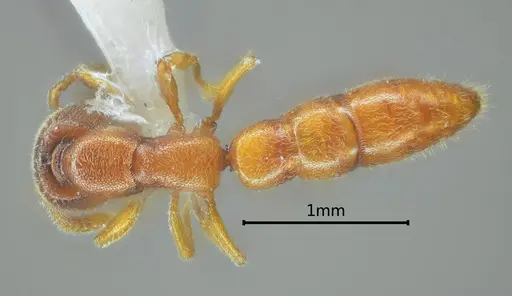
Literatura
Carregando mapa de distribuição...Carregando produtos...