
Stigmacros pilosella
- Nome científico
- Stigmacros pilosella
- Tribo
- Melophorini
- Subfamília
- Formicinae
- Autor
- Viehmeyer, 1925
- Distribuição
- Encontrada em 1 países
Introdução
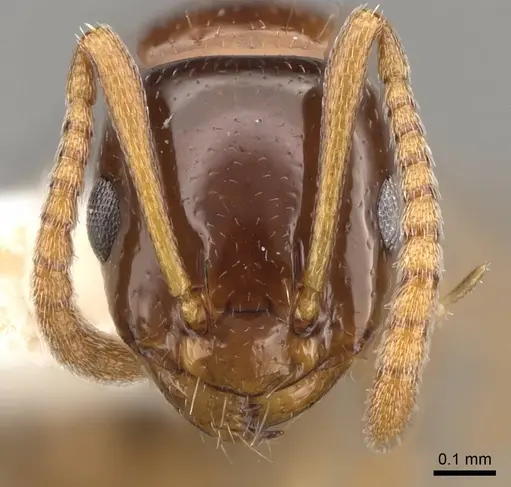
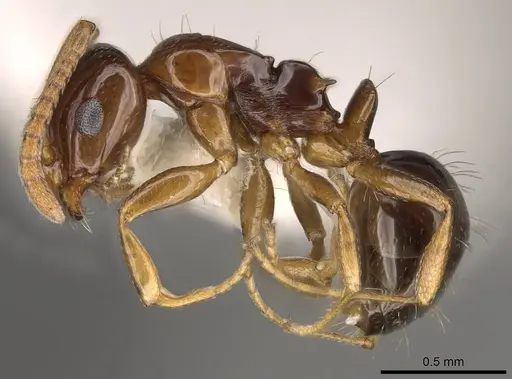
Stigmacros pilosella is a small reddish-brown ant native to Australia, found especially in the wheatbelt and goldfields of Western Australia, and also in New South Wales . Workers have erect bristles on the middle body segment (mesosoma) and bristles both on the edges and the middle of the upper abdomen segments (gastral tergites). The rear part of the thorax (propodeum) slopes gently, just like in the related species S. epinotalis . These ants live in leaf litter, so they’re ground-dwellers that prefer damp, shaded spots . As Formicinae, they defend themselves by spraying formic acid, not by stinging.
Quick Summary
- Difficulty: Medium
- Origin & Habitat: Native to Australia, the wheatbelt and goldfields regions of Western Australia, plus New South Wales. Found in leaf litter in temperate to semi-arid areas [1][2].
- Colony Type: Likely single-queen (monogyne) colonies based on typical Melophorini patterns, but this has not been directly confirmed.
- Size & Growth:
- Queen: No specific measurements available, queen size unconfirmed.
- Worker: No specific measurements available, based on the Stigmacros genus, workers are typically small, roughly 2-4 mm.
- Colony: Unknown, no colony size data available. Based on patterns in small litter-dwelling ants, likely under a few hundred workers.
- Growth: Unknown, likely moderate growth rate.
- Development: Estimated 6-10 weeks based on typical Formicinae development at warm temperatures (22-26 °C). (Development timeline has not been directly studied for this species, estimates come from related Melophorini and Formicinae.)
- Antkeeping:
- Temperature: Aim for 22-26 °C during the active season. They come from temperate Australia, so stable warmth without extremes is best. A gentle heat gradient (one side slightly warmer) lets them regulate.
- Humidity: Keep the nest substrate consistently moist but not waterlogged. Since they live in leaf litter, they need damp conditions with some drier areas to retreat to if it gets too wet.
- Diapause: Likely requires a mild winter rest period (diapause). Reduce temperatures to 10-15 °C for 2-3 months during winter. This is inferred from their temperate Australian range [1].
- Nesting: Y‑tong (AAC) nests or naturalistic setups with moist substrate work well. Because they are tiny, provide tight chambers. Add leaf litter or small debris to the outworld to mimic their natural environment.
- Behavior: Small, ground‑dwelling ants that forage through moist substrate and leaf litter. They are not aggressive and usually flee rather than fight. As Formicinae, they may spray formic acid when threatened. Their tiny size means they can escape through very small gaps, excellent escape prevention is essential.
- Common Issues: escape prevention is critical due to tiny size, use fine mesh and tight‑fitting lids, humidity management is tricky, too wet causes mold, too dry causes desiccation, slow growth and lack of documented care means beginners may struggle with husbandry, winter diapause requirements are not well understood, may cause colony losses if not provided, limited availability makes this species difficult to acquire for most keepers
Housing and Nest Setup
Stigmacros pilosella is a small litter‑dwelling ant, so it needs housing that matches its size and humidity needs. Y‑tong (AAC) nests work well, they provide tight chambers and let you control moisture. A naturalistic setup with moist soil and leaf litter on top also mimics their natural environment. The key is a moisture gradient: one side of the nest should be damper, the other slightly drier, so the ants can choose what they need. For starting a colony, use a test tube founding setup. When the colony reaches about 20 workers, move them to a proper nest. Because the ants are tiny, even small gaps in the housing can lead to escapes, check all connections and cover ventilation holes with fine mesh [1].
Feeding and Diet
Like most Formicinae, Stigmacros pilosella likely has an omnivorous diet. In the wild they probably eat honeydew from aphids and small insects found in leaf litter. In captivity, offer a constant source of sugar water or honey water, and provide protein prey 2-3 times a week. Choose tiny prey such as fruit flies, pinhead crickets, or small pieces of mealworm, their small mouthparts can’t handle large insects. Remove any uneaten prey after 24 hours to prevent mold.
Temperature and Seasonal Care
Stigmacros pilosella comes from temperate Australia (wheatbelt and goldfields). Keep the nest at 22-26 °C during the active season. A heating cable on one side creates a gradient, but make sure there’s a cooler area so the ants can escape heat. In winter, they likely need a mild diapause, reduce temperature to 10-15 °C for 2-3 months. Don’t feed during diapause, but keep some moisture available. Change temperature gradually over 2 weeks to avoid shock. If your room stays above 18 °C year‑round, a formal diapause may not be necessary, but watch for reduced activity or stress. [1]
Colony Founding and Growth
Exactly how Stigmacros pilosella founds a colony hasn’t been documented. Based on Formicinae patterns, the queen probably seals herself in a small chamber (claustral founding) and raises the first brood on stored fat. The first workers (nanitics) will likely be even smaller than normal. Development from egg to worker probably takes 6-10 weeks at 22-26 °C, but this is an estimate. Colonies likely grow slowly at first, then speed up after the first workers arrive. Maximum colony size is unknown but likely stays under a few hundred workers, typical for small litter‑dwelling ants.
Handling and Temperament
These are docile, non‑aggressive ants. As Formicinae, they have no stinger, they spray formic acid when threatened, which is only a minor irritant. They don’t bite. When working with them, move slowly and avoid disturbing the nest too much. Because they’re tiny and fragile, don’t pick them up directly, coax them into a test tube or use a soft brush to move them. Their small size also makes them easy to lose, always work over a tray or in an enclosure.
Frequently Asked Questions
How long does it take for Stigmacros pilosella to produce first workers?
The exact time isn’t known, but based on related Formicinae, expect 6-10 weeks from egg to first worker at 22-26 °C. The first workers (nanitics) will be smaller than later ones. Be patient, small litter‑dwelling ants often develop slowly.
What do Stigmacros pilosella ants eat?
They are omnivorous. In the wild they likely eat honeydew and small insects. In captivity, offer sugar water or honey water constantly, and provide tiny protein prey (fruit flies, pinhead crickets, small mealworm pieces) 2-3 times per week. Remove uneaten food after 24 hours.
Can I keep Stigmacros pilosella in a test tube?
Yes, test tubes work well for founding. Use a small tube with a water reservoir sealed with cotton, keep it dark and undisturbed until the first workers appear. When the colony reaches about 20 workers, move them to a Y‑tong or naturalistic nest.
Do Stigmacros pilosella need hibernation?
Likely yes, they come from temperate Australia and probably need a mild winter rest. Reduce temperatures to 10-15 °C for 2-3 months during winter. Don’t feed during this period but maintain light moisture. If kept above 18 °C year‑round, they may not need formal diapause, but watch for signs of stress.
Are Stigmacros pilosella good for beginners?
Probably not ideal. This species is poorly documented in captivity, and its small size and humidity needs can be tricky. They are also hard to find in the hobby. Beginners may want to start with better‑documented species like Lasius or Camponotus.
How big do Stigmacros pilosella colonies get?
Colony size isn’t well documented, but based on similar Stigmacros species, colonies probably reach a few hundred workers at most, typical for small litter‑dwelling ants.
Why are my Stigmacros pilosella escaping?
Their tiny size lets them squeeze through gaps you might not even see. Always use tight‑fitting lids, fine mesh on ventilation holes, and check all connections. Apply fluon or similar barriers to smooth surfaces.
What temperature do Stigmacros pilosella need?
Aim for 22-26 °C during the active season, with a slight gradient so they can choose their preferred spot. Avoid rapid temperature swings.
Can I keep multiple queens together?
Not recommended. There’s no evidence of multi‑queen colonies in this species, and unrelated queens usually fight. If you have multiple foundresses, house them separately until you can confirm successful founding.
Report an Issue
The current care sheet is based fully on literature. See inconsistencies, or something that's incorrect? Please , it will be resolved after review from an admin. Contributing to the blogs tab also helps providing information, to make us be able to further improve the caresheets. Thank you for your support!
References

Este guia de cuidados está sob a licença CC BY-SA 4.0 .
Posts da comunidade
CASENT0281495
Ver no AntWeb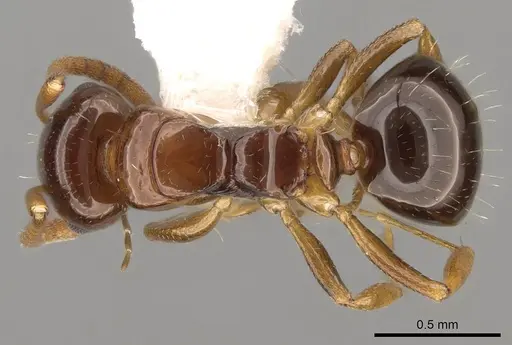
Literatura
Carregando mapa de distribuição...Carregando produtos...