
Stegomyrmex olindae
- Nome científico
- Stegomyrmex olindae
- Tribo
- Solenopsidini
- Subfamília
- Myrmicinae
- Autor
- Feitosa <i>et al.</i>, 2008
- Distribuição
- Encontrada em 1 países
Introdução
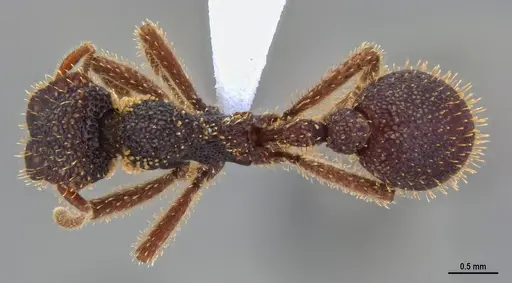
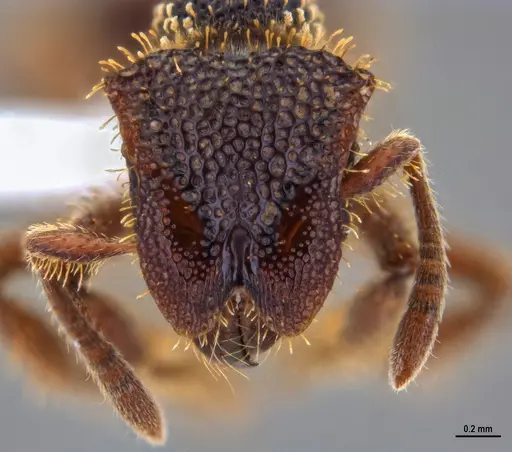
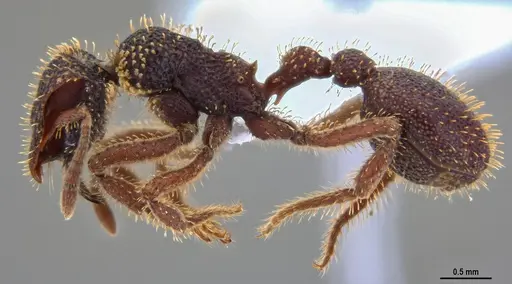
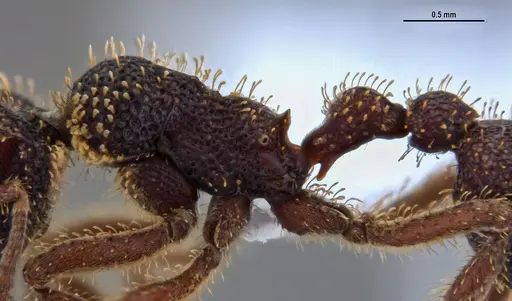
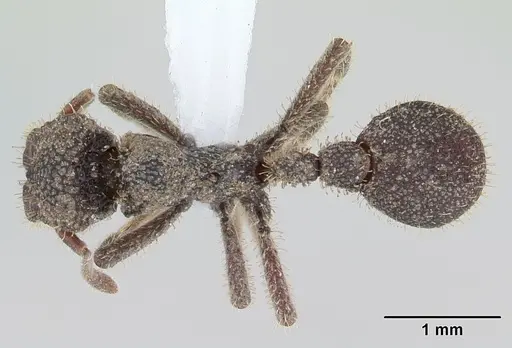
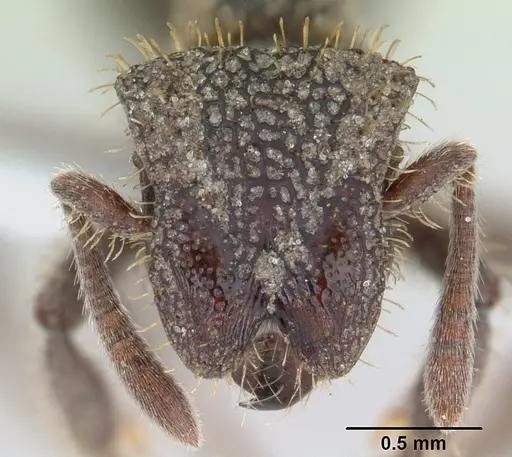
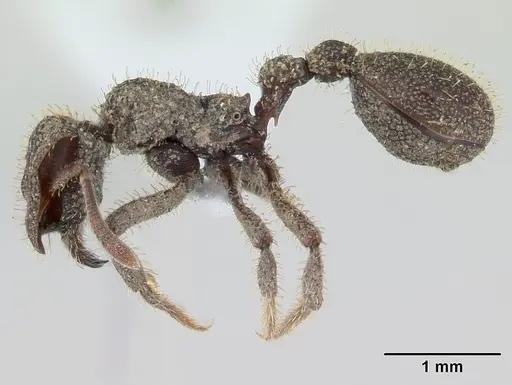
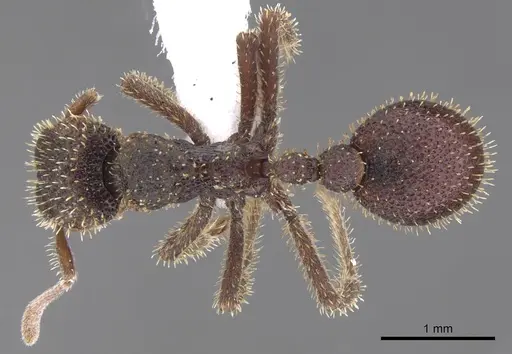
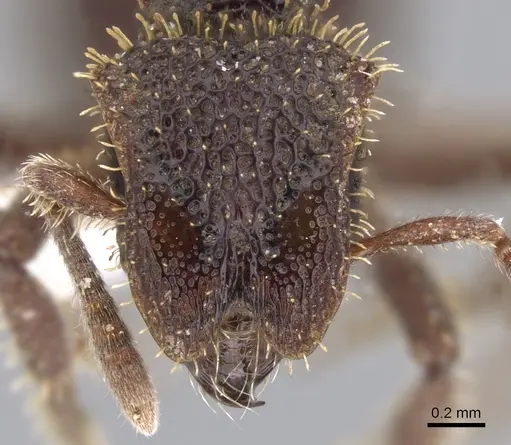
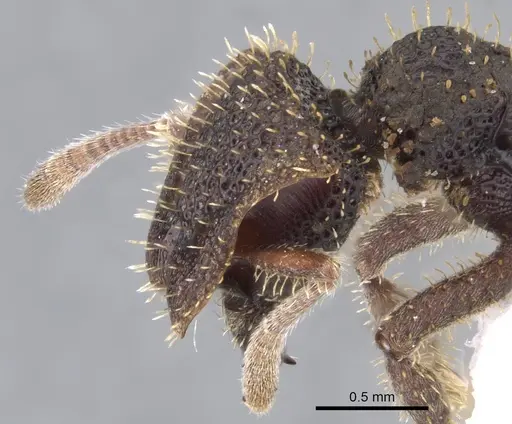
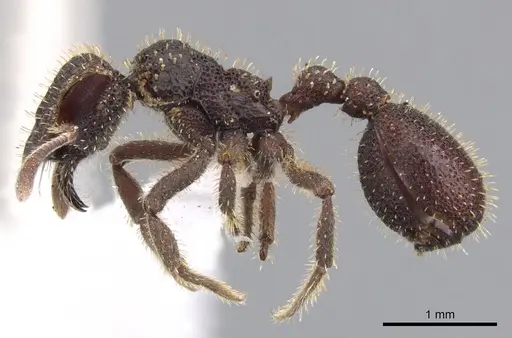
Stegomyrmex olindae is a small Neotropical ant native to central-north Brazil and French Guiana. Workers measure 5.0-5.7 mm in total length with a dark brown to reddish-ferruginous body and lighter appendages . Their most distinctive feature is the dense covering of long, slightly stiffened hairs across the body, giving them a fuzzy appearance. The mesosoma is heavily sculpted with deep areolate-rugose texture, and they carry short propodeal spines . Queens are larger, reaching 6.5 mm total length . This species belongs to the Solenopsidini tribe within Myrmicinae, which includes fire ants and other predatory small ants. This ant remains one of the most enigmatic species for keepers. Found exclusively in the leaf litter of mature wet forests across central-north Brazil and into French Guiana, it reportedly nests about 50 cm deep in the soil . Despite being described in 2008,absolutely no published information exists on its natural history, founding behavior, colony size, diet, or queen number are all unknown . This makes it an expert-level species for dedicated antkeepers who enjoy pioneering husbandry.
Quick Summary
- Difficulty: Expert
- Origin & Habitat: Central-north Brazil (Bahia, Maranhão, Minas Gerais, Mato Grosso, Tocantins) and French Guiana. Found in leaf litter of mature wet forests [1][3][4].
- Colony Type: Unknown, colony structure has not been documented in scientific literature.
- Size & Growth:
- Queen: 6.50-6.51 mm total length [1]
- Worker: 5.01-5.70 mm total length [1]
- Colony: Unknown, no colony size data available.
- Growth: Unknown, no development data exists for this species.
- Development: Unknown, no direct measurements exist. If you attempt to rear this species, expect the timeline to be completely undocumented. Do not rely on guesses. (Development time is completely unstudied. Estimates from related genera may not apply.)
- Antkeeping:
- Temperature: Inferred: Keep at 24-28 °C based on its wet forest habitat in tropical Brazil. Avoid temperatures below 22 °C. Provide a gentle thermal gradient if possible.
- Humidity: High humidity is essential, this is a leaf‑litter ant from wet forests. Keep the nest substrate consistently moist but not waterlogged. Focus on substrate moisture rather than just air humidity.
- Diapause: Unknown, tropical species may not require true diapause, but some seasonal slowdowns could occur. Monitor colony activity and adjust accordingly.
- Nesting: Reportedly nests at approximately 50 cm depth in soil in the wild [2]. In captivity, provide deep substrate (at least 10-15 cm) in a naturalistic setup or a deep plaster or soil‑based formicarium. Y‑tong (AAC) nests may be too shallow unless modified. Keep the nest dark and humid.
- Behavior: No specific behavioral studies exist. Based on tribe membership (Solenopsidini), this ant possesses a sting apparatus, but the sting shaft is weakly sclerotized and probably not perforating [1], effective stinging may be unlikely. Workers are ground‑dwelling and forage in leaf litter. Escape risk is moderate given their 5 mm size, standard fluon barriers are recommended.
- Common Issues: no available care information means you are essentially pioneering husbandry, expect a steep learning curve and potential colony losses while establishing what works., as a reportedly deep‑nesting species, they need vertical space that most standard formicariums do not provide, custom or modified setups may be necessary., wild‑caught colonies may harbor parasites or pathogens, quarantine and careful observation are essential., their cryptic lifestyle in leaf litter means they are not particularly active or visible compared to more charismatic species., temperature and humidity requirements are inferred, not confirmed, be prepared to adjust based on colony response.
Housing and Nesting
Stegomyrmex olindae presents a unique housing challenge because they reportedly nest about 50 cm deep in the soil [2]. Most commercial formicariums do not accommodate this depth. A naturalistic setup with a deep soil chamber (at least 10-15 cm of moist substrate) works best. You can use a large plastic container or custom‑built naturalistic formicarium filled with a soil mixture that holds moisture well. Alternatively, modify a Y‑tong (AAC) or plaster nest by adding a deeper chamber or stacking multiple levels connected by tubing. Test tubes are fine for temporary housing of a founding queen but are too shallow for an established colony. The nest should remain dark and humid, these are cryptic leaf‑litter ants that avoid light. Provide a humid outworld where workers can forage, and cover the nest area to block light. Escape prevention is straightforward given their moderate 5 mm size, standard barriers like fluon on container rims work adequately [1].
Feeding and Diet
No specific dietary studies exist for Stegomyrmex olindae. As a member of the Solenopsidini tribe (which includes fire ants and other predatory ants), it likely occupies a predatory or omnivorous niche. In the wild, they probably hunt small invertebrates in the leaf litter layer. Offer a varied diet: small live prey like fruit flies, pinhead crickets, and tiny arthropods (springtails work well for their size). They may also accept protein‑based foods like boiled egg or chicken. Sugar sources such as honey water or sugar water might be accepted, though this is unconfirmed. Feed small amounts initially and remove uneaten food within 24-48 hours to prevent mold. Given their unknown acceptance of various foods, be prepared to experiment, some colonies take readily to certain foods while ignoring others. The key is offering diversity and observing what they prefer [1].
Temperature and Care
This species comes from wet tropical forests in central‑north Brazil, so warm and humid conditions are essential. Keep the nest area at 24-28 °C, this matches their natural range in the Brazilian Amazon and Cerrado regions. A heating cable on one side of the nest creates a temperature gradient, allowing ants to self‑regulate. Avoid temperatures below 22 °C or above 32 °C. Humidity is critical: maintain the nest substrate consistently moist (but not waterlogged) and aim for high environmental humidity. Mist the outworld occasionally, but focus on substrate moisture rather than air humidity alone. Since nothing is known about their seasonal requirements, observe your colony for any annual activity changes. Tropical ants often show subtle seasonal shifts rather than true hibernation. If the colony becomes less active in winter months, reduce feeding frequency but maintain temperature and humidity [1][2].
Colony Establishment
Establishing a colony of Stegomyrmex olindae presents significant challenges because nothing is known about their founding behavior. Based on typical Solenopsidini patterns, the queen likely seals herself in a claustral chamber and rears the first brood on stored fat reserves, but this is unconfirmed. If you obtain a founding queen, house her in a test tube with a water reservoir (standard founding setup) or a small soil chamber. Keep her in complete darkness at 26 °C with high humidity. Do not disturb her during the founding period, this can cause her to abandon or eat her brood. Once workers emerge, wait several weeks before offering food, then provide tiny prey items. Growth will likely be slow given the lack of documented development times. Be patient, many exotic species take months or even years to establish stable colonies. Consider joining antkeeping communities to share experiences with others attempting to keep this species [1].
Frequently Asked Questions
How long does it take for Stegomyrmex olindae to produce first workers?
Unknown, no development data exists for this species. If you obtain a founding queen, expect a long wait, but timelines are completely undocumented. Do not rely on estimates from related genera [1].
Can I keep Stegomyrmex olindae in a test tube?
Test tubes work for temporary housing of a founding queen, but established colonies need more space. In the wild, they reportedly nest about 50 cm deep in soil [2]. For a growing colony, you will need a deeper setup, either a naturalistic soil chamber or a modified plaster/Y‑tong formicarium with deeper‑than‑standard chambers.
Are Stegomyrmex olindae good for beginners?
No, this is an expert‑level species. Absolutely no published care information exists, meaning you are essentially pioneering husbandry for this ant. They have specific (though unconfirmed) deep‑nesting requirements, need high humidity, and come from a poorly studied genus. Beginners should start with better‑documented species like Lasius, Camponotus, or Messor. This species is for dedicated antkeepers who enjoy the challenge of keeping undocumented species [1].
What do Stegomyrmex olindae eat?
Their exact diet is unstudied. Based on tribe membership (Solenopsidini), they likely eat small invertebrates. Offer small live prey (fruit flies, springtails, tiny crickets), protein sources (boiled egg, chicken), and experiment with sugar water or honey. Remove uneaten food within 24-48 hours. Be prepared to test different foods to see what your colony accepts [1].
How big do Stegomyrmex olindae colonies get?
Unknown, no colony size data has been published. Related Solenopsidini species typically reach several hundred to a few thousand workers. Given their cryptic leaf‑litter lifestyle and sparse distribution in the wild, colonies are probably smaller than those of more common ants. Expect slow growth and be patient with colony development [1].
Do Stegomyrmex olindae need hibernation?
Unlikely, they are a tropical species from wet forests in Brazil. True hibernation (diapause) is probably not required. However, they may show reduced activity during cooler or drier seasons in their natural habitat. Monitor your colony for any annual activity patterns and adjust feeding accordingly, but maintain warm, humid conditions year‑round [1].
Where does Stegomyrmex olindae live in the wild?
They inhabit leaf litter in mature wet forests across central‑north Brazil (Bahia, Maranhão, Minas Gerais, Mato Grosso, and Tocantins states) and have also been recorded in French Guiana. They reportedly nest about 50 cm deep in soil [2][1][4].
Can I keep multiple Stegomyrmex olindae queens together?
Unknown, no data exists on their colony structure (monogyne vs polygyne). Do not attempt combining unrelated queens unless you have specific evidence they tolerate this. Mixing unrelated foundresses typically leads to fighting and colony failure in most ant species. If you obtain multiple queens, house them separately until you understand their social structure [1].
Why is there no care information for Stegomyrmex olindae?
This species was only described in 2008 [1], making it relatively new to science. It is also rare in collections, found in sparse localities across Brazil, and lives cryptically in leaf litter. No scientific studies have examined its natural history, behavior, or captive care requirements. This is both the challenge and the appeal of keeping this species, you are contributing to knowledge that does not yet exist.
Report an Issue
The current care sheet is based fully on literature. See inconsistencies, or something that's incorrect? Please , it will be resolved after review from an admin. Contributing to the blogs tab also helps providing information, to make us be able to further improve the caresheets. Thank you for your support!
References

Este guia de cuidados está sob a licença CC BY-SA 4.0 .
Posts da comunidade
Literatura
Carregando mapa de distribuição...Carregando produtos...