
Solenopsis pusillignis
- Nome científico
- Solenopsis pusillignis
- Tribo
- Solenopsidini
- Subfamília
- Myrmicinae
- Autor
- Trager, 1991
- Distribuição
- Encontrada em 1 países
Introdução
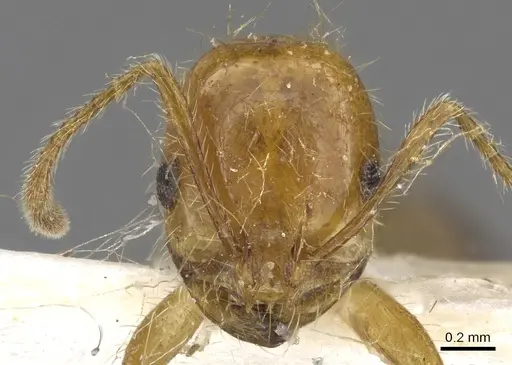
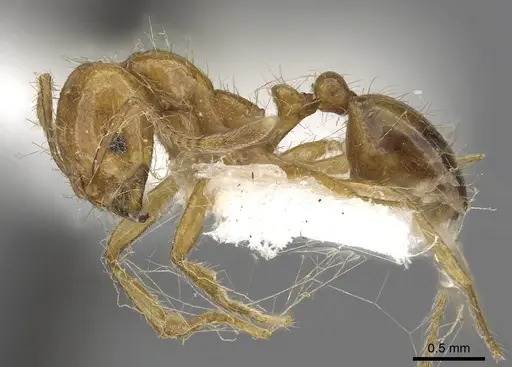
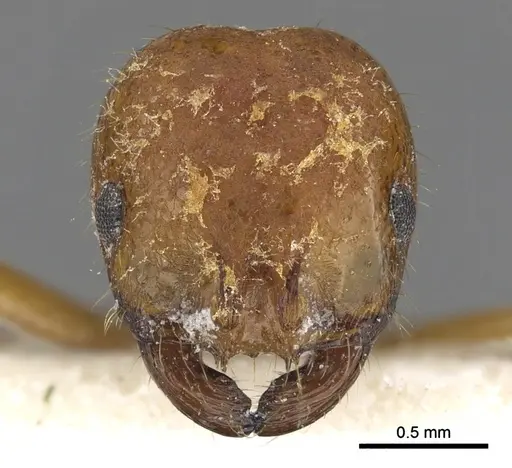
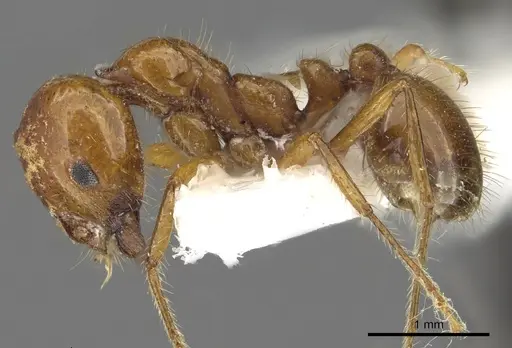
Solenopsis pusillignis is one of the smallest fire ants, native to the tropical savanna of central-western Brazil (Mato Grosso and Mato Grosso do Sul) . Workers are yellow to yellow-brown with a darker brown gaster, and the largest workers have heads that are deeply notched at the back . The area around the propodeal spiracle is granulate, which helps distinguish them from the similar Solenopsis macdonaghi . Queens are orange with brown markings on the abdomen. Males have unusually large ocelli, suggesting they may be active at night . This species is a sister to Solenopsis electra, separated by about 500 km . This species is very rarely collected, so its true distribution and biology remain poorly known . It represents a basally diverging lineage among fire ants, making it an interesting but challenging ant for keepers . The larvae are unique among fire ants, with 10-12 setae (bristles) on the head capsule instead of the usual 8 or fewer .
Quick Summary
- Difficulty: Expert
- Origin & Habitat: Tropical savanna of central-western Brazil: Cuiabá area in Mato Grosso and the Corumbá vicinity in Mato Grosso do Sul [1]. The region has hot, humid conditions with distinct wet and dry seasons.
- Colony Type: Unknown. Based on related saevissima-group species, probably monogyne (single queen), but this has not been confirmed.
- Size & Growth:
- Queen: Size data unavailable.
- Worker: Among the smallest in the genus, exact measurements not available [3].
- Colony: Unknown, the species has been collected so infrequently that colony size data does not exist [3].
- Growth: Estimated moderate based on related species.
- Development: Estimated 6-10 weeks based on related Solenopsis species. (Development has not been directly studied for this species.)
- Antkeeping:
- Temperature: Keep at 24-28°C, they are a tropical Brazilian species adapted to warm conditions [1]. A gentle gradient allows workers to self-regulate. Avoid above 32°C.
- Humidity: High humidity, as a tropical species, keep the nest substrate consistently moist but not waterlogged. Provide a dryer area if possible.
- Diapause: Unlikely, as a tropical species, they probably do not require a true hibernation period. A slight cool period during the dry season may be natural but is not necessary.
- Nesting: Likely nest in soil or under objects in open savanna. Use a test tube for founding, for established colonies, a Y-tong (AAC), plaster, or soil nest works well.
- Behavior: Like all Solenopsis, they can sting and are likely aggressive when disturbed. Their small size makes escape prevention critical, use fine mesh (
- Common Issues: escape prevention is critical due to tiny worker size, use fine mesh and tight-fitting barriers., biology is poorly documented so care is largely inferential from related species., slow growth and small colony sizes may frustrate keepers expecting rapid development., tropical humidity requirements can lead to mold issues if ventilation is poor., sting capability means handling requires caution despite small size.
Housing and Nest Setup
For founding, use a standard test tube setup. Fill the tube halfway with water, plug with cotton, and cover to keep it dark. This mimics the claustral chamber queens would create in the wild (if founding is claustral, as inferred from related Solenopsis). For established colonies, use a Y-tong (AAC) nest with narrow chambers, a plaster nest that holds humidity, or a soil setup. Because these are among the smallest fire ants [3], ensure all openings are covered with fine mesh (gaps must be smaller than 1 mm). They prefer tight, enclosed spaces. Include a water tube or moisture source, and outworld ventilation with mesh.
Temperature and Heating
Solenopsis pusillignis comes from tropical Brazil [1] and needs warm conditions. Aim for 24-28°C in the nest area. Use a heating cable or mat on one side to create a gradient so workers can choose their preferred temperature. Room temperature may suffice if it stays in the low-to-mid 20s°C, but monitor with a thermometer. Avoid temperatures above 32°C. They do not need hibernation, but activity may decrease slightly in cooler months. Do not attempt full hibernation.
Feeding and Diet
Like other fire ants, they are likely omnivorous. Offer sugar water, honey, or diluted maple syrup as a constant carbohydrate source. For protein, provide tiny insects such as fruit flies, small crickets, or mealworms. Feed protein 2-3 times per week and remove uneaten prey after 24-48 hours to prevent mold. Keep sugar water available at all times.
Humidity and Water
As a tropical species, they need high humidity. Keep the nest substrate consistently moist but not waterlogged. Use a water tube attached to the nest or mist periodically. If you see persistent condensation, increase ventilation. The outworld can be drier, giving the ants a humidity gradient. Good drainage prevents mold and drowning. [1]
Handling and Safety
All Solenopsis can sting, and the venom is painful. Never handle workers with bare hands. Use soft brushes or plastic tools for transferring ants. Keep a spray bottle of water and a clean cloth handy in case of escapes. If you need to move the colony to a new nest, wait until most workers are in the outworld.
Colony Establishment and Growth
Starting a colony is challenging because queens are rarely available. If you obtain a newly mated queen, place her in a claustral test tube setup (as inferred from related species). She will seal herself in and raise the first brood on stored reserves. The first workers (nanitics) may appear in 6-10 weeks, based on related species. Once they arrive, connect the test tube to an outworld. Growth is likely moderate, and maximum colony size is unknown. Be patient, this species is not for keepers looking for rapid expansion. [3]
Frequently Asked Questions
How long does it take for Solenopsis pusillignis to produce first workers?
The time from egg to first worker is estimated at 6-10 weeks based on related fire ant species, though it has not been directly studied for S. pusillignis. Warmer temperatures within the acceptable range tend to speed development.
Can I keep multiple Solenopsis pusillignis queens together?
This has not been studied for this species. Related fire ants in the saevissima group are typically monogyne, but some can form multi-queen colonies. Until more data is available, it is not recommended to combine foundress queens, as fighting is likely.
What do Solenopsis pusillignis eat?
They are likely omnivores like other fire ants. Offer sugar water, honey, or maple syrup as a constant carbohydrate source. For protein, provide tiny insects like fruit flies, small crickets, or mealworms. Feed protein 2-3 times per week and keep sugar available at all times.
Are Solenopsis pusillignis good for beginners?
No. This species is rated Expert because its biology is poorly documented, it is rarely available in the hobby, and its small size makes housing challenging. Related larger fire ants like Solenopsis geminata or Solenopsis invicta are better choices for beginners.
What temperature do Solenopsis pusillignis need?
Keep them at 24-28°C. They are a tropical Brazilian species adapted to warm conditions [1]. A heating cable or mat on one side of the nest can create a gradient if room temperature is insufficient. Avoid temperatures above 32°C.
Do Solenopsis pusillignis need hibernation?
Probably not. As a tropical species from central Brazil, they likely do not require a true hibernation period. A slight cool period during the dry season may occur naturally in their habitat, but do not attempt full hibernation.
How big do Solenopsis pusillignis colonies get?
The maximum colony size is unknown, this species has been collected so infrequently that colony size data does not exist [3]. Based on related species, they likely reach several hundred to a few thousand workers at most, but this is an estimate.
Why are my Solenopsis pusillignis escaping?
Their tiny worker size makes them excellent escape artists. Use fine mesh (at least 0.5 mm or smaller), tight-fitting lids, and apply barrier tape or fluon to all edges. Check for any gaps larger than about 1 mm, these small ants can squeeze through surprisingly small openings.
Where is Solenopsis pusillignis found in the wild?
They are native to the tropical savanna regions of central-western Brazil, specifically the states of Mato Grosso and Mato Grosso do Sul, around the cities of Cuiabá and Corumbá [1].
Report an Issue
The current care sheet is based fully on literature. See inconsistencies, or something that's incorrect? Please , it will be resolved after review from an admin. Contributing to the blogs tab also helps providing information, to make us be able to further improve the caresheets. Thank you for your support!
References

Este guia de cuidados está sob a licença CC BY-SA 4.0 .
Posts da comunidade
CASENT0902354
Ver no AntWeb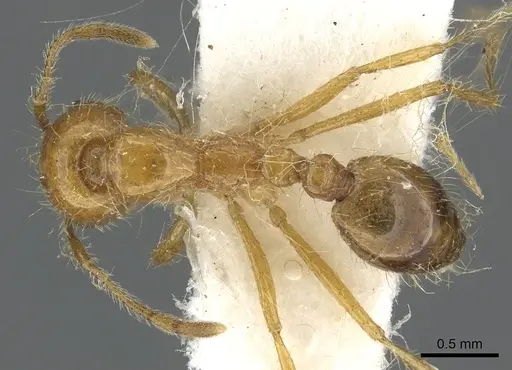
CASENT0902355
Ver no AntWeb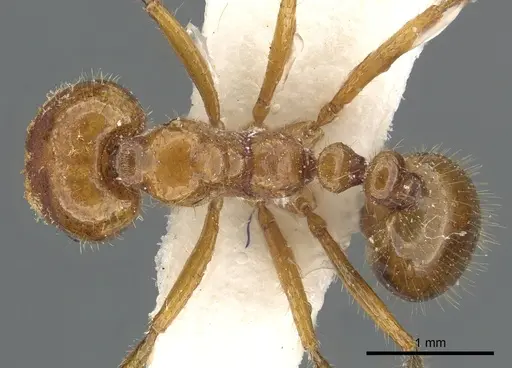
Literatura
Carregando mapa de distribuição...Carregando produtos...