
Solenopsis electra
- Nome científico
- Solenopsis electra
- Tribo
- Solenopsidini
- Subfamília
- Myrmicinae
- Autor
- Forel, 1914
- Distribuição
- Encontrada em 1 países
Introdução
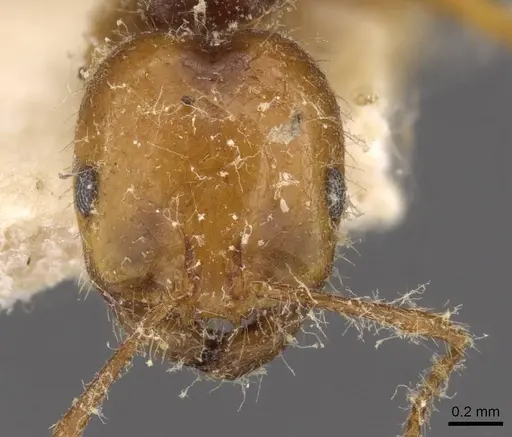
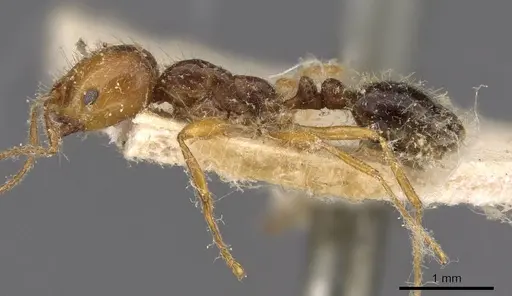
Solenopsis electra is a small fire ant species native to southern South America, belonging to the Solenopsis saevissima species group . Workers are among the smallest in the fire ant genus, with a distinctive color pattern: red-yellow head, legs, and antennae, dark brown mesosoma and gaster, and yellow anterior on the first abdominal segment . Queens are yellow with a reddish-brown gaster . This species shows significant size variation between populations - northern workers are much larger than southern ones, though queens remain similar in size across their range . Solenopsis electra is the sister species to Solenopsis pusillignis, and they form a well-supported clade separate from other fire ants . It is one of the most basal members of the S. saevissima species group . In the Argentine Chaco, this species makes up 22-55% of ant records, showing remarkable abundance in its native habitat .
Quick Summary
- Difficulty: Hard
- Origin & Habitat: Native to the Neotropical region: Argentina (Santiago del Estero, Salta, Tucumán, Jujuy provinces), Bolivia (Santa Cruz), and possibly introduced to Paraguay (Asunción) [1][2]. Inhabits the Argentine Chaco where it thrives in both degraded and natural areas [6].
- Colony Type: Unconfirmed. Based on typical Solenopsis saevissima group patterns, likely monogyne (single-queen colonies), but no specific colony structure data exists for this species.
- Size & Growth:
- Queen: Size data unavailable. Inferred from related Solenopsis saevissima group species, queens may be around 6-8 mm, but no actual measurements are available for this species.
- Worker: Polymorphic, one of the smallest fire ant species [3]. No precise body length (TL) measurements are published for workers. Northern populations produce larger workers than southern ones [2].
- Colony: Unknown. Related fire ants typically reach several thousand workers, but no data exists for Solenopsis electra.
- Growth: Unknown (inferred moderate based on related Solenopsis species).
- Development: Unknown. Based on related fire ant species, development from egg to worker is estimated at 5-7 weeks at warm temperatures (26-30°C), but this is unconfirmed for Solenopsis electra. (Development time heavily depends on temperature. Exact timeline for this species is not known.)
- Antkeeping:
- Temperature: Unknown. As a subtropical species from South America, it likely prefers warm conditions. Estimate a range of 26-30°C, but no published data confirms this. Provide a temperature gradient and observe colony response.
- Humidity: Unknown. Fire ants generally tolerate moderate humidity. Keep the nest substrate slightly dry to moderately moist, exact preferences are not studied. Avoid waterlogging.
- Diapause: Unknown. Given its origin in subtropical Argentina and Bolivia, it likely does not require winter diapause, but this has not been confirmed. Keep warm year-round.
- Nesting: In nature, nests in soil. In captivity, a test tube setup with a water reservoir is suitable for founding. For larger colonies, use Y-tong (AAC) or plaster nests with dry to moderately moist conditions. Always use fine mesh and fluon for escape prevention due to small worker size.
- Behavior: Defensive and ready to sting when disturbed. Workers are small but aggressive, swarming to protect the colony. Excellent escape prevention is mandatory, they can squeeze through tiny gaps. Generalist foragers, likely hunting small insects and tending honeydew sources.
- Common Issues: stinging, the sting is painful and may cause allergic reactions in sensitive individuals, handle with caution., escape risk due to small worker size, needs fluon barriers and fine mesh (0.5 mm or smaller) on all openings., limited availability in the hobby, this species is rarely offered for sale., many care requirements are unknown, husbandry must be adjusted based on trial and error, beginners may struggle.
Housing and Nest Setup
Because specific nesting preferences for Solenopsis electra are not published, follow general fire ant husbandry. For a founding colony, a test tube setup with a water reservoir and cotton plug works well. The queen will likely seal herself in to raise her first brood (claustral founding assumed). For established colonies, use a Y-tong (AAC) or plaster nest kept on the dry side. Fire ants are not moisture-dependent like some tropical species, so avoid excess humidity. The most critical part is escape prevention: apply fluon around test tube rims and outworld walls, and cover all ventilation holes with fine mesh (0.5 mm or smaller). Workers are small and will exploit any gap. [1]
Feeding and Diet
Fire ants are generalist omnivores. In the wild they hunt small insects and tend aphids for honeydew [2]. In captivity, provide a varied diet: small insects (fruit flies, pinhead crickets, mealworm pieces) two to three times a week, plus a constant supply of sugar water or honey. Remove uneaten prey after 24-48 hours to prevent mold. The founding queen does not need food until her first workers appear. Once workers are present, they will forage for both protein and sugar. Exact dietary preferences for Solenopsis electra are not studied, so offer a wide range and observe what they accept.
Temperature Requirements
No published temperature requirements exist for Solenopsis electra. As a subtropical species from the Argentine Chaco, it likely thrives in warm conditions. An estimated range of 26-30°C is a reasonable starting point for brood development, but this is not confirmed. Use a heating cable on one side of the nest to create a gradient, allowing the ants to choose their preferred temperature. Room temperature (20-24°C) will probably slow development significantly. Avoid temperatures above 32°C, which may dry out the nest and stress the colony. Monitor the ants' behavior: if they cluster away from the heat source, lower the temperature. [1][2]
Defense and Sting Management
Like all members of the subfamily Myrmicinae and tribe Solenopsidini, Solenopsis electra possesses a functional sting used to subdue prey and defend the colony. The sting delivers a venom containing piperidine alkaloids, causing a burning sensation and potentially severe allergic reactions in some people. When handling the nest, move slowly and avoid blowing on workers or disturbing the colony directly. Use long tweezers or tools to move items inside the outworld. If stung, wash the area with soap and water, apply a cold pack for pain, and monitor for signs of an allergic reaction. Keep the formicarium in a low-traffic area away from bedrooms and barefoot walking paths.
Colony Growth and Development
No specific data exists for colony growth of Solenopsis electra. Based on related fire ants, queens are thought to be claustral, sealing themselves in a chamber and raising the first brood on stored reserves. The first workers (nanitics) are expected to emerge after 5-7 weeks at warm temperatures, but this timeline is unconfirmed. After the first workers appear, the queen shifts to continuous egg-laying. Fire ants are polymorphic, producing both minor and major workers [3]. The maximum colony size is unknown, related species can reach several thousand workers. Growth rate appears moderate but is heavily influenced by temperature and feeding frequency.
Legal and Ethical Considerations
Before acquiring Solenopsis electra, check your local laws regarding ant keeping. While this species is not listed as a major invasive, it has been recorded as a possible introduction in Asunción, Paraguay [1]. Never release colonies into the wild outside their native range. In its natural range (Argentina, Bolivia, Paraguay), it is an important ecological component, both as a predator and as prey for specialized Pseudacteon decapitating flies [7]. If you can no longer keep your colony, rehome it to another antkeeper or humanely euthanize it. Always prevent any escape of queens or workers.
Frequently Asked Questions
How long does it take for Solenopsis electra to raise first workers?
There is no specific data for this species. Based on related fire ants, the claustral queen may take 5-7 weeks to produce the first workers at warm temperatures (around 26-30°C). Cooler temperatures will lengthen this period. Disturbing the queen during founding can cause brood rejection, so be patient and leave her undisturbed.
What do Solenopsis electra eat?
Like most fire ants, Solenopsis electra is an omnivorous scavenger and predator. Offer small insects (fruit flies, pinhead crickets, mealworm pieces) two to three times per week, plus a constant supply of sugar water or honey. They will also tend honeydew sources if available. Remove uneaten food after 24-48 hours to prevent mold.
Is Solenopsis electra good for beginners?
No. This species is not recommended for beginners. They are highly defensive, have a painful sting, and many of their care requirements are unknown. Their small size makes escape prevention tricky. Beginners should start with hardier, better-studied species like Lasius niger or Messor barbarus.
Do Solenopsis electra need hibernation?
It is unknown. Since they originate from subtropical South America (Argentina, Bolivia), they likely do not require winter diapause, but this has not been confirmed. It is safest to keep them warm year-round, at least above 24°C. Hibernation at cold temperatures might kill the colony.
How big do Solenopsis electra colonies get?
The exact maximum colony size is unknown. Related fire ant species can reach several thousand workers. Solenopsis electra is polymorphic, with both minor and major workers. With good care, a colony may grow to over 1,000 workers over several years, but this is speculative.
Can I keep multiple Solenopsis electra queens together?
It is not recommended. This species is presumed to be monogyne (single queen). Multiple unrelated queens will likely fight until only one remains. Pleometrosis (cooperative founding) has not been studied in this species and would be risky.
What temperature is best for Solenopsis electra?
No exact temperature has been published. A reasonable estimate is 26-30°C, based on the subtropical climate of its native range. Provide a gradient using a heating cable, and let the ants choose. Avoid temperatures above 32°C, which may dry out the nest, and below 24°C, which may slow development or harm brood.
Why is my Solenopsis electra colony dying?
Several factors could be responsible. The most likely are: temperature too low (below 24°C), substrate too wet (fire ants prefer drier conditions), stress from frequent disturbance, or insufficient escape prevention leading to worker loss. Also check for mold in the nest. If you cannot identify the cause, try adjusting temperature and humidity gradually.
Report an Issue
The current care sheet is based fully on literature. See inconsistencies, or something that's incorrect? Please , it will be resolved after review from an admin. Contributing to the blogs tab also helps providing information, to make us be able to further improve the caresheets. Thank you for your support!
References

Este guia de cuidados está sob a licença CC BY-SA 4.0 .
Posts da comunidade
CASENT0908803
Ver no AntWeb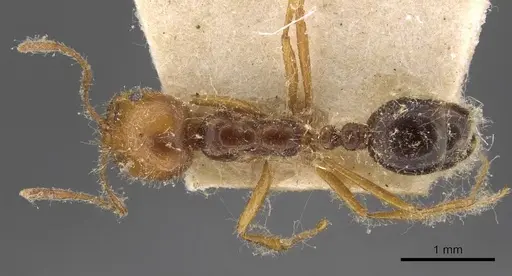
Literatura
Carregando mapa de distribuição...Carregando produtos...