
Solenopsis cypridis
- Nome científico
- Solenopsis cypridis
- Tribo
- Solenopsidini
- Subfamília
- Myrmicinae
- Autor
- Santschi, 1934
- Distribuição
- Encontrada em 0 países
Introdução
Solenopsis cypridis is a small ant species native only to the island of Cyprus . It was originally described by Santschi in 1934 as a subspecies of Solenopsis fugax, but was raised to full species status in 2023 . Workers are tiny, around 1.5-2.5 mm, and are yellowish to reddish-brown - typical of thief ants. Queens are larger, roughly 5-6 mm, and darker. The species is known from the Limassol area and Kythrea (based on a gyne collected in November). As a Mediterranean island endemic, it experiences hot, dry summers and mild winters.
Quick Summary
- Difficulty: Hard
- Origin & Habitat: Cyprus (Palaearctic region) [1][2]. Recorded from Limassol and Kythrea. The natural habitat is Mediterranean, with hot dry summers and mild winters.
- Colony Type: Unconfirmed (no data on queen number in the research context).
- Size & Growth:
- Queen: Approximately 5-6 mm (estimated from related Solenopsis species, no direct measurements available).
- Worker: Approximately 1.5-2.5 mm (estimated from original description).
- Colony: Colony size data unavailable.
- Growth: Unknown
- Development: Unknown, specific data for S. cypridis is unavailable. (No reliable inference can be made from related species without confirmation.)
- Antkeeping:
- Temperature: Keep at a warm room temperature (20-25°C) and provide a slight gradient. Avoid prolonged exposure above 30°C. Specific optimal range is unknown.
- Humidity: Provide a majority of dry substrate with one small moist area to create a gradient. Cyprus summers are dry, so overall conditions should lean dry.
- Diapause: Unknown. Cyprus has mild winters, a cooling period to 15-18°C for a few months may be attempted, but it is unconfirmed whether it is required.
- Nesting: Unknown preferences. A test tube for founding is standard, later a small Y‑tong (AAC) or plaster nest may be tried. Keep the nest dark and mostly dry.
- Behavior: Workers carry a functional sting containing piperidine alkaloids (typical of Solenopsidini), but they are secretive and rarely sting defensively. Because of their tiny size, escape prevention is critical: all gaps must be sealed with fine mesh or tight lids.
- Common Issues: escape prevention is absolutely critical due to the ant's tiny size, use fine mesh and seal all gaps., lack of specific care data means adjustments may be needed, start with general Solenopsis guidance and observe colony response., wild-caught colonies may carry unknown parasites or diseases., the ants are secretive and may seem inactive, this is normal behavior.
Housing and Setup
For founding colonies, a standard test tube setup works. Fill the tube one‑third with water, plug with cotton, and introduce the queen. Once you have a small worker force (e.g.,10-20 workers), you can offer a small Y‑tong (AAC) or plaster nest. Because nothing is known about their preferred nesting conditions, keep the nest mostly dry with only a small damp area. The nest should remain dark and undisturbed.
Feeding and Diet
Solenopsis cypridis is omnivorous. In captivity they accept small insects, fruit flies, pinhead crickets, tiny mealworms, and sugar water or diluted honey. Protein is essential for brood development, offer prey 2-3 times per week. Remove leftovers after 24 hours to prevent mold. Because of their tiny size, all food must be small enough for them to handle.
Temperature and Seasonal Care
As a Mediterranean species, S. cypridis likely prefers warm conditions, but no specific data exists. Maintain room temperature (20-25°C) and provide a gradient. Avoid prolonged heat above 30°C. A winter cooling period to 15-18°C may be optional, Cyprus winters are mild, but the species’ exact needs are unknown. Keep the nest away from drafts and constant cold.
Behavior and Colony Dynamics
This is a secretive species that stays hidden most of the time. Workers are tiny, non‑aggressive, and have a functional sting (piperidine alkaloids) that is rarely used defensively. Their common name “thief ant” refers to a habit of raiding other nests, but this behavior is seldom seen in captivity. Colony growth is unknown for this species, any estimates from related Solenopsis are speculative.
Frequently Asked Questions
How long does it take for Solenopsis cypridis to have first workers?
No specific data is available for this species. Based on related Solenopsis, egg‑to‑worker may take 5-8 weeks, but this is unconfirmed. Be patient during the founding phase.
Can I keep multiple Solenopsis cypridis queens together?
Not recommended, no data exists on polygyny in this species. It is safer to assume single‑queen colonies until proven otherwise.
What is the best nest type for Solenopsis cypridis?
Start with a test tube for the queen. Once the colony has 10-20 workers, try a small Y‑tong (AAC) or plaster nest. Keep the nest mostly dry and dark. Avoid large, open setups as they prefer confined spaces.
How often should I feed Solenopsis cypridis?
Offer small prey 2-3 times per week and provide a sugar source continuously (replace every few days). Remove uneaten prey after 24 hours. Adjust frequency as the colony grows, but no specific schedule is known.
Do Solenopsis cypridis need hibernation?
Unknown. Cyprus has mild winters, so a true diapause may not be required. If you want to try, reduce the temperature to 15-18°C for 2-3 months during winter. Observe colony activity and adjust.
Are Solenopsis cypridis good for beginners?
No, they are considered Hard. Their tiny size makes escape prevention challenging, and the lack of species‑specific care data means keepers must be willing to experiment. They are not recommended for beginners.
Why is my Solenopsis cypridis colony not growing?
The most likely reasons are unsuitable temperature, lack of protein, or excessive humidity. Keep the nest at 20-25°C, offer tiny prey regularly, and provide a dry environment. Slow growth may be normal for this species, its colony dynamics are unknown.
How big do Solenopsis cypridis colonies get?
No reliable data exists. Colony size is unknown, any number given would be pure speculation. Keep expectations low and observe natural growth.
Report an Issue
The current care sheet is based fully on literature. See inconsistencies, or something that's incorrect? Please , it will be resolved after review from an admin. Contributing to the blogs tab also helps providing information, to make us be able to further improve the caresheets. Thank you for your support!
References

Este guia de cuidados está sob a licença CC BY-SA 4.0 .
Posts da comunidade
CASENT0913887
Ver no AntWeb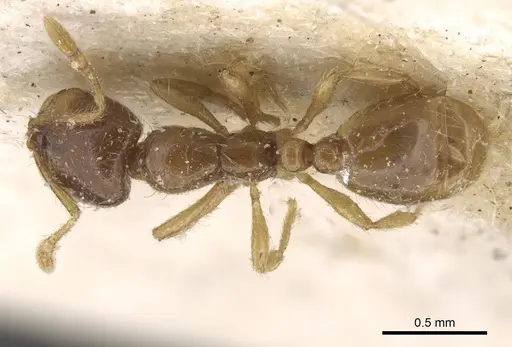
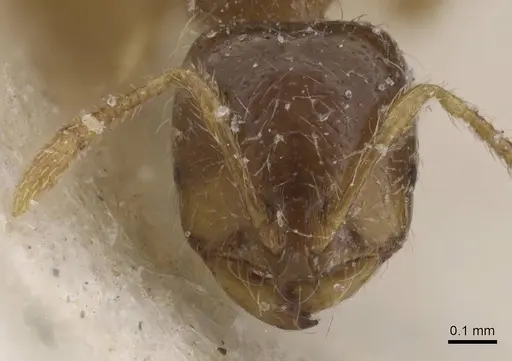
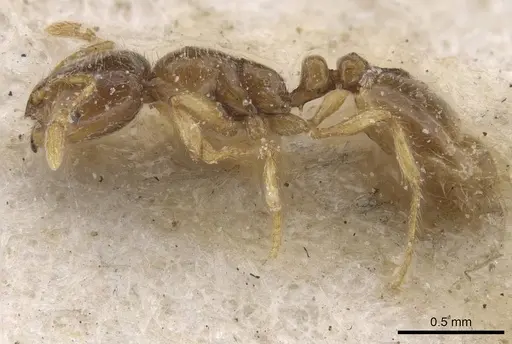
Literatura
Carregando mapa de distribuição...Carregando produtos...