
Solenopsis cooperi
- Nome científico
- Solenopsis cooperi
- Tribo
- Solenopsidini
- Subfamília
- Myrmicinae
- Autor
- Donisthorpe, 1947
- Distribuição
- Encontrada em 1 países
Introdução
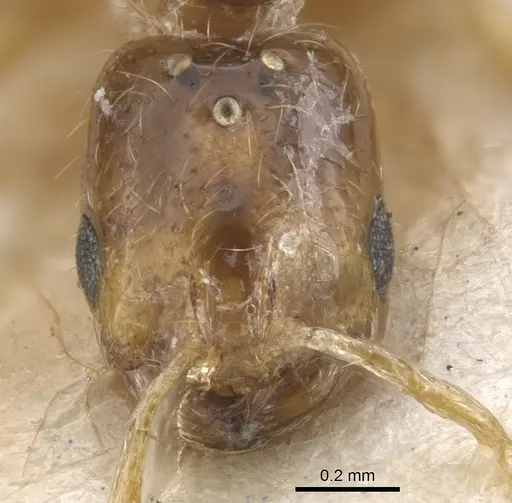
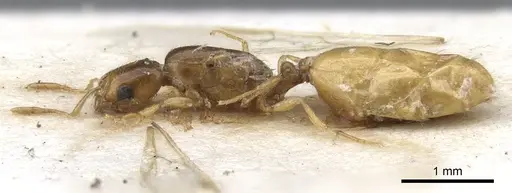
Solenopsis cooperi is a small, yellowish-brown ant species native to Egypt and Libya in North Africa. Workers measure just 1.53-1.76mm and display a distinctive dimorphism with both minor and major castes - a rare trait among Egyptian Solenopsis species . Workers are dusky yellow with a darkened posterior gaster, while queens are larger at 4.0-4.75mm with a bicolored pattern: brown head and alitrunk contrasting with yellow antennae, legs, and gaster . One of their most unusual features is their tiny eyes, composed of just a single ommatidium - essentially a light-sensing dot . This species remains poorly studied in the wild, with only a handful of colonies ever documented.
Quick Summary
- Difficulty: Unknown
- Origin & Habitat: Solenopsis cooperi is restricted to Egypt and Libya in the Palaearctic region. Known colonies were found in loose sandy soil at the base of old trees, suggesting they prefer dry, sandy habitats with some shade [1]. They have been collected from Siwa Oasis in the western desert, Saloga Island Protectorate in Aswan, Abu-Swelam in El-Minyia Governorate, and Burg El-Arab near Alexandria [1].
- Colony Type: Colony structure is unconfirmed. Worker dimorphism has been documented, meaning colonies produce both minor and major workers [1]. The only collected colony was small.
- Size & Growth:
- Queen: 4.0-4.75mm [1]
- Worker: 1.53-1.76mm [1]
- Colony: Unknown, the only documented colony was small [1]
- Growth: Unknown
- Development: Unknown, development has not been studied [1] (No direct data exists on development time. Related Solenopsis species in similar climates typically develop in 4-8 weeks at warm temperatures, but this is an estimate.)
- Antkeeping:
- Temperature: Based on their Egyptian habitat [1], they likely prefer warm conditions around 24-30°C. Start in the mid-20s and observe colony activity.
- Humidity: They nest in loose sandy soil at tree bases [1], suggesting moderate to low humidity. Allow the nest substrate to dry partially between rehydrations.
- Diapause: Unknown, Egyptian ants may have reduced activity during cooler months but true diapause is unconfirmed.
- Nesting: In nature they nest in loose sandy soil at the base of old trees [1]. In captivity, a small test tube setup or a formicarium with sandy substrate would be appropriate. Avoid overly compact soil.
- Behavior: Solenopsis species can be defensive, but this small species is not an aggressive fire ant type. Their tiny eyes suggest limited visual navigation [2]. They likely forage on the ground surface. Escape prevention is important due to their small size, use fine mesh barriers. Workers are hairy with abundant yellow pilosity [2].
- Common Issues: this species is extremely rare in the antkeeping hobby, finding a colony may be impossible., no captive breeding data exists, we don't know their exact care requirements., their tiny single-ommatidium eyes suggest they may be light-sensitive, avoid bright illumination., small colony size means they are vulnerable to stress and disturbance., wild-caught colonies may have parasites since only small colonies have been found.
Appearance and Identification
Solenopsis cooperi workers are tiny at just 1.53-1.76mm, making them one of the smaller Solenopsis species [1]. They display worker dimorphism with both minor and major workers, a notable trait since this wasn't previously reported for Egyptian Solenopsis [1]. Workers are dusky yellow with the posterior of their gaster darkened, and they have abundant yellow hairs covering their body [2]. The most distinctive feature is their extremely tiny eyes, composed of only a single ommatidium, essentially a tiny dot for detecting light [2]. Queens are larger at 4.0-4.75mm with a bicolored pattern: brown head and alitrunk contrasting with yellow antennae, legs, and gaster [2]. The propodeum (the rear portion of the mesosoma) has a distinctive longitudinal impression and angular corners [1].
Natural History and Distribution
This species appears to be restricted to Egypt, with a few records from neighboring Libya [3]. The original description was based on specimens collected from Siwa Oasis in the western desert (formerly known as the Libyan Desert) in 1935 [1]. More recent collections come from Saloga Island Protectorate in Aswan (24.05°N,32.56°E), Abu-Swelam village in El-Minyia Governorate (28.06°N,30.45°E), and Burg El-Arab near Alexandria [1]. The known colony was found in loose sandy soil at the base of an old tree, suggesting they prefer sheltered spots in dry, sandy environments [1]. Very little is known about their biology in the wild, only a handful of colonies have ever been documented. Note that the previously described species Solenopsis cooperi was synonymized under S. cooperi [1].
Housing and Nesting
In nature, Solenopsis cooperi nests in loose sandy soil at the base of old trees [1]. For captive care, a small test tube setup works well for founding colonies. Use a container with sandy substrate that allows for easy tunnel construction. The nesting area should be kept relatively dry, these are not high-humidity ants. Because of their tiny size, ensure any formicarium or test tube setup has excellent escape prevention. Use fine mesh on any openings since workers are only about 1.5mm. A small outworld area for foraging completes the setup. Keep the nest in a quiet location with minimal vibration, their tiny eyes suggest they may be sensitive to light and disturbance.
Feeding and Diet
Diet has not been studied for this species [1]. Based on related Solenopsis species, they are likely omnivorous with a preference for small insects and sugary liquids. For captive colonies, offer small live prey such as fruit flies, pinhead crickets, or other tiny insects. Sugar water or honey can be offered occasionally, though acceptance may vary. Since colonies are small, portion sizes should be tiny. Remove uneaten prey to prevent mold.
Temperature and Seasonal Care
Solenopsis cooperi comes from Egypt, a hot desert to semi-arid climate [3]. They likely tolerate temperatures from roughly 20°C up to 30°C or higher. Keep them in the mid-to-warm room temperature range, around 24-28°C, to support normal colony activity. A slight heat gradient allows the ants to self-regulate. True diapause requirements are unknown, the species hasn't been studied enough to determine if they need a winter rest period. Based on their Egyptian origin, they probably have reduced activity during cooler months but may not require full hibernation. If keeping them through winter, a slight temperature reduction to around 18-20°C for a few months may be appropriate, but this is an estimate rather than a confirmed requirement.
Behavior and Temperament
Solenopsis species can deliver a painful sting, though this small species is likely less aggressive than larger fire ants. Their tiny eyes (single ommatidium) suggest they rely more on chemical signals than vision for navigation [2]. Workers are hairy and move actively when foraging. They likely use chemical trails to recruit nestmates to food sources. Major workers, when present, may have different roles in the colony. Due to their small size and the fact that this species is virtually unknown in captivity, handle them with extra care and minimize disturbances to the colony. Always use appropriate escape prevention since tiny ants can slip through surprisingly small gaps.
Frequently Asked Questions
How long does it take for Solenopsis cooperi to develop from egg to worker?
This is unknown, the development timeline has not been studied for this species [1]. Based on related Solenopsis species in similar climates, expect roughly 4-8 weeks at warm temperatures (around 26-28°C), but this is an estimate.
What do Solenopsis cooperi ants eat?
Diet has not been specifically studied for this species. Like related Solenopsis, they are likely omnivorous, offer small live prey (fruit flies, tiny crickets) for protein and occasional sugar water or honey. Acceptance of sugar sources is not confirmed for this species.
Can I keep Solenopsis cooperi in a test tube?
Yes, a test tube setup is appropriate for this small species. Use a small test tube with a water reservoir and sandy substrate for the founding colony. Ensure excellent escape prevention, these tiny workers can slip through standard barriers.
How big do Solenopsis cooperi colonies get?
Unknown, the only documented wild colony was small [1]. This species appears to have naturally small colony sizes, so don't expect the large colonies typical of some Solenopsis.
Are Solenopsis cooperi good for beginners?
No, this species is extremely rare in the antkeeping hobby and almost no captive care information exists. The difficulty level is effectively 'unknown' because these ants are virtually never kept.
Do Solenopsis cooperi need hibernation?
Unknown, diapause requirements have not been studied for this species. Based on their Egyptian origin, they may have reduced activity during cooler months but true hibernation may not be necessary.
Why are my Solenopsis cooperi dying?
Without captive data, we cannot confirm specific issues. Potential problems include: stress from disturbance, incorrect humidity (they prefer dry sandy conditions), poor escape prevention, or parasites from wild-caught colonies. Keep disturbances minimal.
When should I move Solenopsis cooperi to a formicarium?
Wait until the colony is well-established with multiple workers. For this small species, a test tube setup can house them for quite some time. Move them when the test tube becomes crowded or the water reservoir needs frequent refilling.
Can I keep multiple queens together?
Not enough is known about their colony structure to answer this. The queen number in wild colonies has not been documented. For safety, keep only one queen per colony unless you have specific guidance.
Report an Issue
The current care sheet is based fully on literature. See inconsistencies, or something that's incorrect? Please , it will be resolved after review from an admin. Contributing to the blogs tab also helps providing information, to make us be able to further improve the caresheets. Thank you for your support!
References

Este guia de cuidados está sob a licença CC BY-SA 4.0 .
Posts da comunidade
CASENT0902334
Ver no AntWeb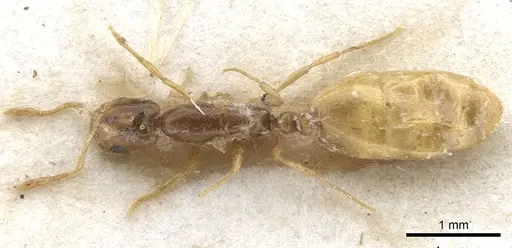
Literatura
Carregando mapa de distribuição...Carregando produtos...