
Simopone dignita
- Nome científico
- Simopone dignita
- Subfamília
- Dorylinae
- Autor
- Bolton & Fisher, 2012
- Distribuição
- Encontrada em 1 países
Introdução
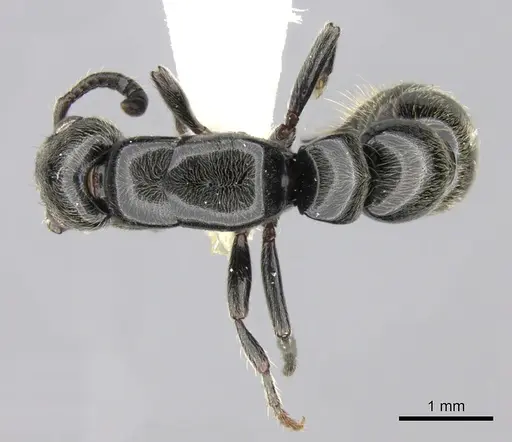
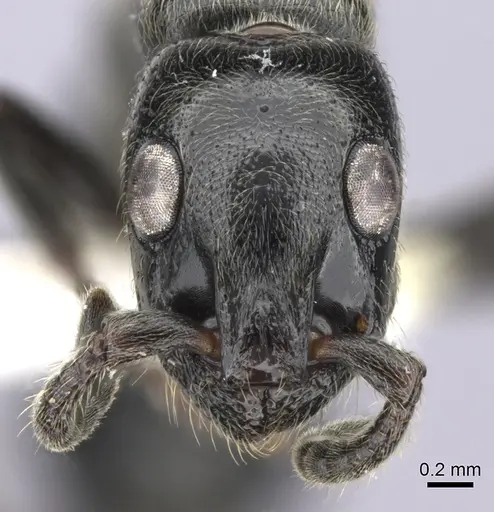
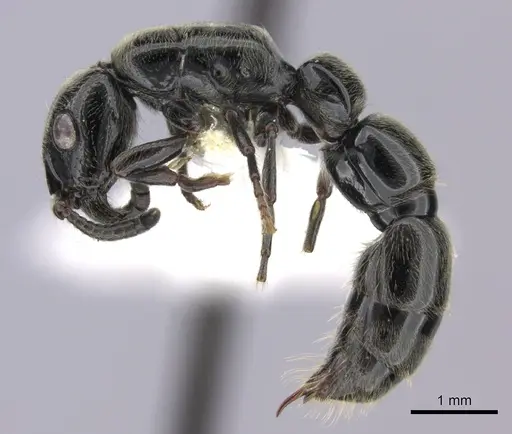
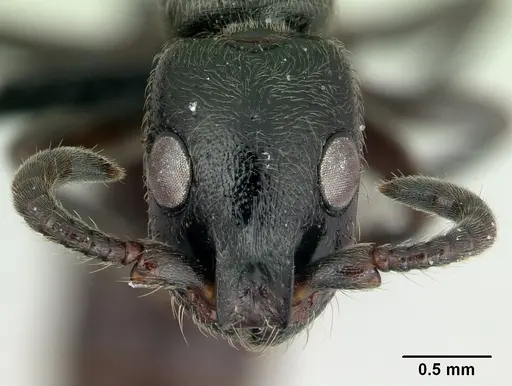
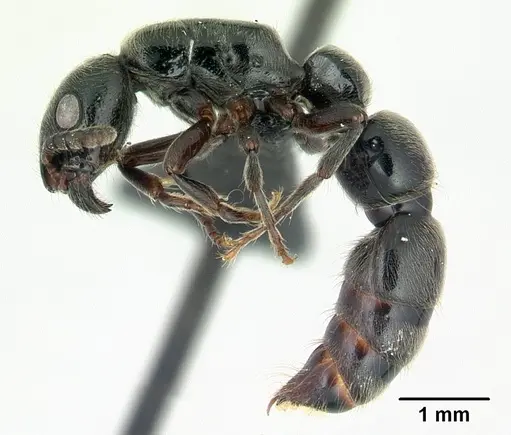
Simopone dignita is a predatory ant from Madagascar, belonging to the Dorylinae subfamily. Workers are black with blackish-brown appendages, and the clypeus is usually a bit lighter . They were discovered in Namoroka National Park (northwestern Madagascar) in a dead branch above ground, inside tropical dry forest . This means they are arboreal nesters - they live off the ground in tree cavities. Their biology is poorly known, as they were only described in 2012 and have almost no captive history.
Quick Summary
- Difficulty: Expert
- Origin & Habitat: Madagascar (Mahajanga Province), specifically tropical dry forest at 100 m elevation in Namoroka National Park. The type specimens were taken from a dead branch above ground [1][2]. Additional data suggests they prefer dry, dark, arboreal microhabitats [3].
- Colony Type: Unconfirmed, no data on queen number or social structure for this species.
- Size & Growth:
- Queen: Undocumented, queens have not been described [1].
- Worker: No total length data available, head measurements are known but do not represent body size [1].
- Colony: Unknown, no colony size data available.
- Growth: Unknown, no development data available.
- Development: Unconfirmed, no direct data exists for this species [1][3]. (No development timeline has been studied. Given the complete lack of data, any estimate would be guesswork.)
- Antkeeping:
- Temperature: Based on their tropical dry forest origin, keep them warm year‑round, between 24 and 28°C. Avoid temperatures below 20°C [2][3].
- Humidity: This species lives in dry forest and arboreal nests, so provide low to moderate humidity. The nest substrate should be mostly dry with only a small slightly moist area, definitely avoid waterlogging [3].
- Diapause: Unknown, because they come from a tropical region, a cold diapause is probably not needed. Keep temperatures stable year‑round [2].
- Nesting: Arboreal nester, in nature they live in dead branches above ground [1][2]. In captivity, use a horizontal Y‑tong (AAC) nest, a plaster nest with elevated chambers, or a naturalistic setup with cork bark. They need dark, enclosed spaces.
- Behavior: Almost nothing is known about their behavior. As a Dorylinae ant, they are likely predatory and may use a stinger for defence, but this has not been confirmed for this species. Treat them as potentially aggressive and always use caution. Because workers are small (head length roughly 1.5 mm), they can escape through tiny gaps, use fluon or barrier gel on all edges.
- Common Issues: very limited availability, this species is almost never kept, and captive breeding history is zero., total lack of basic biology, founding behaviour, colony structure, and development are all unknown, making colony establishment a gamble., requires constant live prey, they are predatory, so you must supply live insects regularly., arboreal nesting, standard ground nests do not work, you need an elevated setup., potential stinging risk, although unconfirmed for this species, Dorylinae ants often have functional stingers, handle carefully.
Temperature and Care
Simopone dignita comes from tropical dry forest in Madagascar, so you need to keep them warm. Aim for a nest temperature of 24-28°C, with a small cool zone so workers can choose. Temperatures below 20°C are risky, they could stress the colony and slow everything down. A heating cable on one side of the nest works, but make sure the other side stays cooler. In a warm room, normal room temperature (low‑to‑mid 20s) might be enough, but use a thermometer to check. There is no evidence they need a winter pause, keep them warm all year [1][3][2].
Feeding and Diet
This is a predatory ant that needs live protein. Offer small insects like fruit flies, pinhead crickets, small mealworms, and other size‑appropriate arthropods. They are probably active hunters, so live prey helps trigger their natural foraging instincts. You can also try a sugar source occasionally, but protein should be the main food. Feed protein 2-3 times a week, adjusting the amount to what the colony eats. Remove any uneaten prey after 24-48 hours to stop mold [1].
Nesting Preferences
In nature, S. dignita nests in dead branches above ground [1][2]. That means you should not use a ground‑level setup. Instead, go with a horizontal Y‑tong (AAC) nest, a plaster nest with chambers raised off the ground, or a piece of cork bark placed vertically. The nest should be dark and enclosed, workers will seal off chambers they think are too bright. Since they come from a dry forest, keep the nest substrate mostly dry, but you can keep one small area slightly damp. Avoid making the nest wet [3].
Behavior and Temperament
Hardly anything is recorded about S. dignita’s behaviour. As a member of Dorylinae, it is likely predatory and may have a functional stinger, but this has not been studied for this species. Treat them as potentially aggressive, use forceps or gloves when cleaning the outworld. Workers are small (head length roughly 1.5 mm), so they can slip through very thin gaps. Seal your setup well with fluon or barrier gel, and check for any cracks weekly [1].
Colony Establishment
Starting a colony of S. dignita is very hard because none of the basic biology is known. Queens have never been described, so you may not even be able to identify one. If you get a wild‑caught queen, founding type is unknown. Do not try to keep multiple queens together, there is no evidence this species is polygynous. Expect the colony to grow slowly, if at all, because no one has kept this species in captivity before. You will need to be patient and adaptable [1][2].
Frequently Asked Questions
Can I keep Simopone dignita in a test tube?
You can try a test tube for a founding queen or a tiny colony, but because this ant is arboreal, a horizontal tube with a water plug might work temporarily. Keep it in a dark place and add a small piece of cork or twig for grip. However, once the colony grows, you will need an elevated nest setup. Test tubes are not ideal long‑term [2].
How long until Simopone dignita has first workers?
There is no data on development time for this species. Any estimate would be pure guesswork. If you manage to start a colony, keep careful notes and share them with other keepers [1].
What do Simopone dignita eat?
They are predatory and need live protein prey. Offer small insects like fruit flies, pinhead crickets, and small mealworms. Sugar water may be accepted occasionally but should not be the main food. Remove uneaten prey after 24-48 hours [1].
Are Simopone dignita good for beginners?
No. This species is not recommended for anyone without advanced experience. Almost nothing is known about its care, it needs live prey, it may sting, and it is almost impossible to find captive‑bred stock. Only attempt this ant if you are prepared for a long, uncertain project [1].
Do Simopone dignita need hibernation?
Diapause requirements are unknown. Because they come from a tropical dry forest, a cold winter pause is probably unnecessary. Keep them warm year‑round at 24-28°C [2][3].
How big do Simopone dignita colonies get?
There is no data on colony size. Based on related Dorylinae, colonies could range from a few hundred to a couple thousand workers, but that is pure speculation. Growth is likely slow at first and may speed up as the worker force builds [1].
Can I keep multiple queens together?
Colony structure is unconfirmed. Keeping multiple queens together is not recommended because there is no evidence of polygyny. They might fight, and you could lose all the queens [1].
When should I move Simopone dignita to a formicarium?
There is no set rule. Wait until the colony has at least 20 workers and seems cramped in its current nest. Because they are arboreal, move them to a horizontal or raised nest rather than a standard ground formicarium. Make the move gradual to reduce stress [2].
Why are my Simopone dignita dying?
Common issues include: temperature too cold (below 20°C), lack of live prey, humidity problems (too dry or too wet), too much disturbance, or poor escape prevention. Also, if they were wild‑caught, they may have parasites. Check your setup against the care tips above, and keep a log to find the cause [1][3].
Report an Issue
The current care sheet is based fully on literature. See inconsistencies, or something that's incorrect? Please , it will be resolved after review from an admin. Contributing to the blogs tab also helps providing information, to make us be able to further improve the caresheets. Thank you for your support!
References

Este guia de cuidados está sob a licença CC BY-SA 4.0 .
Posts da comunidade
CASENT0009816
Ver no AntWeb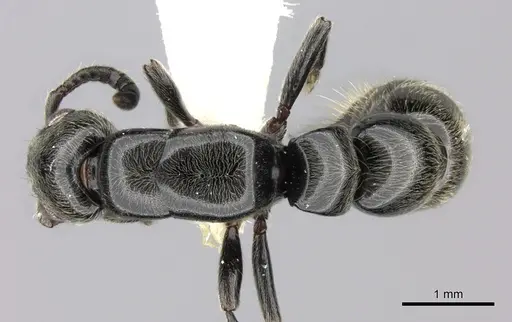
CASENT0493183
Ver no AntWeb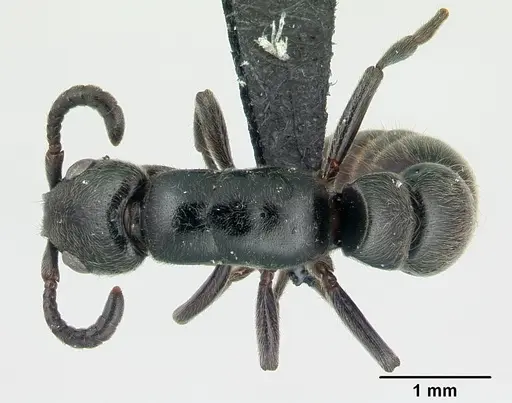
Literatura
Carregando mapa de distribuição...Carregando produtos...