
Rogeria prominula
- Nome científico
- Rogeria prominula
- Tribo
- Solenopsidini
- Subfamília
- Myrmicinae
- Autor
- Kugler, 1994
- Distribuição
- Encontrada em 1 países
Introdução
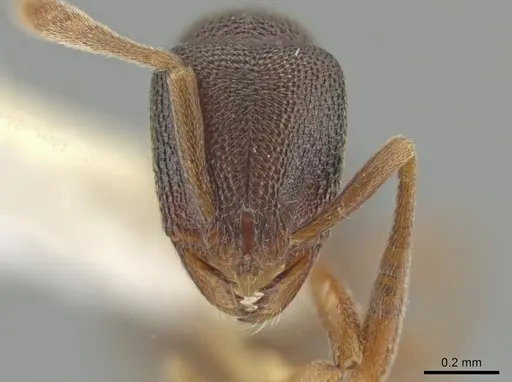
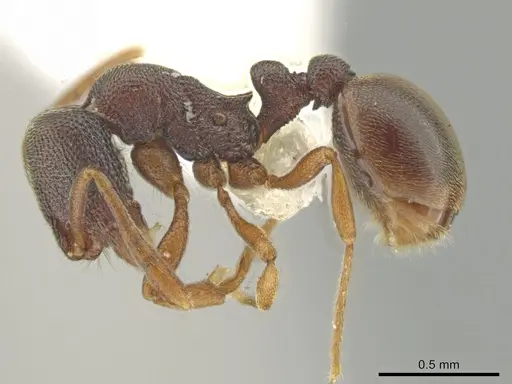
Rogeria prominula is a tiny ant species native to the Neotropical region, documented in Brazil (Manaus, Pará) and Guyana (Oronoque River) . Workers measure just 2.88mm in total length, making them one of the smaller ant species you might encounter . Their appearance is distinctive: a greatly projecting clypeus (the shield-like front of the head), a unique propodeal shape, and rugoreticulate (wrinkled-net-like) head and mesosoma . The body is dull brown with almost no erect hairs - most hairs lie flat, giving a sleek look . It is one of only four Rogeria species that have only appressed hairs on the mesosomal dorsum . This species belongs to the stigmatica-group within Rogeria, a genus of small, cryptic ants that are very poorly studied in the wild . What makes Rogeria prominula especially intriguing is how little we know about it: no biology has been documented - no colony structure, no queen description, no captive care data . This is a species for keepers who enjoy experimentation and observation, as you'll be discovering much about their needs through your own trials rather than following established protocols.
Quick Summary
- Difficulty: Hard
- Origin & Habitat: Native to the Neotropical region, documented in Brazil (Manaus in Amazonas state, Marabá in Pará state) and Guyana (Oronoque River) [1][2]. The type locality is near Manaus, Brazil, in the Amazon basin. Natural habitat preferences are unconfirmed, but related Rogeria species typically inhabit leaf litter, rotting wood, or soil in forested areas.
- Colony Type: Unknown, only worker castes have been documented, and no queens have been described in the scientific literature [1]. Colony structure and social organization remain unconfirmed.
- Size & Growth:
- Queen: Unknown, queens have not been described [1]
- Worker: 2.88mm total length (TL) [3]
- Colony: Unknown, no colony size data exists [1]
- Growth: Unknown, no development data available
- Development: Unknown, no direct observations. Based on typical Myrmicinae patterns, a rough guess would be 6-10 weeks at optimal warm temperatures. (No species-specific data exists. Related small Myrmicinae in the Solenopsidini tribe typically develop in 6-8 weeks under warm conditions.)
- Antkeeping:
- Temperature: Start around 24-26°C and observe colony behavior. As a Neotropical species from the Amazon basin, they likely prefer warm, stable conditions. Adjust based on activity, workers should be active and foraging, not sluggish or clustering far from heat.
- Humidity: High humidity is likely needed. Keep the nest substrate consistently moist but not waterlogged. A test tube setup with a water reservoir works well for maintaining stable humidity.
- Diapause: Unknown, no seasonal data exists. As a tropical species from the Amazon, they may not require true hibernation, but a slight cool period (around 20°C) during a simulated dry season might be beneficial, this is speculative.
- Nesting: No documented nesting preferences exist. Based on related Rogeria species and their small size, they likely prefer enclosed spaces like test tubes, small Y-tong nests, or 3D-printed setups with narrow chambers. Avoid large, open spaces that could stress such tiny ants.
- Behavior: Temperament and behavior are unconfirmed. Based on genus-level patterns, Rogeria species are typically non-aggressive, cryptic ants that avoid confrontation. Their tiny size (under 3mm) means they are likely shy and may flee rather than fight. Escape prevention is critical, they can squeeze through the tiniest gaps in equipment. They are probably nocturnal or crepuscular foragers, hunting small prey in leaf litter.
- Common Issues: lack of biological data means you are experimenting, colony failure is likely without careful condition monitoring., high risk of desiccation due to tiny size in dry conditions, maintain high humidity., escape prevention is critical due to their tiny size, use fine mesh and tight-fitting lids., no documented diet acceptance, you may need to experiment to find what they will eat., queen and colony founding behavior is completely unknown, you may not be able to establish colonies from wild-caught queens.
Housing and Setup
Because Rogeria prominula workers are only 2.88mm long, they require careful housing that prevents escape while maintaining high humidity. A standard test tube setup works well, use a small-diameter tube (around 10-12mm inner diameter) with a cotton plug separating the water reservoir from the ants. The tiny workers can easily slip through gaps that would hold back larger ants, so inspect all connections and use parafilm or tape around any seams. If using a Y-tong or 3D-printed nest, choose one with narrow chambers scaled to their minute size. Avoid naturalistic setups with large open spaces, as these tiny ants may become stressed or lost in areas that feel expansive to them. A simple, compact enclosure that allows you to observe them easily will serve you better than elaborate setups.
Temperature and Humidity
As a species from the Amazon basin near Manaus, Brazil, Rogeria prominula almost certainly requires warm, humid conditions. Start with temperatures in the 24-26°C range and monitor colony behavior, active, foraging workers indicate good conditions, while sluggishness or clustering suggests the temperature may be too low. Room temperature (around 20-22°C) might be acceptable if your home runs warm, but you may need a small heating cable or mat to maintain optimal warmth. For humidity, keep the nest substrate consistently moist but not waterlogged, the test tube water reservoir helps maintain this naturally. These tiny ants have a high surface-area-to-volume ratio and can desiccate quickly if conditions become too dry. A small water dish in the outworld can help maintain ambient humidity.
Feeding and Diet
No specific dietary information exists for Rogeria prominula, but related species in the tribe Solenopsidini are typically omnivorous, accepting small insects, sugar sources, and honeydew. Start by offering small live prey appropriate to their size, tiny items like springtails, aphids, or newly hatched insects are likely suitable. Sugar water or diluted honey (about half water) should be available, though acceptance is uncertain. Observe carefully, you may need to offer prey items that are nearly microscopic. Remove uneaten food promptly to prevent mold, which can quickly become a problem in small enclosures. If they don't accept initial offerings, try varying the prey type and size.
Behavior and Observation
Given how little we know about this species, much of your experience will be about observation and documentation. Based on genus-level patterns, these are likely cryptic, non-aggressive ants that prefer to avoid confrontation. Their tiny size means they probably forage in leaf litter or along substrate surfaces, hunting small micro-arthropods. You may notice them being most active during evening or night hours, though this is unconfirmed. Watch for colony organization, brood development, and any unique behaviors that differ from typical ant patterns. Document your observations, what you discover may contribute to the scientific knowledge of this rarely studied species. Their small size suggests colonies will be small (likely under 100 workers, based on related species), allowing you to observe individual behaviors closely.
Finding and Acquiring Colonies
Rogeria prominula has only been documented a few times in scientific collections, with the most recent records from Pará, Brazil in 2021 [2]. Finding wild colonies will be challenging, they are tiny, cryptic, and not commonly encountered. If you are in their range (Brazil or Guyana), you might locate them by sifting leaf litter in forested areas or searching under rotting logs and stones. However, without a queen description, it's unclear what a founding queen looks like, making targeted searching difficult. If you obtain a colony, it will likely be a small worker collection rather than a queen-right colony. This species is not commonly available in the antkeeping hobby, making your efforts potentially pioneering [1][2].
Frequently Asked Questions
How long does it take for Rogeria prominula to develop from egg to worker?
This is completely unknown, no scientific observations exist for this species. Based on typical Myrmicinae patterns, a rough estimate would be 6-10 weeks at optimal warm temperatures, but this is speculative. You'll need to document your own observations to establish a timeline.
What do Rogeria prominula ants eat?
No specific dietary data exists. Based on related Solenopsidini species, they likely accept small live prey (micro-arthropods, springtails) and sugar sources (honey water, sugar water). Start with tiny prey items scaled to their 2.88mm size and sugar water. Experiment to see what they accept.
Can I keep Rogeria prominula in a test tube?
Yes, a test tube setup is likely ideal for these tiny ants. Use a small-diameter tube (10-12mm) with adequate water reservoir for humidity. The critical concern is escape prevention, they can squeeze through tiny gaps, so check all connections and use fine mesh on any ventilation.
Are Rogeria prominula good for beginners?
No, this species is not recommended for beginners. Almost nothing is known about their care requirements, colony structure, or biology. They require experimental care and careful observation. Only experienced antkeepers comfortable with uncertainty should attempt this species.
What temperature should I keep Rogeria prominula at?
Start around 24-26°C based on their Amazon basin origin. Monitor colony activity to adjust, workers should be active and foraging. If they cluster away from heat sources, increase slightly, if they seem sluggish, check temperature. Avoid major fluctuations.
Do Rogeria prominula need hibernation?
Unknown, no seasonal data exists. As a tropical Amazon species, they likely do not require true hibernation. A slight cool period (around 20°C) during a simulated dry season might be beneficial, but this is speculative.
How big do Rogeria prominula colonies get?
Unknown, no colony size data exists. Based on their tiny worker size (2.88mm) and related species patterns, colonies are likely small, probably under 100 workers. They may never reach the large colony sizes common in many ant species.
Why are my Rogeria prominula dying?
Without documented care requirements, colony failures are likely due to improper humidity (too dry), temperature issues (too cold or fluctuating), or stress from inadequate housing. Their tiny size makes them vulnerable to desiccation and escape. Ensure high humidity, warm stable temperatures, and excellent escape prevention.
Can I find Rogeria prominula in the wild?
They have been documented in Brazil (Manaus, Pará) and Guyana, but only in a handful of scientific collections. Finding them requires searching leaf litter or under rotting logs in forested areas within their range. They are tiny and cryptic, making detection difficult [1][2].
What does a Rogeria prominula queen look like?
Unknown, queens have never been described in the scientific literature. Only worker castes have been documented [1]. This is one of the many mysteries about this species that makes captive breeding challenging.
Is Rogeria prominula aggressive?
No specific behavior data exists, but based on genus-level patterns, Rogeria species are typically cryptic, non-aggressive ants that avoid confrontation. Their tiny size also means they are not equipped to be aggressive toward humans or large threats.
Report an Issue
The current care sheet is based fully on literature. See inconsistencies, or something that's incorrect? Please , it will be resolved after review from an admin. Contributing to the blogs tab also helps providing information, to make us be able to further improve the caresheets. Thank you for your support!
References

Este guia de cuidados está sob a licença CC BY-SA 4.0 .
Posts da comunidade
MCZ-ENT00036281
Ver no AntWeb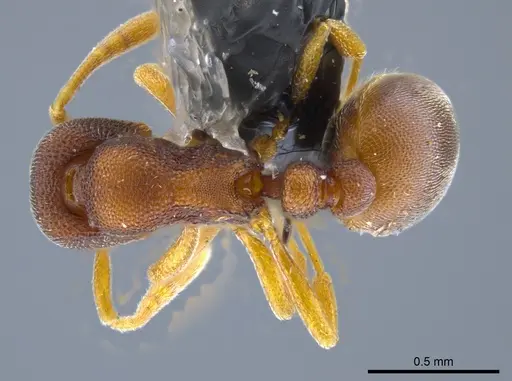
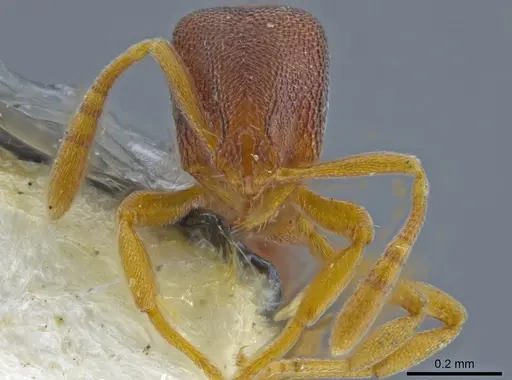
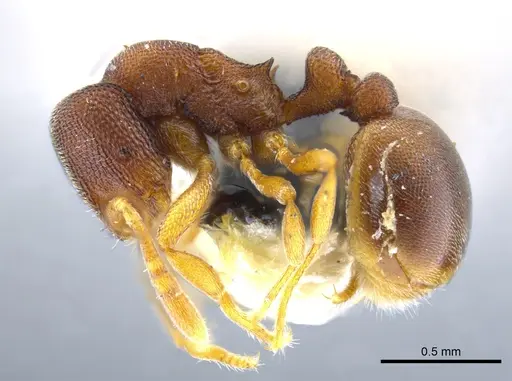
USNMENT01128009
Ver no AntWeb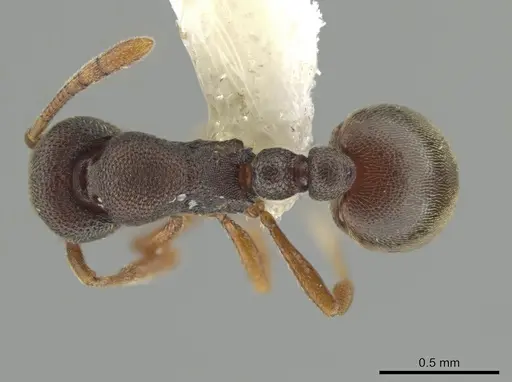
Literatura
Carregando mapa de distribuição...Carregando produtos...