
Rhytidoponera pilosula
- Nome científico
- Rhytidoponera pilosula
- Tribo
- Ectatommini
- Subfamília
- Ectatomminae
- Autor
- Clark, 1936
- Distribuição
- Encontrada em 1 países
Introdução
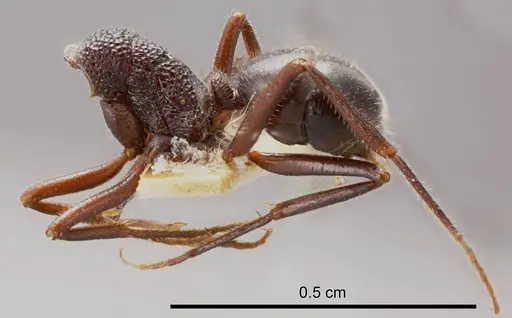
Rhytidoponera pilosula is a medium-sized ant native to inland Australia, specifically found in New South Wales around the Bourke region, as well as southwestern Queensland and northwestern New South Wales . Workers are uniformly blackish with a notably hairy appearance (pilosula means 'hairy') . They belong to the subfamily Ectatomminae, meaning they have a functional stinger, a key consideration for keepers. This species was described by Clark in 1936 from specimens collected in arid inland NSW . These predatory ants hunt small invertebrates and are adapted to Australia's dry interior.
Quick Summary
- Difficulty: Medium
- Origin & Habitat: Inland Australia, specifically New South Wales around Bourke, extending into southwestern Queensland and northwestern NSW. This is an arid region with hot summers and cool winters [1][2].
- Colony Type: Unconfirmed. No published data describes the social structure of this species. Based on typical genus patterns, colonies may be monogyne (single queen), but this is not certain.
- Size & Growth:
- Queen: Size data unavailable.
- Worker: Size data unavailable. Inferred from the genus Rhytidoponera, workers are typically small to medium (roughly 5-7 mm), but has not been formally measured.
- Colony: Unknown. No data available.
- Growth: Unknown.
- Development: Unknown. Not documented for this species. (Development time is not recorded. If kept at warm temperatures (around 26°C), expect several weeks, but no specifics.)
- Antkeeping:
- Temperature: Needs warm conditions typical of arid Australia. During the active season, keep the nest at around 24-28°C (room temperature 22-24°C works as a baseline). Provide a temperature gradient so workers can self-regulate.
- Humidity: Low to moderate. Mimic arid conditions: let the nest substrate dry out partly between waterings. Constant dampness is harmful. A water tube for drinking is more important than high humidity.
- Diapause: Likely yes, based on the cool winter period in its natural range. From about May to August (Southern Hemisphere winter), move the colony to 10-15°C. Stop feeding during this rest period. This is not confirmed in literature but aligns with seasonal cycles.
- Nesting: In the wild, these ants likely nest in soil under stones or in shallow excavations. In captivity, use a well-drained substrate like a sand-soil mix, or a Y-tong (AAC) or plaster nest kept mostly dry. Provide a water tube for drinking.
- Behavior: Active hunters. Workers are moderately aggressive and will sting if the colony is disturbed, the sting is functional (Ectatomminae). They are diurnal foragers. Escape risk is low due to their size, but use standard escape prevention (e.g., fluon on rims).
- Common Issues: overhumidity is the biggest killer, these ants come from arid regions and suffer in damp conditions., stingers mean they can deliver painful stings, handle with care and avoid provoking the colony., no confirmed data on nesting or founding behavior, so care advice is based on related species and habitat inference., wild-caught colonies may be difficult to establish because their biology is poorly studied., prey must be small enough for them to tackle, they are predators but cannot handle large insects, especially with small worker size.
Temperature and Heating
Rhytidoponera pilosula comes from arid inland Australia where temperatures can be extreme [1]. During the active season (roughly September to April in the Southern Hemisphere), keep the nest at 24-28°C. A heating cable on one side creates a gradient, letting workers move between warmer and cooler spots. Typical room temperature (22-24°C) works as a baseline. For the winter rest period, reduce temperatures to 10-15°C to mimic the cooler winter. This rest period is important for colony health, though it has not been specifically studied for this species. You can achieve this by moving the colony to an unheated garage or basement during winter. Do not feed during the rest period, provide only water.
Feeding and Diet
As predatory ants, Rhytidoponera pilosula needs protein-rich food. Offer small live invertebrates like fruit flies, small crickets, or mealworms. They also accept protein baits (canned cat food, boiled egg, tuna) and will occasionally drink sugar water or honey water. Feed every 2-3 days during the active season, removing uneaten prey after 24 hours. During the rest period, stop feeding entirely. Always provide a water tube with fresh water.
Nesting and Habitat
In the wild, these ants probably nest in soil under stones in arid regions, based on general Rhytidoponera ecology. In captivity, the key is drainage: they cannot tolerate damp conditions. Use a sand-soil mix that dries out partially between waterings, and place flat stones on top to mimic natural cover. Plaster or Y-tong (AAC) nests work if kept mostly dry. Avoid acrylic nests entirely. Provide a water tube for drinking, and make sure the outworld is clean with standard escape prevention (fluon on rims).
Behavior and Temperament
Workers are active, alert, and moderately aggressive. They have a functional stinger (typical of Ectatomminae) and will sting if the colony is disturbed. The sting is painful but not medically significant for healthy humans. They are diurnal foragers that actively hunt rather than scavenge. Because their size is unmeasured but small, they cannot take down large prey. Colonies are likely small, but no data exists. Observe them from a distance to avoid stress.
Colony Founding
The founding behavior of Rhytidoponera pilosula is not documented. For related species in the genus, some are semi-claustral (the queen leaves the nest to forage), but this is not confirmed for this species. If you obtain a foundress queen, provide small prey regularly and keep conditions stable. Founding is likely sensitive to disturbances.
Overwintering and Seasonal Care
To mimic the natural seasonal cycle of arid Australia, reduce temperatures to 10-15°C for a 3-4 month rest period (roughly May-August in the Southern Hemisphere, or November-February in the Northern Hemisphere). During this time, the colony becomes less active, the queen stops laying, and workers cluster. Do not feed, provide a water tube for drinking. Monitor for mold. In spring, gradually increase temperatures back to active levels and resume feeding. This advice is inferred from the species' native climate and should be adjusted based on your colony's response.
Frequently Asked Questions
Do Rhytidoponera pilosula ants sting?
Yes, they can sting. They belong to the subfamily Ectatomminae, which has retained functional stingers. The sting is painful but not medically significant for healthy humans. Handle with care.
How long does it take for first workers to appear?
This is unknown for this species. No specific studies exist. If you have a founding queen, expect several weeks to months, but there is no confirmed timeline.
Can I keep multiple queens together?
Not recommended. There is no information on whether this species is polygyne, and it is likely monogyne as is typical for the genus. Combining unrelated queens would probably result in fighting.
What do Rhytidoponera pilosula eat?
They are predatory ants that need live small invertebrates such as fruit flies, small crickets, and mealworms. They also accept protein baits like canned cat food and will drink sugar water. Protein should form the bulk of their diet.
Do they need hibernation?
Based on their natural arid, temperate climate, they likely need a cool rest period. Keep the colony at 10-15°C for 3-4 months during winter. Stop feeding during this time. This is not confirmed in literature but is a reasonable practice.
Are Rhytidoponera pilosula good for beginners?
They are intermediate difficulty. Founding behavior is unconfirmed, and they are sensitive to overhumidity. However, once established, they are not overly demanding. Their sting is a consideration, so handle with care.
How big do colonies get?
Colony size is unknown. No published data exists. Inferred from related Rhytidoponera species, they may reach up to a few hundred workers, but this is speculation.
What humidity level do they need?
Low to moderate. These are arid-adapted ants. Let the nest substrate dry between waterings. A water tube for drinking is more important than high humidity. Constant dampness will kill them.
When should I move them to a formicarium?
Wait until the colony has established and clearly outgrown its current setup. For a founding queen, a test tube with a small outworld works fine. Only upgrade when the colony is overcrowded.
Why are my ants dying?
The most common cause is likely overhumidity, as these ants come from arid regions. Check that the nest is drying properly. Other possibilities include incorrect temperature, lack of protein, or stress during founding. Without species-specific data, adjust conditions based on observation.
Report an Issue
The current care sheet is based fully on literature. See inconsistencies, or something that's incorrect? Please , it will be resolved after review from an admin. Contributing to the blogs tab also helps providing information, to make us be able to further improve the caresheets. Thank you for your support!
References

Este guia de cuidados está sob a licença CC BY-SA 4.0 .
Posts da comunidade
ANTWEB1008316
Ver no AntWeb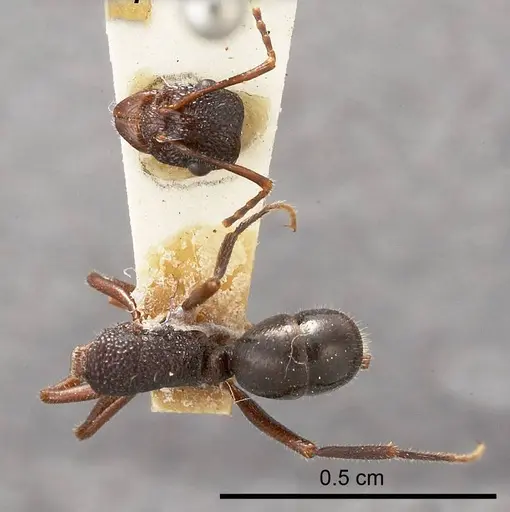
Literatura
Carregando mapa de distribuição...Carregando produtos...