
Pseudonotoncus hirsutus
- Nome científico
- Pseudonotoncus hirsutus
- Tribo
- Melophorini
- Subfamília
- Formicinae
- Autor
- Clark, 1934
- Distribuição
- Encontrada em 1 países
Introdução
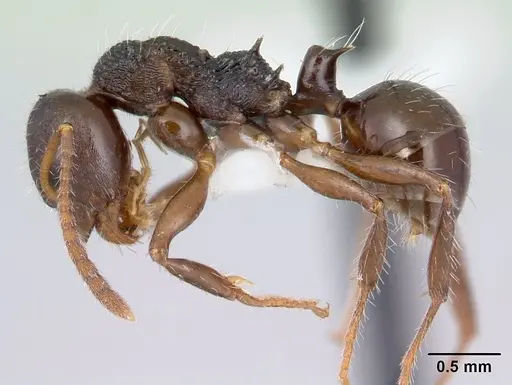
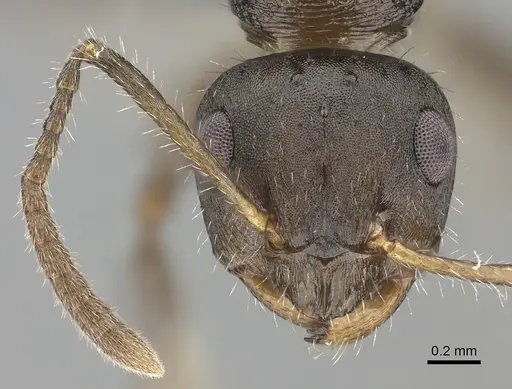
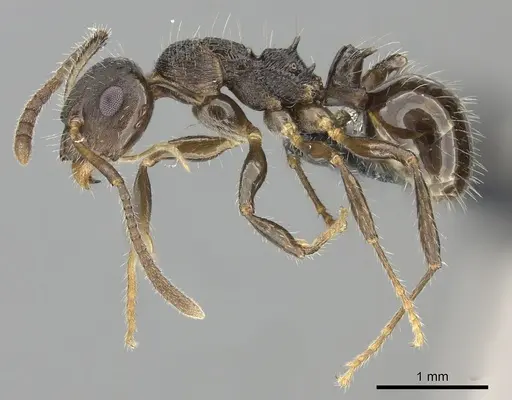
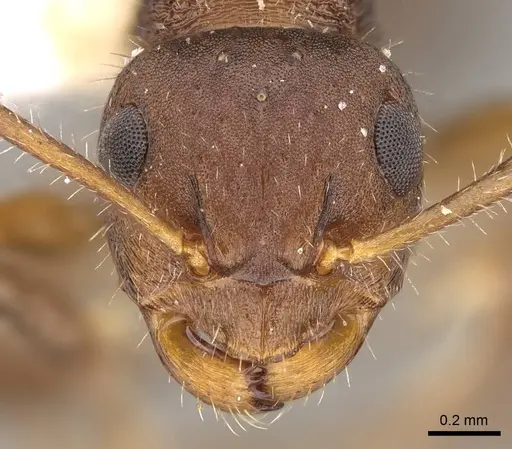
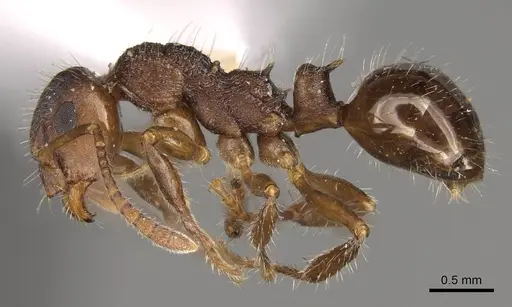
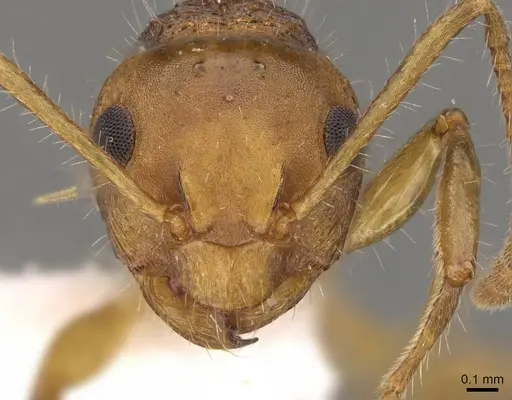
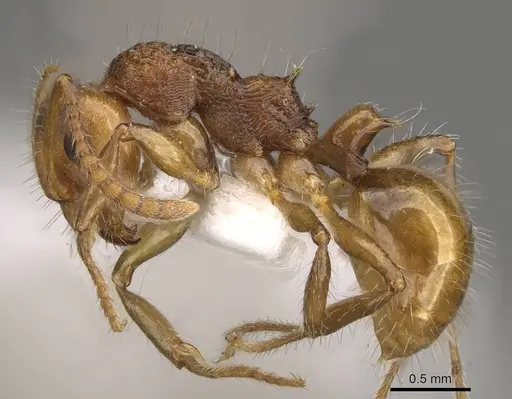
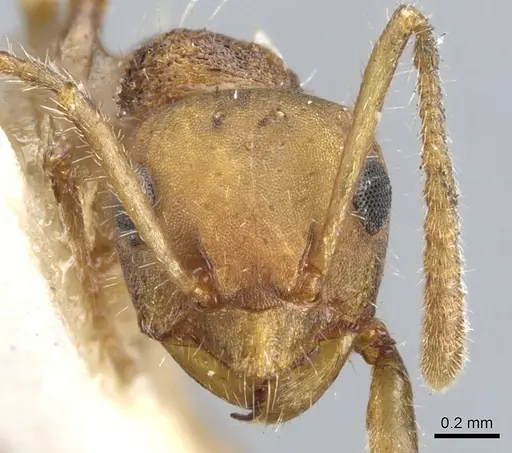
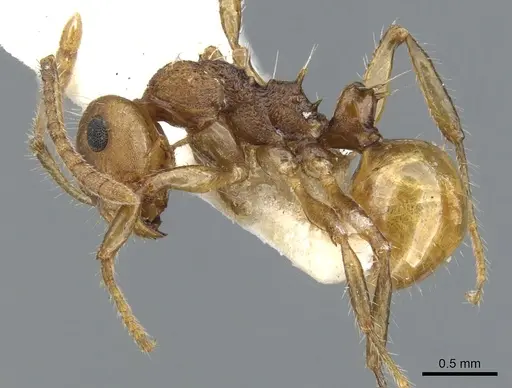
Pseudonotoncus hirsutus is a small Australian ant species native to the east coast, from Queensland down to Victoria. Workers are small, but total body size has not been directly measured - only head measurements are known. The body is uniform chocolate brown, often with a darker gaster. They have a distinctive petiole that is broader than long in dorsal view, and in lateral view much higher than long, with a sharp angle separating the front and top faces . Queens are about 4.3 mm long and look similar to workers but with coarser body sculpture . These ants live in rainforest and wet sclerophyll forests, usually close to the coast, where rainfall is high and temperatures are stable . What really sets this species apart is its defensive behavior - when disturbed, workers instantly curl into a tight ball and play dead . They also forage both during the day and at night, walking on vegetation and tree trunks . Only one colony has ever been documented, found in soil under a log, so much about their biology remains unknown .
Quick Summary
- Difficulty: Medium
- Origin & Habitat: East coast of Australia, from wet tropics in North Queensland to southern Victoria. Found in rainforest and wet sclerophyll forests, generally close to the coast. Prefers high rainfall and stable temperatures [1][2].
- Colony Type: Colony structure is not well documented. Only a single small colony has been recorded, found in soil under a log [2].
- Size & Growth:
- Queen: 4.3 mm total length [1]
- Worker: Size data unavailable, only head measurements known
- Colony: Small, only one small colony ever documented [2]
- Growth: Unknown
- Development: Unknown, no data available (Development has not been studied. Related Melophorini species may develop in 6‑10 weeks, but this is speculative.)
- Antkeeping:
- Temperature: Keep around 22-26°C, avoiding extremes. This matches the stable temperatures of their rainforest habitat. A gentle gradient is helpful [1]. Exact requirements are inferred from habitat data.
- Humidity: High humidity is essential, these ants come from rainforest and wet sclerophyll forests. Keep the nest substrate consistently moist but not waterlogged. Aim for damp substrate with some drier areas [1][2].
- Diapause: Unknown, likely not required given Australia's mild east coast climate, but no specific studies exist. A slight winter cooling to 18-20°C may be beneficial but is optional [2].
- Nesting: The only known nest was in soil under a log [2]. In captivity, a naturalistic setup with moist soil or a well‑hydrated Y‑tong/plaster nest works well. Provide dark, humid conditions similar to the forest floor.
- Behavior: These ants are generalist foragers that walk on vegetation and tree trunks both day and night [2]. They are not aggressive, when disturbed, they roll into a ball and lie motionless instead of attacking [2]. As Formicinae, they can spray formic acid, but this is harmless to humans. Their small size means escape prevention is critical, use fine mesh and seal all gaps. Workers are active and explore widely, making them interesting to watch.
- Common Issues: small size makes escapes likely without fine mesh barriers, high humidity requirements can lead to mold if ventilation is poor, limited data on captive care means many aspects are uncertain, frequent disturbances may stress them due to their defensive rolling behavior, wild‑caught colonies may be difficult to establish in captivity
Housing and Nest Setup
Pseudonotoncus hirsutus needs a humid, dark environment like its natural rainforest floor. The only documented nest was in soil under a log, so a naturalistic setup with moist substrate works well [2]. Use a Y‑tong (AAC) nest or plaster nest and keep humidity high. The nest area should be dark, these ants prefer shade and are often found in darker microhabitats. Since they forage on vegetation and tree trunks, include climbing structures in the outworld [2]. Escape prevention is vital due to their small size, use fine mesh barriers and secure all connections. A small water tube attached to the nest helps maintain humidity.
Feeding and Diet
These generalist foragers likely accept a varied diet. In nature, they forage on vegetation and tree trunks, which suggests they may tend aphids for honeydew and hunt small insects [2]. In captivity, offer sugar water or honey as a constant energy source, plus small protein sources like fruit flies, small mealworms, or other tiny insects. Since they are small, prey items should be appropriately sized. Placing food on climbing structures may encourage natural foraging. Remove uneaten food promptly to prevent mold in the humid environment.
Temperature and Seasonal Care
Keep temperatures between 22-26°C, avoiding extremes. These ants come from Australia's east coast, where temperatures are relatively stable year‑round, especially in rainforests [1][2]. They prefer stable conditions compared to their relative P. eurysikos. A slight temperature gradient lets the colony self‑regulate. During winter, a modest reduction to 18-20°C may simulate seasonal changes, but full diapause is probably not necessary given their mild native climate. Avoid direct sunlight or heating elements. Room temperature within the preferred range is often suitable.
Behavior and Observation
The most distinctive behavior is their defensive response, when disturbed, they instantly roll into a tight ball and play dead [2]. This passive defense replaces aggression. They do not sting (Formicinae spray formic acid instead), and are not dangerous to keepers. Workers forage both day and night, walking on vegetation and tree trunks [2]. Providing climbing opportunities in the outworld lets them display natural behavior. Their small size and generalist habits make them fascinating for keepers who enjoy observing arboreal foraging patterns.
Frequently Asked Questions
How long does it take for Pseudonotoncus hirsutus to raise first workers?
The exact development timeline is unknown, this species has not been studied in captivity. Based on related Melophorini species, expect around 6-10 weeks from egg to first worker at optimal temperatures, but this is only an estimate. Patience is key with this little‑known species.
Can I keep Pseudonotoncus hirsutus in a test tube setup?
Test tubes can work for founding colonies if you maintain high humidity, but these ants need consistent moisture from their rainforest habitat. A test tube with a water reservoir can work, but watch for mold in the humid conditions. A Y‑tong or plaster nest designed for humidity may be more suitable long‑term.
Are Pseudonotoncus hirsutus good for beginners?
We rate them as medium difficulty. They are not aggressive, but they need high humidity and there is limited captive care information. They may be better for keepers with some experience who can provide stable, humid conditions.
How big do Pseudonotoncus hirsutus colonies get?
Based on available data, colonies appear small. Only a single small colony has ever been documented in scientific literature [2]. They are not known for large colony sizes. Expect a modest colony even in established setups.
Do Pseudonotoncus hirsutus need hibernation?
Full hibernation is likely not required. Their native climate on Australia's mild east coast has relatively stable year‑round temperatures. A slight temperature reduction during winter may be beneficial but is not mandatory [2].
What do Pseudonotoncus hirsutus eat?
They are generalist foragers. Offer sugar water or honey as a constant energy source, plus small protein sources like fruit flies, small mealworms, or other tiny insects. They likely also accept honeydew from aphids if kept with plants [2].
Why do my Pseudonotoncus hirsutus roll into a ball?
That's their natural defensive behavior. When disturbed, they instantly curl into a ball and lie motionless [2]. This is not a sign of illness or stress, it's how they protect themselves in the wild. Avoid frequent disturbances to keep them calm.
Report an Issue
The current care sheet is based fully on literature. See inconsistencies, or something that's incorrect? Please , it will be resolved after review from an admin. Contributing to the blogs tab also helps providing information, to make us be able to further improve the caresheets. Thank you for your support!
References

Este guia de cuidados está sob a licença CC BY-SA 4.0 .
Posts da comunidade
ANTWEB1008297
Ver no AntWeb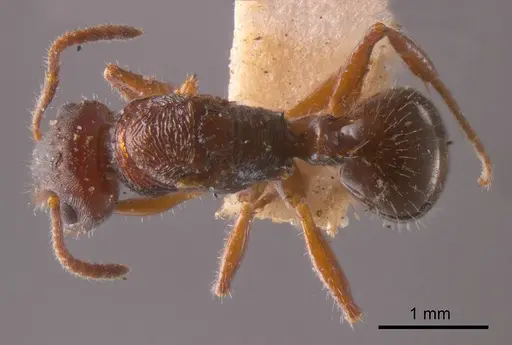
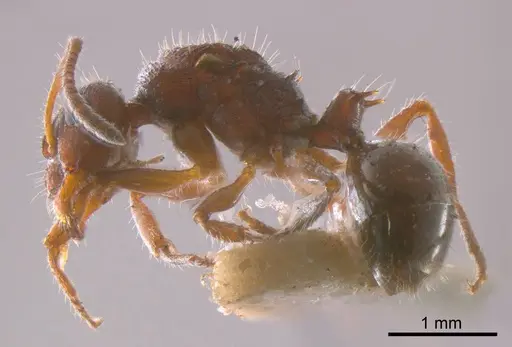
CASENT0178517
Ver no AntWeb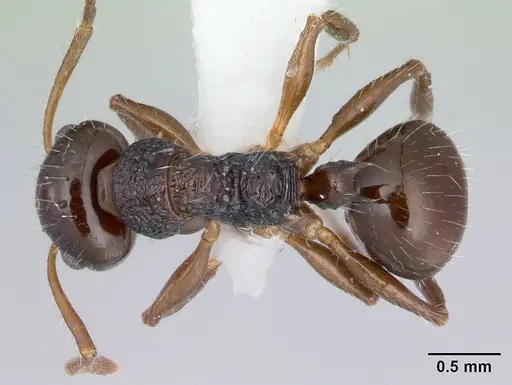
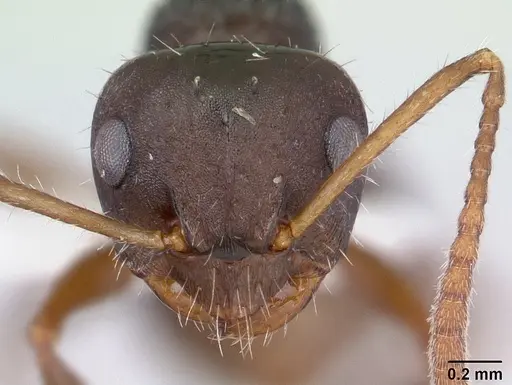
CASENT0227592
Ver no AntWeb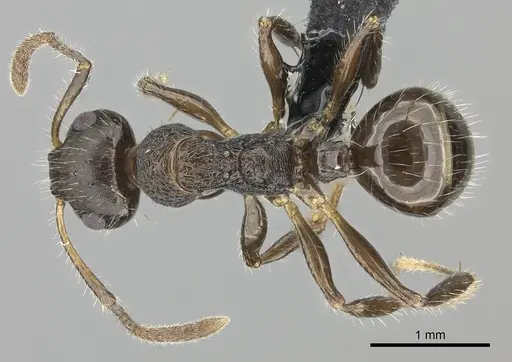
CASENT0281489
Ver no AntWeb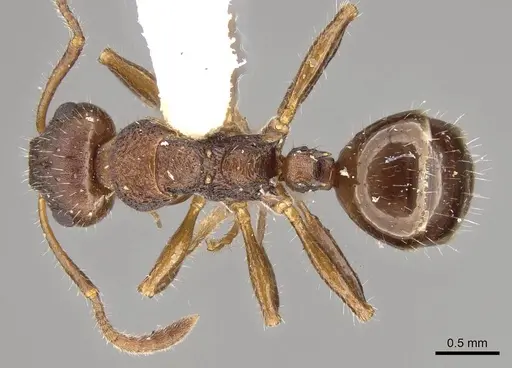
CASENT0281490
Ver no AntWeb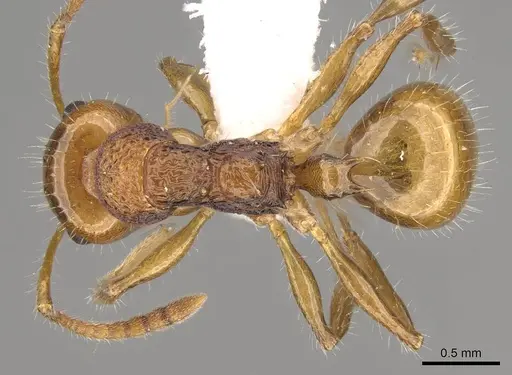
CASENT0903252
Ver no AntWeb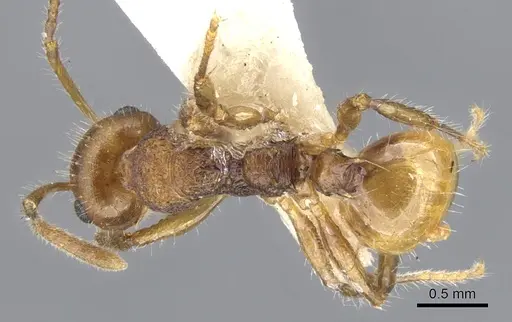
Literatura
Carregando mapa de distribuição...Carregando produtos...