
Pseudolasius bidenticlypeus
- Nome científico
- Pseudolasius bidenticlypeus
- Tribo
- Lasiini
- Subfamília
- Formicinae
- Autor
- Xu, 1997
- Distribuição
- Encontrada em 0 países
Introdução
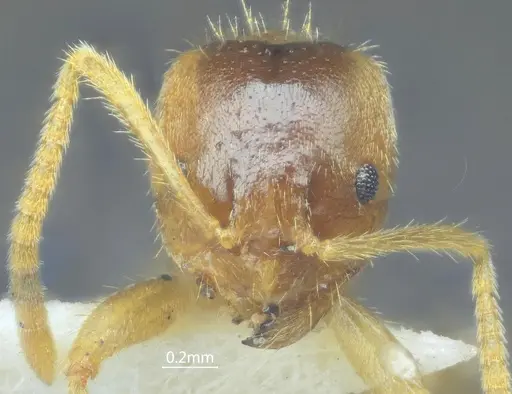
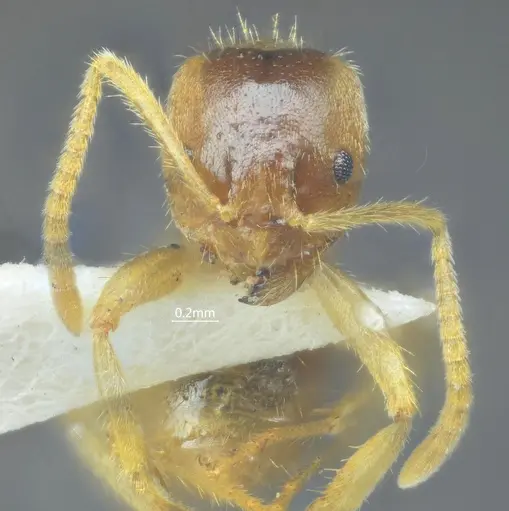
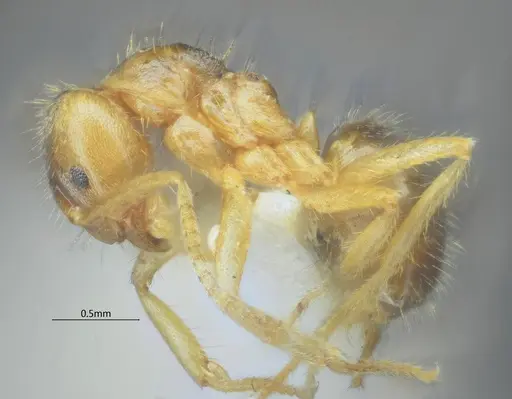
Pseudolasius bidenticlypeus is a small to medium-sized ant species from southern China, recorded in Guizhou, Yunnan, and Zhejiang provinces. Workers are polymorphic and measure 2.8-4.5 mm total length, depending on caste (major, media, minor). The body is brownish yellow with a brown head and alitrunk, while the gaster is dark blackish brown. Workers have 12-segmented antennae and two blunt denticles on the front of the clypeus, which gives the species its name 'bidenticlypeus' (two‑toothed clypeus) . This ant nests underground in soil .
Quick Summary
- Difficulty: Unknown, limited data available
- Origin & Habitat: Endemic to China: recorded from Guizhou (type locality: Guiyang,1080 m), Yunnan, and Zhejiang (Thousand Island Lake). Nests underground in soil in subtropical to temperate regions [1][2][3].
- Colony Type: Colony structure is unconfirmed. Based on typical Pseudolasius and Lasiini patterns, likely single‑queen colonies (monogyne), but this has not been directly documented for this species.
- Size & Growth:
- Queen: Not described in literature
- Worker: Major: 4.5 mm, Media: 3.4-4.2 mm, Minor: 2.8-3.5 mm [1]
- Colony: Not documented
- Growth: Unknown
- Development: Estimated 6-10 weeks based on typical Formicinae development at warm temperatures (Development timeline has not been directly studied. Estimate based on related Lasiini patterns.)
- Antkeeping:
- Temperature: Not directly studied. Based on its subtropical Chinese distribution, likely tolerates 20-26°C. Start around 22-24°C and observe colony activity.
- Humidity: Not directly studied. As a soil‑nesting species from humid subtropical regions, it likely prefers moderate to high substrate moisture. Keep nest substrate consistently moist but not waterlogged.
- Diapause: Unknown. Chinese subtropical populations may have reduced winter activity, but specific diapause requirements have not been documented.
- Nesting: Nests underground in soil in the wild [1]. For captive care, a test tube setup works well for founding colonies. Once established, a naturalistic setup with soil or a Y‑tong/plaster nest with moisture provision is appropriate.
- Behavior: Not directly studied. Based on genus behavior, these are relatively docile ants that nest in soil and likely tend aphids. Workers are small to medium‑sized and may escape through small gaps, use standard barriers and check for potential exit routes. Not known to be aggressive.
- Common Issues: limited availability, this species is rarely kept in captivity and may be difficult to obtain, no established care guidelines, keepers will need to develop husbandry through observation and trial, colony growth rate is unknown, making feeding and space planning difficult, hibernation requirements are unconfirmed, Chinese subtropical populations may not require full diapause, wild-caught colonies may have parasites or diseases not yet understood in captive settings
Identification and Appearance
Pseudolasius bidenticlypeus workers are polymorphic, with three castes: major (~4.5 mm), media (3.4-4.2 mm), and minor (2.8-3.5 mm). The body is brownish yellow, with a brown head and alitrunk and a dark blackish brown gaster. The mandibles have 6 teeth, with the basal two fused. A key feature is the two blunt denticles on the front of the clypeus. The antennae have 12 segments, in minor and media workers the scape extends past the posterior margin of the head. The body is covered with abundant erect hairs and dense pubescence [1].
Distribution and Natural Habitat
This species is endemic to China. It was first described from Guiyang, Guizhou Province (26.6°N,106.7°E,1080 m elevation) and has also been recorded in Yunnan Province and in Zhejiang Province (Thousand Island Lake) [1][2][3]. It nests underground in soil [1].
Nest Preferences and Housing
In the wild, Pseudolasius bidenticlypeus nests underground in soil [1]. For captive care, start a colony in a test tube setup (water with cotton plug, kept dark). As the colony grows, move to a naturalistic setup with soil or a moisture‑retaining nest (Y‑tong or plaster). Provide a connection to an outworld with food and water. Because the ants are small, ensure all openings are sealed, standard barriers should be enough for this size.
Feeding and Diet
The natural diet of Pseudolasius bidenticlypeus has not been studied. In captivity, offer a varied diet including sugar water or honey for energy, and small insects (fruit flies, pinhead crickets, mealworms) for protein. Feed protein about twice a week and keep a sugar source available at all times. Observe your colony and adjust based on what they accept.
Temperature and Seasonal Care
Specific temperature requirements are unknown. Based on the subtropical origin (Guizhou, Yunnan), the ants likely tolerate 20-26°C. A good starting range is 22-24°C, with a slight gradient so the colony can choose. Avoid sustained temperatures below 15°C or above 30°C. Diapause needs are unknown, if the colony becomes less active in winter, reduce feeding and keep temperatures above 15°C, but do not force a cold period without evidence.
Colony Development and Growth
Colony development has not been directly documented. Based on typical Formicinae patterns, the first workers (nanitics) likely emerge about 6-10 weeks after egg‑laying at around 24°C. The founding method is unconfirmed, if the queen is claustral (which is common in the subfamily), she would raise the first brood without foraging. Colony growth rate and maximum size are unknown, estimates from related Lasius species suggest moderate growth and possibly a few hundred workers at maturity, but this is speculative.
Frequently Asked Questions
How long does it take for Pseudolasius bidenticlypeus to produce first workers?
The exact timeline is unknown, but based on typical Formicinae development, expect 6-10 weeks from egg to first worker at around 24°C. This is an estimate, the species has not been directly studied.
What do Pseudolasius bidenticlypeus ants eat?
Their specific diet is unconfirmed. In captivity, offer sugar water or honey for energy and small insects (fruit flies, pinhead crickets, mealworms) for protein. They likely collect honeydew in the wild, but this is not proven.
What temperature should I keep Pseudolasius bidenticlypeus at?
Specific requirements are unknown. Based on their Chinese subtropical distribution, start around 22-24°C with a slight gradient. Avoid temperatures below 15°C or above 30°C.
Do Pseudolasius bidenticlypeus ants need hibernation?
Diapause requirements are unconfirmed. Chinese subtropical populations may not require true hibernation. In winter, reduce feeding and slightly lower temperatures but maintain above 15°C.
Is Pseudolasius bidenticlypeus a good species for beginners?
This species is not recommended for beginners due to limited availability and lack of established care guidelines. There is very little documented information about keeping this species in captivity.
How big do Pseudolasius bidenticlypeus colonies get?
Maximum colony size is not documented. Based on genus patterns, expect several hundred workers at maturity, but this is speculative.
Can I keep multiple Pseudolasius bidenticlypeus queens together?
Colony structure is unconfirmed. Combining unrelated queens has not been documented for this species and is not recommended.
What size nest should I use for Pseudolasius bidenticlypeus?
Start with a test tube for founding. Once established, a naturalistic setup with soil or a Y‑tong/plaster nest with moisture provision works well for these soil‑nesting ants.
Where is Pseudolasius bidenticlypeus found in the wild?
This is a China‑endemic species recorded in Guizhou, Yunnan, and Zhejiang provinces, including the type locality of Guiyang at 1080 m elevation.
Report an Issue
The current care sheet is based fully on literature. See inconsistencies, or something that's incorrect? Please , it will be resolved after review from an admin. Contributing to the blogs tab also helps providing information, to make us be able to further improve the caresheets. Thank you for your support!
References

Este guia de cuidados está sob a licença CC BY-SA 4.0 .
Posts da comunidade
ANTWEB1060625
Ver no AntWeb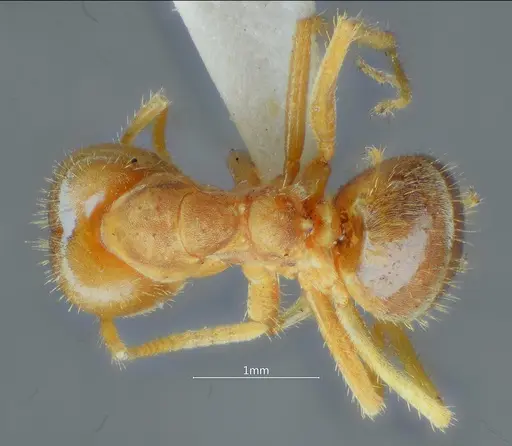
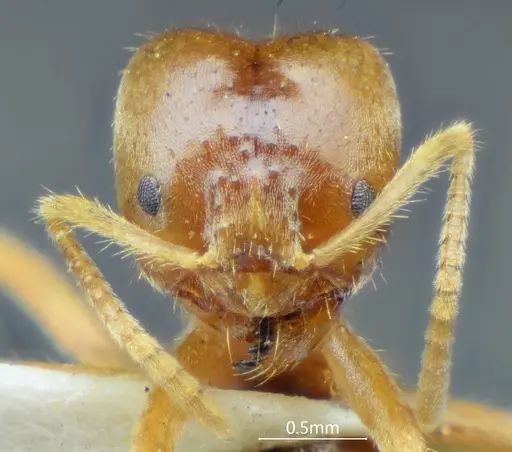
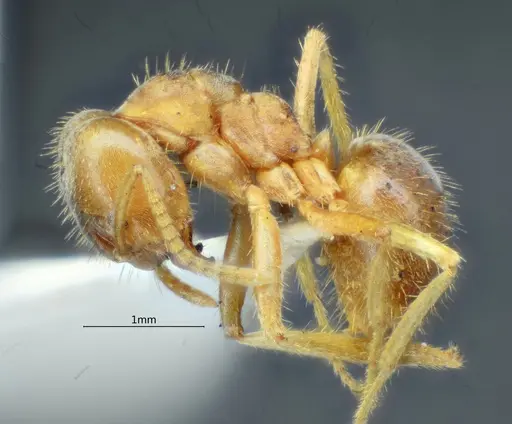
ANTWEB1060626
Ver no AntWeb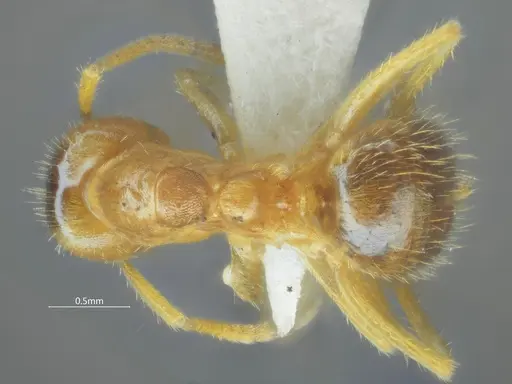
Literatura
Carregando mapa de distribuição...Carregando produtos...