
Protanilla wallacei
- Nome científico
- Protanilla wallacei
- Tribo
- Leptanillini
- Subfamília
- Leptanillinae
- Autor
- Griebenow, 2024
- Distribuição
- Encontrada em 0 países
Introdução
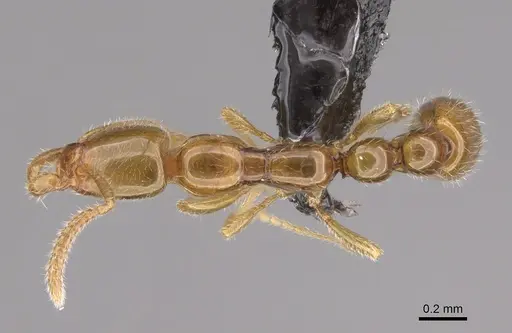
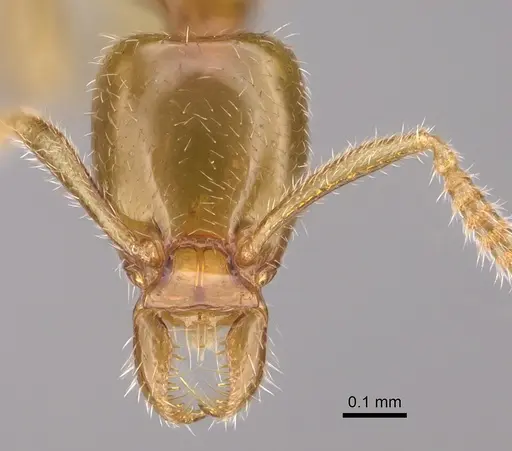
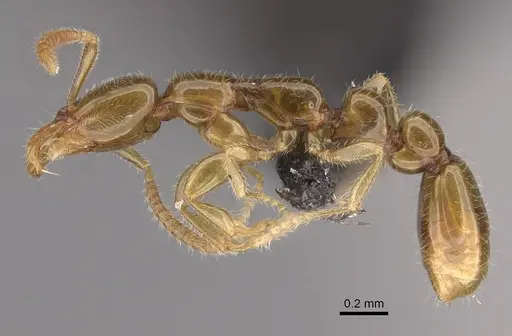
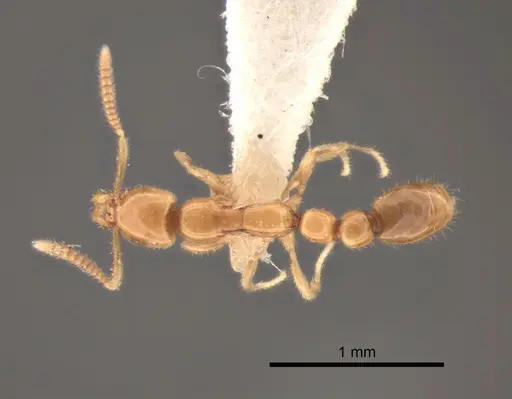
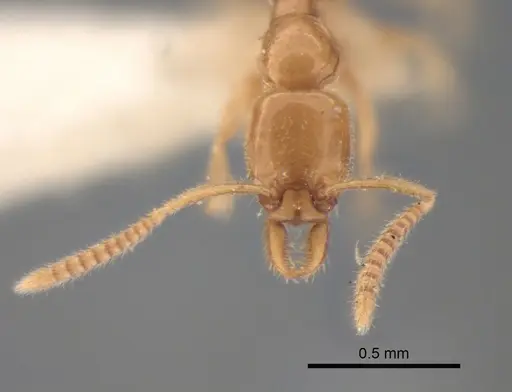
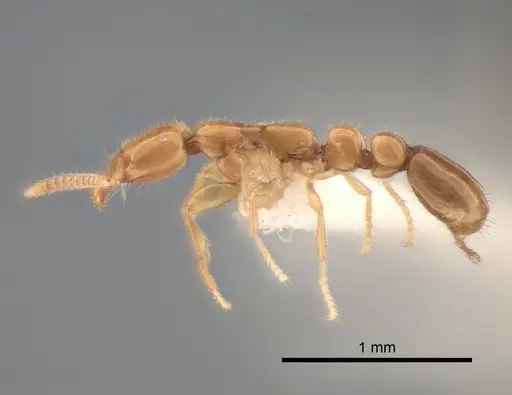
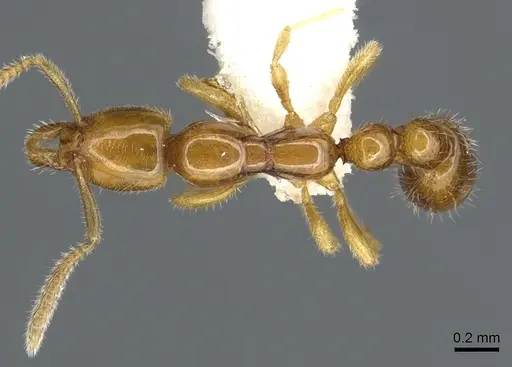
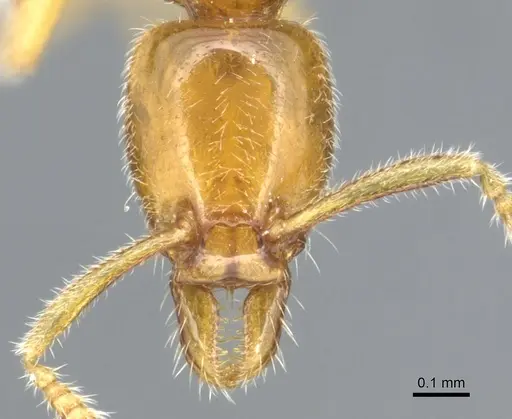
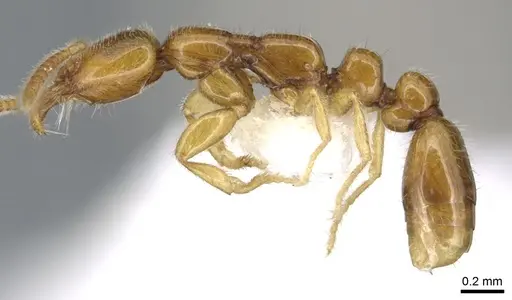
Protanilla wallacei is a tiny ant from the Leptanillinae subfamily, native to Malaysia (Sabah, Sarawak, Selangor) in the Indomalaya region . Workers are very small (mesosoma length about 0.64-0.72 mm; total body length not published) and have a castaneous (reddish-brown) coloration with a shallow postpetiolar node . All known queens of this species are ergatoid, wingless and looking similar to workers, with subtle differences in eye size and abdomen shape . This is different from its sister species Protanilla lini, which has winged queens . This species is a specialized predator of dipluran insects (Occasjapyx diplurans) and lives in dead broken twigs on the forest floor . Colonies can contain multiple ergatoid queens, one studied colony had 17 queens,25 workers, and 29 larvae . Researchers have found 26 different exocrine glands in this species, including six never before seen in ants, making it chemically complex .
Quick Summary
- Difficulty: Hard
- Origin & Habitat: Malaysia (Sabah, Sarawak, Selangor) in the Indomalaya region. Found in dead broken twigs on the forest floor in tropical forests [3][1].
- Colony Type: Multi-queen colonies with ergatoid (wingless) queens. One collected colony had 17 ergatoid queens,25 workers, and 29 larvae [3]. Queens look very similar to workers but have larger compound eyes, a bigger abdomen, and a developed spermathecal gland [5].
- Size & Growth:
- Queen: Size not published, ergatoid queens are similar to workers in size, slightly larger in body and abdomen [5].
- Worker: Total length not reported, mesosoma length 0.64-0.72 mm [1].
- Colony: Up to 25 workers observed in one wild colony [3], maximum unknown.
- Growth: Unknown
- Development: Unknown, no published data exists for this species. (No development studies have been conducted. Related Leptanilla species may provide clues, but this is speculative.)
- Antkeeping:
- Temperature: Keep at 24-28°C (tropical room temperature). No specific studies on temperature requirements, but their Malaysian distribution suggests they prefer warm, stable conditions year-round [1].
- Humidity: High humidity required. They live in rotting twigs on the forest floor, a damp microhabitat. Keep nest substrate consistently moist but not waterlogged. Balance with ventilation to prevent mold [3].
- Diapause: No, tropical species from Malaysia, they likely do not require hibernation [1].
- Nesting: Natural nesting: dead broken twigs on the forest floor [3]. Captive options: small test tubes with tight water reservoirs and cotton plugs, or small ytong nests with chambers sized for 1-2 mm ants. Ensure excellent escape prevention (fine mesh
- Behavior: Workers are predatory on dipluran insects (Occasjapyx diplurans) and can open their mandibles 180 degrees to strike at prey [5]. They are active foragers in the leaf litter. Despite their tiny size, they can strike quickly. Escape prevention is critical – they are extremely small and can slip through standard mesh. They do not sting humans and are not aggressive toward keepers [3].
- Common Issues: escape is critical, they are tiny and can slip through gaps many ants cannot., specialized prey, they need live diplurans, springtails may work but are not confirmed., high humidity requirements can lead to mold if ventilation is poor., small colony size makes them vulnerable to stress and disturbance, avoid frequent inspection.
Housing and Nest Preferences
Protanilla wallacei is extremely tiny, so standard formicarium chambers are far too large. In the wild, they nest in dead broken twigs on the forest floor [3]. For captive care, replicate this microhabitat. Small test tubes with tight cotton plugs and a water reservoir work well. Alternatively, use small ytong nests with fine chambers (1-2 mm wide). The key is high humidity and escape prevention. Use fine mesh (0.5 mm or smaller) on ventilation holes. These ants are not strong climbers, so vertical space is less important than a small, enclosed foraging area. Provide a small outworld with a hunting ground for live prey.
Feeding and Diet
This species is a specialized predator. In the wild and lab, they feed on dipluran insects (Occasjapyx diplurans) [3][5]. This specialized diet is the biggest challenge in keeping them. Live springtails may be accepted as an alternative, but this is unconfirmed based on available data. Do not expect them to take sugar water, honey, or dead protein – they are pure predators. Offer small live prey every few days and remove uneaten items after 24 hours to prevent mold. Their hunting behavior is fascinating: workers can open mandibles 180 degrees and strike with precision [5].
Temperature and Humidity
A tropical species from Malaysia, Protanilla wallacei needs warm, humid conditions. Keep the nest at 24-28°C – a heating cable on one side can create a gentle gradient. Humidity is critical: the nest substrate should be damp but not waterlogged. Use a water reservoir in test tubes and mist the outworld occasionally. Balance humidity with ventilation to prevent mold. If condensation is constant, increase airflow slightly. These ants live in rotting wood on the forest floor – a stable, moist environment [3][1].
Colony Structure and Multi-Queen Dynamics
Protanilla wallacei forms colonies with multiple ergatoid (wingless) queens. One studied colony had 17 ergatoid queens,25 workers, and 29 larvae [3]. Ergatoid queens look similar to workers – main differences are slightly larger compound eyes, a bigger abdomen, and a developed spermathecal gland [5]. The exocrine system of workers and queens is very similar, the spermathecal gland is the obvious difference [3]. This multi-queen system may help the colony survive and grow. Do not try to separate queens – keep the colony as one unit.
Escape Prevention
Due to their extremely small size, escape prevention is critical. Standard ant keeping mesh is too large. Use fine mesh with holes no larger than 0.5 mm, or petroleum jelly barriers on smooth surfaces. Test tubes with tightly packed cotton plugs work well, but check that the cotton is firm. These ants are not strong climbers, so smooth surfaces can work as barriers, but any gap or crack will be exploited. Seal all connections in the outworld and expect tiny workers to fit through seemingly impossible gaps [3][1].
Frequently Asked Questions
How long does it take for Protanilla wallacei to produce first workers?
Unknown – no development data exists for this species.
Can I keep Protanilla wallacei in a test tube?
Yes, small test tubes with a water reservoir and firm cotton plug work well. The small diameter mimics their natural twig nesting habitat [3]. Ensure excellent escape prevention.
What do Protanilla wallacei eat?
They are specialized predators of dipluran insects (Occasjapyx diplurans) [3][5]. In captivity, live springtails may be accepted, but this is not confirmed. They are unlikely to accept sugar, honey, or dead protein. Live prey is essential.
Do Protanilla wallacei sting?
They are not known to sting humans. They have venom and sting glands, but they are too small to penetrate human skin and are not aggressive toward keepers [3].
Are Protanilla wallacei good for beginners?
No. This is an expert-level species due to several challenges: extremely tiny size requiring excellent escape prevention, specialized predatory diet needing live prey, high humidity needs, and limited availability. Only experienced antkeepers should attempt this species.
How many queens does a Protanilla wallacei colony have?
Multiple. Unlike most ants, this species naturally forms colonies with multiple ergatoid (wingless) queens. One wild colony had 17 ergatoid queens [3]. Keep the colony as a multi-queen unit, do not separate queens.
Do Protanilla wallacei need hibernation?
No. As a tropical species from Malaysia, they do not require hibernation or diapause [1]. Keep them at warm tropical temperatures (24-28°C) year-round.
Why are my Protanilla wallacei dying?
Common causes include: escape (they are tiny and will find any gap), improper prey (they need live diplurans or possibly springtails, not sugar), too dry conditions (they need high humidity), and stress from disturbance [3][5]. Small colonies are vulnerable – avoid frequent moves or handling.
How big do Protanilla wallacei colonies get?
Based on limited field data, colonies appear small – one wild colony had only 25 workers and 29 larvae [3]. Maximum colony size is unknown but likely under 100 workers.
When should I move Protanilla wallacei to a formicarium?
Keep them in test tubes initially. Move to a larger setup only when the colony has clearly outgrown the tube and humidity can no longer be maintained. The transition should be gradual, connecting the old nest to new space with a tube. Do not force the move.
Report an Issue
The current care sheet is based fully on literature. See inconsistencies, or something that's incorrect? Please , it will be resolved after review from an admin. Contributing to the blogs tab also helps providing information, to make us be able to further improve the caresheets. Thank you for your support!
References

Este guia de cuidados está sob a licença CC BY-SA 4.0 .
Posts da comunidade
Literatura
Carregando mapa de distribuição...Carregando produtos...