
Prolasius hemiflavus
- Nome científico
- Prolasius hemiflavus
- Tribo
- Melophorini
- Subfamília
- Formicinae
- Autor
- Clark, 1934
- Distribuição
- Encontrada em 1 países
Introdução
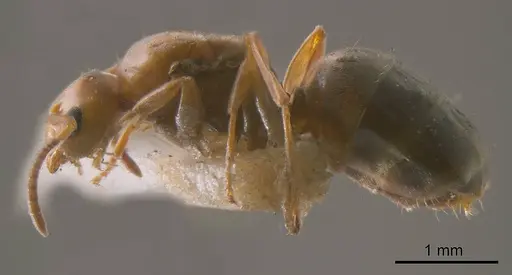
Prolasius hemiflavus is a small ant species native to southern Australia . Workers show a distinct propodeal angle and a single pair of upright hairs on the pronotum . You will find them in Western Australia, New South Wales, Tasmania, and Victoria . They live under stones, in trees, and near the south coast . This species stays poorly studied in captivity. You will find no solid data on founding behavior, colony size, or exact temperature needs. Based on their Australian temperate range, they likely prefer stable, moderate conditions.
Quick Summary
- Difficulty: Hard
- Origin & Habitat: Southern Australia (Western Australia, New South Wales, Tasmania, Victoria). They nest under stones, in trees, and near the south coast [1].
- Colony Type: Single-queen or multi-queen structure remains unconfirmed.
- Size & Growth:
- Queen: size data unavailable
- Worker: size data unavailable
- Colony: size data unavailable
- Growth: Unknown
- Development: Unknown, no development data available (Development speed has not been studied.)
- Antkeeping:
- Temperature: Unknown, start around 20-26°C and watch how the colony reacts. Keep the environment stable and adjust based on worker activity.
- Humidity: Unknown, provide a humidity gradient. Keep the main nest chamber mostly dry with one small moist area to match their natural under-stone habitat.
- Diapause: Unknown, southern Australian populations may need a cool period, but this is unconfirmed. Observe your colony for signs of winter dormancy.
- Nesting: They nest under stones and in trees [1]. Use a Y-tong, plaster, soil, or 3D-printed nest. Start small and expand as workers appear.
- Behavior: Activity levels and temperament are undocumented. As a Formicinae ant, they likely defend themselves with formic acid spray rather than a stinger. Escape risk is high due to their small size. Use fine mesh and secure barriers.
- Common Issues: lack of scientific data makes care recommendations uncertain, monitor colony response closely, no documented feeding preferences, offer varied sugar and protein sources and adjust based on acceptance, colony founding behavior unconfirmed, unknown if the queen seals herself in or must forage, winter care requirements unknown, unclear if diapause is needed, no known diseases or parasites documented, maintain standard antkeeping hygiene
Natural Distribution and Habitat
Prolasius hemiflavus lives in southern Australia [1]. You will find them in Western Australia, New South Wales, Tasmania, and Victoria [1]. In Western Australia, they appear along the south coast and near Jarrahdale, about 60 kilometers south of Perth [1]. Collectors find them in pitfall traps, in trees, and under stones [1]. This shows they forage on the ground and in vegetation. They prefer temperate coastal and forest-edge spots.
Identification and Morphology
Workers show two clear traits: a sharp propodeal angle and one pair of upright hairs on the pronotum [1]. Clark described both workers and queens in 1934 [1]. No published measurements exist for workers or queens, so size-based ID is hard. The genus Prolasius sits in the Melophorini tribe under Formicinae.
Housing and Nesting
Field data shows they nest under stones and in trees [1]. Start with a test tube for founding. Move them to a Y-tong, plaster, soil, or 3D-printed nest as the colony grows. Humidity needs are unknown. Keep the nest substrate slightly moist but not waterlogged. Watch how they use the space. Small size means escape prevention matters. Use fine mesh and secure barriers.
Feeding and Diet
No specific diet studies exist. Formicine ants usually eat a mix of sugars and proteins. Offer sugar water or honey for energy. Provide small insects like fruit flies or pinhead crickets for protein. They may accept honeydew from aphids if you keep them in a setup that allows tending. Adjust offerings based on what the workers take.
Temperature and Seasonal Care
No thermal data exists for this species. Southern Australian populations likely handle cool to moderately warm conditions. Start at 20-26°C. Watch worker behavior. If they cluster in warm spots, raise the temperature slightly. If they avoid heat, lower it. Diapause needs are unknown. Southern populations may slow down in winter, but this is unconfirmed.
Frequently Asked Questions
How do I care for Prolasius hemiflavus ants?
Care guidance is limited due to scarce research. Start with a test tube setup. Keep humidity moderate. Offer sugar water and small insects. Maintain temperatures around 20-26°C. Watch your colony closely and adjust conditions as needed.
What do Prolasius hemiflavus eat?
Diet details are missing. Offer sugar water or honey for energy. Provide small protein like fruit flies or pinhead crickets. They may accept honeydew from aphids if you set up a tending environment.
How long does it take for Prolasius hemiflavus to produce workers?
Development speed is unknown. Related Melophorini species often take 6-10 weeks at warm temperatures, but treat this as a rough guess only.
Is Prolasius hemiflavus a good species for beginners?
This species is not recommended for beginners. Care data is too limited. Start with better-documented Australian ants like Iridomyrmex or some Camponotus species.
Where is Prolasius hemiflavus found?
They live in southern Australia [1]. Records cover Western Australia, New South Wales, Tasmania, and Victoria [1].
Do Prolasius hemiflavus colonies need hibernation?
Diapause needs are unknown. Southern populations may slow down in winter, but this is unconfirmed. Watch your colony for reduced activity. If they slow down, provide a cool period around 15-18°C.
How big do Prolasius hemiflavus colonies get?
Maximum colony size is unknown. Related Melophorini species often reach several hundred workers, but this is just an estimate.
Can I keep multiple Prolasius hemiflavus queens together?
Colony structure is unconfirmed. Do not combine unrelated queens. You do not know if they accept multiple queens.
What temperature is best for Prolasius hemiflavus?
Optimal temperature is unknown. Start around 20-26°C based on their temperate range. Adjust based on worker activity.
Report an Issue
The current care sheet is based fully on literature. See inconsistencies, or something that's incorrect? Please , it will be resolved after review from an admin. Contributing to the blogs tab also helps providing information, to make us be able to further improve the caresheets. Thank you for your support!
References

Este guia de cuidados está sob a licença CC BY-SA 4.0 .
Posts da comunidade
ANTWEB1008275
Ver no AntWeb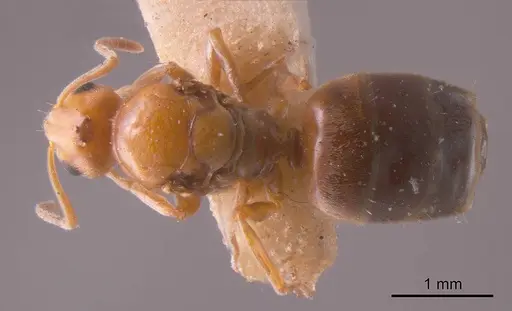
Literatura
Carregando mapa de distribuição...Carregando produtos...