
Proformica striaticeps
- Nome científico
- Proformica striaticeps
- Tribo
- Formicini
- Subfamília
- Formicinae
- Autor
- Forel, 1911
- Distribuição
- Encontrada em 2 países
Introdução
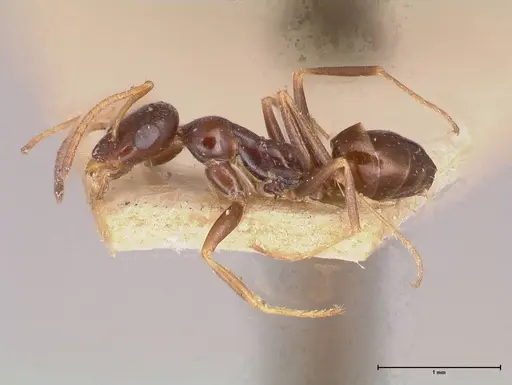
Proformica striaticeps is a small to medium-sized ant in the subfamily Formicinae. Workers are polymorphic, with minor and major castes, but full body size data is unavailable . The species has a striated clypeus and lacks erect body hairs, distinguishing it from similar species . Coloration varies: minor workers are yellowish-brown, major workers are darker . This species is a Balkan-Anatolian subendemic, found in Bulgaria, Turkey, and Greece . In Greece, it's recorded from highlands of Halkidiki and mountains of north-western Peloponnese, nesting in mountain pastures along clay-gravel roads .
Quick Summary
- Difficulty: Medium
- Origin & Habitat: Southeastern Europe and Anatolia, found in mountain pastures and grasslands in Bulgaria, Greece (Macedonia and Peloponnese), and Turkey. Nests are located along clay-gravel roads and open sunny areas at various altitudes [5][6][7].
- Colony Type: Colony structure is unconfirmed. No specific data on queen number or social structure from research.
- Size & Growth:
- Queen: Size data unavailable, inferred from Proformica genus patterns (~6-8 mm)
- Worker: Size data unavailable, head lengths are 0.75-1.46 mm, but full body size not specified [1]
- Colony: Unknown, no data on maximum colony size
- Growth: Unknown
- Development: Unconfirmed, estimated 6-10 weeks based on related Formicinae species (No specific development data available for this species)
- Antkeeping:
- Temperature: Unconfirmed, based on mountain habitat, likely prefers moderate temperatures around 20-24°C during active season. Winter diapause may be required.
- Humidity: Unconfirmed, mountain pastures suggest tolerance for drier conditions. Provide a humidity gradient with some moist areas.
- Diapause: Likely yes, as a temperate species from the Balkans, probably requires winter rest at 5-10°C for 2-3 months. Inferred from genus patterns.
- Nesting: In nature, nests in soil in open, sunny locations. For captivity, use soil substrate, Y-tong, or plaster nests with small chambers.
- Behavior: Workers are active foragers. As Formicinae, they defend by spraying formic acid rather than stinging, harmless to humans but can irritate eyes. Not aggressive but will defend nest. Escape risk is moderate due to small size, use standard barriers.
- Common Issues: limited distribution means this species is rarely available in the antkeeping hobby, specific care requirements are not well-documented, requiring careful observation, winter diapause needs are inferred but not confirmed for captive colonies, founding colonies may be slow due to unknown founding behavior
Distribution and Habitat
Proformica striaticeps is a Balkan-Anatolian subendemic species, found primarily in the Balkans and Anatolia [4]. In Greece, it is recorded from the highlands of Halkidiki in Macedonia and the mountains of north-western Peloponnese [5]. The type locality in Greece is Thessaloniki at low altitude [3].
In Bulgaria, records exist from multiple locations including the Western and Eastern Stara Planina Mountains, the Thracian Lowland, and other areas [7]. In Turkey, it has been recorded from Artvin, Isparta, and Sivas provinces [8].
The natural habitat consists of mountain pastures and open grassy areas, often along clay-gravel roads where numerous nests have been observed [5]. This suggests a preference for open, sunny locations.
Identification and Morphology
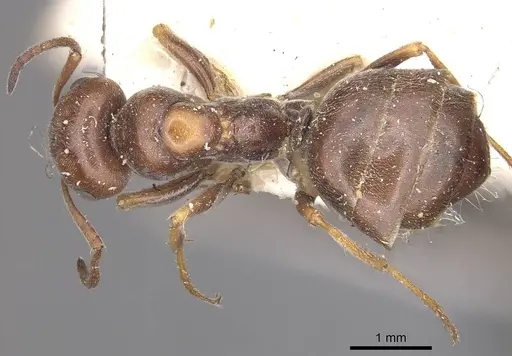
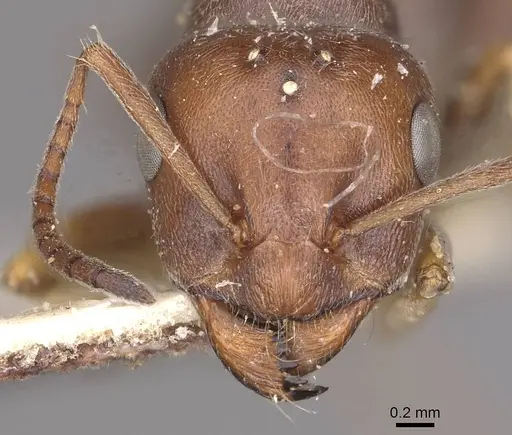
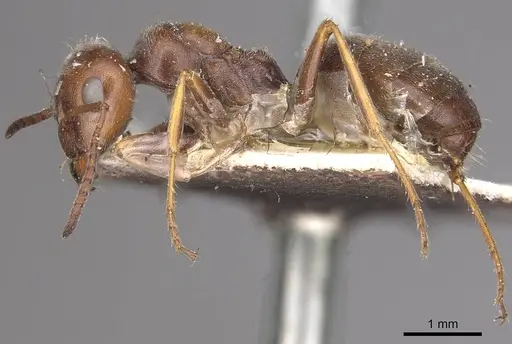
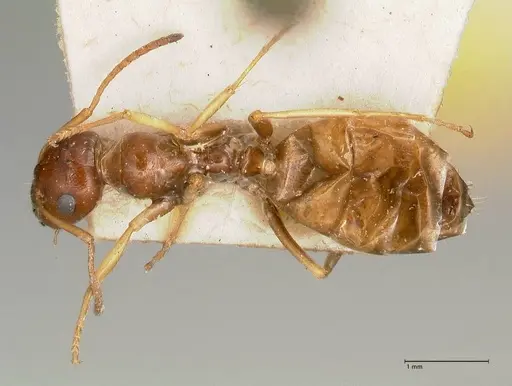
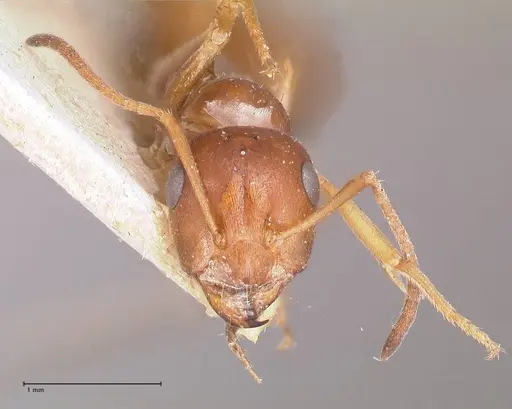
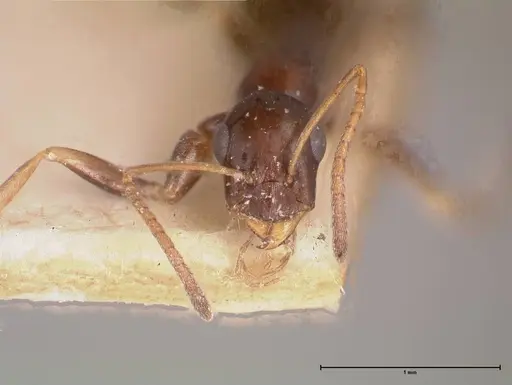
Proformica striaticeps workers are polymorphic, with minor and major castes. A key identifying feature is the striated clypeus, with longitudinal striations visible from the clypeus to the space between the eyes [3]. This distinguishes it from similar species like P. oculatissima, which has a smooth interocular space.
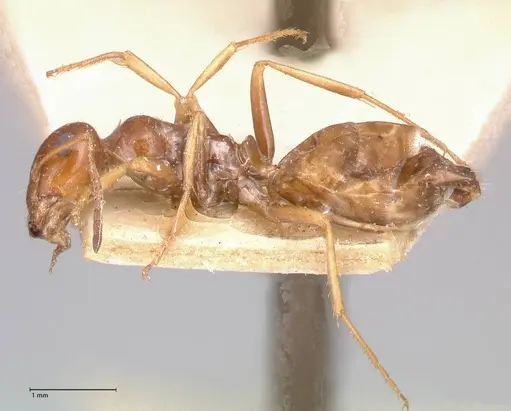
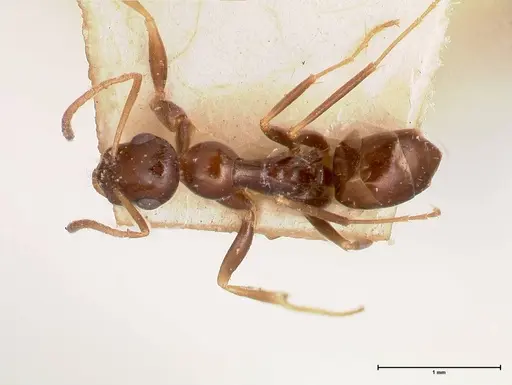
The species lacks erect hairs on the body, particularly on the mesosoma and first gastral segment [2]. This is important for distinguishing from P. chelmosensis, which has many erect hairs. Minor workers have a very long scape that extends beyond the occipital margin [1].
Coloration differs between castes: minor workers have brown head and mesosoma, while major workers are darker with black head and gaster [1].
Temperature and Seasonal Care
Based on the species' mountain habitat, Proformica striaticeps likely prefers moderate temperatures around 20-24°C during the active season. This is inferred from related Formicinae species and habitat data [5].
As a temperate species, it probably requires a winter diapause period of 2-3 months at 5-10°C, typical for European Formicinae. This can be achieved by moving the colony to a cool location during winter.
Maintain stable temperatures without major fluctuations during the active season. Use a heating cable if needed to create a gentle gradient.
Nesting and Housing
In the wild, Proformica striaticeps nests in soil in open, sunny locations such as mountain pastures and along roadsides [5]. For captive care, use a naturalistic setup with soil substrate, or Y-tong/plaster nests with small chambers scaled to their size.
Ensure proper escape prevention due to their small size. Use standard barrier methods like fluon on the rim of the formicarium.
Place the nest in a location with moderate lighting, as these ants prefer dimmer conditions but still need some light cycles.
Feeding and Diet
Like other Formicinae, Proformica striaticeps likely has an omnivorous diet, feeding on honeydew and small insects. For captive colonies, offer sugar sources like honey water and protein sources like fruit flies or small crickets.
Provide fresh water always, using a water test tube with a cotton stopper. Observe colony preferences and remove uneaten prey after 24-48 hours to prevent mold.
Defense and Behavior
As members of the subfamily Formicinae, these ants lack a functional stinger and defend by spraying formic acid. This makes them harmless to keepers, but avoid direct contact with eyes.
Workers are active foragers, likely searching for food on the ground and low vegetation. The species is not particularly aggressive but will defend the nest if threatened.
Colony founding behavior is unconfirmed, but based on Formicinae patterns, queens may seal themselves in a chamber to raise the first brood alone.
Frequently Asked Questions
How long does it take for Proformica striaticeps to raise first workers?
The exact development time is unconfirmed. Based on related Formicinae species, expect approximately 6-10 weeks from egg to first worker at optimal temperatures (around 20-24°C). The queen may remain sealed during founding.
What temperature do Proformica striaticeps need?
Unconfirmed from research. Based on mountain habitat, they likely prefer 20-24°C during active season and may require winter diapause at 5-10°C.
Are Proformica striaticeps good for beginners?
Difficulty is medium. This species is rarely available and care requirements are not well-documented, so it may be challenging for beginners.
How big do Proformica striaticeps colonies get?
Colony size is unknown, no data on maximum size from research.
Do Proformica striaticeps need hibernation?
Likely yes, as a temperate species. Provide 2-3 months of cold temperatures (5-10°C) during winter, inferred from genus patterns.
What do Proformica striaticeps eat?
They likely eat honeydew and small insects. Offer sugar sources and protein foods in captivity.
Can I keep multiple Proformica striaticeps queens together?
Colony structure is unconfirmed. No data on pleometrosis or multiple queens, so it is not recommended without evidence.
What makes Proformica striaticeps different from other ants?
It has a striated clypeus, lacks erect body hairs, and has a limited Balkan-Anatolian distribution, making it rare in antkeeping.
Where is Proformica striaticeps found in the wild?
It is found in Bulgaria, Turkey, and Greece, specifically in mountain pastures along clay-gravel roads in regions like Halkidiki and Peloponnese.
Report an Issue
The current care sheet is based fully on literature. See inconsistencies, or something that's incorrect? Please , it will be resolved after review from an admin. Contributing to the blogs tab also helps providing information, to make us be able to further improve the caresheets. Thank you for your support!
References

Este guia de cuidados está sob a licença CC BY-SA 4.0 .
Posts da comunidade
Literatura
Carregando mapa de distribuição...Carregando produtos...