
Prenolepis mediops
- Nome científico
- Prenolepis mediops
- Tribo
- Lasiini
- Subfamília
- Formicinae
- Autor
- Williams & LaPolla, 2016
- Distribuição
- Encontrada em 1 países
Introdução
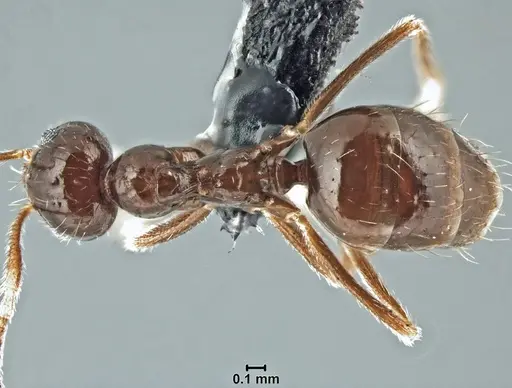
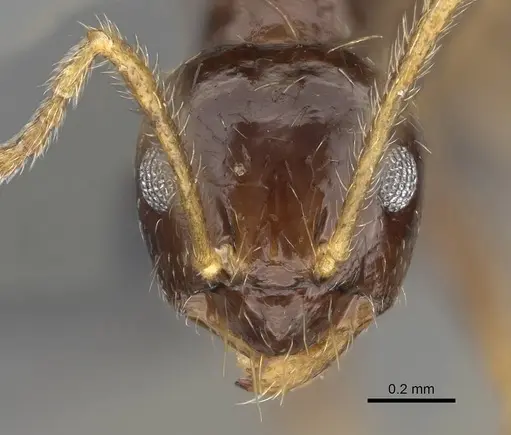
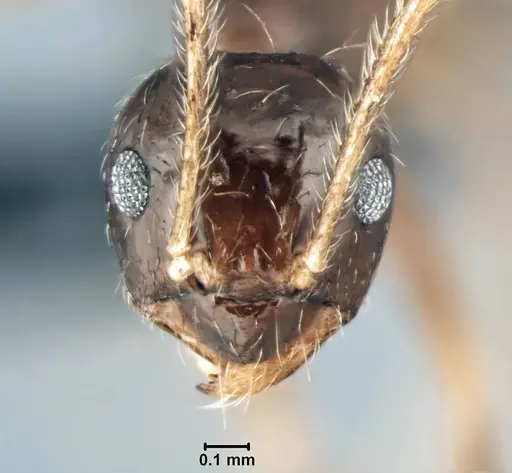
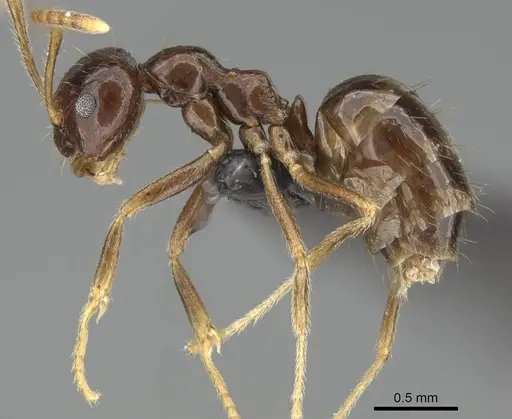
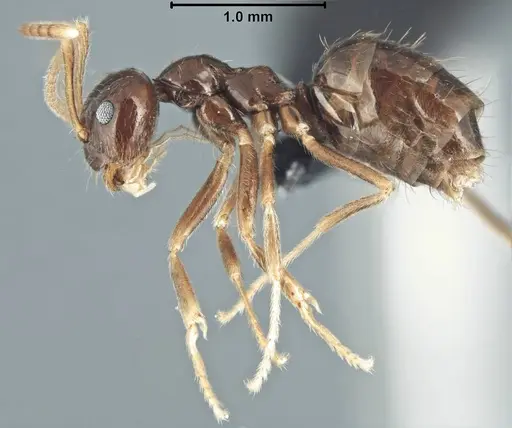
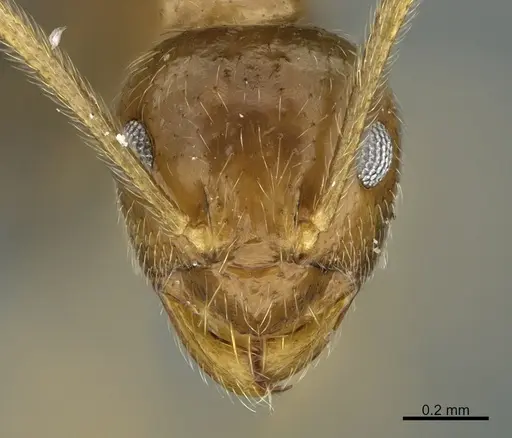
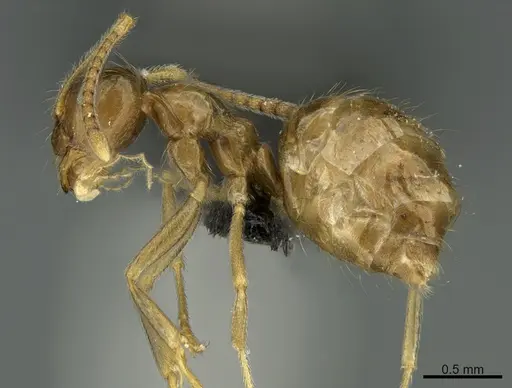
Prenolepis mediops is a tiny ant species from China, measuring 2.85-3.32 mm in total length . Workers have a yellow-brown head and mesosoma with a dark brown to black gaster . Their eyes are moderately sized, rounded, and spaced far apart . The cuticle is smooth and shiny, with abundant long erect hairs on the head, pronotum, mesonotum, and gaster . This species was described in 2016 and little is known about its biology in the wild .
Quick Summary
- Difficulty: Medium, based on genus patterns, but no captive data exists [1]
- Origin & Habitat: China (Palaearctic Region) [1]
- Colony Type: Unconfirmed, colony structure has not been documented [1]
- Size & Growth:
- Antkeeping:
- Behavior: Temperament is unconfirmed [1]. Escape risk is high due to tiny size [1].
- Common Issues: no captive husbandry data exists, this is an unstudied species in captivity [1], tiny size makes escape prevention critical, use fine mesh barriers [1], complete lack of development data makes growth unpredictable [1], no confirmed feeding preferences, any diet is experimental [1], winter care requirements are unconfirmed [1]
Species Identification and Appearance
Prenolepis mediops workers are among the smallest ants, measuring 2.85-3.32 mm total length [1]. They have a color contrast with a yellow-brown head and mesosoma and a dark brown to black gaster [1]. Eyes are moderately sized, rounded, and spaced far apart [1]. The body surface is smooth and shiny, with long erect hairs on the head, pronotum, mesonotum, and gaster [1].
Distribution and Native Habitat
Prenolepis mediops is known only from China in the Palaearctic Region [1]. The exact habitat is not documented, but based on distribution, it likely inhabits temperate areas [1].
Current State of Knowledge
This species was described in 2016 and no biological or behavioral data exists [1]. Captive care is unstudied, so any keeping is experimental [1].
Similar Species and Identification Tips
Prenolepis mediops can be distinguished by its color pattern, eye spacing, and small size [1]. Related species like Prenolepis dugasi have different distributions [1].
Frequently Asked Questions
How long does it take for Prenolepis mediops to produce first workers?
Unknown, no development data exists [1].
What do Prenolepis mediops ants eat?
Unknown, no feeding studies exist [1].
Are Prenolepis mediops good for beginners?
Unknown, no captive data exists, so they are not recommended for beginners [1].
What temperature should I keep Prenolepis mediops at?
Unknown, no specific data exists [1].
Do Prenolepis mediops need hibernation?
Unknown, no diapause data exists [1].
How big do Prenolepis mediops colonies get?
Unknown, no colony size data exists [1].
Can I keep multiple Prenolepis mediops queens together?
Unknown, no research on colony structure exists [1].
What type of nest is best for Prenolepis mediops?
Unknown, no nesting data exists [1].
Is Prenolepis mediops aggressive?
Unknown, no behavioral studies exist [1].
Report an Issue
The current care sheet is based fully on literature. See inconsistencies, or something that's incorrect? Please , it will be resolved after review from an admin. Contributing to the blogs tab also helps providing information, to make us be able to further improve the caresheets. Thank you for your support!
References

Este guia de cuidados está sob a licença CC BY-SA 4.0 .
Posts da comunidade
CASENT0203583
Ver no AntWeb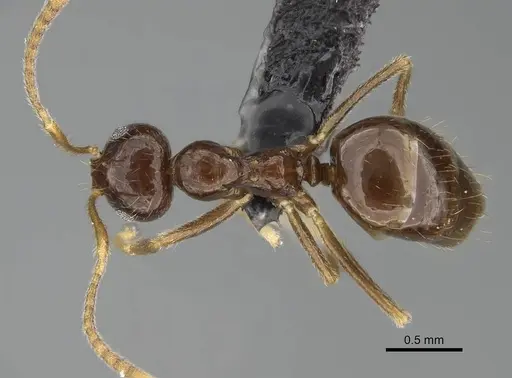
CASENT0203585
Ver no AntWeb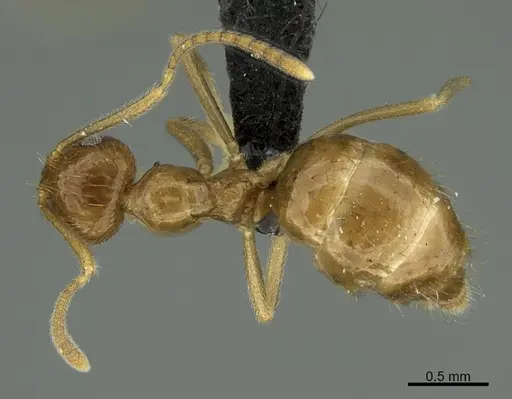
Literatura
Carregando mapa de distribuição...Carregando produtos...