
Poneracantha perspicax
- Nome científico
- Poneracantha perspicax
- Tribo
- Ectatommini
- Subfamília
- Ectatomminae
- Autor
- Kempf & Brown, 1970
- Distribuição
- Encontrada em 2 países
Introdução
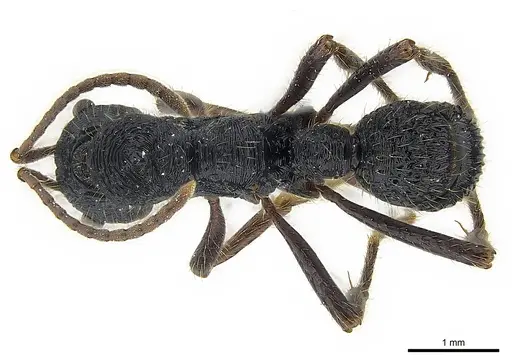
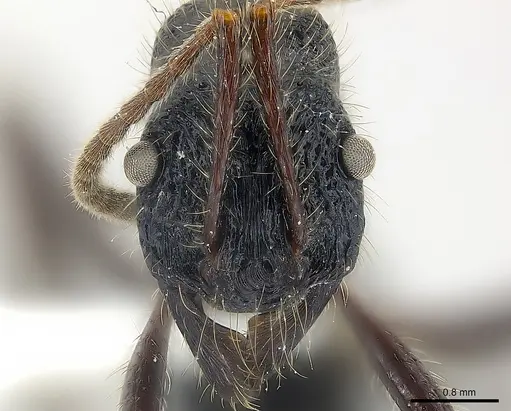
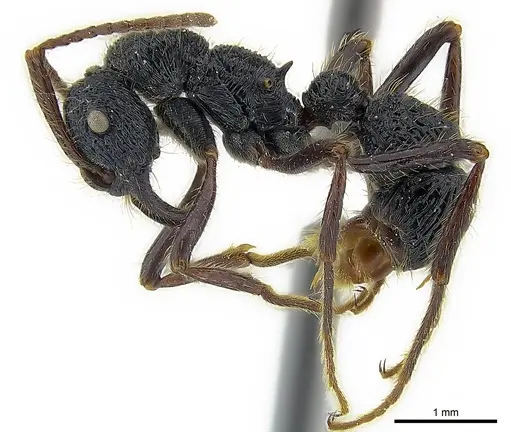
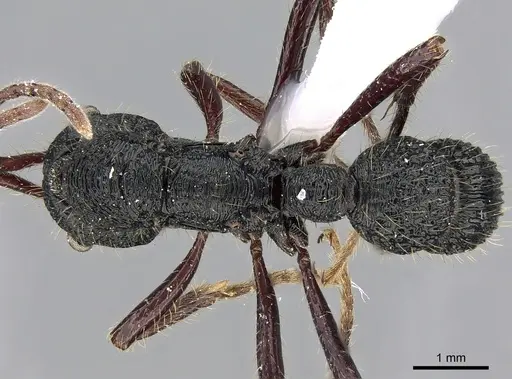
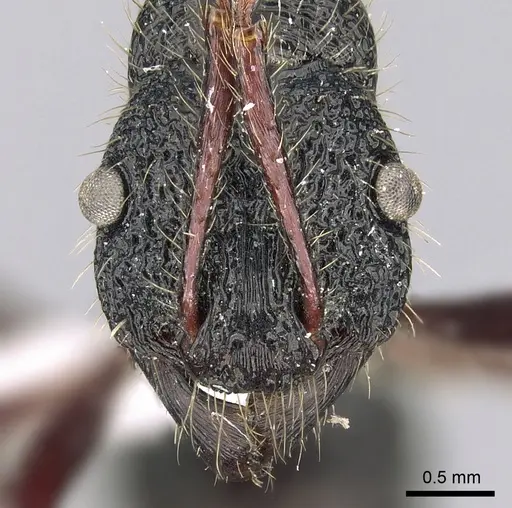
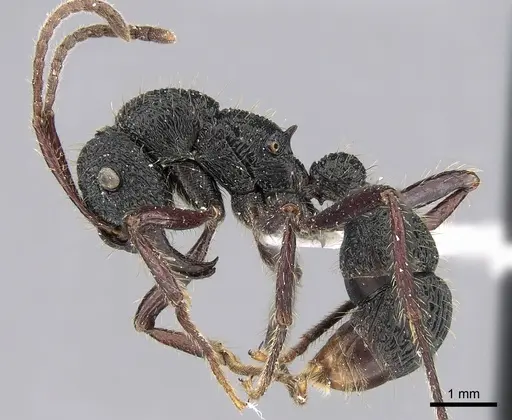
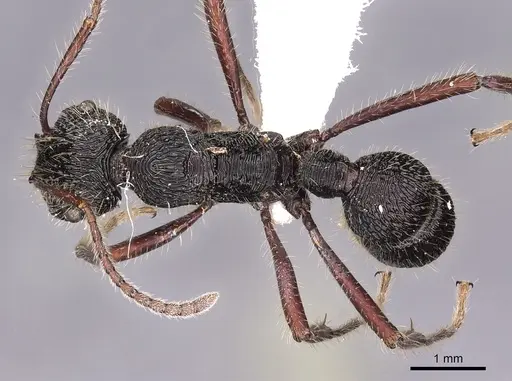
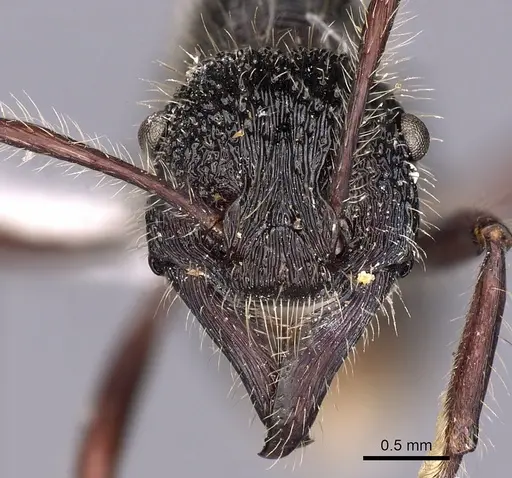
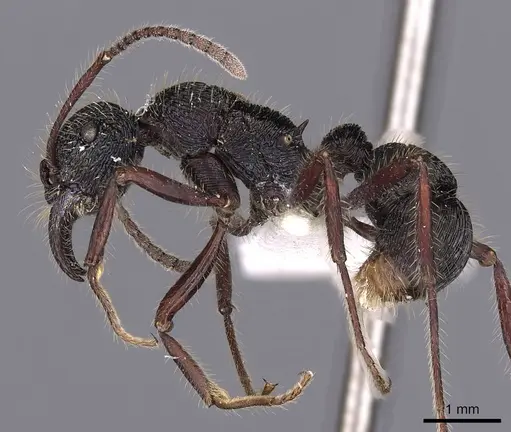
Poneracantha perspicax is a large ponerine ant native to the cloud forests of Colombia and Ecuador. Workers measure 9.0-9.6 mm total length and are almost entirely black with abundant pale standing hairs . They have protruding eyes and short propodeal teeth . This species is a specialized millipede predator, feeding almost exclusively on Diplopoda and resisting cyanide defenses . Colonies nest in large rotten logs at altitudes of 1600-1800 m, with type colonies containing up to 45 workers and a single ergatoid queen .
Quick Summary
- Difficulty: Expert
- Origin & Habitat: Cloud forests of Colombia and Ecuador at 1600-1800 m altitude, nesting in large rotten logs in shaded ravines [5][6][1].
- Colony Type: Monogyne with a single ergatoid (wingless) queen per colony. The queen is smaller than workers and develops from a worker-like form [1].
- Size & Growth:
- Queen: 8.6 mm total length [1]
- Worker: 9.0-9.6 mm total length [1]
- Colony: Up to 45 workers observed in type colony [1]
- Growth: Slow, inferred from large ponerine patterns
- Development: Unknown, no direct studies on development time (Development timeline has not been documented in scientific literature)
- Antkeeping:
- Temperature: Keep warm, roughly 22-26°C, based on cloud forest habitat inference
- Humidity: Keep nest substrate consistently moist but not waterlogged, as they are from humid forests [1][5]
- Diapause: Unknown, no documented requirement for hibernation
- Nesting: In nature, they nest in large rotten logs with multiple chambers. In captivity, use naturalistic setups with rotten wood or cork sections [1]
- Behavior: Active predators specialized on millipedes. Workers are bold foragers but not escape artists due to their large size. They are not aggressive toward humans. The ergatoid queen allows colony recovery if the primary queen is lost.
- Common Issues: extreme dietary specialization makes feeding difficult, they may refuse anything except millipedes, high humidity requirements can lead to mold problems if ventilation is poor, wild-caught colonies may arrive with parasites that are difficult to treat, slow growth and small colony sizes require patience, difficulty obtaining millipedes as natural food in captivity
Feeding and Diet
This species is a extreme dietary specialist, feeding almost exclusively on millipedes (Diplopoda) in the wild [3][4]. Laboratory tests confirm live millipedes are their preferred food, and they have evolved resistance to cyanide defenses [1]. In captivity, you must provide a steady supply of millipedes. Other prey like small beetles or click beetle larvae may be accepted occasionally, but millipedes should be the primary food [3].
Natural History and Distribution
Poneracantha perspicax is found in cloud forests of Colombia and Ecuador at altitudes of 1600-1800 m [5][6]. The type locality is in Valle del Cauca, Colombia, and it is also recorded in Risaralda, Cundinamarca, and Pichincha [7][8]. They nest in large rotten logs on the forest floor, with chambers over 2 cc volume and entrances over 4 cm diameter [1].
Colony Structure and Reproduction
Colonies are monogyne with a single ergatoid queen, which is wingless and smaller than workers (8.6 mm vs 9-9.6 mm) [1]. The ergatoid form allows replacement reproductives if the primary queen dies, supporting colony stability [1].
Temperature and Humidity Care
As a cloud forest species, keep temperatures around 22-26°C with a gentle gradient. High humidity is essential, keep the nest substrate consistently moist but not waterlogged [1][5]. Provide a water source and good ventilation to prevent mold.
Nesting Requirements
In nature, they nest in large rotten logs with multiple chambers [1]. For captivity, use naturalistic setups with rotten wood or cork sections to mimic their natural habitat. Spacious chambers are needed due to their large size [1].
Frequently Asked Questions
What do Poneracantha perspicax ants eat?
They are millipede specialists. Feed them millipedes (Diplopoda) as their primary food, as they have evolved resistance to cyanide defenses [3][4]. Other prey may be accepted occasionally, but sugar sources are unlikely [3].
How difficult is Poneracantha perspicax to keep?
This is an expert-level species due to extreme dietary specialization and high humidity needs. It is not recommended for beginners.
What size are Poneracantha perspicax ants?
Workers are 9.0-9.6 mm total length, and the ergatoid queen is 8.6 mm [1].
Where is Poneracantha perspicax found?
They live in cloud forests of Colombia and Ecuador at 1600-1800 m altitude, in departments like Valle del Cauca, Risaralda, and Cundinamarca [5][6][1].
Do Poneracantha perspicax ants sting?
As a member of Ectatomminae, they have a functional sting, but they are not known to be aggressive toward humans.
How do Poneracantha perspicax colonies form?
Colonies are monogyne with a single ergatoid queen. Founding behavior is unconfirmed [1].
What temperature do Poneracantha perspicax need?
Keep them around 22-26°C, based on their cloud forest habitat.
Do Poneracantha perspicax need hibernation?
No, as a tropical species, they do not require hibernation.
What kind of nest do they need?
In nature, they nest in rotten logs. In captivity, use naturalistic setups with rotten wood or cork [1].
How big do colonies get?
Up to 45 workers in type colonies, with mature colonies likely larger [1].
Can I keep multiple queens together?
This species is monogyne with a single queen per colony. Combining queens is not recommended [1].
Why are they called perspicax?
The name means 'sharp-sighted' in Latin, referring to their prominent eyes.
Report an Issue
The current care sheet is based fully on literature. See inconsistencies, or something that's incorrect? Please , it will be resolved after review from an admin. Contributing to the blogs tab also helps providing information, to make us be able to further improve the caresheets. Thank you for your support!
References

Este guia de cuidados está sob a licença CC BY-SA 4.0 .
Posts da comunidade
Literatura
Carregando mapa de distribuição...Carregando produtos...