
Polyrhachis xiphias
- Nome científico
- Polyrhachis xiphias
- Subgênero
- Campomyrma
- Tribo
- Camponotini
- Subfamília
- Formicinae
- Autor
- Smith, 1863
- Distribuição
- Encontrada em 1 países
Introdução
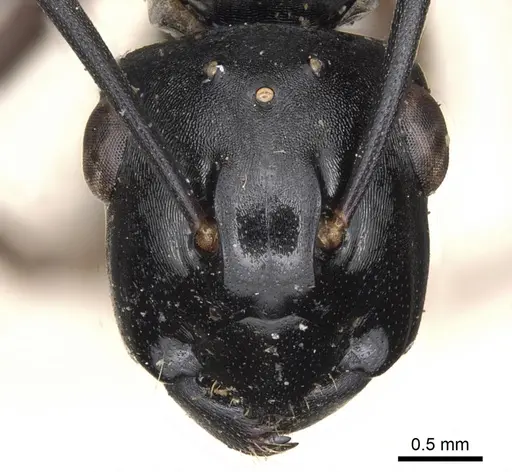
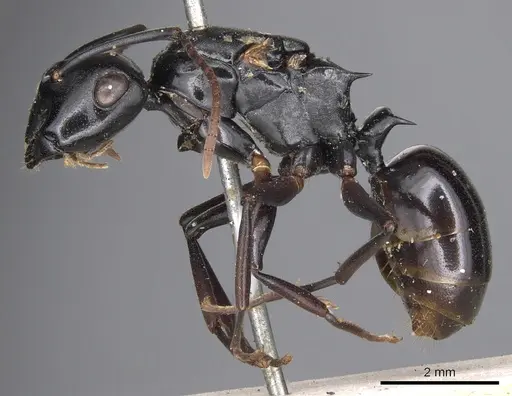
Polyrhachis xiphias is a medium-sized ant from the rainforests of New Guinea and Indonesia. Workers are 6.0-6.8mm long, with a black body, bright yellow legs, and reddish-brown antennae . Queens reach 10.3-10.9mm and look similar but have shorter propodeal spines . This species belongs to the xiphias group within the subgenus Campomyrma, known for its columnar petiole with two horizontal spines and convex eyes that break the head outline . Very little is known about its biology in the wild or captivity. Males have never been collected, and colony structure is unconfirmed . Like other formicines, they defend themselves by spraying formic acid into bites.
Quick Summary
- Difficulty: Hard
- Origin & Habitat: Native to the Australasian and Indomalaya regions: Indonesia (West Irian, Waigeo Island) and Papua New Guinea (West Sepik, Gulf Province). They live in lowland rainforest at 150-500 meters elevation, nesting in rotting wood [1].
- Colony Type: Colony structure is not documented. Only two queens have been measured, and males are unknown [1]. Likely single-queen (monogyne) colonies, but this is unconfirmed.
- Size & Growth:
- Queen: 10.33-10.89mm [1]
- Worker: 6.00-6.80mm [1]
- Colony: Unknown, no colony size data available
- Growth: Unknown, no development timing data exists
- Development: Unknown, no direct data. Based on related Polyrhachis species, estimate 6-10 weeks at 24-28°C. (Development has not been studied. Keep at stable tropical temperatures and observe.)
- Antkeeping:
- Temperature: 24-28°C is recommended. As a tropical species, keep temperatures stable and avoid drops below 22°C. A gentle gradient helps the ants self-regulate.
- Humidity: High humidity is essential. Keep the nest substrate consistently moist but not waterlogged. Aim for 70-85% relative humidity, achievable with a moisture chamber or regular misting.
- Diapause: No, as a tropical species from near the equator, they do not need hibernation. Maintain consistent conditions year-round.
- Nesting: Naturally nests in rotting wood [1]. Provide cork, wood pieces, or a plaster/Y-tong nest with high moisture. Avoid acrylic nests, they don't retain humidity well. Offer a naturalistic setup with wood-like material.
- Behavior: Calm and non-aggressive, like most Polyrhachis. They are generalist foragers and moderately active. Their defense mechanism is biting and spraying formic acid (common to formicines). Escape risk is moderate due to their 6mm worker size, standard barriers work, but keep the setup sealed. No stinger, so they cannot sting.
- Common Issues: very limited knowledge, no captive care data exists, you will be pioneering, high humidity is critical for survival, especially during founding, wild-caught colonies may carry parasites or diseases, males have never been collected, so nuptial flight timing and mating behavior are unknown, this species is rarely available in the hobby, sourcing might be extremely difficult
Natural History and Distribution
Polyrhachis xiphias is endemic to New Guinea and surrounding Indonesian islands. It was first described from a single queen (holotype) collected by Alfred Russel Wallace on Waigeo Island in 1863 [1]. More specimens have since been found in West Irian (Indonesia) and several provinces in Papua New Guinea, including West Sepik and Gulf Province [1]. The ants inhabit lowland rainforest at 150-500 meters, nesting in rotting wood pieces. Males have never been collected, which is unusual and suggests either very localized nuptial flights or that reproduction occurs in an atypical manner [1].
Identification and Distinguishing Features
This species belongs to the Polyrhachis xiphias species-group within the subgenus Campomyrma. Unlike most Campomyrma, which have a scale-like petiole, P. xiphias has a columnar petiole armed with two horizontal, posteriorly-directed spines [1][2]. Workers are identified by their moderately convex eyes that break the head outline in full-face view, blunt humeral angles on the pronotum, and divergent petiolar spines [1][2]. Color: black body, bright yellow legs with dark brown joints at the femora and tibiae, and dark brown tarsi. Antennae dark brown at base, lightening toward the tip, with yellow condylae. Queens are similar but larger (10.3-10.9mm) with shorter propodeal spines and a developed mesosoma [1].
Housing and Nesting Preferences
Since they nest in rotting wood in the wild [10111
Report an Issue
The current care sheet is based fully on literature. See inconsistencies, or something that's incorrect? Please , it will be resolved after review from an admin. Contributing to the blogs tab also helps providing information, to make us be able to further improve the caresheets. Thank you for your support!
References

Este guia de cuidados está sob a licença CC BY-SA 4.0 .
Posts da comunidade
CASENT0901819
Ver no AntWeb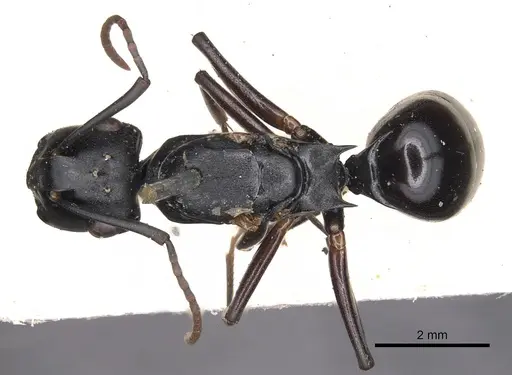
Literatura
Carregando mapa de distribuição...Carregando produtos...