
Polyrhachis trapezoidea
- Nome científico
- Polyrhachis trapezoidea
- Subgênero
- Hagiomyrma
- Tribo
- Camponotini
- Subfamília
- Formicinae
- Autor
- Mayr, 1876
- Distribuição
- Encontrada em 1 países
Introdução
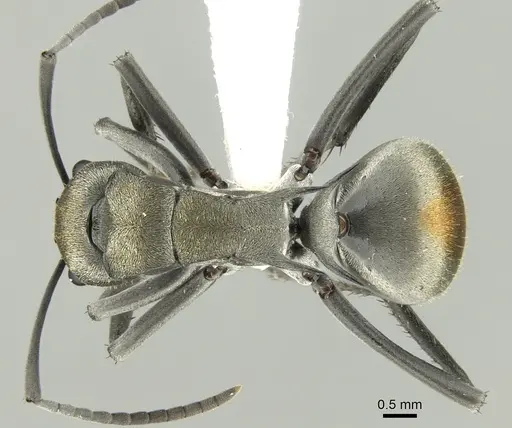
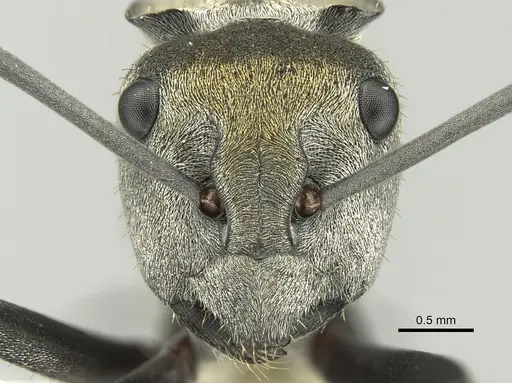
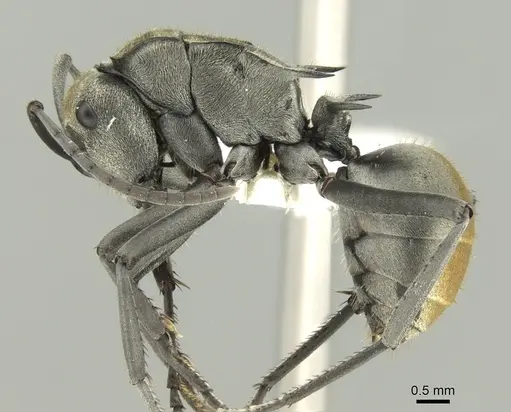
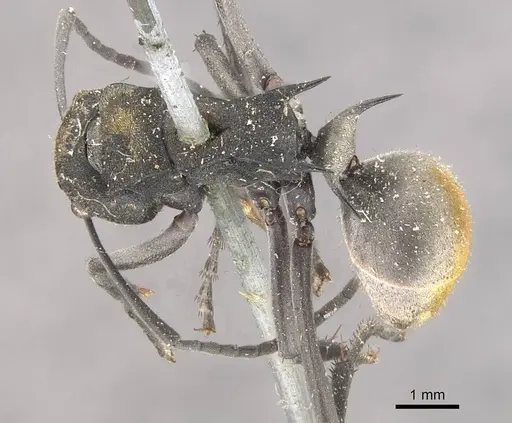
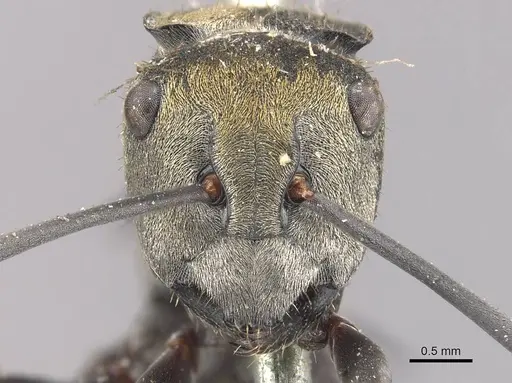
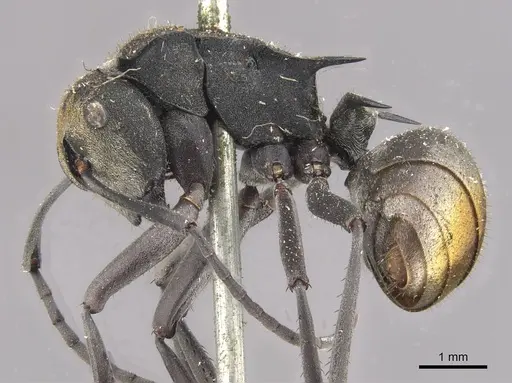
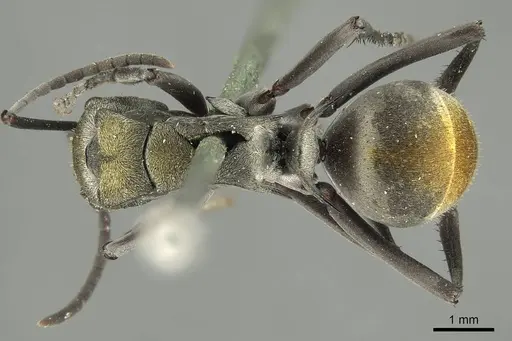
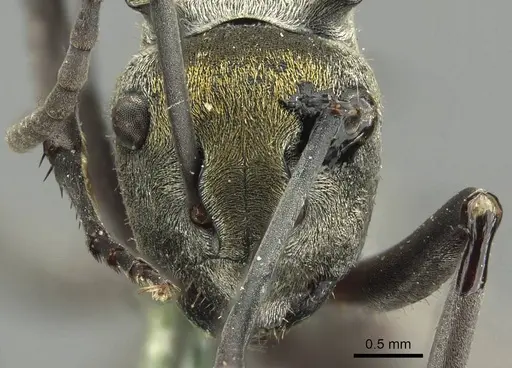
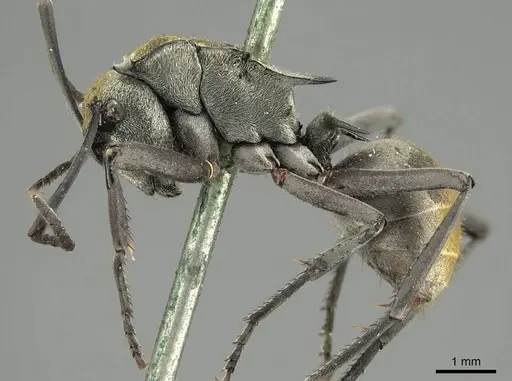
Polyrhachis trapezoidea is an Australian ant in the subgenus Hagiomyrma. Workers are 7.61-9.42 mm long, black with golden pubescence and a narrow reddish-brown band on the mandibles. Queens are 9.63-11.09 mm long. It is common in open eucalypt forests and savannah woodlands from Torres Strait to Gladstone, Queensland, and northern Northern Territory . Unlike arboreal Polyrhachis species, it nests in the ground . It has pupal cocoons, which require humidity for development .
Quick Summary
- Difficulty: Medium
- Origin & Habitat: Northern Australia, from Torres Strait to Gladstone, Queensland, and northern Northern Territory, in open eucalypt forests and savannah woodlands [1].
- Colony Type: Unconfirmed, no specific literature on queen number or social structure.
- Size & Growth:
- Queen: 9.63-11.09 mm [1]
- Worker: 7.61-9.42 mm [1]
- Colony: Unknown, no context data on maximum colony size.
- Growth: Moderate, inferred from related Polyrhachis species.
- Development: Unknown, no context data on development time. (Development time is unclear, based on Formicinae patterns, it may vary with temperature.)
- Antkeeping:
- Temperature: Keep warm, around 24-28°C, based on tropical distribution [1].
- Humidity: Keep nest substrate consistently moist but not waterlogged, as pupal cocoons need humidity [2].
- Diapause: No, inferred from tropical range [1].
- Nesting: Ground-nesting species [1]. Use soil or Y-tong/plaster nests with moisture for cocoons [2].
- Behavior: Workers are generally calm but will defend the nest if threatened. They can spray formic acid as defense, typical for Formicinae. Escape risk is moderate for medium-sized ants, use standard barriers.
- Common Issues: cocoon desiccation, pupal cocoons need humidity to develop, dry conditions kill pupae., temperature drops below 22°C can slow brood development., colonies may struggle if kept too dry, monitor substrate moisture., escape prevention is needed for medium-sized ants, use standard barriers., slow founding, queens may take months to raise first workers.
Nest Preferences and Setup
Polyrhachis trapezoidea is a ground-nesting species that excavates chambers in soil [1]. In captivity, use naturalistic setups with soil or formicarium-style nests like Y-tong or plaster. Maintain moisture for pupal cocoons, keep substrate damp but not waterlogged [2]. Chambers should be scaled to medium-sized ants (7-9 mm workers). Avoid dry setups to prevent cocoon desiccation.
Feeding and Diet
Based on typical Polyrhachis patterns, this species is omnivorous. Offer protein sources like small insects and sugar sources like honey water. Feed protein 2-3 times per week and provide constant sugar water. Remove uneaten prey after 24-48 hours to prevent mold.
Temperature and Seasonal Care
Keep nest area warm, around 24-28°C, based on tropical distribution [1]. Use a heating cable for a temperature gradient. Avoid temperatures below 22°C, as they can slow brood development. No diapause needed, maintain stable warmth year-round.
Behavior and Colony Dynamics
Workers are calm but defensive, spraying formic acid when threatened. They are active foragers on the ground. Unlike arboreal relatives, they do not weave nests. Pupal cocoons require humidity for development [2]. Colony growth is moderate, founding queens may take months to raise first workers.
Escape Prevention
Workers are medium-sized (7-9 mm), with moderate escape risk. Use Fluon or similar barriers on test tubes and formicarium openings. Ensure all connections are secure to prevent escapes.
Frequently Asked Questions
How long does it take for Polyrhachis trapezoidea queens to raise their first workers?
Unknown from context, but based on Formicinae patterns, it may take several months at optimal temperature. Do not disturb the founding chamber.
Do Polyrhachis trapezoidea ants need hibernation?
No, they do not require hibernation, as inferred from their tropical range [1]. Keep them at stable warm temperatures year-round.
What do Polyrhachis trapezoidea ants eat?
Based on typical Polyrhachis patterns, they are omnivorous. Offer small insects for protein and sugar sources like honey water.
Are Polyrhachis trapezoidea good for beginners?
They are rated medium difficulty. Main challenges are maintaining humidity for cocoons and warm temperatures. More suited for keepers with some experience.
Can I keep multiple Polyrhachis trapezoidea queens together?
Not recommended, as queen number is unconfirmed. Combining queens may lead to fighting.
What type of nest should I use for Polyrhachis trapezoidea?
Use ground-nesting setups like soil or Y-tong/plaster nests, with moist substrate for cocoons [1][2].
Why are my Polyrhachis trapezoidea pupae dying?
Most likely due to dry conditions. Pupal cocoons need humidity to develop properly [2]. Ensure substrate is damp and temperatures are warm.
How big do Polyrhachis trapezoidea colonies get?
Unknown from context, no data on maximum colony size.
When should I move my colony to a formicarium?
Move when the test tube setup is crowded or water reservoir depletes quickly. Ensure the new setup maintains humidity for cocoons.
Report an Issue
The current care sheet is based fully on literature. See inconsistencies, or something that's incorrect? Please , it will be resolved after review from an admin. Contributing to the blogs tab also helps providing information, to make us be able to further improve the caresheets. Thank you for your support!
References

Este guia de cuidados está sob a licença CC BY-SA 4.0 .
Posts da comunidade
Literatura
Carregando mapa de distribuição...Carregando produtos...