
Polyrhachis scutulata
- Nome científico
- Polyrhachis scutulata
- Subgênero
- Chariomyrma
- Tribo
- Camponotini
- Subfamília
- Formicinae
- Autor
- Smith, 1859
- Distribuição
- Encontrada em 2 países
Introdução
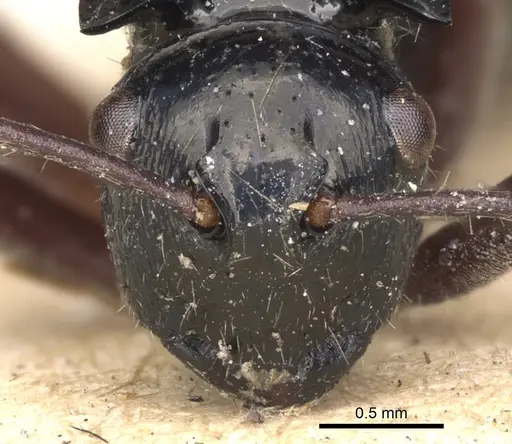
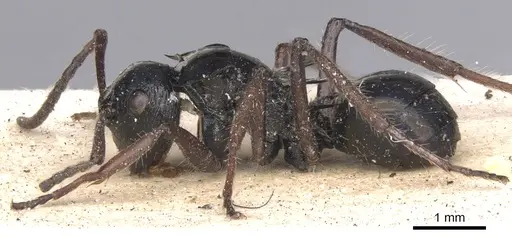
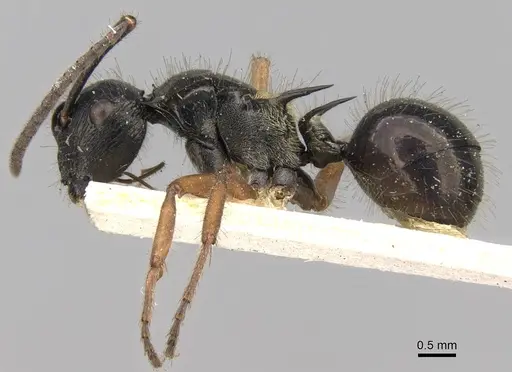
Polyrhachis scutulata is a medium-sized ant species known only from northern Australia and the Aru Islands . Workers have a distinctive spiny thorax, typical of the genus Polyrhachis. Because the species is very poorly studied, almost everything about its biology is inferred from related spiny ants. They likely live in warm, tropical to subtropical habitats consistent with their northern Australian range.
Quick Summary
- Difficulty: Hard
- Origin & Habitat: Northern Australia and Aru Islands (near New Guinea). Likely inhabits tropical forests, open woodlands, or coastal vegetation [1][2].
- Colony Type: Colony structure is unconfirmed. Based on typical Polyrhachis patterns, likely single-queen (monogyne) colonies.
- Size & Growth:
- Queen: ~10-12mm, inferred from medium-sized Polyrhachis species
- Worker: ~6-9mm, inferred from genus morphology
- Colony: Probably several hundred workers at maturity (inferred from genus patterns)
- Growth: Moderate (estimated)
- Development: 6-10 weeks at 24-28°C (estimate from related Polyrhachis species) (Development time is unconfirmed for this species, the estimate may change with actual breeding data)
- Antkeeping:
- Temperature: Keep at 24-28°C. Northern Australian species are warm-adapted, so avoid prolonged temperatures below 20°C [1]. Provide a gradient so ants can self-regulate.
- Humidity: Moderate to high. Keep the nest substrate slightly moist but not waterlogged. Mist the outworld occasionally. Exact humidity needs are unconfirmed.
- Diapause: Probably no true diapause given the tropical origin. They may slow down during cooler months but don't require enforced hibernation (inferred).
- Nesting: Y-tong (AAC), plaster, or soil nests work well. Provide vertical climbing structures as some Polyrhachis are semi-arboreal. Avoid acrylic nests.
- Behavior: Generally docile, as with many Polyrhachis species. Workers are active foragers and can climb moderately well. They are not exceptional escape artists but can squeeze through small gaps, use standard prevention (fluon, tight lids). Defense form: they lack a stinger, instead they bite and spray formic acid from the abdomen tip (typical of Formicinae).
- Common Issues: very little species-specific information available, all care is based on genus-level estimates and may be wrong, brood may fail if humidity is too low or too high, monitor moisture carefully, wild-caught colonies may carry parasites or diseases, temperature below 20°C can stop development or kill the colony, formic acid spray can cause minor skin irritation if handled carelessly
Nest Preferences
The natural nesting site of Polyrhachis scutulata is unknown. Many Polyrhachis nest in soil, under stones, in rotting wood, or build silk-and-leaf nests. In captivity, they accept Y-tong (AAC), plaster, or soil nests. Provide a nest chamber large enough for several hundred ants, and include some substrate depth if using a naturalistic setup. Because they may be semi-arboreal, add climbing structures (cork bark, twigs) in the outworld. Do not use acrylic nests.
Feeding and Diet
Polyrhachis ants are generally omnivorous. Offer protein sources 2-3 times per week: small insects like fruit flies, pinhead crickets, or small mealworms. Provide constant access to a sugar source (honey water or sugar water). They likely also accept sweet fruits. Remove uneaten prey after 24-48 hours to prevent mold. No species-specific dietary preferences are known.
Temperature and Care
Keep the colony warm: 24-28°C is a safe range based on typical northern Australian conditions. Use a heating cable on one side to create a gradient. Avoid temperatures below 20°C for extended periods. Room temperature (22-25°C) may work if the house is warm. Since this species is poorly studied, watch the ants: if they cluster away from heat or become sluggish, adjust accordingly.
Behavior and Temperament
Workers are active and curious foragers, likely diurnal. They are generally docile and not aggressive toward the keeper. Their primary defense is to bite and spray formic acid, they do not have a functional stinger (this is true for all Formicinae). They can climb smooth surfaces moderately well, so use standard escape prevention (fluon on rims, tight-fitting lids). Avoid stressing the colony unnecessarily.
Frequently Asked Questions
How long does it take for Polyrhachis scutulata to produce first workers?
Estimate 6-10 weeks from egg to first worker at optimal temperature (24-28°C). This is based on related Polyrhachis species, the actual timing for P. scutulata is unconfirmed.
What do Polyrhachis scutulata ants eat?
Offer small insects for protein 2-3 times per week and sugar water constantly. They are omnivorous and likely accept honeydew, sweet fruits, and small arthropods.
What temperature do Polyrhachis scutulata ants need?
Keep them at 24-28°C. They come from a warm region (northern Australia, Aru Islands) and likely suffer below 20°C. Provide a gradient for self-regulation.
How big do Polyrhachis scutulata colonies get?
Estimated several hundred workers at maturity, based on typical Polyrhachis colony sizes. Exact numbers are unknown for this species.
Can I keep Polyrhachis scutulata in a test tube?
Yes, a test tube setup works for founding. Once the colony reaches roughly 20-30 workers, move them to a formicarium with more space. The test tube should have a water reservoir at one end and a cotton plug.
Do Polyrhachis scutulata ants need hibernation?
Probably not. As a tropical species, they likely do not require a true diapause. They may reduce activity in cooler months but don't need forced cooling.
Are Polyrhachis scutulata good for beginners?
No, we rate them Hard because almost nothing is known about their specific needs. Only experienced keepers with the patience for trial and error should attempt them. Beginners should start with better-documented species.
When should I move my Polyrhachis scutulata colony to a formicarium?
Move them when the test tube gets crowded (20-40+ workers) or when the water runs out. Make sure the new nest has stable humidity and temperature.
Why are my Polyrhachis scutulata dying?
Common causes: temperature below 20°C, humidity too extreme, mold from overwatering, or stress from frequent disturbance. Since care is only inferred, any problem may be due to unknown species-specific needs.
Report an Issue
The current care sheet is based fully on literature. See inconsistencies, or something that's incorrect? Please , it will be resolved after review from an admin. Contributing to the blogs tab also helps providing information, to make us be able to further improve the caresheets. Thank you for your support!
References

Este guia de cuidados está sob a licença CC BY-SA 4.0 .
Posts da comunidade
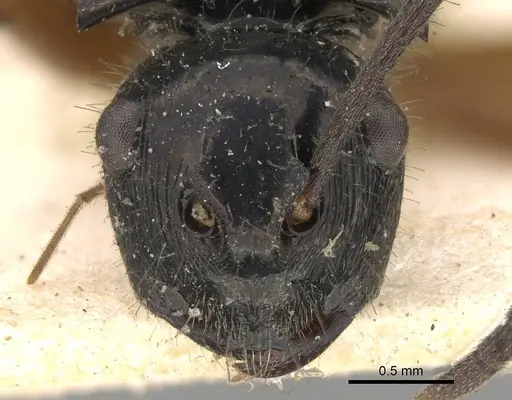
CASENT0901805
Ver no AntWeb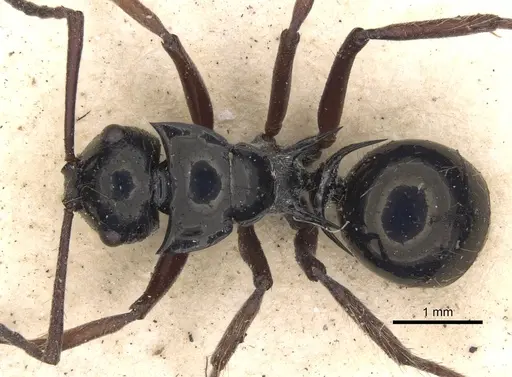
CASENT0906741
Ver no AntWeb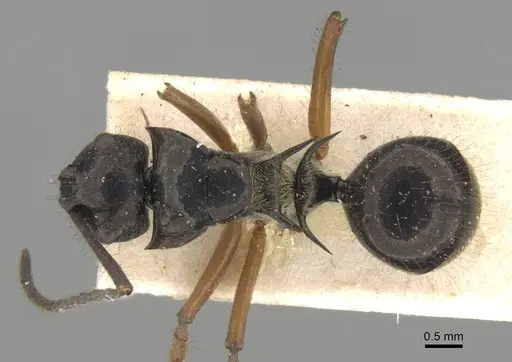
Literatura
Carregando mapa de distribuição...Carregando produtos...