
Polyrhachis parabiotica
- Nome científico
- Polyrhachis parabiotica
- Subgênero
- Myrma
- Tribo
- Camponotini
- Subfamília
- Formicinae
- Autor
- Chapman, 1963
- Distribuição
- Encontrada em 0 países
Introdução
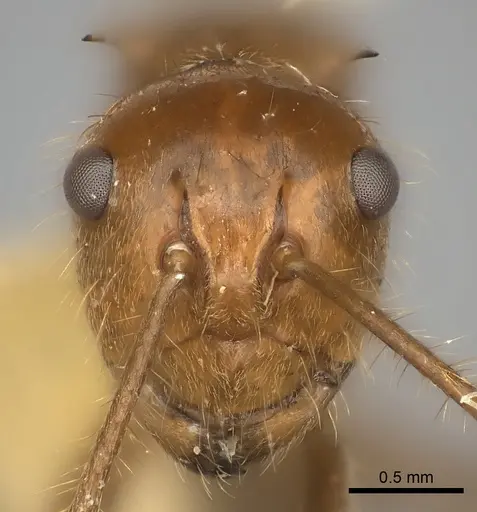
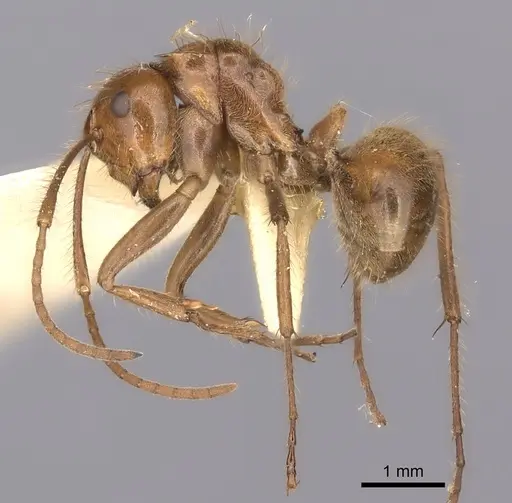
Polyrhachis parabiotica is an ant species from the Philippines, belonging to the subgenus Myrma. Workers are about 6.0-6.3 mm long, and queens are about 6.9 mm long . It was first discovered in 1948 in a dead tree fern frond on Negros island . The species name reflects its close association with Myrmicaria ants, as it was found nesting near their mound .
Quick Summary
- Difficulty: Expert
- Origin & Habitat: Philippines (Negros and Luzon islands), found in dead tree fern fronds at 1,500-4,000 feet altitude in forested areas [1][2]
- Colony Type: Colony structure is unconfirmed, only one wild colony has ever been documented
- Size & Growth:
- Queen: Approximately 6.9 mm in total length [1]
- Worker: 6.0-6.3 mm in total length [1]
- Colony: Unknown, only one colony has ever been found
- Growth: Unknown
- Development: Unconfirmed, no captive breeding data exists (Development timeline is unstudied. Related Polyrhachis species typically develop in 6-10 weeks at tropical temperatures, but this is a rough estimate.)
- Antkeeping:
- Temperature: Unknown, based on tropical origin, aim for warm conditions around 24-28°C [1]
- Humidity: Unknown, likely moderate to high humidity given arboreal nesting in tropical forests [1]
- Diapause: No, tropical species do not require hibernation [1]
- Nesting: Lignicolous (wood-nesting), use Y-tong, plaster, or naturalistic setups with wood pieces [2]. The single known colony was in a dead tree fern frond [1].
- Behavior: This species is diurnal, only collected during daytime surveys [3]. Temperament is unstudied, but most Polyrhachis species are moderately defensive. They have pupal cocoons [2][4], which is unusual for Formicinae. Escape risk is moderate due to 6 mm worker size, standard barriers should suffice, but avoid tiny gaps.
- Common Issues: extreme rarity, this species is virtually unavailable in the antkeeping hobby and has never been captive-bred, completely unstudied biology, all care recommendations are educated guesses based on related species, the single known colony was found in a parabiosis relationship with Myrmicaria, their exact ecological needs are unknown, no established feeding protocols exist, their diet in captivity is completely unverified, potential difficulty establishing in captivity, wild-caught colonies may struggle with captive conditions
Rarity and Collection History
Polyrhachis parabiotica is one of the rarest ant species in the world, only a single colony has ever been documented. Chapman collected workers and wingless females from forays of Myrmicaria ants on Cuernos de Negros for many years before finding the nest in 1948. The colony was in a dead tree fern frond, with the fern partly surrounded by a Myrmicaria mound nest. This association is reflected in the species name 'parabiotica, ' meaning 'living alongside.' Workers and females closely resemble Myrmicaria in coloration [1].
Nesting Biology
This species is lignicolous, meaning it nests in wood. The only known colony was in a dead tree fern frond [1]. Like other Polyrhachis in subgenus Myrma, they use silk to construct nests and have pupal cocoons [2][4]. In captivity, a naturalistic setup with wood pieces or a Y-tong formicarium would replicate their natural conditions.
Distribution and Habitat
Polyrhachis parabiotica is endemic to the Philippines, known from Negros and Luzon islands. On Negros, specimens are orange-red, on Luzon, they are red [1]. They are collected at elevations between 1,500 and 4,000 feet in forested areas, indicating a preference for cooler, humid conditions [1].
Care Recommendations
Since this species has never been captive-bred, all care recommendations are based on related Polyrhachis species. Provide warm temperatures around 24-28°C and moderate to high humidity. Use a lignicolous nest like Y-tong or naturalistic setups with wood pieces. Feed sugar water and insects, though acceptance is unverified. This species is only for expert antkeepers [1][2].
Frequently Asked Questions
Is Polyrhachis parabiotica available for purchase?
No. This is one of the rarest ant species, only a single colony has ever been documented, and there are no captive breeding programs [1].
How do I care for Polyrhachis parabiotica?
Since no captive care data exists, recommendations are based on related species. Provide warm temperatures (24-28°C), moderate humidity, and a lignicolous nest like Y-tong. Feed sugar water and insects [1][2].
What does Polyrhachis parabiotica look like?
Workers are 6.0-6.3 mm long, queens are about 6.9 mm long. They have orange-red to red coloration, resembling Myrmicaria ants [1].
Where is Polyrhachis parabiotica found?
This species is endemic to the Philippines, known from Negros and Luzon islands at elevations of 1,500-4,000 feet in forested areas [1].
Does Polyrhachis parabiotica have cocoons?
Yes. Unlike many Formicinae, this species has pupal cocoons [2][4].
What is parabiosis in ants?
Parabiosis is when two ant species nest in close association without aggression. Polyrhachis parabiotica was found nesting near Myrmicaria ants, which inspired its name [1].
How long do Polyrhachis parabiotica ants live?
This is completely unknown, no lifecycle data exists for this species. Related Polyrhachis species may live several years for queens, but this is speculative.
Are Polyrhachis parabiotica good for beginners?
No. This species is rare, unstudied, and has no captive breeding history. Only expert antkeepers should attempt to keep it [1].
What do Polyrhachis parabiotica ants eat?
Their exact diet is unstudied. Like related species, they likely feed on nectar, honeydew, and small insects. In captivity, offer sugar water and protein sources, though acceptance is unverified.
Do Polyrhachis parabiotica need hibernation?
No. As a tropical species from the Philippines, they do not require hibernation [1].
How big do Polyrhachis parabiotica colonies get?
Unknown. Only one colony has ever been documented, and its size was not recorded. Related Polyrhachis species can form colonies of several hundred workers, but this is speculative for P. parabiotica.
Report an Issue
The current care sheet is based fully on literature. See inconsistencies, or something that's incorrect? Please , it will be resolved after review from an admin. Contributing to the blogs tab also helps providing information, to make us be able to further improve the caresheets. Thank you for your support!
References

Este guia de cuidados está sob a licença CC BY-SA 4.0 .
Posts da comunidade
CASENT0217789
Ver no AntWeb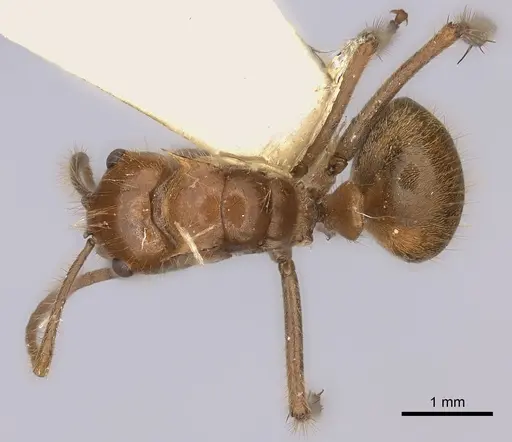
Literatura
Carregando mapa de distribuição...Carregando produtos...