
Polyrhachis mondoi
- Nome científico
- Polyrhachis mondoi
- Subgênero
- Cyrtomyrma
- Tribo
- Camponotini
- Subfamília
- Formicinae
- Autor
- Donisthorpe, 1938
- Distribuição
- Encontrada em 0 países
Introdução
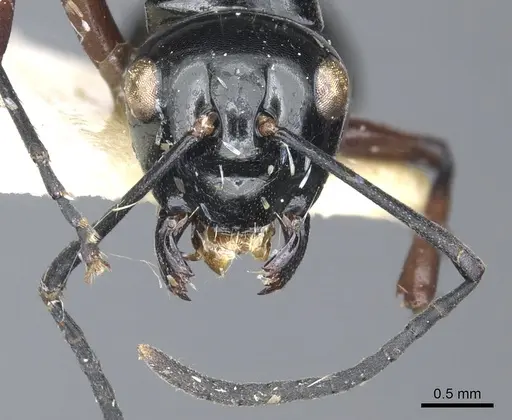
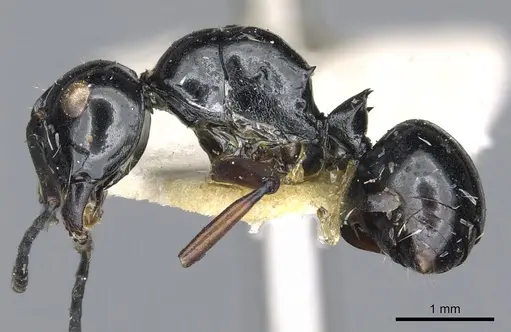
Polyrhachis mondoi is a medium-sized arboreal ant native to New Guinea. Workers measure approximately 5.5mm and are black and shining with dark red trochanters, femora, and tibiae . This species belongs to the subgenus Cyrtomyrma and can be distinguished from similar species by its strongly transverse pronotum and short, upturned propodeal spines . The petiole has four subequal spines . These ants typically nest in trees but have been found under the bark of living trees .
Quick Summary
- Difficulty: Medium
- Origin & Habitat: New Guinea, tropical rainforest environment, found at elevations around 1800m [2][1].
- Colony Type: Unconfirmed, no specific data on queen number, but based on Polyrhachis genus patterns, likely monogyne (single queen colonies).
- Size & Growth:
- Queen: Size data unavailable, no specific measurements for queens.
- Worker: 5.5mm [1]
- Colony: Unknown, no data on colony size available.
- Growth: Moderate, inferred from genus patterns.
- Development: Estimated 6-10 weeks, based on typical Formicinae development. (Development time may vary with temperature, specific data for this species is unavailable.)
- Antkeeping:
- Temperature: Keep at 22-26°C, based on elevation preferences [2].
- Humidity: Keep nest substrate lightly moist but not waterlogged, as they are arboreal species [1].
- Diapause: No, tropical origin, so no diapause required.
- Nesting: Arboreal nesting, provide vertical or diagonal nests with narrow chambers, such as Y-tong or plaster nests [1].
- Behavior: Generally peaceful and good climbers. Escape risk is moderate due to their size and climbing ability.
Housing and Nest Setup
Polyrhachis mondoi is an arboreal species, so provide vertical or diagonal nest structures. Use Y-tong or plaster nests with narrow chambers to mimic tree hollows [1]. Add bark pieces or twigs for climbing enrichment. Ensure connections between nest and outworld are secure to prevent escapes, as these ants are good climbers [1].
Feeding and Diet
Like most Formicinae ants, Polyrhachis mondoi is omnivorous. Offer sugar sources like honey water constantly, and provide protein insects such as small crickets or fruit flies 2-3 times per week.
Temperature and Seasonal Care
Keep temperatures between 22-26°C, as they prefer cooler conditions based on elevation data [2]. Avoid temperatures above 28°C. No diapause is needed due to tropical origin.
Humidity and Water
Maintain moderate humidity by keeping the nest substrate lightly moist [1]. Provide a water source in the outworld, but avoid waterlogging.
Behavior and Observation
Workers are active climbers and generally peaceful. They may establish foraging trails vertically. Provide enrichment like branches to encourage natural behaviors.
Frequently Asked Questions
How long does it take for Polyrhachis mondoi to produce first workers?
Based on typical Formicinae development, expect first workers approximately 6-10 weeks after queen lays eggs, assuming optimal temperature.
Can I keep Polyrhachis mondoi in a test tube?
Test tubes can work for founding, but transfer to a vertical nest once the colony grows [1].
What do Polyrhachis mondoi ants eat?
They are omnivorous, offer sugar water constantly and protein insects like crickets or fruit flies weekly.
Are Polyrhachis mondoi ants good for beginners?
They are rated medium difficulty due to arboreal housing needs, but their cooler temperature preference may help.
How big do Polyrhachis mondoi colonies get?
Colony size data is unavailable for this species.
Do Polyrhachis mondoi need hibernation?
No, they are tropical and do not require diapause.
When should I move my Polyrhachis mondoi colony to a formicarium?
Move them when the colony outgrows the test tube, typically after reaching a few workers [1].
Why are my Polyrhachis mondoi dying?
Common causes include temperatures too high, excessive humidity, or lack of protein. Check conditions and diet.
Can I keep multiple queens together?
Polyrhachis mondoi is likely monogyne, so combining queens is not recommended.
Report an Issue
The current care sheet is based fully on literature. See inconsistencies, or something that's incorrect? Please , it will be resolved after review from an admin. Contributing to the blogs tab also helps providing information, to make us be able to further improve the caresheets. Thank you for your support!
References

Este guia de cuidados está sob a licença CC BY-SA 4.0 .
Posts da comunidade
CASENT0903428
Ver no AntWeb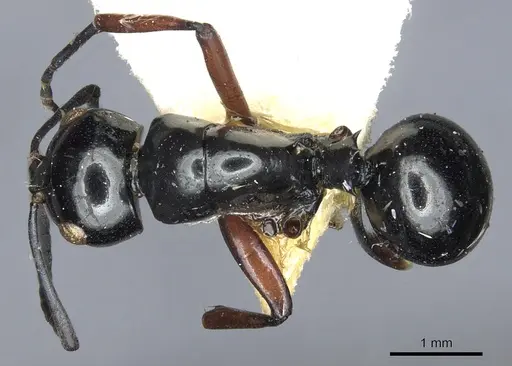
Literatura
Carregando mapa de distribuição...Carregando produtos...