
Polyrhachis limitis
- Nome científico
- Polyrhachis limitis
- Subgênero
- Myrma
- Tribo
- Camponotini
- Subfamília
- Formicinae
- Autor
- Santschi, 1939
- Distribuição
- Encontrada em 0 países
Introdução
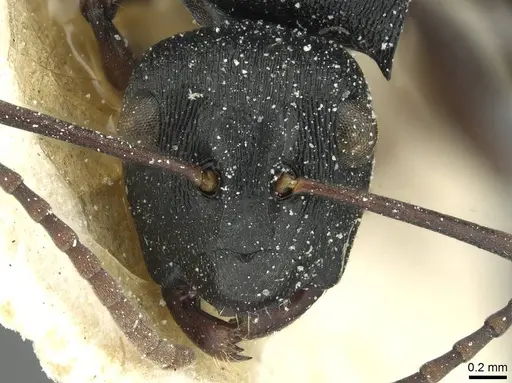
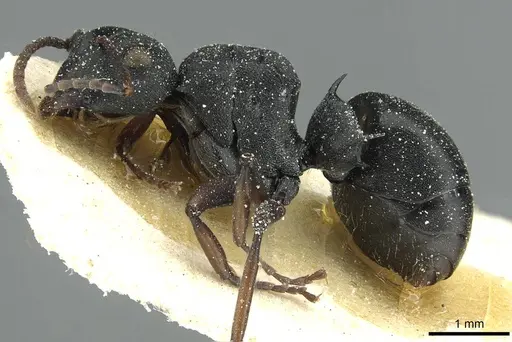
Polyrhachis limitis is a medium-sized ant in the Formicinae subfamily, found in the Afrotropical region of central and eastern Africa . Workers are about 6.5mm in total length . This species belongs to the alexisi species-group, with a marginate pronotum and propodeum, a quadrispinose petiole, and an oval head with moderately convex sides . The eyes break the head outline in full-face view . Originally described as a subspecies in 1939,it was raised to full species status in 1973 based on sculpturation differences . This is one of the least studied Polyrhachis species, with no biological observations in the wild or captivity.
Quick Summary
- Difficulty: Hard
- Origin & Habitat: Democratic Republic of Congo and Tanzania in the Afrotropical region [1][2]. Specific habitat preferences are unconfirmed.
- Colony Type: Unconfirmed, only worker caste described, queen caste unknown [1].
- Size & Growth:
- Queen: Unknown, queen caste has not been described [1].
- Worker: Approximately 6.5mm total length [1].
- Colony: Unknown, no colony size data exists.
- Growth: Unknown, no development data available.
- Development: Unconfirmed, no direct observations. Based on typical Polyrhachis genus patterns, estimated 6-10 weeks at optimal temperatures, but this is a rough estimate. (Development timeline is unstudied for this species.)
- Antkeeping:
- Temperature: Likely 24-28°C based on tropical African distribution. Start in this range and observe colony activity.
- Humidity: Moderate to high, aim for 60-80% relative humidity typical of tropical forest dwellers. Keep substrate consistently moist but not waterlogged.
- Diapause: Unlikely, tropical species from DRC and Tanzania probably does not require a diapause period. However, this has not been studied.
- Nesting: Specific nesting preferences unconfirmed. Based on genus patterns, likely accepts typical nest setups like test tubes or Y-tong. Provide a humid nest environment with some moisture.
- Behavior: Behavior is unstudied. Based on typical Polyrhachis genus behavior, workers are likely moderately active foragers with moderate aggression when defending the nest. Escape risk is moderate given the 6.5mm worker size, standard barrier methods should suffice. The quadrispinose petiole may serve as a defensive adaptation.
- Common Issues: biology is completely unstudied, so all care recommendations are estimates based on genus patterns, no established captive breeding protocols exist for this species, queen caste remains unknown, wild colony structure cannot be confirmed, lack of dietary preference data makes feeding recommendations uncertain, risk of colony failure due to unknown specific requirements
Species Identification and Taxonomy
Polyrhachis limitis belongs to the alexisi species-group within the subgenus Myrma. This species was originally described in 1939 by Santschi as a subspecies of P. alexisi, then elevated to full species rank by Bolton in 1973 [1]. Key identification features include the laterally marginate pronotum and propodeum, the quadrispinose petiole with four distinct spines, and the oval head shape with eyes that break the head outline in full-face view [2]. Workers measure about 6.5mm in total length [1]. The sculpturation shows longitudinal striation on the head and dorsal thorax, with reticulate patterns on the clypeus, propodeal declivity, petiole, and gaster [1]. Only the worker caste has been described, the queen and male castes remain unknown.
Distribution and Habitat
Polyrhachis limitis is known from two locations in the Afrotropical region: the Democratic Republic of Congo and Tanzania [1]. The first specimen was collected in the DRC, with a second worker later collected in Tanzania's Kigoma Region at Gombe Stream National Park [2]. This distribution suggests the species likely inhabits tropical forest environments, though specific microhabitat preferences have not been documented. The genus Polyrhachis contains both ground-nesting and arboreal species, but the specific nesting habits of P. limitis remain unknown.
Nest Preferences and Housing
Specific nesting data for P. limitis does not exist, so recommendations are based on typical Polyrhachis genus preferences. Provide a humid nest environment, test tubes with water reservoirs or Y-tong nests work well for medium-sized Formicinae. Keep the nest substrate consistently moist but avoid flooding. Given the tropical distribution, these ants likely prefer enclosed, humid spaces. A test tube setup with a water reservoir is a good starting point. Workers at 6.5mm are large enough for standard setups without escape concerns.
Temperature and Humidity Requirements
Based on the species' tropical African distribution, aim for temperatures in the 24-28°C range. This aligns with typical tropical forest conditions. Humidity should be moderate to high, roughly 60-80% relative humidity. Keep the nest substrate moist but not waterlogged, with some drier areas available if the colony chooses to regulate its own conditions. Do not allow the nest to dry out completely. No diapause is recommended given the tropical distribution, though this has not been studied.
Feeding and Diet
Diet preferences are unconfirmed for P. limitis. As a Formicinae ant, it likely has typical omnivorous habits, accepting sugar sources like honey water, and protein like insects. Start with offering sugar water constantly and protein prey 2-3 times per week. Remove uneaten prey after 24-48 hours to prevent mold. Observe colony acceptance and adjust accordingly. Since nothing is known about this species' specific dietary needs, be prepared to experiment with different food types.
Behavior and Colony Dynamics
No behavioral observations exist for this species in scientific literature. Based on genus-level knowledge, Polyrhachis ants are typically moderate foragers with some species showing arboreal tendencies. Workers are likely moderately sized and should handle standard formicarium setups well. The quadrispinose petiole may serve as a defensive adaptation, suggesting some aggression when threatened. Colony founding, social structure, and reproductive behavior remain completely unknown. Only the worker caste has been described to date.
Frequently Asked Questions
How long does it take for Polyrhachis limitis to produce first workers?
The egg-to-worker development timeline is completely unstudied for this species. Based on typical Polyrhachis genus patterns at tropical temperatures (24-28°C), estimate approximately 6-10 weeks from egg to first worker, but this is a rough guess. Without any species-specific data, actual development time could be faster or slower.
What do Polyrhachis limitis ants eat?
Diet is unconfirmed for this species. Based on typical Formicinae feeding habits, offer sugar water or honey constantly, and protein sources like small insects 2-3 times per week. Remove uneaten food promptly. This species has not been studied for specific dietary preferences.
Are Polyrhachis limitis ants good for beginners?
This species cannot be recommended for beginners due to the complete lack of biological data. No established care protocols exist, and all recommendations are estimates based on genus patterns. Beginners should choose species with well-documented care requirements instead.
Do Polyrhachis limitis ants need hibernation?
Diapause is unlikely given the tropical African distribution (DRC and Tanzania). However, this has not been studied. Do not attempt hibernation unless the colony shows clear signs of dormancy at room temperature.
What temperature should I keep Polyrhachis limitis at?
Based on tropical distribution, aim for 24-28°C. This is an estimate since no thermal tolerance data exists for this species. Monitor colony activity, if workers become sluggish, slightly increase temperature, if they cluster away from heat sources, reduce temperature.
How big do Polyrhachis limitis colonies get?
Colony size is completely unknown, no colony size data has ever been recorded for this species. Related Polyrhachis species often reach several hundred to a few thousand workers, but this is just a rough reference point with no specific data for P. limitis.
Can I keep multiple Polyrhachis limitis queens together?
Colony structure is unconfirmed, only workers have been described, and queen caste is unknown. Do not attempt combining unrelated queens since no data exists on this species' colony founding behavior. The safe approach is to house single-queen colonies.
What size nest do Polyrhachis limitis ants need?
Since nesting preferences are unconfirmed, use standard setups for medium-sized ants: test tubes work well for founding colonies, and Y-tong for established colonies. Provide humid conditions. Workers at 6.5mm are large enough for standard equipment.
Where is Polyrhachis limitis found in the wild?
This species is known only from the Democratic Republic of Congo and Tanzania in East Africa [1]. Specific microhabitats are unknown.
Report an Issue
The current care sheet is based fully on literature. See inconsistencies, or something that's incorrect? Please , it will be resolved after review from an admin. Contributing to the blogs tab also helps providing information, to make us be able to further improve the caresheets. Thank you for your support!
References

Este guia de cuidados está sob a licença CC BY-SA 4.0 .
Posts da comunidade
CASENT0912826
Ver no AntWeb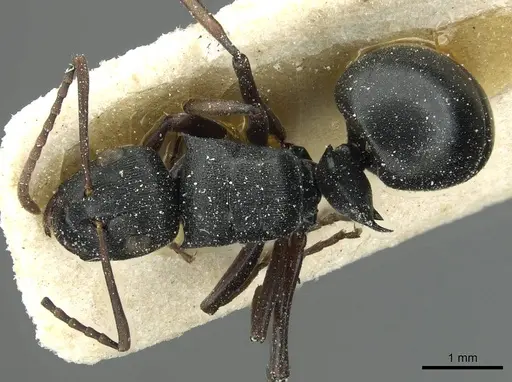
Literatura
Carregando mapa de distribuição...Carregando produtos...