
Polyrhachis laevissima
- Nome científico
- Polyrhachis laevissima
- Subgênero
- Cyrtomyrma
- Tribo
- Camponotini
- Subfamília
- Formicinae
- Autor
- Smith, 1858
- Distribuição
- Encontrada em 5 países
Introdução
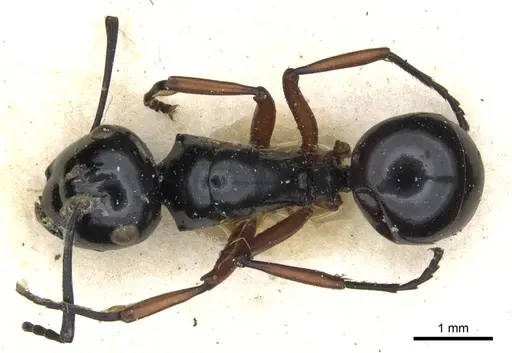
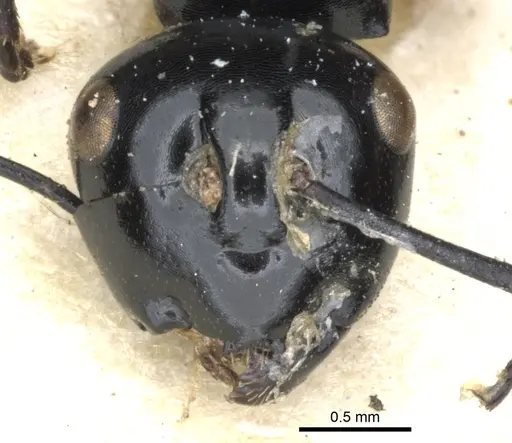
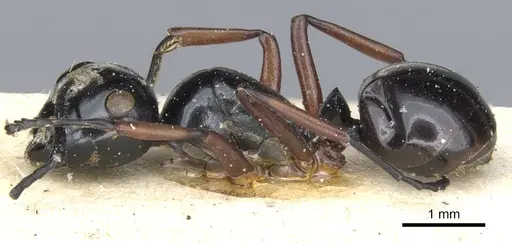
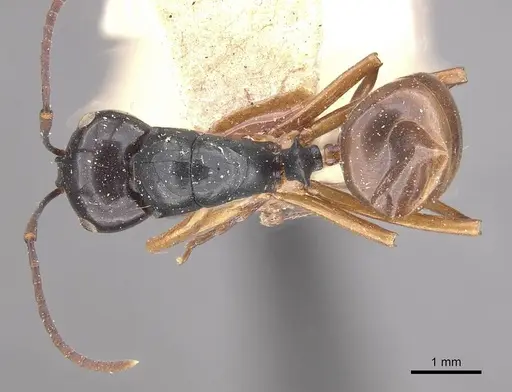
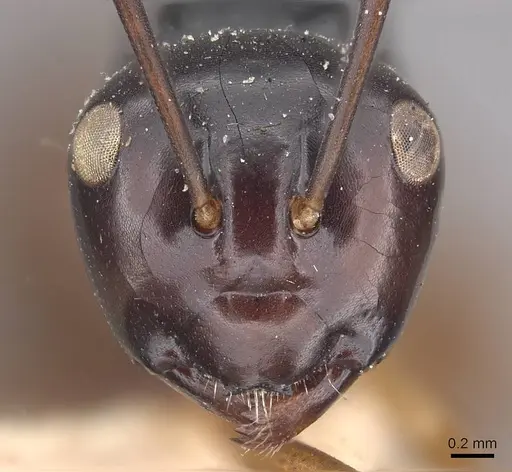
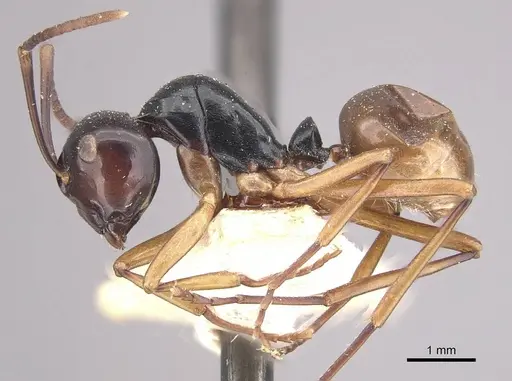
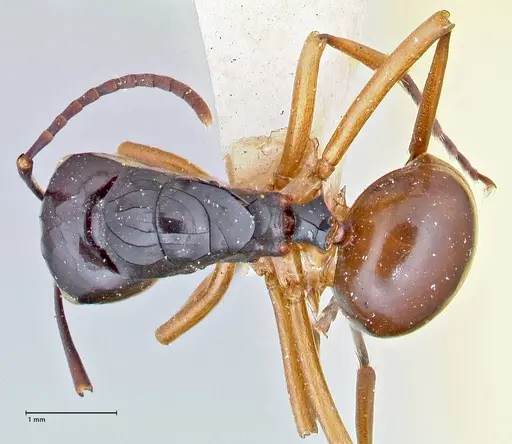
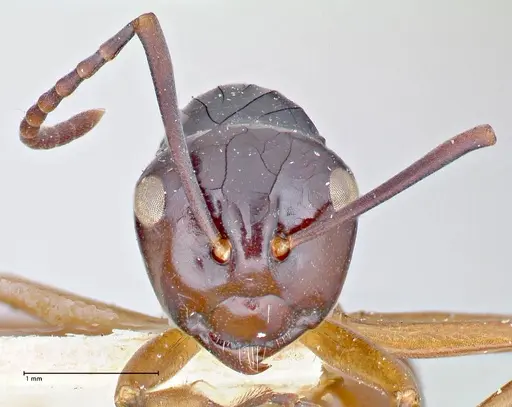
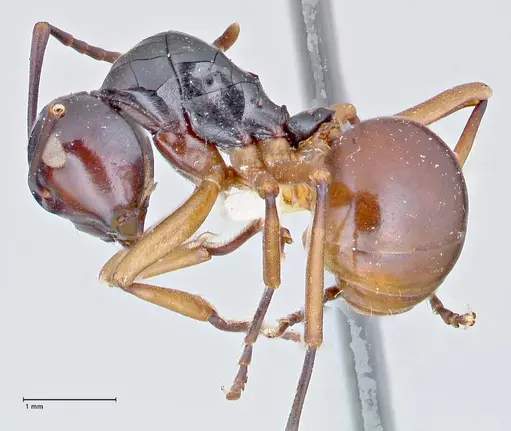
Polyrhachis laevissima is a medium-sized ant in the subgenus Cyrtomyrma. Workers are 6-7 mm long , queens are 8-10 mm , and males are about 6 mm . They are glossy black with light red legs. This species ranges across Southeast Asia, including Myanmar, India, Thailand, Malaysia, Sumatra, Java, and Borneo . They live in forest and grassland habitats, foraging exclusively on the ground surface , and build arboreal nests using carton material . A unique trait is their use of carton for nest construction, unlike many ground-nesting ants.
Quick Summary
- Difficulty: Medium
- Origin & Habitat: Southeast Asia, including Myanmar, India, Thailand, Malaysia, Sumatra, Java, and Borneo. Found in forest and grassland habitats, absent from human-modified areas [4][5][8].
- Colony Type: Unconfirmed, colony structure not well documented.
- Size & Growth:
- Antkeeping:
- Temperature: Keep warm, around 24-28°C, as this species is from tropical regions [1][3].
- Humidity: Maintain moderate to high humidity by keeping the substrate consistently moist but not waterlogged [8][4].
- Diapause: Unknown, as a tropical species, hibernation is unlikely, but no specific data exists.
- Nesting: Arboreal nests using carton material [6][7]. In captivity, provide vertical structures like branches or cork bark, and use Y-tong nests with climbing access.
- Behavior: Workers are calm and non-aggressive, foraging on the ground [4][5]. Escape risk is moderate due to medium size, use standard barriers. Defense mechanism is spraying formic acid, typical for Formicinae.
- Common Issues: cold temperatures can slow or stop brood development [8], lack of vertical space may prevent proper nesting [6][7], disturbance may stress the colony, as they are absent from human habitats [4][5], limited data means care is estimated, monitor colony closely, ground-foraging behavior requires food placement on nest surface [4][5]
Behavior and Colony Dynamics
Workers are active foragers that search for food on the ground surface [4][5]. They are not particularly aggressive, making them manageable in captivity. The colony grows at a moderate pace, but specific growth data is unavailable. Polyrhachis species produce naked pupae without cocoons [6], so you may see pupae directly before emergence. Queens are relatively large and should be handled gently during founding. The species has been found in urban areas of Bangkok [9], suggesting some tolerance for human presence, but they are absent from heavily developed habitats.
Frequently Asked Questions
How long does it take for Polyrhachis laevissima to produce first workers?
No specific data is available. Based on related Polyrhachis species, it may take 6-8 weeks in tropical temperatures, but this is an estimate [6].
Can I keep Polyrhachis laevissima in a test tube setup?
Test tubes are not ideal. They are arboreal nesters that build elevated nests using carton material [6][7]. A naturalistic setup with vertical structures works better.
Are Polyrhachis laevissima good for beginners?
This species is rated Medium difficulty. It requires specific arboreal housing and warm temperatures, which may challenge beginners.
What temperature do Polyrhachis laevissima need?
Keep them warm at 24-28°C, as they are from tropical Southeast Asia [1][3].
Do Polyrhachis laevissima need hibernation?
Probably not. As a tropical species, they likely do not require hibernation, but no specific data exists.
How big do Polyrhachis laevissima colonies get?
Colony size data is not available for this species.
What do Polyrhachis laevissima eat?
They are omnivorous. Offer sugar water or honey continuously, and protein sources like small insects 2-3 times per week. They forage on the ground, so place food on the nest surface [4][5].
Report an Issue
The current care sheet is based fully on literature. See inconsistencies, or something that's incorrect? Please , it will be resolved after review from an admin. Contributing to the blogs tab also helps providing information, to make us be able to further improve the caresheets. Thank you for your support!
References

Este guia de cuidados está sob a licença CC BY-SA 4.0 .
Posts da comunidade
Literatura
Carregando mapa de distribuição...Carregando produtos...