
Polyrhachis dorsena
- Nome científico
- Polyrhachis dorsena
- Subgênero
- Cyrtomyrma
- Tribo
- Camponotini
- Subfamília
- Formicinae
- Autor
- Kohout, 2006
- Distribuição
- Encontrada em 0 países
Introdução
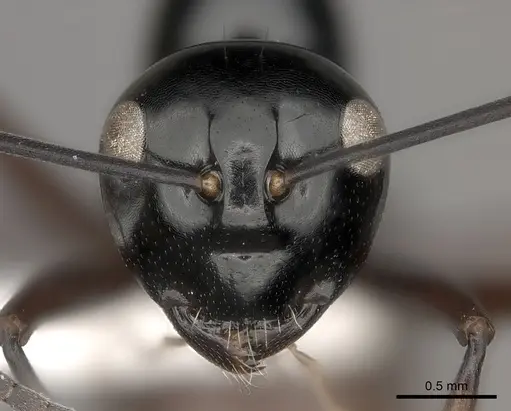
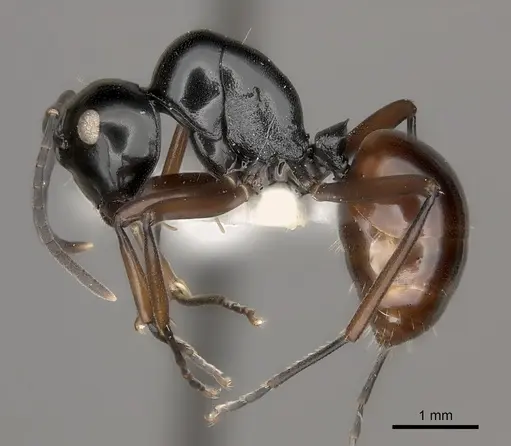
Polyrhachis dorsena is a medium-sized arboreal ant native to the rainforests of New Guinea . Workers have a total length of 5.80-6.35 mm and are predominantly black with reddish-brown markings on the gaster, legs, and antennae . The species is recognized by four subequal spines on the petiole and a swollen pronotum . Queens are larger, with a total length of approximately 8.06 mm , and similar in appearance. This ant constructs silk nests on the underside of leaves in the rainforest canopy, using silk to bind leaves for shelter . Unlike many ants, they do not spin cocoons during pupation . The type colony was collected from a palm leaf in the Torricelli Mountains of Papua New Guinea at 400-500m elevation .
Quick Summary
- Difficulty: Medium
- Origin & Habitat: New Guinea, specifically Papua New Guinea (West Sepik Province). Found in rainforest habitats at 400-500m elevation. Nests are built arboreally on the underside of palm leaves using silk [1][2].
- Colony Type: Colony structure is unconfirmed. Most Polyrhachis species are single-queen colonies, but specific data for P. dorsena is lacking.
- Size & Growth:
- Antkeeping:
- Temperature: Keep warm and stable, roughly 24-28°C, based on tropical rainforest habitat [1].
- Humidity: Keep the nest substrate consistently moist but not waterlogged, based on arboreal rainforest habitat [1][2].
- Diapause: No, tropical species from near equator, no hibernation needed [1].
- Nesting: Arboreal silk-nester. Provide materials for silk shelters, such as live plants or artificial foliage [2][3].
- Behavior: This is an arboreal species that forages in the canopy layer. Workers are active and will explore vertical spaces readily. They are not particularly aggressive but will defend their nest. Escape prevention is important due to their climbing abilities. Founding behavior is unconfirmed.
- Common Issues: high humidity management is critical, too dry and colonies will fail, too wet and mold becomes a problem., escape prevention is essential due to their arboreal climbing abilities., lack of cocoons means pupae are vulnerable, handle nests gently during cleaning., slow colony growth may frustrate beginners, these ants take time to establish., wild-caught colonies may have parasites that are difficult to treat in captivity.
Housing and Nest Setup
Polyrhachis dorsena is an arboreal species that naturally nests in silk shelters on leaves. In captivity, house them in naturalistic setups with live plants like ferns or pothos, where they can construct silk bindings [2]. Alternatively, use Y-tong nests with high humidity and add artificial leaves or moss for silk structures [2]. The outworld should allow vertical foraging, as these ants climb readily [1]. Start founding queens in a test tube setup and transition to larger setups as the colony grows.
Feeding and Diet
Diet data from research is unavailable for Polyrhachis dorsena. Based on general antkeeping practices, offer carbohydrates like sugar water or honey, and protein such as small insects [1]. Provide sugar sources constantly and protein prey 2-3 times per week, adjusting for colony size.
Temperature and Humidity Management
As a tropical rainforest species, P. dorsena requires warm and humid conditions. Keep temperatures around 24-28°C [1]. Use a heating cable for a gradient if needed. Humidity should be maintained by keeping the nest substrate moist but not waterlogged [1][2]. Ensure adequate ventilation to prevent mold.
Colony Founding and Early Development
Founding behavior is unconfirmed for this species. Provide a small, humid chamber for queens, such as a test tube setup, and leave undisturbed. After first workers emerge, offer small amounts of sugar water and prey. Colony growth is slow initially.
Behavior and Observation
Workers are active climbers and forage vertically. They construct silk shelters rather than tunnels [2]. They are not aggressive but defend their nest. Pupae lack cocoons and are vulnerable, so handle nests gently during pupation [2][3]. Escape prevention is critical due to climbing abilities.
Seasonal Care and Long-Term Maintenance
As a tropical species, no diapause is needed [1]. Maintain consistent temperature and humidity year-round. Colony growth is slow, monitor for mold and adjust ventilation as needed.
Frequently Asked Questions
How long does it take for Polyrhachis dorsena to produce first workers?
The exact development timeline has not been studied. No data is available from research [1].
What do Polyrhachis dorsena ants eat?
Diet data from research is unavailable. Based on general antkeeping practices, they accept sugar sources and small insects [1].
Do Polyrhachis dorsena ants need hibernation?
No. As a tropical species from New Guinea near the equator, they do not require hibernation [1].
What is the best nest type for Polyrhachis dorsena?
They are arboreal silk-nesters, so naturalistic setups with live plants work best [2][3].
Are Polyrhachis dorsena good for beginners?
This species is rated as Medium difficulty. They have specific humidity requirements and slow growth, so some experience is helpful [1].
How big do Polyrhachis dorsena colonies get?
Exact colony size data is not available. Based on related species, colonies may reach several hundred workers, but growth is slow.
Why is my Polyrhachis dorsena colony dying?
Common causes include improper humidity (too dry or too wet) and temperature issues. Ensure humidity is consistent and temperatures are warm [1].
Can I keep multiple Polyrhachis dorsena queens together?
Colony structure is unconfirmed. Most Polyrhachis species are single-queen, so combining queens is not recommended.
When should I move my colony to a formicarium?
Wait until the colony has at least 20-30 workers and is actively foraging. For arboreal species, naturalistic setups are often better than traditional formicariums.
Do Polyrhachis dorsena make cocoons?
No. Like all Polyrhachis in the subgenus Cyrtomyrma, they do not spin cocoons, pupae are naked [2][3].
What makes Polyrhachis dorsena different from other ants?
They are arboreal silk-nesters that construct protective shelters from silk rather than digging tunnels, and they lack cocoons during pupation [2][3].
Report an Issue
The current care sheet is based fully on literature. See inconsistencies, or something that's incorrect? Please , it will be resolved after review from an admin. Contributing to the blogs tab also helps providing information, to make us be able to further improve the caresheets. Thank you for your support!
References

Este guia de cuidados está sob a licença CC BY-SA 4.0 .
Posts da comunidade
CASENT0217428
Ver no AntWeb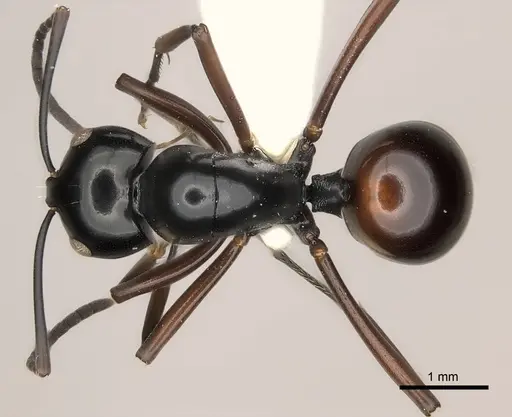
Literatura
Carregando mapa de distribuição...Carregando produtos...